Welcome to the next instalment of our five month trip around south east Asia. You join us in a rattling second class train bound for volunteering in Kolar Gold Fields, India. The heat is kept manageable by the dusty breeze rushing through the window bars. Mr Fluskey has a small child squeezed between him and the window, drawn by the wind and curiosity about the unusual commuters.
Kolar Gold Fields
Kolar Gold Fields (KGF) is a town with an identity problem. When the gold mines were shut down in 2001 due to increasing costs and poor yield, a huge number of people lost their livelihoods. At it’s peak, the town had a population of 300,000 but now that has dipped to below 100,000. There are plans to reopen the gold mines but as yet, this hasn’t happened. The older generation is waiting for this, but the younger generation are seeking training in other jobs. En masse, they are moving to Bangalore, a short train ride but a world away. You can read more about Kolar Gold Fields here
The School
India Ministry Fellowship is a Christian organisation in India. It has set up several projects to help young people train and improve their chances. The Kolar Gold Fields location offers general education and job specific skills. We saw computer workshops, medical classes, a clothing design studio and a nursery. Mr Fluskey and I were visiting to see the great work they do, and to give the kids a few workshops. Honestly, we weren’t 100% sure what we were doing, but we thought we would give anything a go.
Light filtered through the light net curtains and the sounds of children filled our room. The nursery children were sitting themselves down in the courtyard below our window and preparing for the school day. I poked my head around the curtain to watch as the teacher announced that it somebody’s birthday. The lucky child stood up at the front and they all sang a riotous verse of Happy Birthday. How sweet!
However, as a result, another child became quite upset. Evidently they wanted it to be their birthday too. So, to be nice, the whole class sang to them as well. It was after the third child, this cutie in the dress, was serenaded, that the teachers called time on the whole affair. It was clearly going to get out of hand!
The Little One’s Workshop
We threw on some clothes, drank some Javan courage (coffee) and then it was our turn. Downstairs, we spent a little time singing songs with these teeny, tiny tots.
The wheels on the bus went round and round, we floated merrily, merrily, merrily, merrily and then we decided to ruin the teacher’s lives forever (maybe). We had the children facing each other in pairs, pretending to row, row, row their boats and recklessly, we taught them the “if you see a crocodile, don’t forget to scream!” version, which had them squealing at the top of their voices.
On that bombshell, we left to meet some of the older children.
The Older One’s Workshop
Mr Fluskey and I had graduated with Performing Arts degrees in 2008 and so we thought it would be nice to do a drama workshop with the girls who had been excused from their normal lessons for the occasion. We did a few warm up games and then Mr Fluskey started what we thought was an easy drama exercise.
“Imagine you are getting up in the morning and act it out”
He was met with a courtyard full of teenage girls looking at him blankly. He started to mime waking up and yawning, stretching, that kind of thing. The girls began to copy him movement by movement.
“That’s great, but how do YOU do it?”
Again, blank stares all around.
He mimed brushing his teach; they did the same.
Then he mimed eating breakfast; they did the same.
It was honestly a little excruciating, but they seemed to enjoy it by the end.
Then it was my turn. I stole one of my dad’s dance games. It involves going around in a circle in a funny sideways walk whilst singing a funny little song. I thought I’d make the singing easier and rewrote the words;
“I want to dance with you, because you are my friend”. Easy and on message. So you go around once, then you hold hands whilst you go around. Next, you hold elbows, then shoulders, knees, and finally ankles which leaves everyone giggling, shuffling whist bend double and trying to sing; all very silly and fun. This seemed to go down a little better than the first few games and so the workshop ended on a good note.
Break Time
Later on, it was their turn to teach us. We saw some of the oldest pupils hanging out in a classroom and they called us up. It was a dance party! We boogied to some awesome Bollywood tunes and chatted to the teens about their future plans. They had dreams of being nurses, secretaries and engineers. It was really nice to see them relaxed and having fun.
A Trip Into Kolar Gold Fields
After they had gone back to classes, we decided to head into the town and spend a bit of time on the internet sending emails, catching up on Facebook, that sort of thing. It was remarkable how different it was to be in a small town when compared with the madness of Bangalore. People stared, sure, but the gaze was pure curiosity. We got friendly smiles that demanded nothing and didn’t hold that, “You have money” edge. We sat and ate kulfi on the steps and watched the traffic on the dusty streets flow by before heading upstairs to the internet cafe full of old PCs.
Although Kolar Gold Fields was the third city in India to get electricity, its supply is still a little unstable. Every fifteen minutes or so, the power would fail and the generator would take a minute to kick in. The regular put-put-put of generators kicked into gear all the way down the road, sounding like world’s least cool motorbike gang!
After another five minutes, the power would come back on and we would restart the PC. I would ask to start in safe mode, do a scan of the PC for bugs and then finally start up. Two minutes of browsing and the whole thing would repeat. I don’t think we actually got anything done but it was a mildly amusing way to spend two hours.
Dinner
By the time we left the internet cafe, it was dark and we left into a world of generator splutters. The school was in darkness and we had been kindly left some dinner and candles. Sitting on the floor we shared chapati and spicy dahl by candlelight. It was all very romantic (almost).
The following day saw us bedecked in jasmine flowers and the special guests of the show! The school put on a wonderful performance for Mr Arles, the rest of the pupils and us.
Final Thoughts
I don’t think any of these young adults were planning to stick around in Kolar Gold Fields, which must be such an exciting prospect for them. The town, however, will continue to struggle. It is heart-breakingly possible that it may never retain it’s former glory. All I hope is that these bright young things continue to push for the stars!
Mumbai is the capital of Maharastra state, located on India’s western coast. Until 1995, it was also called Bombay; you will still have your airline bag tagged with BOM.
Mumbai is India’s richest city, but is also home to Dhavari, one of the world’s biggest slums. It is home to almost 1,000,000 people. You will find some of the poorest members of society sharing the same streets as Bollywood movie stars. Maybe this diversity is what gives Mumbai’s its vibrant spirit.
What To Do – A Selection of Flying Fluskey’s Favourites
You will find most of these sights in the Colaba, Fort and Churchgate areas,in the south of the city so they can all be reached by foot or a very short cab ride.
People Watch – Walk the Sea Wall
In India, it is not the done thing to walk around town holding the hand of your significant other when unmarried. Young Mumbai couples who just can’t keep their hands out of each others, head to the mile long waterfront for a stroll and to sit, watching the waves. You aren’t going to see anything raunchier than a quick peck on the cheeks, and the odd arm over a shoulder of their girlfriend, but it very endearing. It is a wonderful place to sit and enjoy the sunset whether you are clutching your loved one, or just going solo.
Heading down to the sea wall for a walk
Join the Crowd – Visit the Gateway of India
Not to be confused with the similarly named India Gate in Delhi, this vast building, centred by a giant arch was built to celebrate the landing of King George V on his visit to India in 1911. It became the ceremonial entry point for Viceroys and royals into India from the sea after its completion in 1924. The last British troops to leave the sub-continent after India’s independence left through here in a final ceremony of farewell.
These days, you can’t actually go through it, but instead, circumnavigate it. You will surrounded by huge numbers of tourists from elsewhere in India, and f you are as rubbish at tanning as I am, you may be asked for a photo on more than one occasion. I was in a good few family photos!
We took a photo back of this chap who kept filming us.
Live the High Life – Take Tea at the Taj Mahal Palace Hotel
Mumbai’s elite will be very familiar with this stalwart of Mumbai high society. The Taj Mahal Palace Hotel was finished in 1903 and has played host to the great and good since then. The tower was completed in 1973, personally I’m not a fan of the aesthetics, but I wouldn’t turn down a free stay!! I bet the views from the high floors are stunning.
The facade of the main building hides a collection of expensive designer boutiques.Venture further down the corridor and you emerge into a lush, green garden with a pretty blue lap pool. It feels a million miles from the dust and heat outside. The courtyard used to be entrance to hotel, as oppose to the lobby on the roadside. The sea view rooms still have a view of the water, but passed the reclaimed land of the area surrounding the Gateway to India.
The Sea Lounge does an afternoon tea which allows you sip on some of India’s finest tea leaves, sample some of India’s famous street food (without worrying about Delhi Belly) and nibble at some fine, fresh patisserie.
On a tighter budget…?
Toast the Day – Pour You Own Beer at Leopold’s Cafe
Made famous by the ever-popular backpacker’s book, Shantaram, this Iranian cafe has been on S.B.Singh Road in some incarnation or another since 1871. That’s as old as the Royal Albert Hall in London. It is open from first thing in the morning to last thing at night, serving Indian and international food.
My favourite thing about this place, even though I don’t actually drink beer, is the beer towers. A big plastic tower is brought to your table and you can pour you beers from there.
Relax on the Cricket Green – The Maidan
The unique sound of leather on wood cracks across this 22 acre green section of land, just South of Churchgate.
The idea of groups of white clad players in the Indian sun may be a cliche but it really is a very popular spot. There are 4 official cricket pitches on the oval maidan, and more unofficial games abound. These take place on the large swathe of grass, but it wasn’t always so.
It was once used for large rallys during the fight for Independence. It is now illegal to hold political or religious events there…I mean cricket is almost a religion but they get away with it. Oh, and in the rainy monsoon season the whole area is used for football instead.
Waiting for their turn at bat
Join the Rush – Chhatrapati Shivaji Maharaj Terminus
Known as Victoria Terminus when it was reconstructed in 1887, this High Gothic Revival building was built to celebrate Queen Victoria’s golden jubilee. It was on a site of a previous railway station in the Churchgate area, just North of the Maidan. The new building wasn’t just functional, however, it was much more aesthetically pleasing. It bears a resemblance to St Pancras Station in London which was built in the same period; so “on trend”.
These days people pour through the station, disembarking trains full to the brim, arriving from the wider Mumbai area. Men with their shirt sleeves rolled up, briefcases in hand, go toe to toe with school children in starched white uniforms. Women in saris march purposefully with shopping in one arm, and a baby in the other. It is another excellent spot for a little people watching out of the Mumbai sun.
Feeling Fishy? – The Seafood Market and Restaurants
Mumbai’s Bhaucha Dhakka (or Ferry Wharf) fish market is a lively working market in Colaba. Here, the public and local restaurants buy the daily catch as it is unleaded from the boats. Come first thing in the morning to see the huge variety of species and shopper. If you come later, in the heat of the day, be prepared for a very strong seafood pong that can be slightly overwhelming.
What is even better than visiting a seafood market? Eating its salty treats!
That is a full size fork…take me back!
We had dinner in a restaurant that we stumbled upon by accident. I cannot find the name despite a couple of hours of googling…maybe it is not there anymore…that would be a shame. I digress, the point is, even a place that was on its own, and not recommended in a guidebook had the most excellent seafood! Upstairs was a fancy AC room, we chose to sit downstairs and just enjoy the good food. I had a prawn biryani and it was absolutely delicious. I’m pretty sure it still ranks as the best biryani I’ve ever had. Just look at the size of that prawn…..!
Take a Breather – Girgaum Chowpatty
Mumbaikars (Mumbai’s residents) love to relax at Chowpatty Beach. This doesn’t usually consist of sunbathing and swimming. A bikini would draw lots of the wrong kind of attention, and the water here is thoroughly polluted. It’s not such a nice place to take a dip, but it is an ideal place to come for a celebration. or just a break from city life. Every year thousands gather to celebrate a huge ten day festival. This isn’t quite such a relaxing time to visit, but it is a lot of fun.
On our first first visit, we had been wandering in the expensive area of Malabar Hill (seriously, some of these properties go for US$25000/m2). The huge gated residences didn’t allow for a lot of respite and so it was a real relief to sit on the sand and let a gentle breeze cool us down as the sun set. We had our noses stuck in a book, and when we looked up again, we were surrounded by a circle of faces. In just five minutes, we had attracted quite a crowd of curious teenage boys. We said our hellos and then walked further along the sand, indulging in the feeling of the sand between our toes, massaging away the aches from the long walk.
We came across a small funfair that had been set up celebrate Diwali three days before. Yet more teenage guys drove small children around on small electric cars. A small Ferris wheel, stuffed full of kids, was being enthusiastically flung round by a young man. He was balancing on the frame and pushing it by hand; I have never seen such speed on a big wheel. India really is the land that health and safety forgot.
Munch Through Mumbai – Go on a Food Tour
We visited Chowpatty once more, on a subsequent visit, as it was the first stop on our food tour. Before leaving for Mumbai, we had booked through Reality Tours and Travel as a special treat for my mum’s birthday. The tour started off by catching a short train to the beach. The street food stalls were set up right next to the area of beach that had housed the funfair. We tried such wonderful little treats that we may not have been brave enough to try alone; Pani Puri and Pav Bhaji.
From Chowpatty, we ventured on to the predominantly Muslim area of Mumbai, Mohammed Ali road. Here we tried some lamb koftas and other grilled meat dishes. Finally we tried two different sweet courses. We had ice cream and then vivid orange jalebi.
Mani Bhavan Gandhi Sangrahalaya
In a leafy street in the Gamdevi area, an airy two-storey house houses a small museum dedicated to Mahatma Gandhi’s struggle towards India’s freedom. For seventeen years, this house was his base in Mumbai. It’s a really interesting place to poke around. My absolute favourite display item was a letter that Gandhi wrote to Adolf Hitler in 1939. You can read it here.
Spend the Day Looking Up – Take in Some More of Mumbai’s Architecture
Around Colaba you will see wonderful examples of Victorian architecture.
The Municipal Corporation Building is built in a similar style to the nearby Victoria Terminus. It is the base for the municipal body that runs the city of Mumbai. You cannot go inside but its nice to take a quick look at.
The Asiatic Society of Mukbai is a huge library. It is a base for study relating to Asian nations. It is housed in a huge Greco-Roman style building constructed in 1830.
Just around the corner you will find the St Thomas Cathedral. This is even older, having been built in the 1700s in a typically European style. It is this church that gives its name to the Churchgate area. Inside you will find lots of memorials to British residents of Bombay.
Where To Stay?
I’ve always stayed in Colaba. I love to be within walking distance of the big sights.
This is the quintessential budget option. The guesthouse is one minute’s walk down the road from the Taj Mahal Palace Hotel. It has the most fabulous location. The rooms vary from a light and airy dorm, to dark and dingy smaller rooms. It can be hit and miss. Mind you, if you are just there to sleep, you won’t feel too hard done by. You will get a simple breakfast included in the price. One little niggle; there is no wifi so you’ll need to find a nearby cafe for that.
This guesthouse is a five minute walk from the Gateway to India and fort areas. It is more expensive than the Red Shield but I believe it is worth every penny. The rooms are large, ensuite and clean. There are two meals provided a day and it was delicious. Even Mr Fluskey managed to wolf down his curry breakfast (normally being a coco pops boy). I thoroughly enjoyed my stay here and would recommend it 100%.
OK, so I am not pretending that I can afford this option, or that I have ever stayed here….but wouldn’t it be nice! Heritage, grandeur, duplex suites and a cooling swimming pool relax in. It sounds like a dream come true right in the heart of Mumbai.
The Attack
In November 2008, Mumbai was the location of a horrendous terrorist attack. Gunmen in small boats disembarked and began a terrible killing spree. They struck in 12 co-ordinated attacks throughout the city.
The First Attack
Two gunmen entered the Chhatrapati Shivaji Maharaj Terminus and began to shoot people. A very brave station announcer told passengers to leave. In their attack, which lasted just under two hours, they slaughtered 58 people and injured 100 more. They were intending on attacking Cama Hospital next but they were thankfully thwarted by the staff. From there they killed a group of policeman and fired into a waiting crowd. They were finally stopped in the Metro Cinema area.
Narmian House
Narmian House, a building owned by the Jewish Chabad Lubavitch movement, people were drawn to the windows by a large explosion at a near by petrol station. There they were picked off by waiting gunmen who then took the building. They held several people hostage including a rabbi and his family.
Colaba Hotels
A third group of attackers peppered the Leopold Cafe with bullets. These can still be seen on the walls. The terrorists then stormed down to the Taj Mahal Palace Hotel and so began a three day fire fight. Explosives were detonated in the hotel and then the terrorists went in, guns blazing. They started out by the pool, and then moved through the hotel killing people and taking hostages. A fire ravaged the hotel’s roof and many of the guests were killed or injured in the three day ordeal.
The final attack was the Oberoi Trident, another high end hotel on the opposite side of Colaba. The last two gunmen entered the lobby and made their way through the bars and restaurants shooting their victims.
Aftermath
We were so nervous to see how this terrible attack had affected the city. It is not easy to recover when over 500 people were killed or injured. We visited, for the first time, just 11 months after it had happened. There were security checks everywhere and the Taj Mahal Palace Hotel was surrounded by sandbags. There were army lookouts carrying machine guns at each corner. Five years later, and just the metal detectors arches remained. Mumbai has bounced back, and the revenue it receives from tourists has been a good part of that recovery.
Mumbai is a wonderful, thriving city. It’s seaside location gives it a relaxed air down by the water. The central business district is India’s financial powerhouse. I really enjoyed my time in this city of contrasts and I would happily go back tomorrow.
Our time in Kolkata was very special. A very happy diary clash meant that we were in Kolkata for Diwali and Kolkata for Kali Puja. These happen at around the same time, and so we were able to join in with all of the festivities. Kali Puja in Kolkata is something you will never forget!
Diwali (or Deepavali) is known as the festival of light celebrated by Hindus, Jains and Sikhs. It celebrates the glory of light over darkness, good over evil. It is a huge multi-day festival and is celebrated all around the world. People make lanterns, let off fireworks and visit their friends and families with gifts. Special sweets are shared and prayers are offered. The main day of Diwali is the darkest evening of the holy month so that the lights seem to burn all the brighter.
What is Kali Puja?
In a nutshell, this Hindu celebration commemorates the Goddess Kali, the destroyer of evil. She is worshipped by Shaktic Hindus and tantric worshippers. Shakti is the belief in the universal power of change and feminine power, and this is how it is personified.
Kali Puja In Kolkata
Celebrated mostly in the North-Western states of India, Kali Puja takes place over five days and the largest celebrations are those in Kolkata.
Everywhere we turned, elaborate clay models of the Goddess Kali stared out at us. A few days before we arrived in Kolkata the ritual of painting on the eyes had taken place. Maybe that’s what made them so enigmatic.
Preparations
On the walk home from watching the fountain light show, we came across something that really made me giggle.
I am pretty immature, and even more so back in 2009. Imagine my joy, coming across a huge tent with this emblazoned across it:
Sniggering like teenage boys, we made our way inside and had a look at the heaps of fire crackers, roman candles and huge rockets. There were fireworks here that you would never be allowed to buy legally as a normal person back in the UK. Feeling considerably less daring than our fellow shoppers, we purchased a pack of sparklers. Well, you can’t celebrate Diwali without a bit of light.
The Kali Puja Stage in Central Kolkata
Just a few minutes from our hostel there was a stage that had been erected in a small square. A large statue of the Goddess stood opposite. We sat and watched a presenter entertaining the crowd. Children jumped up and down, shouting and trying to join in while the adults sat back in their chairs and surveyed the scene. The whole thing was in Hindi, so it washed over our heads but we could feel the excitement.
A Quick Note
I don’t have anywhere near as many photos as I would have liked of the evening, but I will endeavour to try and share with you the experiences we had.
A City Takes to the Streets of Kolkata for Diwali
The crowds crushed in, hot clammy and eager in anticipation. Looking down, all I could see was shuffling feet. Kitten heels scuffed the street. Brown leather men’s shoes pigeon stepped beside sparkling sandals. Looking up was a riot of colour. Fireworks shot up into the air in random bursts. The usual disregard for safe launch distances ruled. Just don’t stand on a fire cracker and you’ll be fine!
The Pandals of Diwali and Kali Puja
Around the streets, huge temporary temples called Pandals had been created. They glittered with flashing lights. Archways led the way to these special places of worship. We meandered through these gaudy structures and saw joy and devotion on peoples faces.
Underneath the Goddess Kali, you can see her significant other, the God Shiva. He is often depicted in this position, prostrate and relaxed beneath the Goddesses foot.
We Give it a Go
Deciding it was time to join in, we pulled out our sparklers and a hastily purchased lighter. The lighter was struck and held to the end of the sparkler…
Nothing happened.
We tried again but still, nothing happened.
We held the lighter until our thumbs burnt. Matches were donated but were equally useless at getting the thick sparklers to ignite. This small spectacle began to draw a crowd. A gathering group of challengers joined in. Each, in turn, took a match to the end of the sparkler but failed to triumph. They stepped back with a head wobble of resignation.
Come On Sparklers!
Eventually, a bright chap had the idea of striking the stick against a rough bit on a motorbike that stood nearby. The sparkler flared and the watching crowd nodded approvingly. We could then light the other sparklers with the first.
Awkwardly we waved them around as the entire crowd looked on, not joining in, but not walking away. I have rarely felt like such an anticlimax!
When the last sparks fizzled out, the people dispersed, back into the ebb and flow of the throng.
The Goat Sacrifice Of Kali Puja
Squeamish? Skip to the next heading….there are no pictures between now and then.
Everywhere, amidst the bubbling conversation and bursting fireworks, the bleeting of goats filled the muggy night air. Part of the Kali Puja celebrations is called bali. This means animal sacrifice. It takes place in or around the Shakti temples. It is actually illegal but unless someone complains, no charges are brought. With it being so integral, I don’t see that happening all that much.
As the evening progressed, we heard less goat noises and realised that the slaughter was underway. We passed one temple where the heads of over 30 goats were being displayed, the sticky, red blood dripped onto the street. I am assured that the goats are eaten, so it is not a complete waste of life. For that I am thankful but being tied to a monument and then beheaded can’t be the most humane way to die.
Final Thoughts on Celebrating Diwali and Kali Puja inKolkata
India is full of colour, but it really comes to life during its hundreds of celebrations. We were incredibly lucky to have been bang smack in the centre of two of the most fantastic festivals.
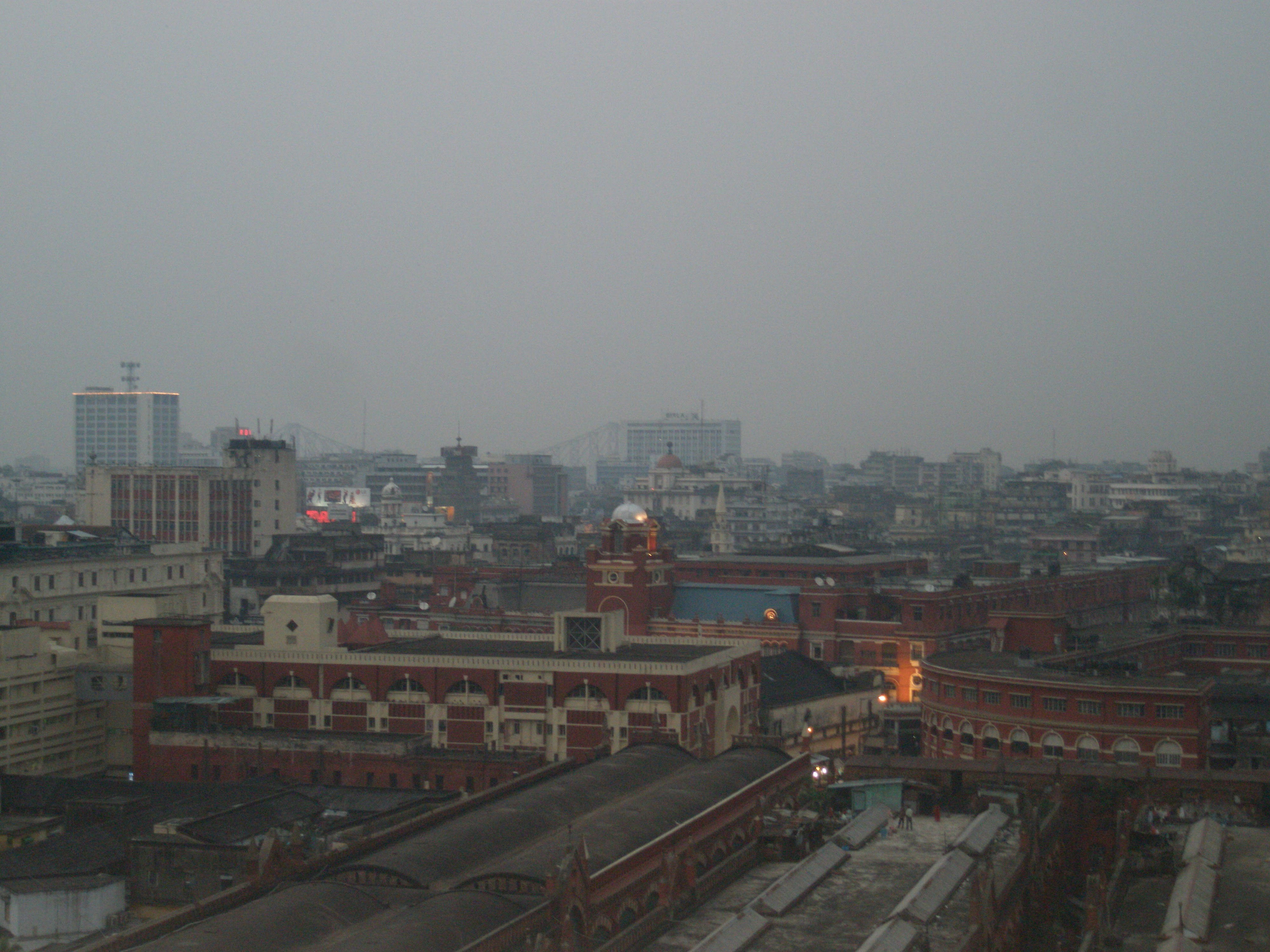
There is an expression about Kolkata, “Where Kolkata leads, India will follow”. Well that’s the gist anyway. This can be seen throughout its recent history. Kolkata, then known as Calcutta, was the centre of the British Raj until the capital was moved to New Delhi. During this time money poured in from the British Empire and it underwent huge industrial growth. In the 1940s, when Britain’s power began to dwindle, it was in Kolkata that the rumblings were the loudest. Bangalore’s prominence as India’s tech capital may have stolen Kolkata’s crown, but when you are zipping around on the underground system, it does still feel like quite a modern city.
The Arrival
For the next stop along our Indian journey, we caught a train from Bodh Gaya.
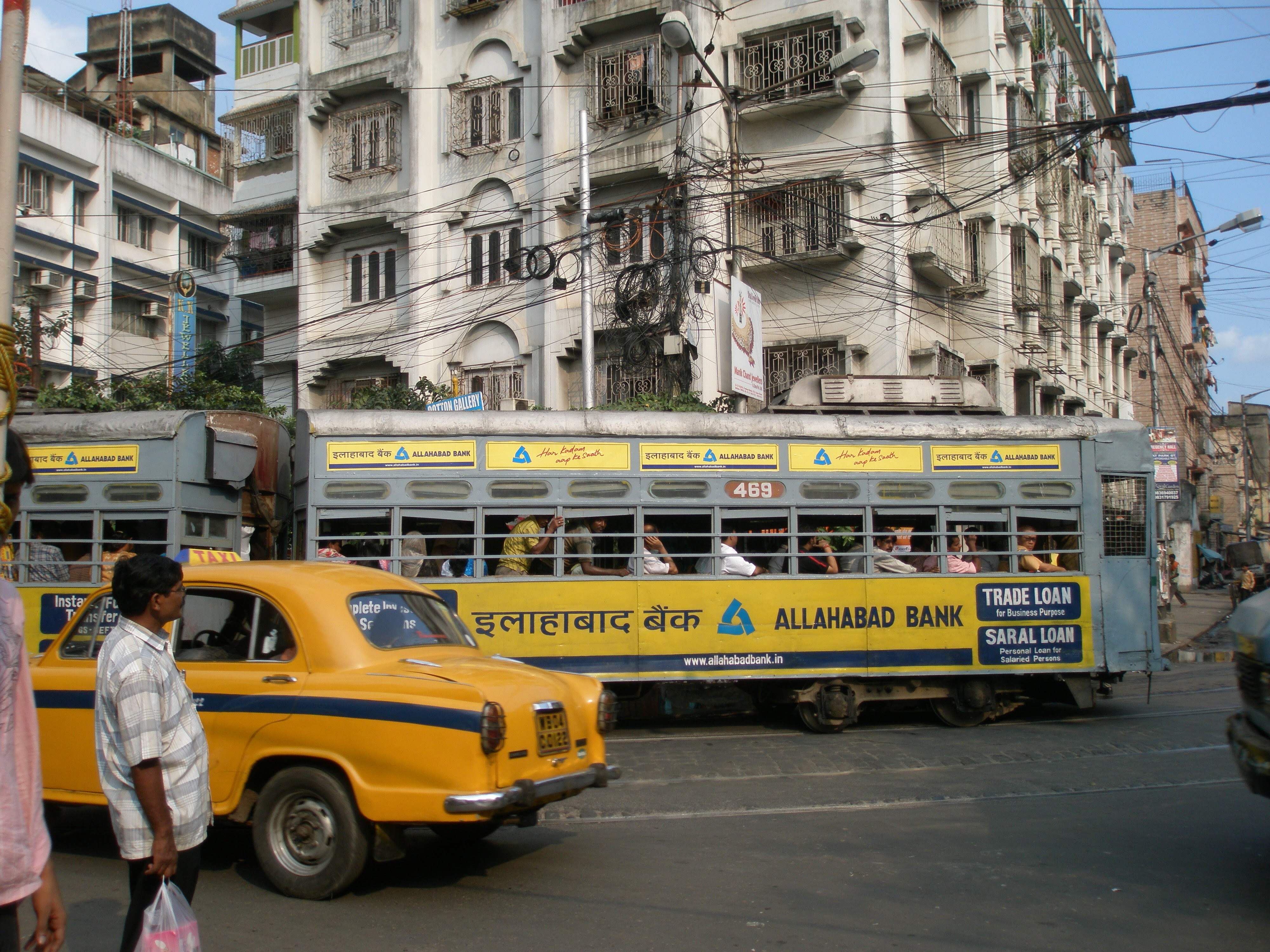
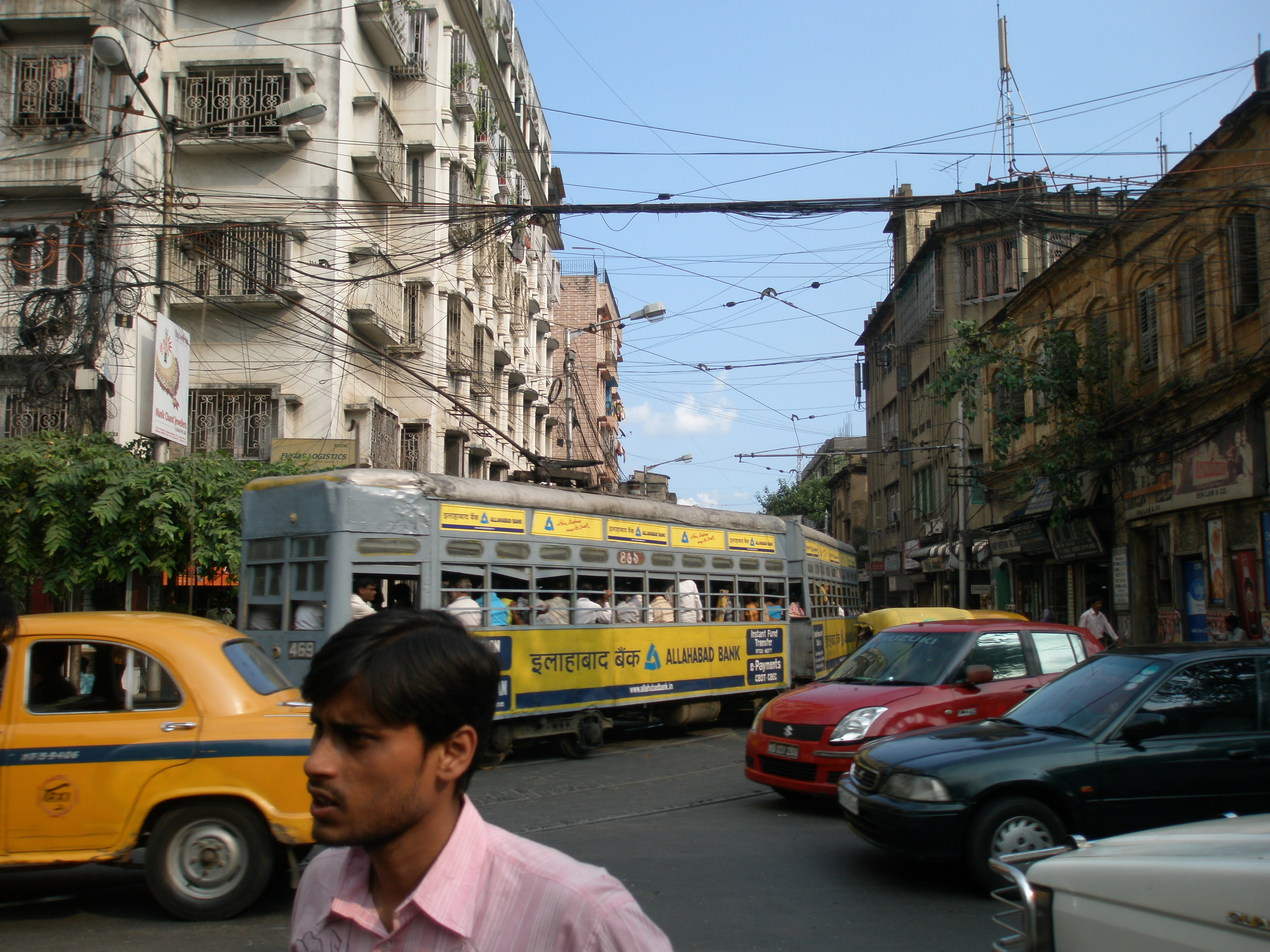
Making sure we found the fixed fare booth just outside the station, we climbed into one of Kolkata’s famous ambassador taxis. They look like the love child of a New York yellow cab and a VW Beetle. The traffic was sluggish, a strange change in India, and we crawled towards our destination, the New Market area. This is where you will find a large selection of reasonably priced accommodation.
When we finally got there, the taxi driver asked for more money, another third in fact. There is an understanding that a fixed fare is just that, fixed. Sometimes you win, sometimes you lose. We chose to use this service so we didn’t have to argue over fares, metres and other haggling which we didn’t need after a long train journey. The driver became enraged when we told him we were going to pay the agreed price. He started to shout extremely loudly, I think he was trying to embarrass us so we just paid him to be quiet, but we held firm. Another guy who was passing asked what the problem was, we explained and he said, “You are correct, just walk away!”. So we did! Feeling somewhere between shell shock and slightly advocated, we set off to find the hostel.
The Hostel
I have been searching high and low for the name of the hostel we stayed in, but I’m not sure it exists any more….and no wonder.
To reach the place, you had to walk down a side street that doubled as a public urinal. There was an actual block for gentlemen to wee into but it was almost overflowing. The stench of boy’s toilets was exceptionally pungent in the heat.
The hostel rooms were constructed of un-plastered concrete. Each grey box remained incomplete. The top foot of the wall was actually just open to the world outside. The sound from everyone’s rooms was clearly audible as it echoed around the bare walls.
The word “en-suite”, although technically true, was a little misleading. What the booking website failed to mention, was that there was no door….or curtain…or screen of any kind; nothing, in fact, to separate you from your loved one who was busy relieving themselves. It was pretty grim.
The Maidan
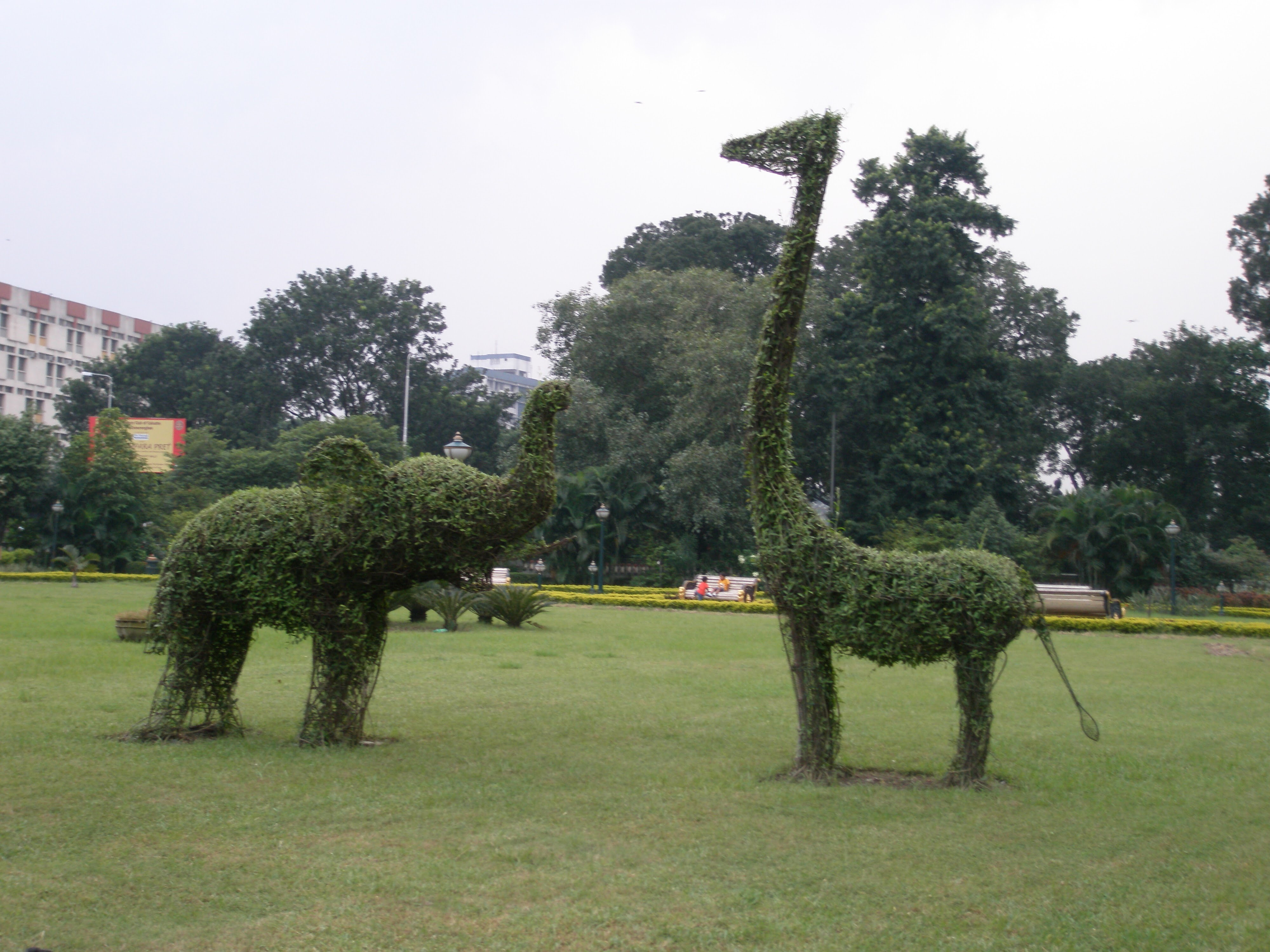
The river Hooghly (pronounced hoo-lee) runs through Kolkata, and along it’s West Bank, you will find a huge expanse called the Maidan. This doesn’t look too big on a map, but walking across it in the heat, without cold water, it seemed endless. It is also called the Brigade Parade Ground but the idea of marching up and down it in the sun seems brutal! Kolkata is a very urban space. There is dirt, dust and concrete overpasses, this makes the green field, “the lungs of Kolkata”, all the more refreshing.
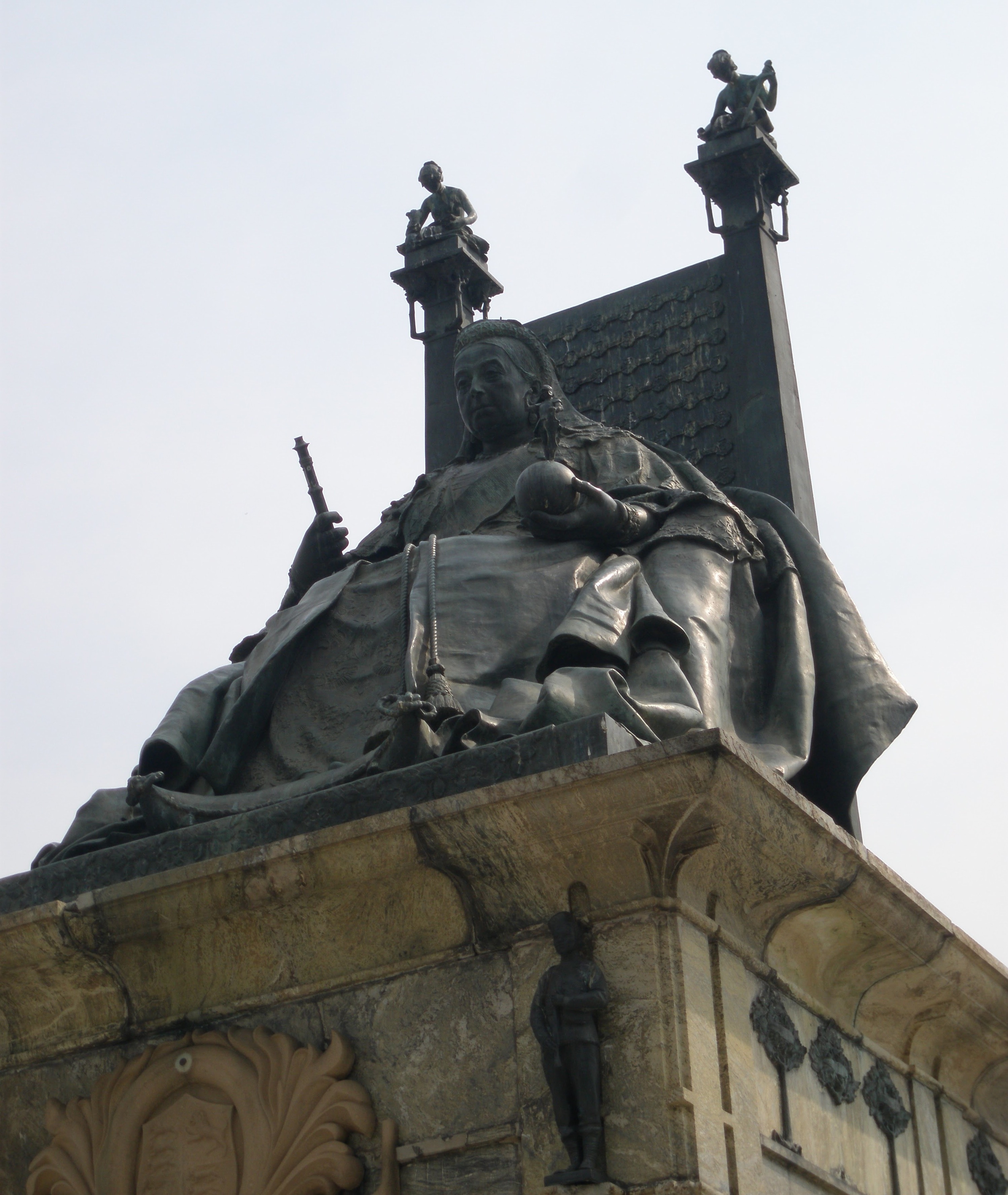
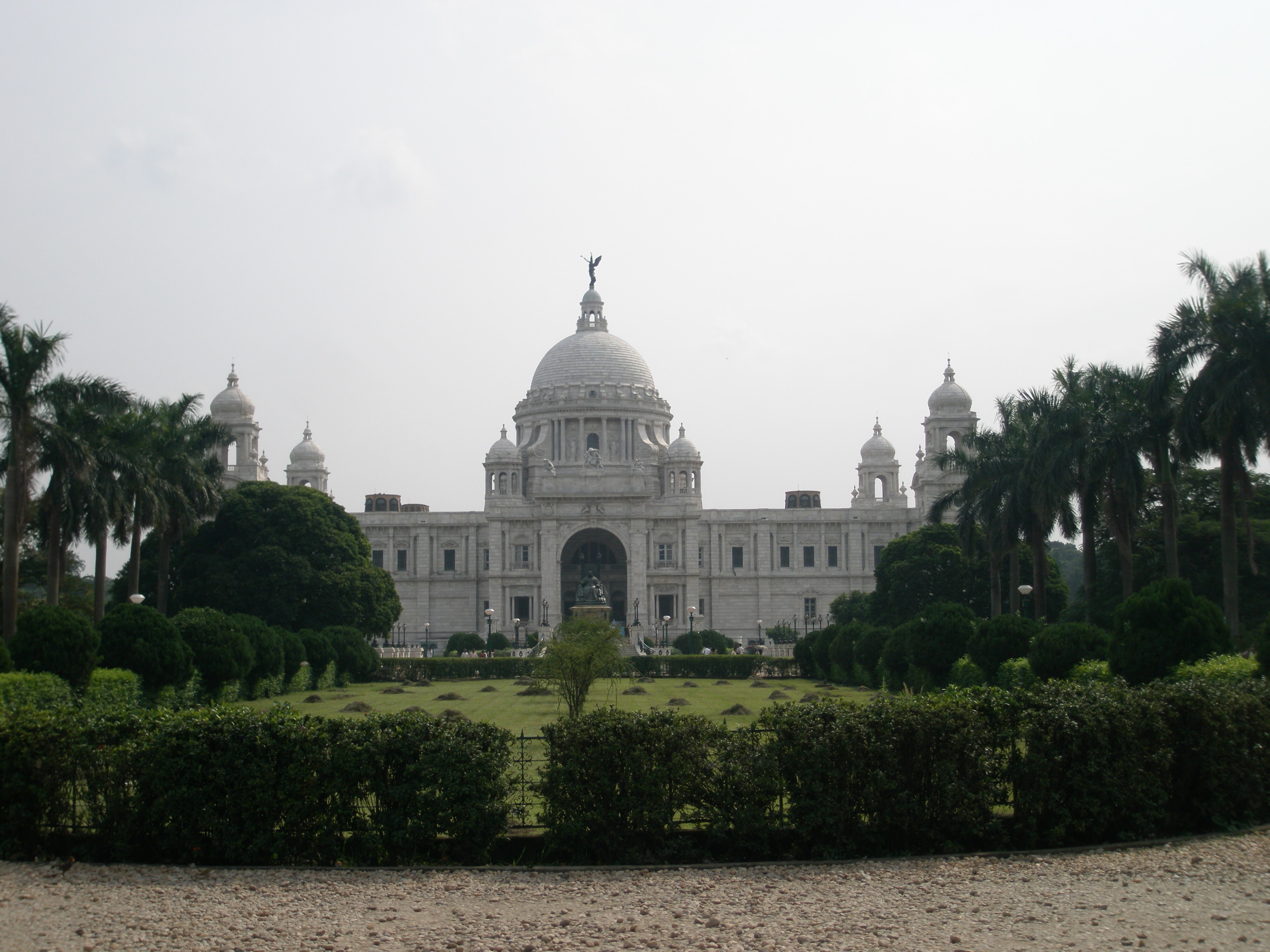
Towards the South of the Maidan, you will find the Victoria Memorial. This large marble building was built in memory of the self-proclaimed “Empress of India”. On approaching the museum, you will find a very austere statue of the lady herself.
The building is a real mix of British and Mughal design principles, with some fun little Venetian bits thrown in for good measure.
We spent an hour or so nosing around. There is a nice collection of oil paintings, some copies of their counterparts in London. We then got lost in an exhibition all about Kolkata’s history in relation to the British Raj. In particular, the information about India’s struggle for independence was thoroughly engrossing. It really left us reeling. Atrocities were committed on both sides and it was an awfully sobering experience.
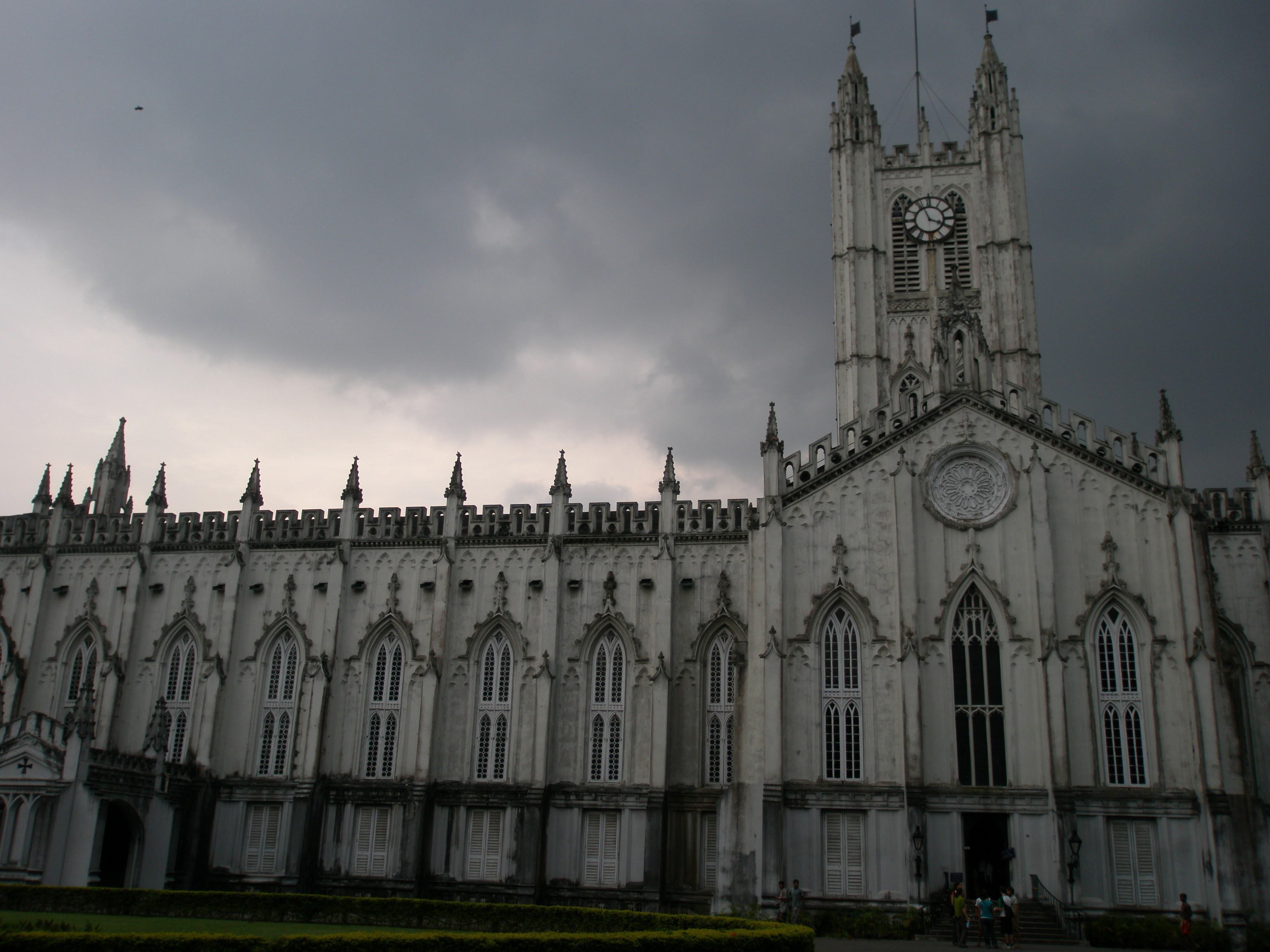
St Paul’s Cathedral
No, not that one.
Just after we came out of the museum, the sky started to threaten.
We dashed towards a large building, St Paul’s Cathedral. Inside, the clamour from outside fell away and the simplicity of the clean white walls cooled the air inside. Large fans hung from the ceiling and it looked like a church somewhere in America’s Southern states. We walked around the entrance and then sat for a while, soothing our throbbing feet.
Happily the clouds passed without disgorging their miserable contents.
The Buses
In London, we have signs on our bus stops that tell you the buses that stop there, where they go, and they even countdown to the moment the bus arrives. In Kolkata, they do things a little differently. Each bus has a man who hangs from the door of the bus and shout its route out to the waiting crowd. We found ourselves at a busy crossroads, each corner of which was an informal bus stop.
Buses raced in, their destination callers bellowing. They screeched to a halt, and then almost instantaneously started pulling out again. People threw themselves into the open doorway and pushed into the already packed interiors. If they faced a wall of stationary passengers, they would join the destination callers, hanging onto the open doorway, shopping bags dangling over the road.
The Mohor Kunja Park
Opened just 2 years before our visit, the Citizen’s Park is another little slice of green in the middle of this hectic city.
We strolled around the colourful flowerbeds, and then took our places on the stone bleachers for this park’s main event. Every evening, the fountains erupt into a musical show. The music started and the water rose and fell in time, in a riotous collection of clashing colours. Super tacky but super fun and when you are a penny pinching backpacker, every free activity is a small win. Below is a short video of the fountains, you may want to turn your speakers down (or off).
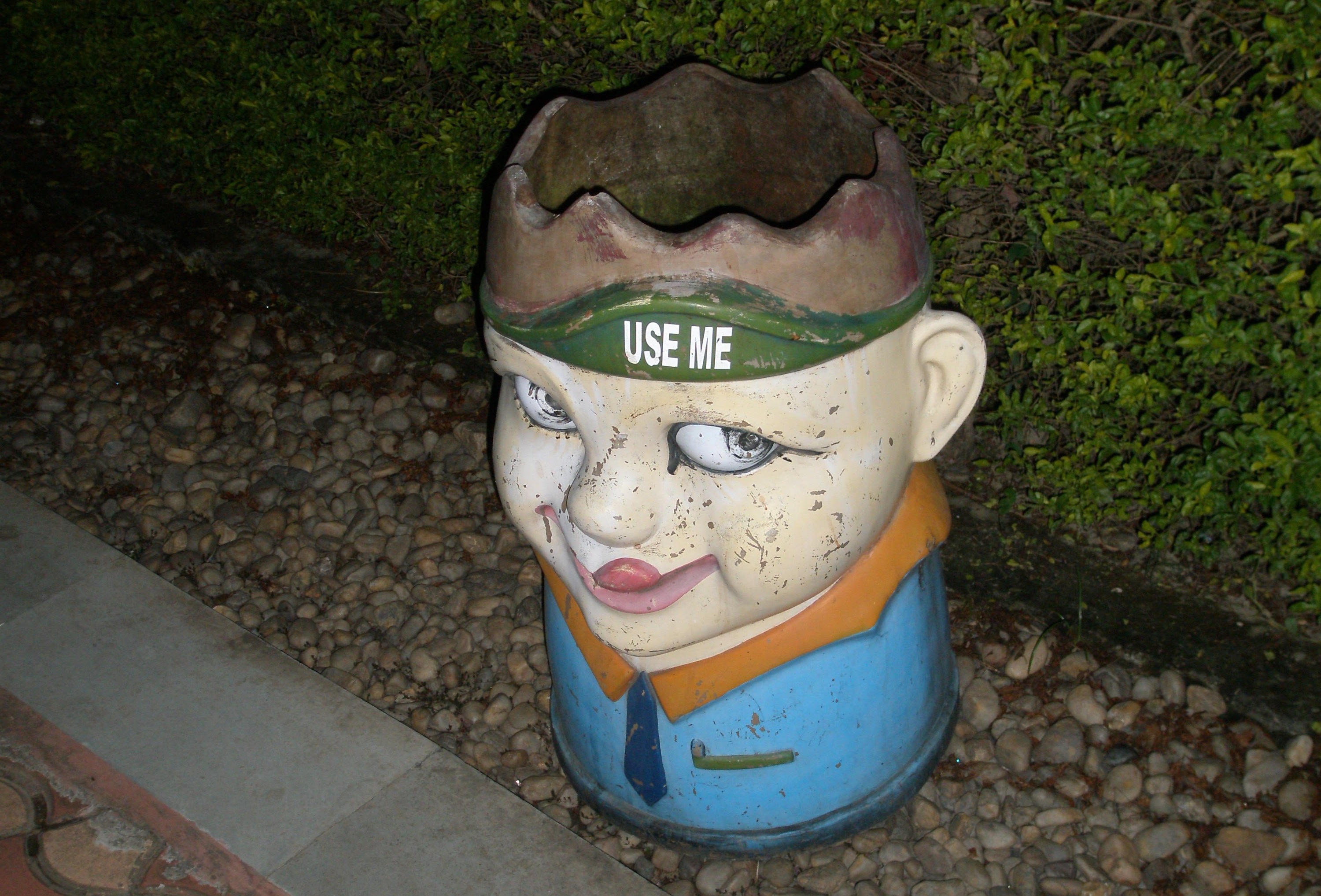
Check out how terrifying this “cute” bin is!!
The Food
I’m not going to lie, by the time we reached Kolkata, we were after comfort food. I don’t mind curry twice a day, every day, but it was fun to mix it up. We went to a pizzeria called Fire and Ice. Our day’s activities had been almost free and so we could splash out on a brilliantly cooked, mozzarella-topped pizza treat. I’m pretty sure we had to share one but it was great and it was a nice change of atmosphere.
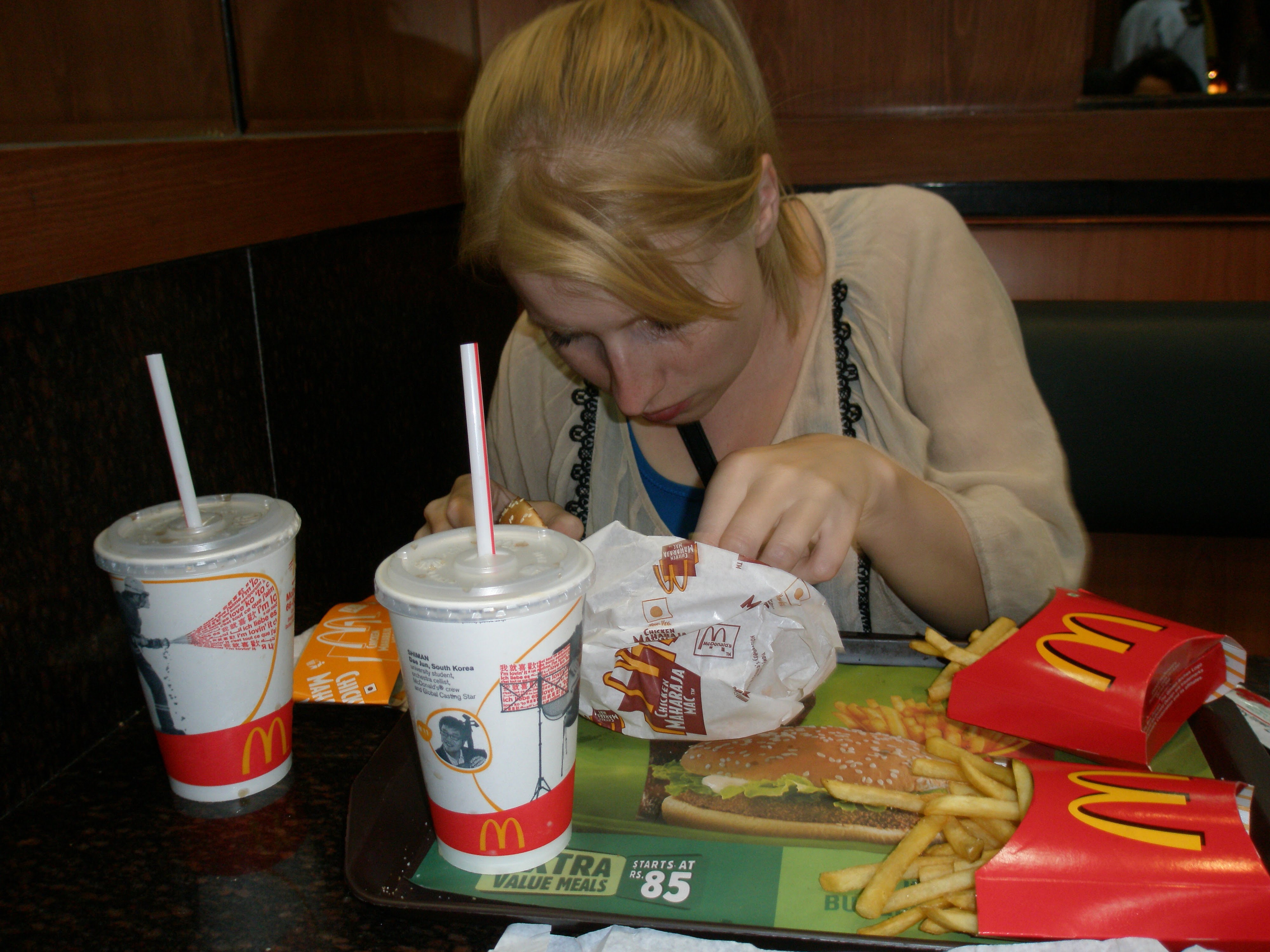
Our other foody indulgence was a McDonald’s. I have written a whole article about Karl’s strange travel habit regarding McDonald’s (read it here). Let me just say that Maharaja Macs are about a zillion times nicer than their beefy counterparts.
With Kolkata’s reputation as a modern city, I think I was expecting somewhere a little more clean and zippy. Kolkata was a surprisingly grimy city. It has huge concrete overpasses above you, a small underground system below and a mass of humanity at street level. Saying that, it has a really interesting history and has some wonderful surprises. We also arrived in Kolkata during an amazing time of year but I’ll tell you all about that next time.
From one holy city (Varanasi), to another and this time it is Bodh Gaya. An unassuming town that holds the most holy sight for Buddhists in India.
Bodh Gaya (or Buddhagaya)
For such an important location, Bodh Gaya is quite a modest place. It definitely has a small town feel about it, with the touts few and far between, the pace of life a touch more leisurely, and open fields within easy walking distance. After the intensity of Varanasi, it was an interesting shift. We took things at a slower pace, made conversation with people we met and took our time visiting temples. We even met the local goat population’s Casanova.
Prince Siddhartha Gautama was born around 2500 years ago. The young man was struck by the way that his wealth and privilege would not bring him happiness. He left his palace and set out into the world to learn how to acquire enlightenment. For six years, he travelled and learnt important meditation techniques. These took him someway to nirvana but never quite achieved it.
It was here, under the Bodhi tree in Bodh Gaya, that he reached enlightenment. With his self realisation, he became Buddha. Buddha means “the enlightened one”. He then spent the next seven weeks exploring what he had learnt in the area surrounding the tree. This is where you will find the key spots in the temple grounds.
The Mahabodhi Temple
The heart of the town, and the Buddhist world, is the. Mahabodhi temple. Inside the complex you will find the temple itself, along with a water tank, and the Bhodi tree. There are also many small stupas and mini temples but too many to name!
Temple
From afar, you could be forgiven for thinking that this is a Hindu temple. The tall pyramidal frontage is very reminiscent of the many Hindu buildings found in India and further afield. Look closer though, and you will see it is more akin to the towers at Angkor War. It was built in around 250BC by the Emperor Asoka but was rebuilt about 260 years later.
The geometric patterns that cover the front are intricate and seem very modern when viewed up close.
Look closer still and faces appear, as well as tiny Buddhas in the lotus position. In 2013, the Thai King donated gold to top the temple. I’m sad we missed it!
To enter the temple you must remove your shoes and if you want to take photos, you need to purchase an additional photo ticket. We didn’t want to forget the interior and so we chose to pay the extra.
The inner sanctum contains a statue of Buddha, in the earth touching position. It’s black stone underneath its golden face paint.
The Bodhi Tree
This is an ancestor of the very tree where Buddha sat. It is in the very same soil and is strung with a fluttering rainbow of prayer flags. This is a nod to the collisions of Buddhist faith from all over the world. These flags are more traditionally seen in countries east of India. Early in the morning, the tree is often surrounded by devotees who come to chant and meditate.
Mucalinda Lake
During Buddha’s time in Bodh Gaya, he was visited by the King of Serpents, a naga called Mucalinda. He was said to have come to Buddha and protected him from a large storm as he meditated. He then bowed down to him before disappearing again. The statue of Buddha in the water tank shows this story.
The Giant Buddha (Daibutsu)
Who doesn’t love a giant Buddha!? In Bodh Gaya you will find a Japanese statue that is a whopping 64 foot tall. It sits atop a pedestal and lotus that add another 16 foot, making it a total of 80 foot from the ground.
It is constructed of yellow and pink sandstone. Not as flashy as its golden counterparts in Thailand, it still manages to impress. It took a whole four years to construct, that’s impressive enough! It was unveiled by the Dalai Lama himself in 1989.
Surrounding it you will find ten smaller disciples of Buddha.
There are also several large blocks that are festooned with glitter. (On closer inspection you will find that these are shards of glass embedded in the concrete to stop birds roosting…..brutal but pretty).
The Thai Monastery
This is one of many temples throughout the town. There are representatives here from Thailand, Bhutan, China, Burma, Vietnam and Japan…and that isn’t all. We didn’t go into too many of these, as we knew we would be visiting some of these countries later in our five month trip.
Some of these temples have guesthouses attached for pilgrims who have travelled from there home countries to visit this holy town. This also means, the food here in Bodh Gaya is a little more varied than elsewhere on our trip. A little more authentic any way. It was nice to be surrounded by all these different cultures.
An Afternoon Off
After a hard day’s sightseeing, we went for a wander. A small lad came up to us and we started to talk. He told us all about his lessons at school. Slowly we made our way through fields edged with small ridges. He showed us the houses we passed and we all enjoyed the company in the sunshine.
After around 40 minutes, we came back around into the town and bought a couple of soft drinks. The joy of an ice cold Mirinda, sucked through a straw in the sun cannot be undersold. The cold, the bubbles and the flavour are all shocking, but in a wonderful way. Giving the bottle back to be recycled is just one of those things that we have lost here in the west.
I am really glad we stopped off in this little gem of a town and didn’t just buzz past it on the train. It’s a real treat, and you can feel the faith that surround it whether you are Buddhist or not.
Writing about vibrant Varanasi has been surprisingly difficult. My memories of this extraordinary place were so jumbled, more a feeling than a narrative. After struggling with this concept, I decided that Varanasi, with its colourful collage of life and confusing lanes, is the inspiration for the structure of this piece. Let’s call it a maze of memory, full of highlights and with the narrative of our journey in India running through it.
Varanasi
Varanasi (or Benares) is one of the longest continually inhabited cities on earth. The Ganges is Hinduism’s most holy river, worshipped as the goddess Ganga. It is the lifeblood, and source of life for millions of Indians. Varanasi is built upon its banks and as such, is the holiest of cities for Hindus. It’s ghats step up to a maze of small lanes lined with shops, restaurants and guest houses. Prepare to get lost! There are markets full of bright fabrics, glittering bindis and delicious food. Cows wander the streets freely, creating new and exciting traffic jams. Tuk tuks are only allowed up to a gated entrance and so their distinctive puttering is replaced by pedicabs.
Getting a guesthouse right on the river was an absolute must for me. Why visit somewhere with a glorious river and miss out on it? Especially as the Ganges is undoubtedly the heart of Varanasi!
The guesthouse is quite large, with rooms from simple budget doubles to slightly fancier offerings. The whole property is set around a courtyard which is a welcome respite from the heat. The restaurant serves food all day with a menu full of backpacker favourites. Their hot honey and lemon was to die for and I partook in quite a few during our visit.
Our room was very basic but comfortable. We were based on the side of the building and so we could still see the river from our room which was nice.
We arrived, pretty tired from getting lost in the warren of streets on the way, and decided to indulge in some comfort food. I spotted macaroni cheese on the menu, and although I wasn’t expecting a dish like Grandma used to make, I ordered it with optimism. When it arrived, my heart sunk! Half of it was made of onion (my food nemesis). The whole dish was thus rendered inedible and I was counting the minutes until dinner.
In the evening, I discovered that the downside to a riverside dwelling, was the insects that swarmed every artificial light along the riverbank. We had to dive through a huge cloud of mosquitoes to get to our bedroom. It was terrifying for a mosquito magnet like me.
You can book a stay at Ganpati Guesthouse (or anywhere else) through Booking.com
Do You Know Goldie Hawn!?
Goldie Hawn, an American actress, once visited Varanasi. Apparently, during her visit she visited every shop in the greater Varanasi area! I lost track of how many cafe proprietors, tailors and shop keepers proudly sport a photo of her pretty blond visage in their establishment. The whole thing ended up being a little surreal.
Now Varanasi isn’t the Masai Mara but we did see two little critters worth noting.
The first was a frog…or toad that was just outside our guesthouse door. It was nice to have a little reminder that the river is still just about alive and kicking.
The second is a little more unsavoury. This is the biggest bug I have ever come across! I’m not sure it if is a cockroach or it just looked like one. I saw it sloping along the high street and followed it in fascination for about three minutes. It was HUGE! The foot in the picture is a full-grown lady with feet around a UK size 5.
After keeping our attention for so long, this unfortunate creature, in a stroke of serious bad luck, was squashed by a motorbike. I think I’ll leave the picture of that to your imagination.
The Boat Ride
Varanasi rises early. To catch it at its best, you need to be up with sun. It is a classic Varanasi experience to hire a boat and travel along the Ganges to see the life of the city along the ghats.
Our boatman started by fighting hard against the current to get upstream, then we drifted slowly back towards our starting point. Hundreds of people made their way down the stone steps of the ghats to immerse themselves. Old men stood with their dhotis floating around them. Young boys laughed and fished. On the breeze, the singing of the Hare Krishna worshippers drowned out the constant whine of motorbikes in the city. It was incredibly relaxing, despite the busy scenes.
Here you can see people washing themselves in the river. The water is also used for laundry, for spiritual cleansing, and most alarmingly, as a dumping ground for industrial run off. Mercury levels in the river are dangerously high, which affects the wildlife in the water, as well as the humans who visit it every day. We put our feet in, but steered clear of any seafood on the menu.
The Burning Ghats
For Hindus passing away in Varanasi is considered to be the best end a person can have. Dying here breaks the cycle of birth, death and rebirth central to their faith. Two ghats in the city are dedicated to the cremation of those who have passed away. These public spaces are set up with pyres onto which, the bodies are placed, wrapped in cloth. The caste system is still in operation here, the higher up the steps you are, the higher your caste.
We walked over to the burning ghat in the evening and stood in amazement as funerals took place. It was darkly fascinating. Whilst we stood in the glow, a young lad approached us. He told us that he worked in the hospice/rest home and that was customary to leave a donation with him. He had lots of pluck, but no luck!
Squeamish? Don’t read the rest of this paragraph!
As the fires crackled, there were occasional pops and sizzles of fat. The smell of the burning fabric and wood lessened the meaty aroma but it was still definitely discernible. It was the spine, blackened and bobbing in the water next to our boat the following morning that told us what happens to the remains when the fire is put out.
The small restaurant where the tabla and sitar player performed a raga for the entirety of our dinner.
The small, spiced twists of pastry that we picked up from a corner shop and are still by far the best train snack I’ve ever had.
And finally, the pedicab driver that took us to the wrong shop (instead of the government silk shop). You can only assume he was looking for a cut of commission but as the prices were so much higher, we didn’t buy anything. We learnt all about silk worms though, so you know…every cloud!
Varanasi is a magical place. Honestly. It’s inspiring to see the faith that surrounds the river, the vibrancy of the town and sipping honey and lemon with the sun glittering on the water is one of my favourite memories of India. Next in our travels was Bodh Gaya – Buddhas, Boys and Balls
Squeezing down a dusty alley in Agra, I was incredibly nervous to think that the Taj Mahal would fall in to the most unfortunate of travel categories. You see there is a moment, and most travellers will experience this at some point, when you finally lay eyes on a place that you have dreamed of. Maybe you have planned a whole trip around reaching it, maybe it is just a stop off or maybe it is a city you have always wanted to visit. You stop, look around and a horrible sinking feeling creeps in;
“…is this it!?”
The Taj Mahal the stuff of legend, the most recognisable symbol of India, somewhere that people have raved about to me and so I approached it with great trepidation.
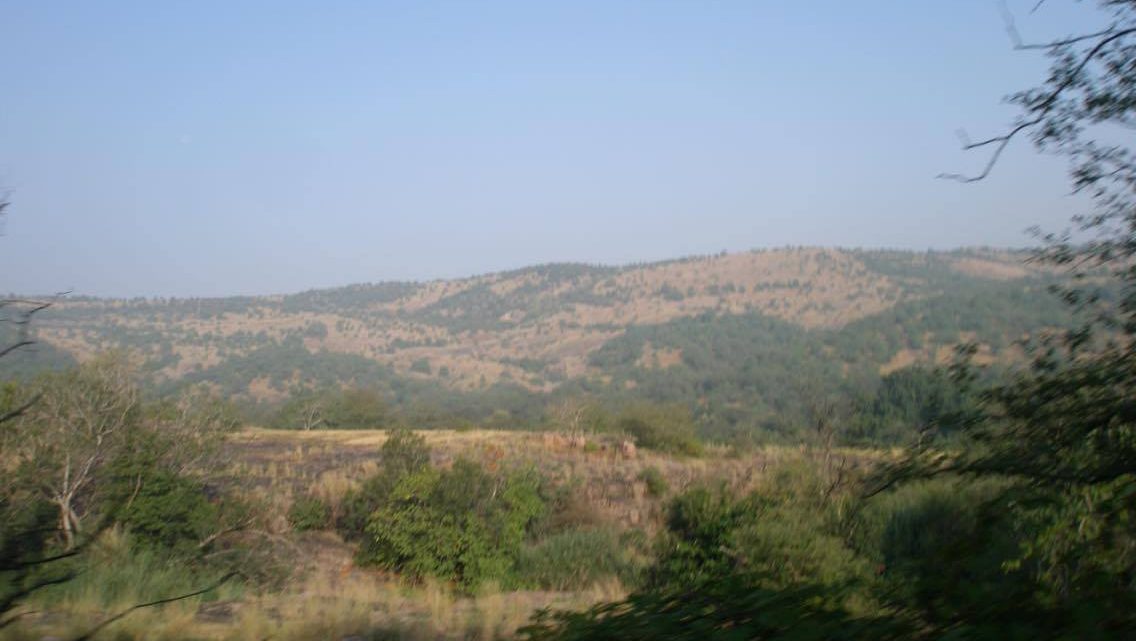
Sawai Madhopur is a small diversion from the 3 points of India’s golden triangle. It is a tiny town that sits next to the Ranthambore National Park. Why is it so popular? Tigers!
Jaipur was so much more for me than just a collection of sights. Both times I visited, I experienced some pretty intense stuff. Here is a more personal look at my time in the pink city.
At the eastern end of Chandni Chowk market stands a vast red wall surrounding one of the cities most popular tourist hot spots, the Red Fort Delhi. We decided to visit on our first full day in India, part of our five month trip.
If you are visiting India, as nice as Delhi is, I am sure you will want to move on at some point as there is so much more to see. We spent a few intensely frustrating days dodging touts, following touts and going around in circles trying to do just that as part of our five month trip.
The start of our five month trip was a disaster, we both messed up our packing and I had a mini meltdown when we boarded the plane (read about How NOT to Start Your Adventure Round the World). I thought things might improve. However, when we landed the fun continued and we were feeling hot and bothered!
This website uses cookies to improve your experience. We'll assume you're ok with this, but you can opt-out if you wish.AcceptRejectRead More
Privacy & Cookies Policy
Privacy Overview
This website uses cookies to improve your experience while you navigate through the website. Out of these cookies, the cookies that are categorized as necessary are stored on your browser as they are essential for the working of basic functionalities of the website. We also use third-party cookies that help us analyze and understand how you use this website. These cookies will be stored in your browser only with your consent. You also have the option to opt-out of these cookies. But opting out of some of these cookies may have an effect on your browsing experience.
Necessary cookies are absolutely essential for the website to function properly. This category only includes cookies that ensures basic functionalities and security features of the website. These cookies do not store any personal information.
Any cookies that may not be particularly necessary for the website to function and is used specifically to collect user personal data via analytics, ads, other embedded contents are termed as non-necessary cookies. It is mandatory to procure user consent prior to running these cookies on your website.
Cookie Consent
We use cookies to improve your experience on our site. By using our site, you consent to cookies.
Contains information related to marketing campaigns of the user. These are shared with Google AdWords / Google Ads when the Google Ads and Google Analytics accounts are linked together.
90 days
__utma
ID used to identify users and sessions
2 years after last activity
__utmt
Used to monitor number of Google Analytics server requests
10 minutes
__utmb
Used to distinguish new sessions and visits. This cookie is set when the GA.js javascript library is loaded and there is no existing __utmb cookie. The cookie is updated every time data is sent to the Google Analytics server.
30 minutes after last activity
__utmc
Used only with old Urchin versions of Google Analytics and not with GA.js. Was used to distinguish between new sessions and visits at the end of a session.
End of session (browser)
__utmz
Contains information about the traffic source or campaign that directed user to the website. The cookie is set when the GA.js javascript is loaded and updated when data is sent to the Google Anaytics server
6 months after last activity
__utmv
Contains custom information set by the web developer via the _setCustomVar method in Google Analytics. This cookie is updated every time new data is sent to the Google Analytics server.
2 years after last activity
__utmx
Used to determine whether a user is included in an A / B or Multivariate test.
18 months
_ga
ID used to identify users
2 years
_gali
Used by Google Analytics to determine which links on a page are being clicked
30 seconds
_ga_
ID used to identify users
2 years
_gid
ID used to identify users for 24 hours after last activity
24 hours
_gat
Used to monitor number of Google Analytics server requests when using Google Tag Manager