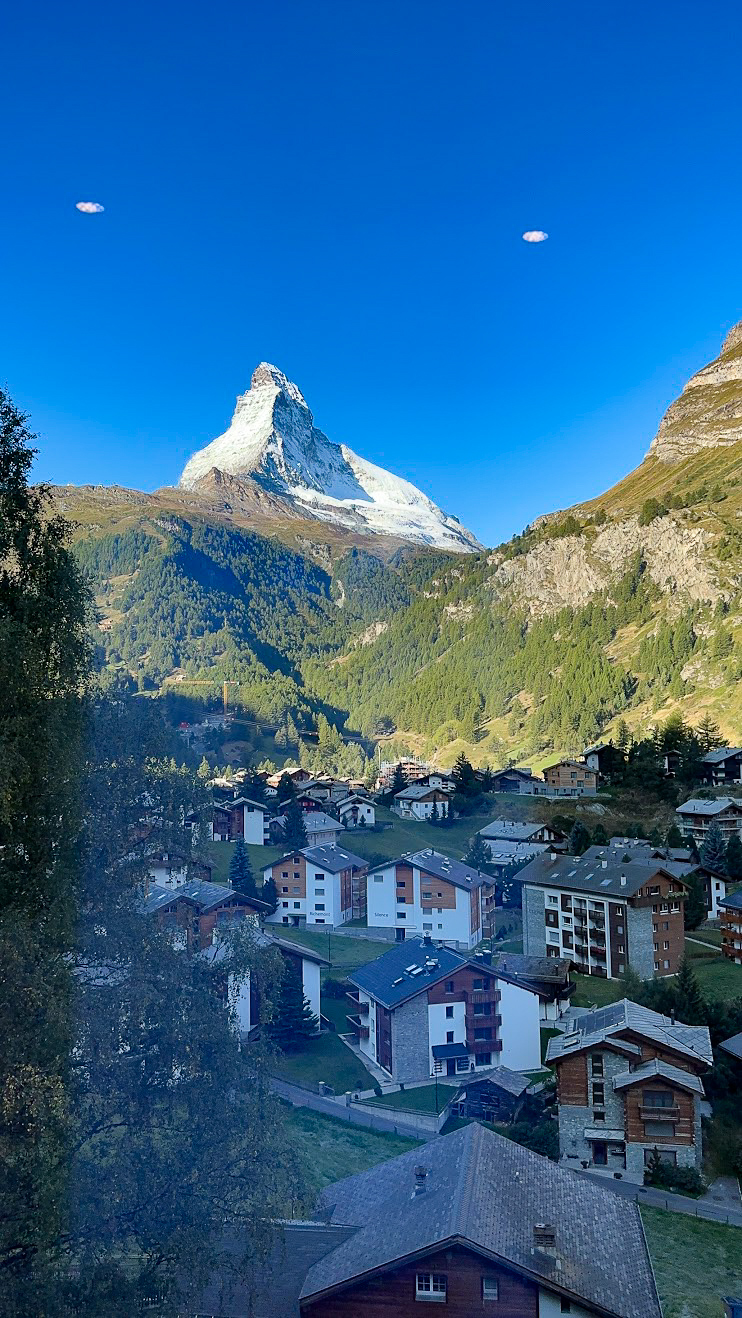
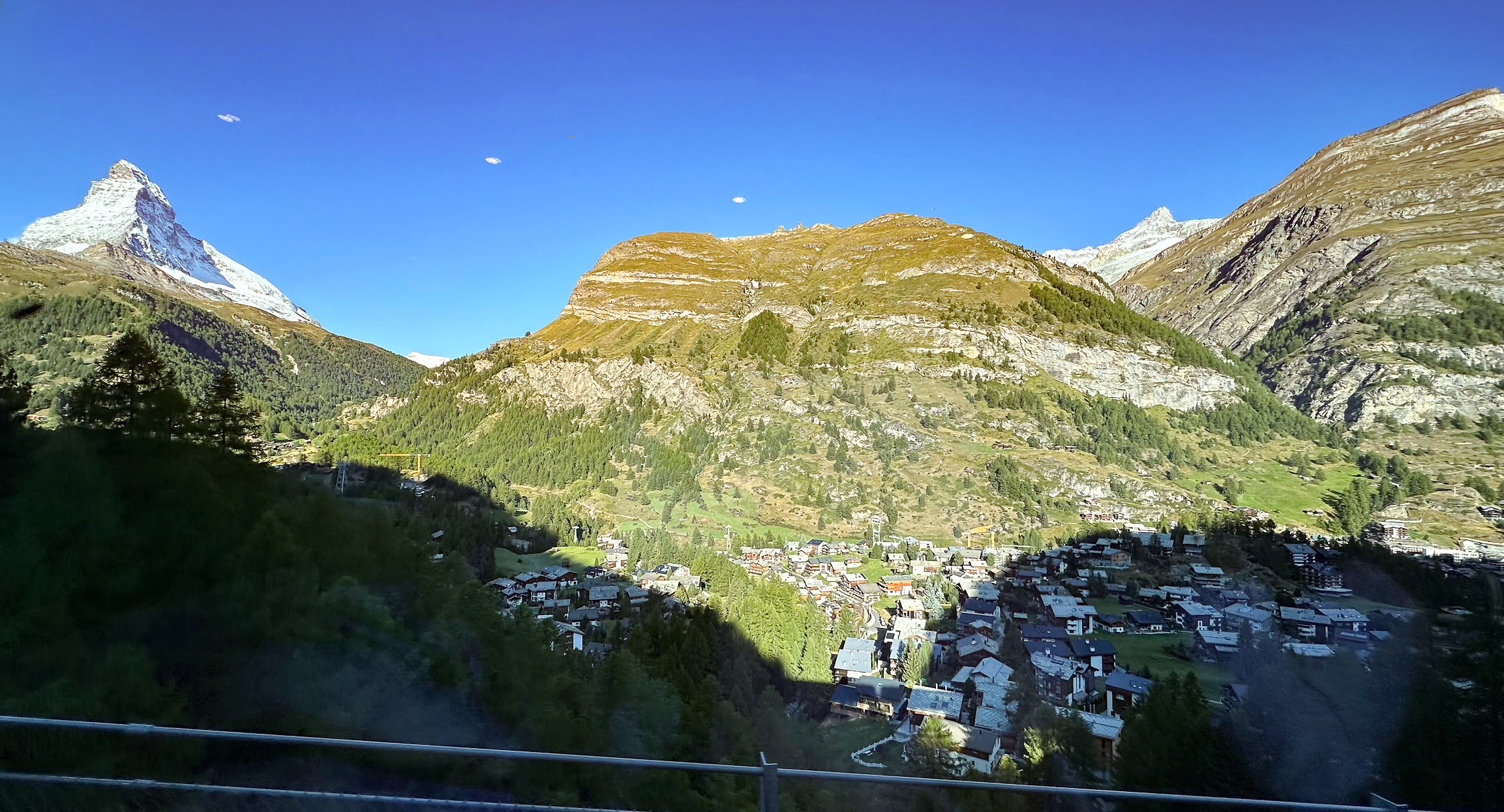
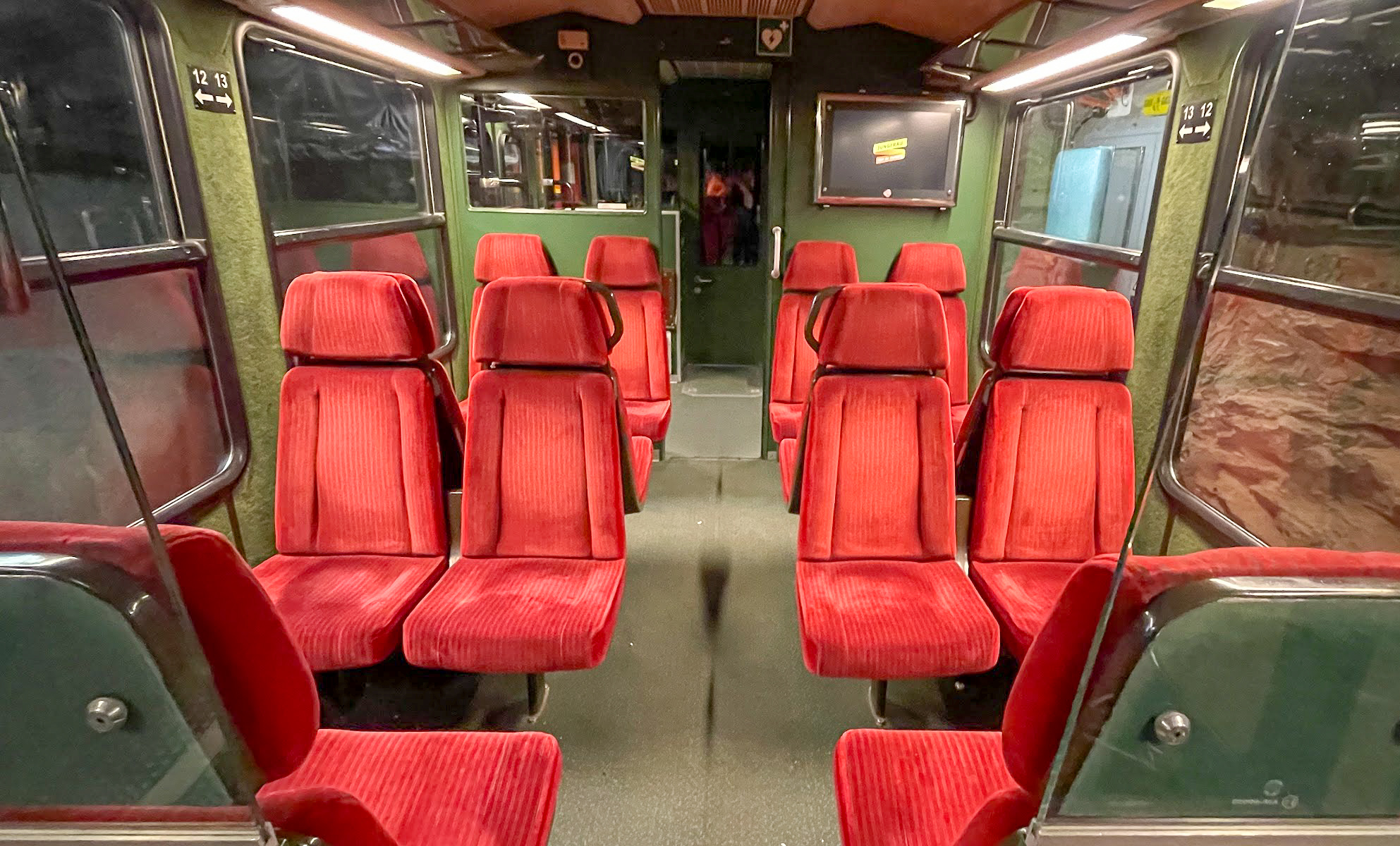
Switzerland is the most beautiful country. Rolling green meadows, snow-capped peaks and azure lakes abound. Criss-crossing the gorgeous landscape is an incredible transport network. Efficient and well organised, it is the gold standard and leading the way are the trains. Pretty views, incredible destinations and unusual carriages make these the 10 best scenic trains in Switzerland.
This post may contain sponsored content or affiliate links that help support the blog. All opinions are our own.
What is the Swiss Travel Pass?
Travelling around Switzerland by train is easy but it isn’t always cheap. There are a few different passes on offer, including the half-fare card and Interrail/Eurail passes which will help. However, for the best flexibility and coverage, we love the Swiss Travel Pass. As well as trains throughout Switzerland, it includes trams, boats and buses as well as entry to over 500 museums. It can be incredible value if you use it wisely.
The 10 Best Scenic Trains in Switzerland (In No Particular Order)
A Quick Note About the Golden Pass
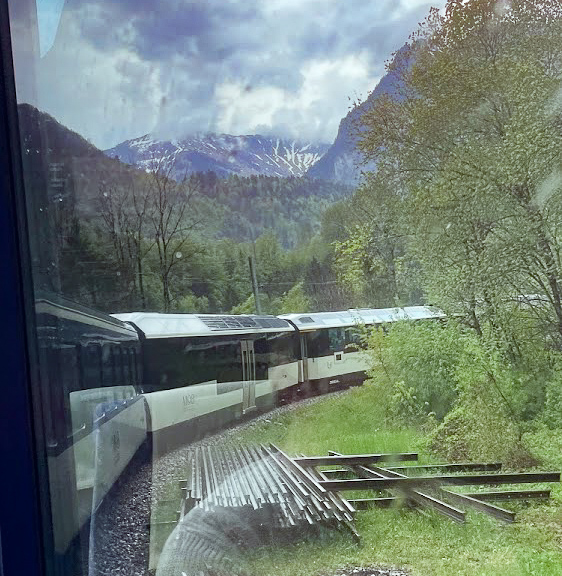
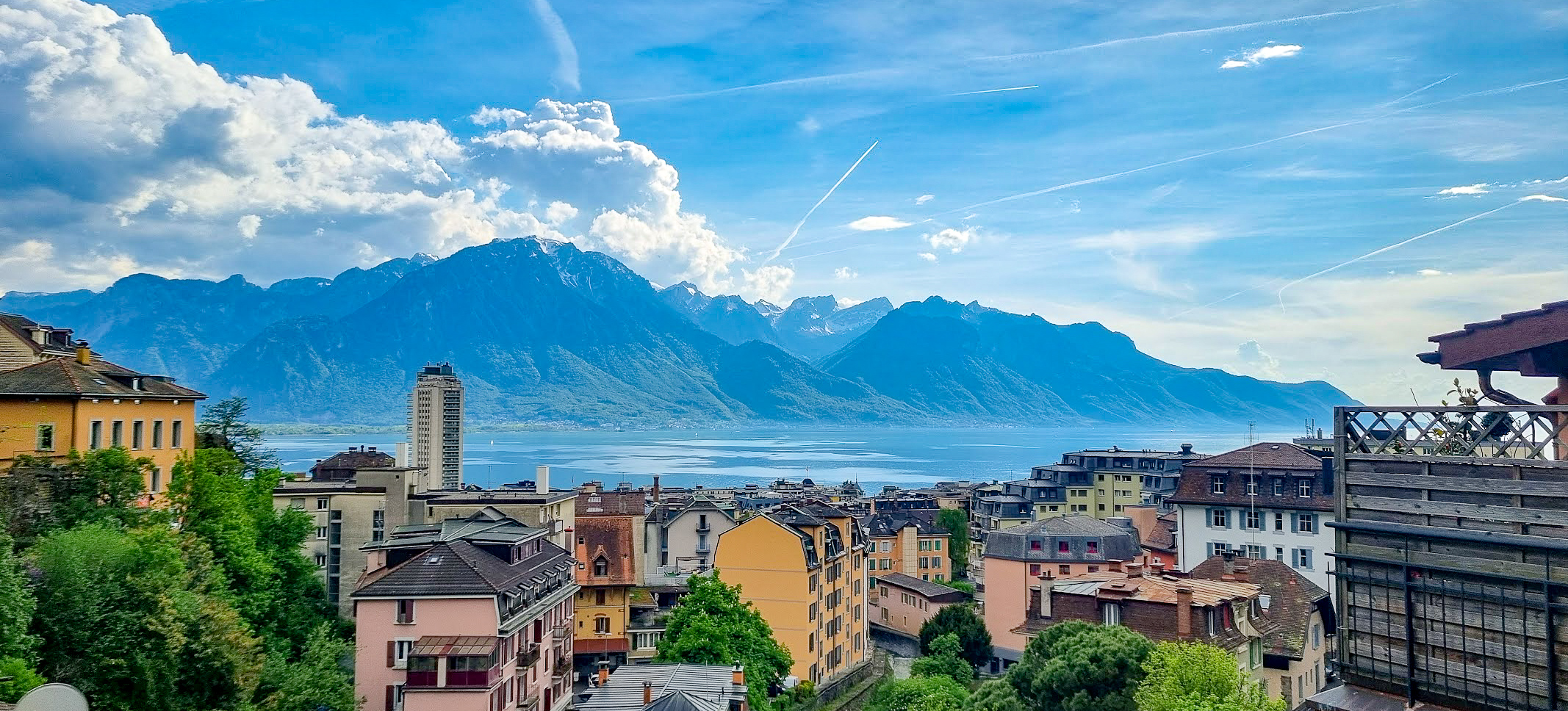
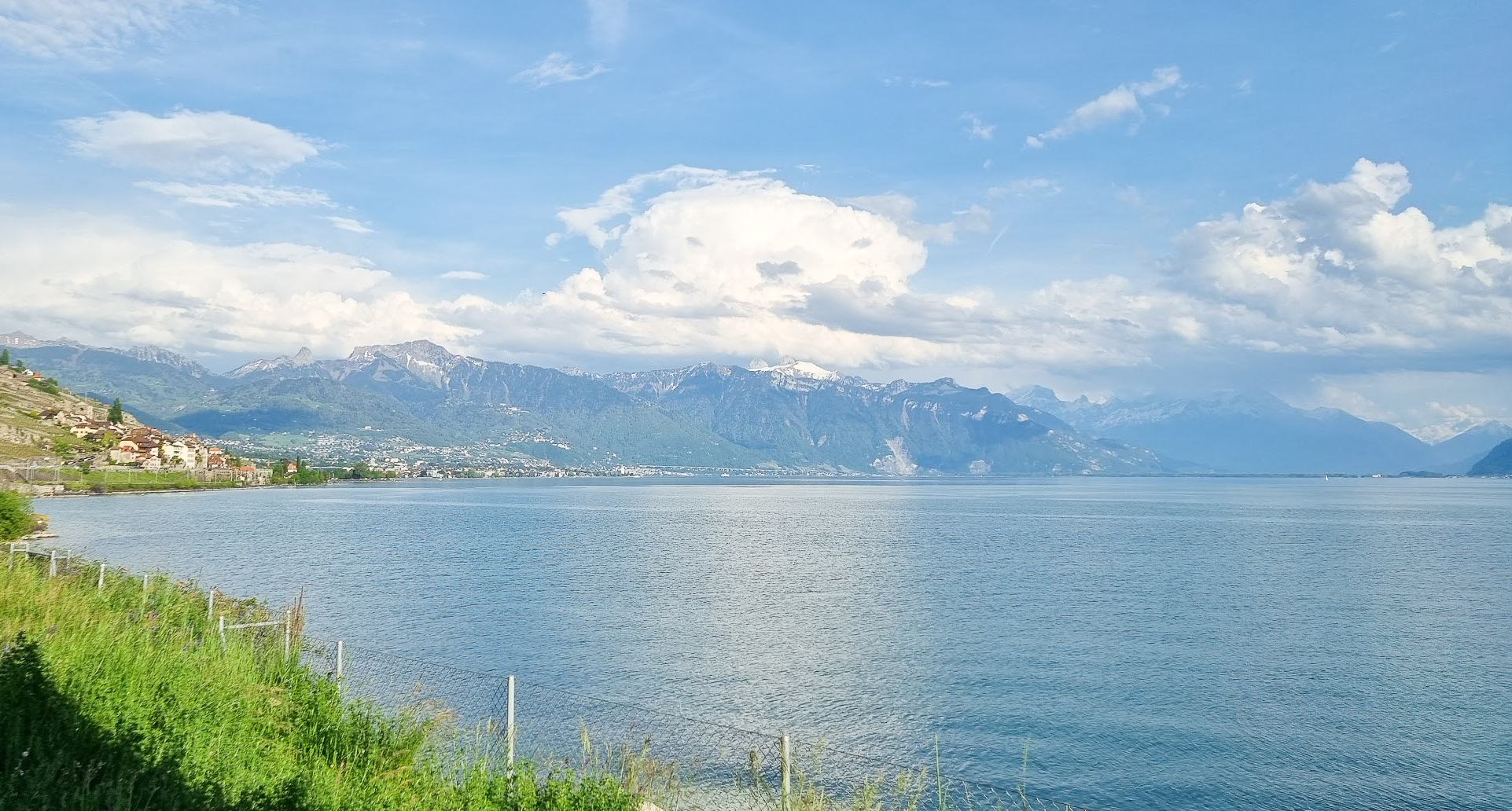
Running between Montreux on the shore of Lake Geneva and Interlaken/Zweisimmen, the Golden Pass Line has three trains on this list. Each train traverses a lakeside hill above Lake Geneva, which glistens gently below. Then meander through green or snow-blanketed hills and picturesque villages with steep valley sides rising up to either side. It is one of the cutest routes in Switzerland and three super trains run on this route (number 1, 2 & 3 on this list).
1 – Golden Pass Panoramic
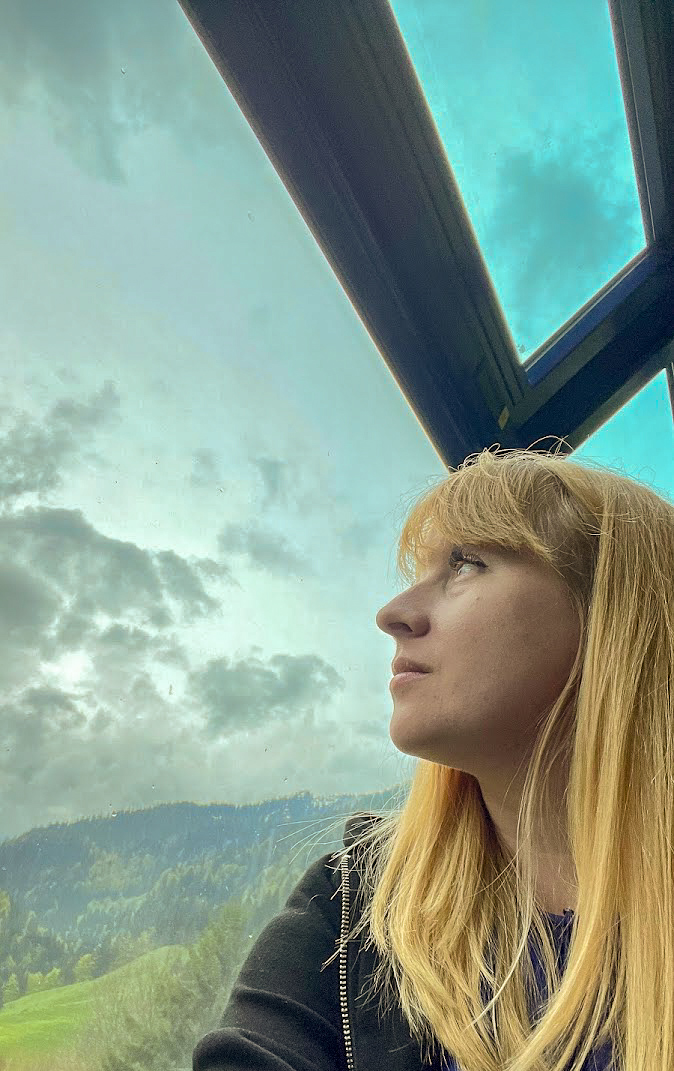
The first of our Golden Pass options is not the prettiest on the inside. However, it is not the inside we are concerned with. Each carriage has large windows, with extra panoramic windows on the roof to extend the views up to the surrounding peaks, and sky beyond. It is modern and comfortable but with a slightly plasticky feel.
TOP TIP
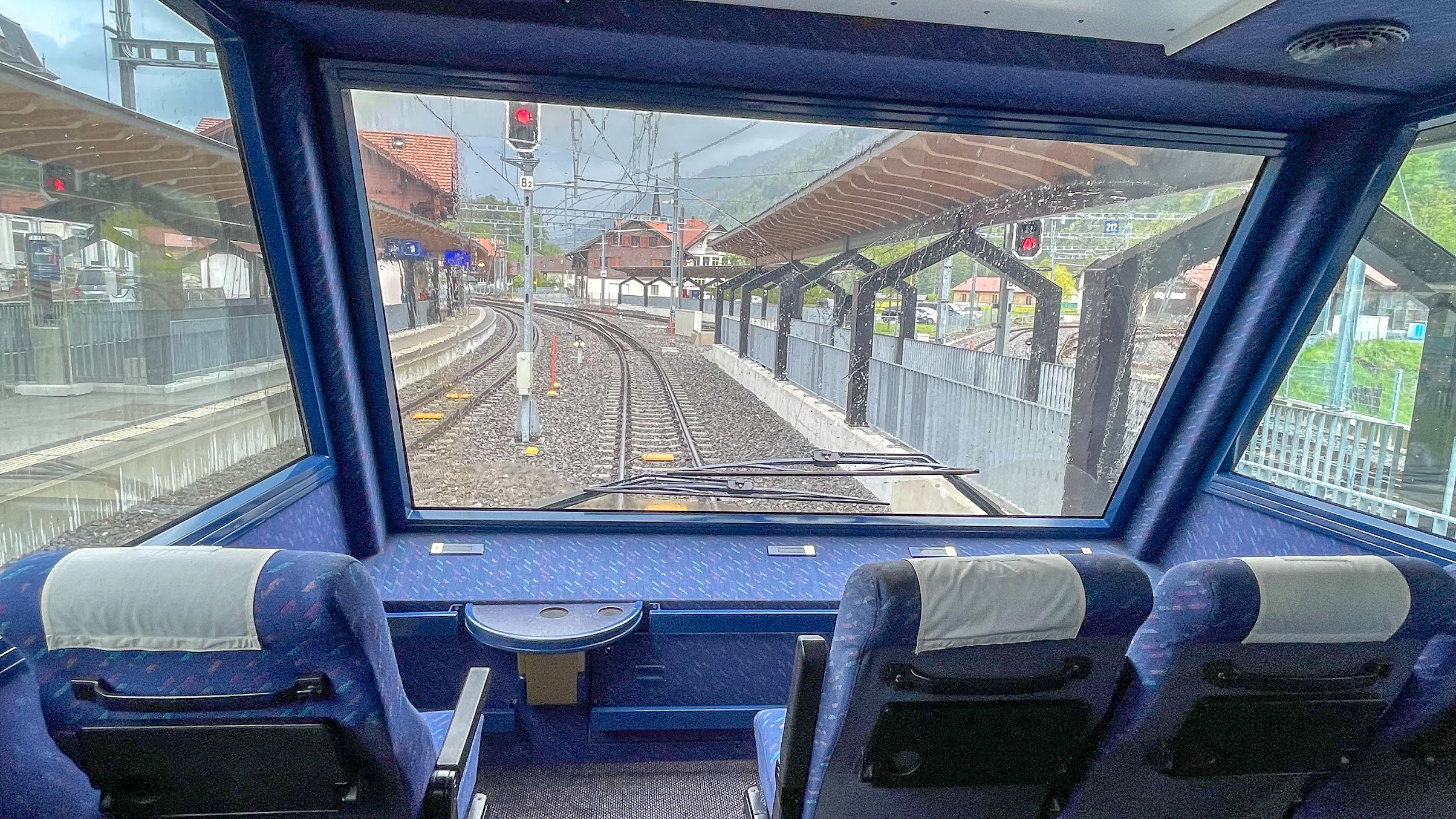
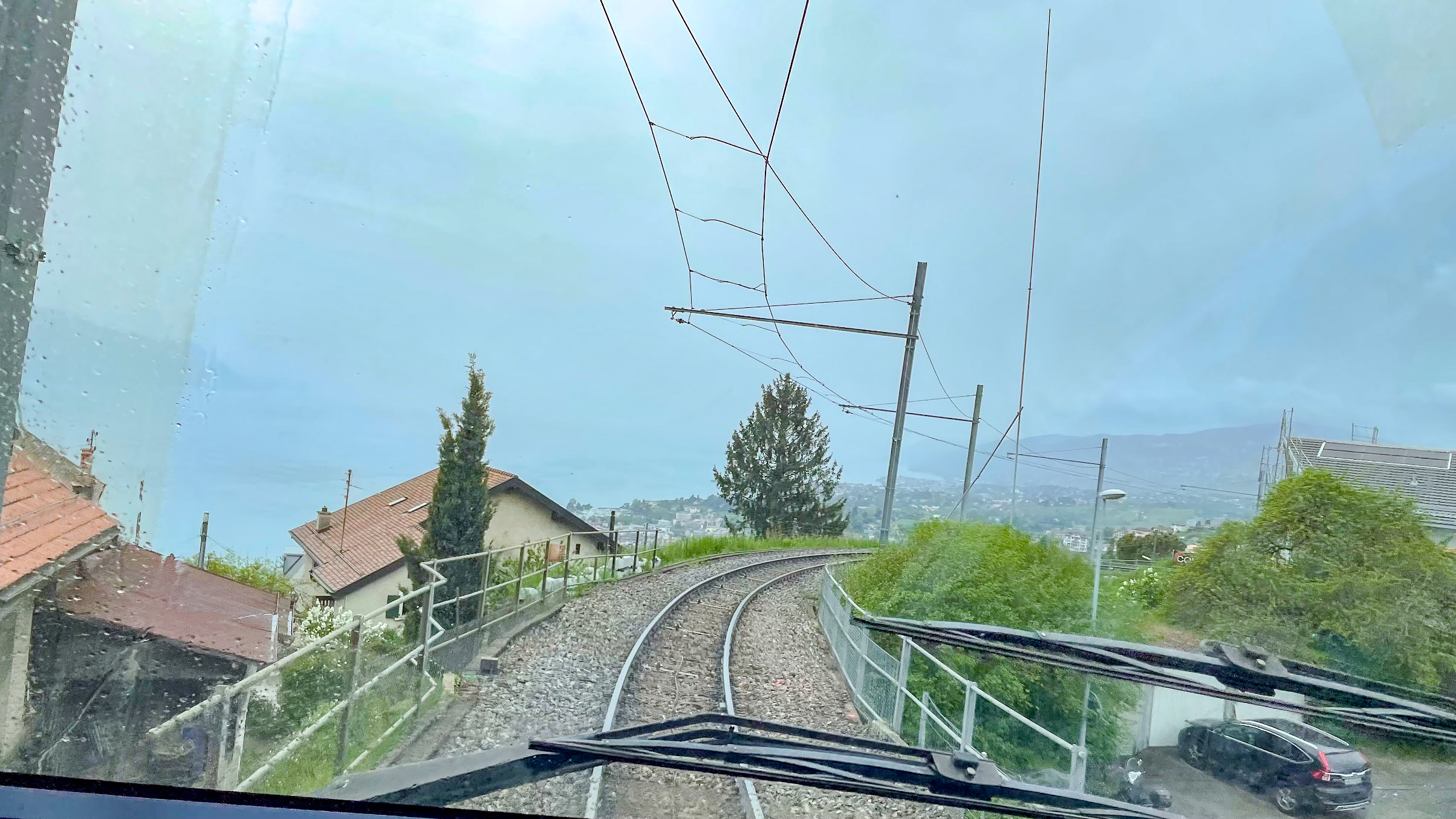
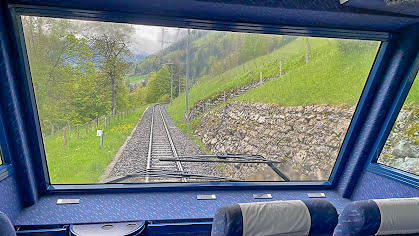
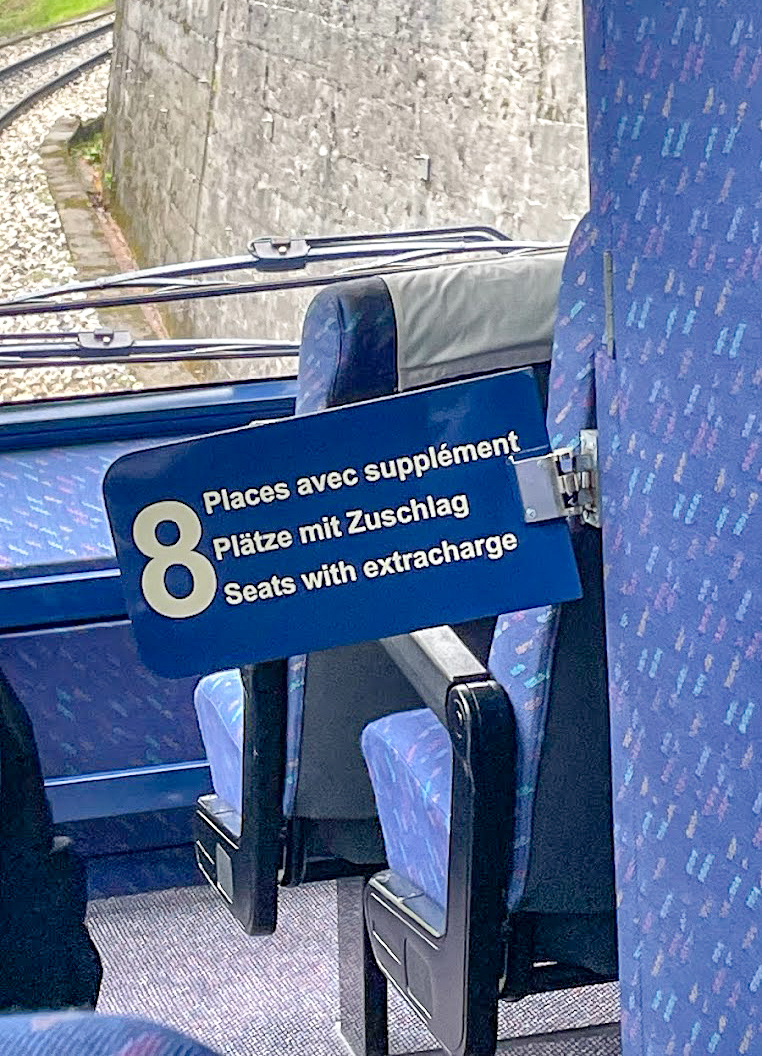
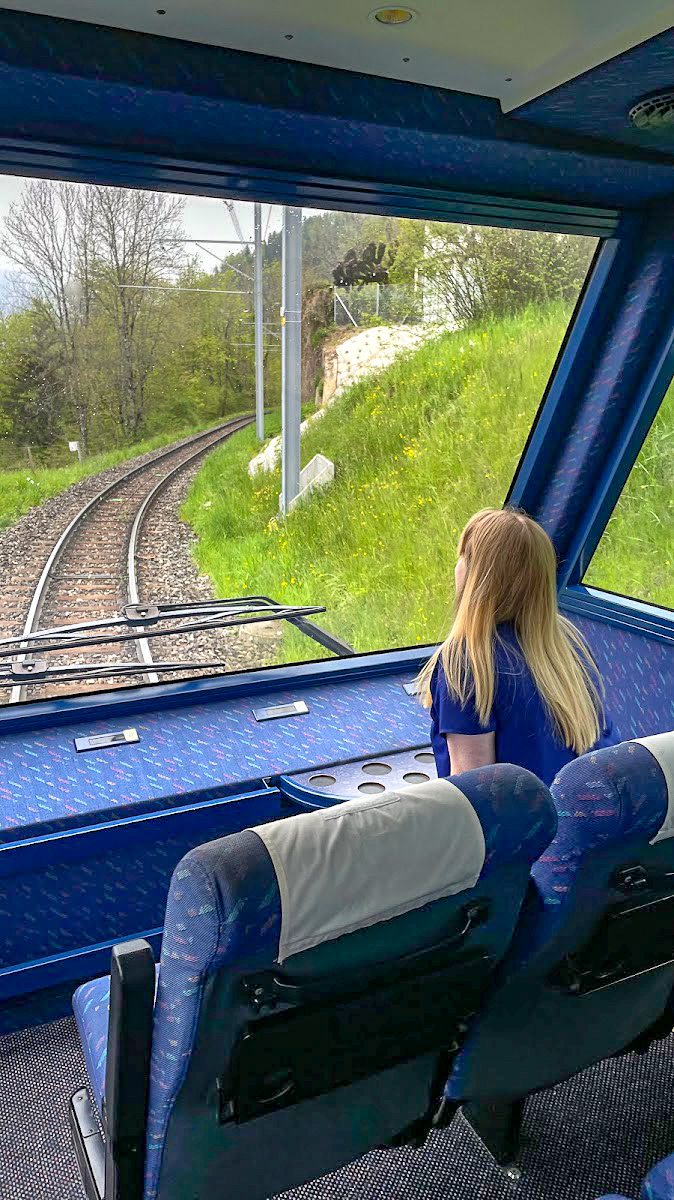
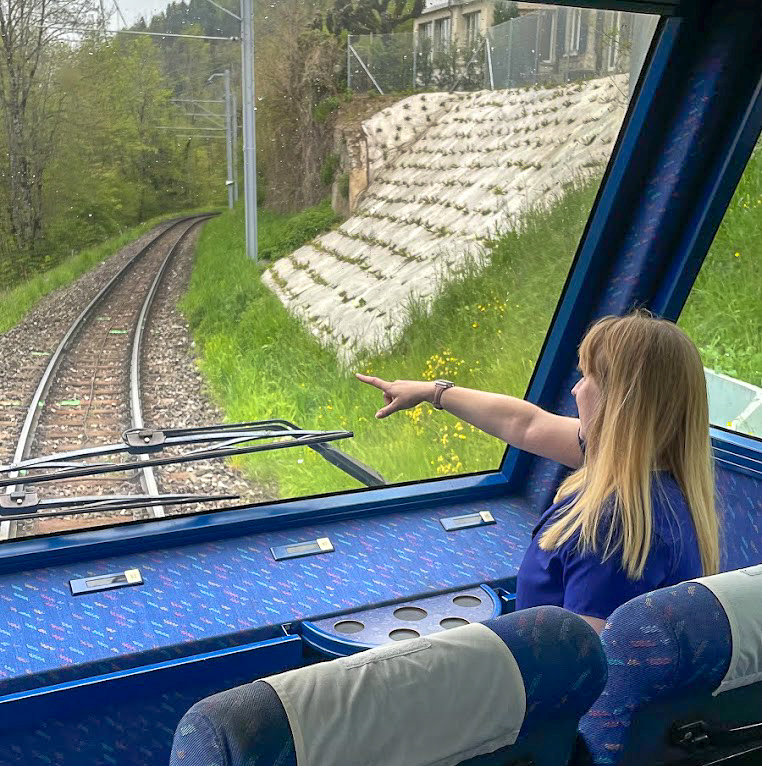
For an extra special treat (and an extra fee) you can pay to sit at the very front of the front carriage. The driver sits above this area so riders gets a view of tracks ahead of them and to both sides. This is very immersive, incredibly novel and if you speed up your videos, looks like a very scenic rollercoaster. It even has windscreen wipers, something I have never experienced on a train!
2 – Belle Epoque
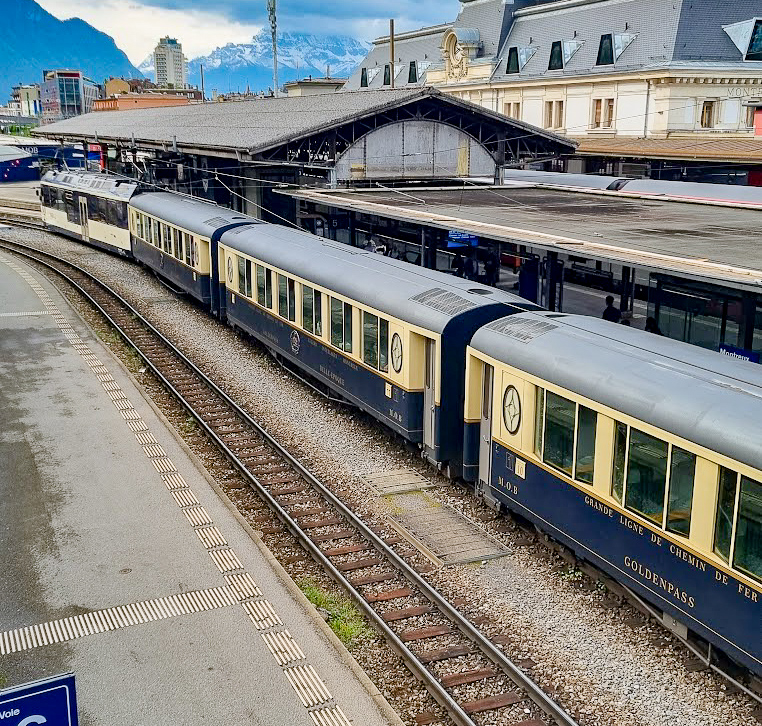
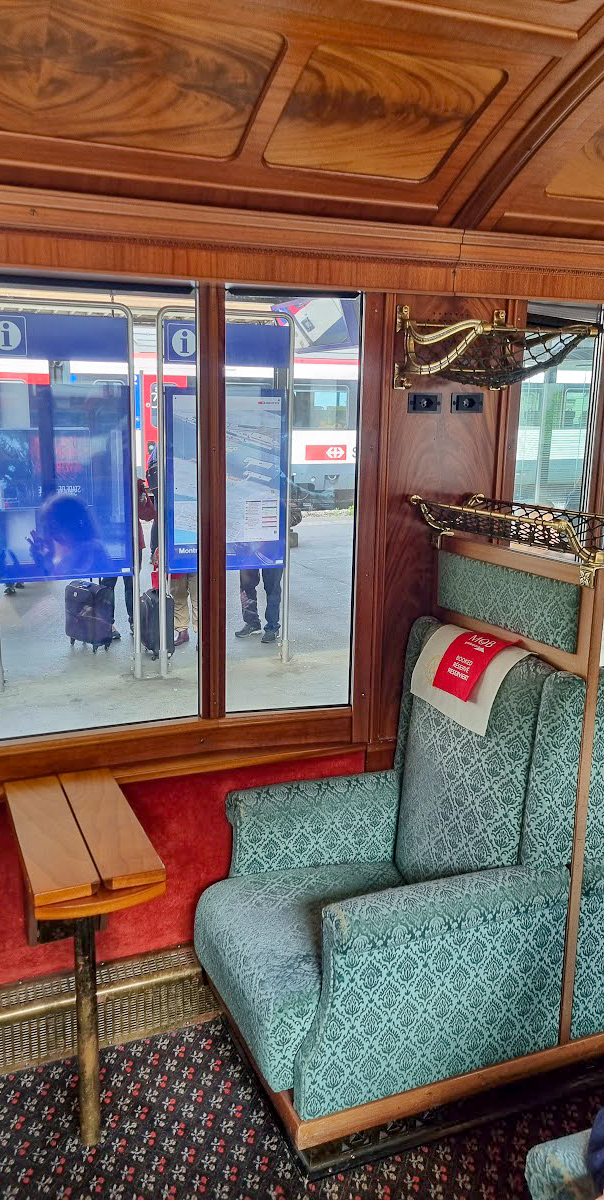
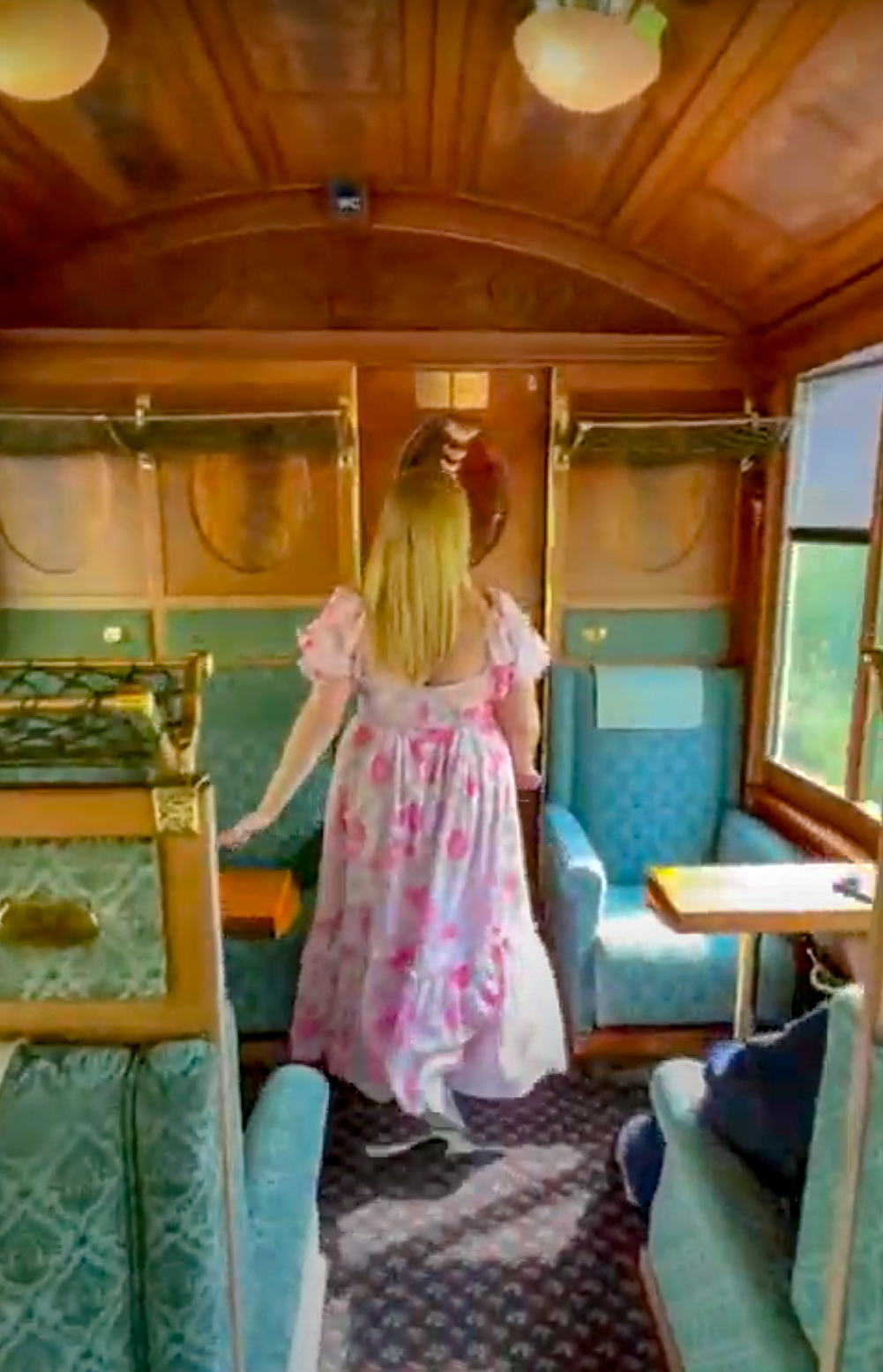
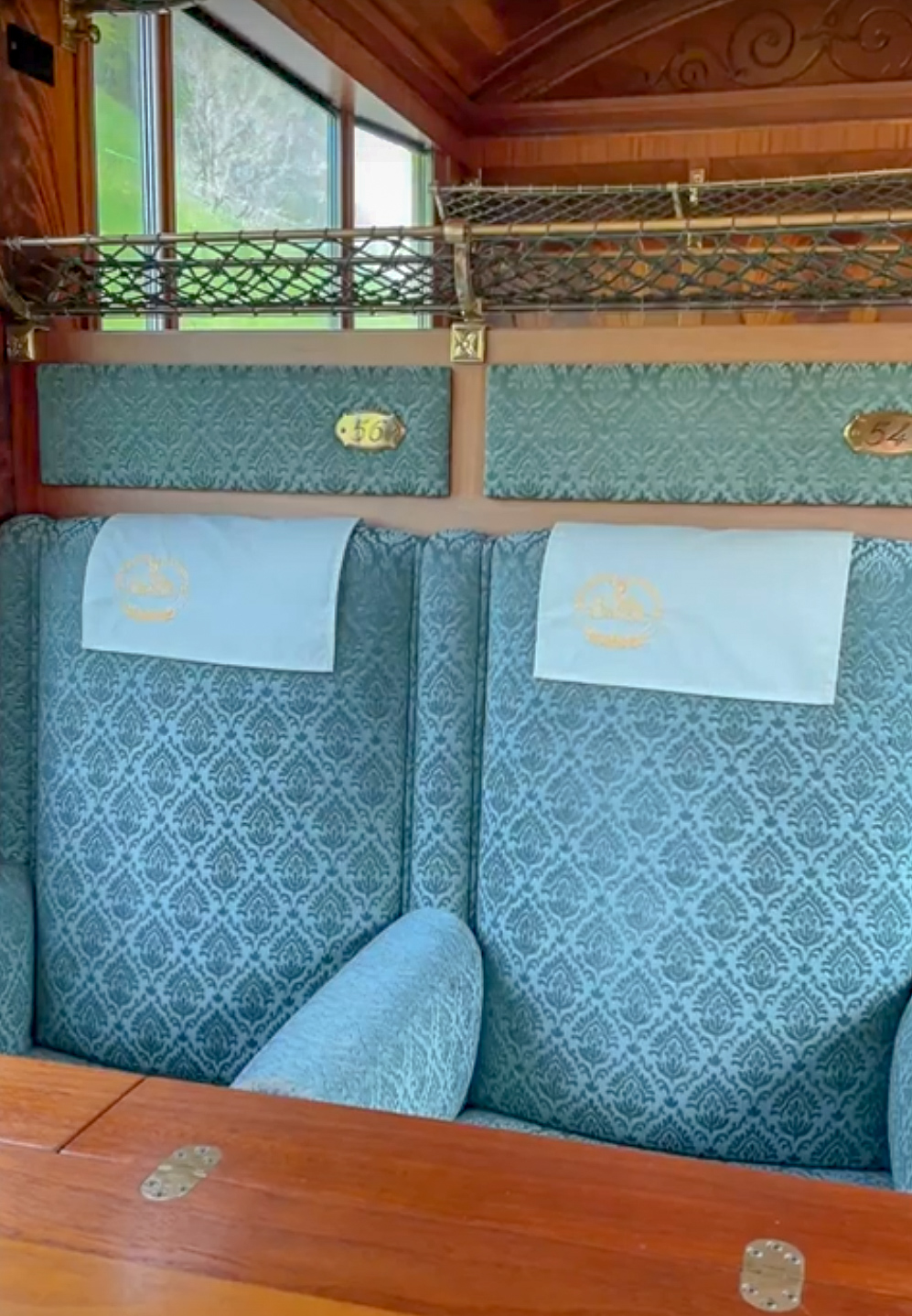
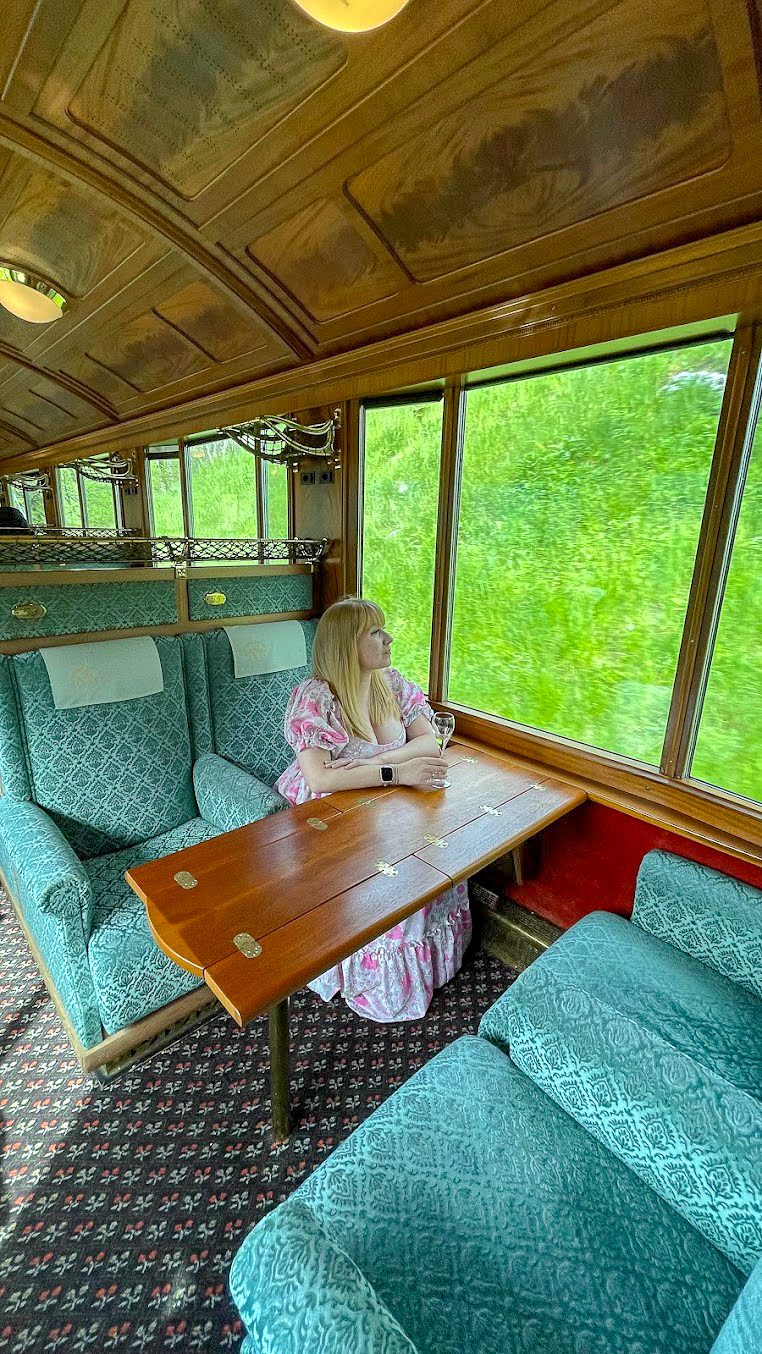
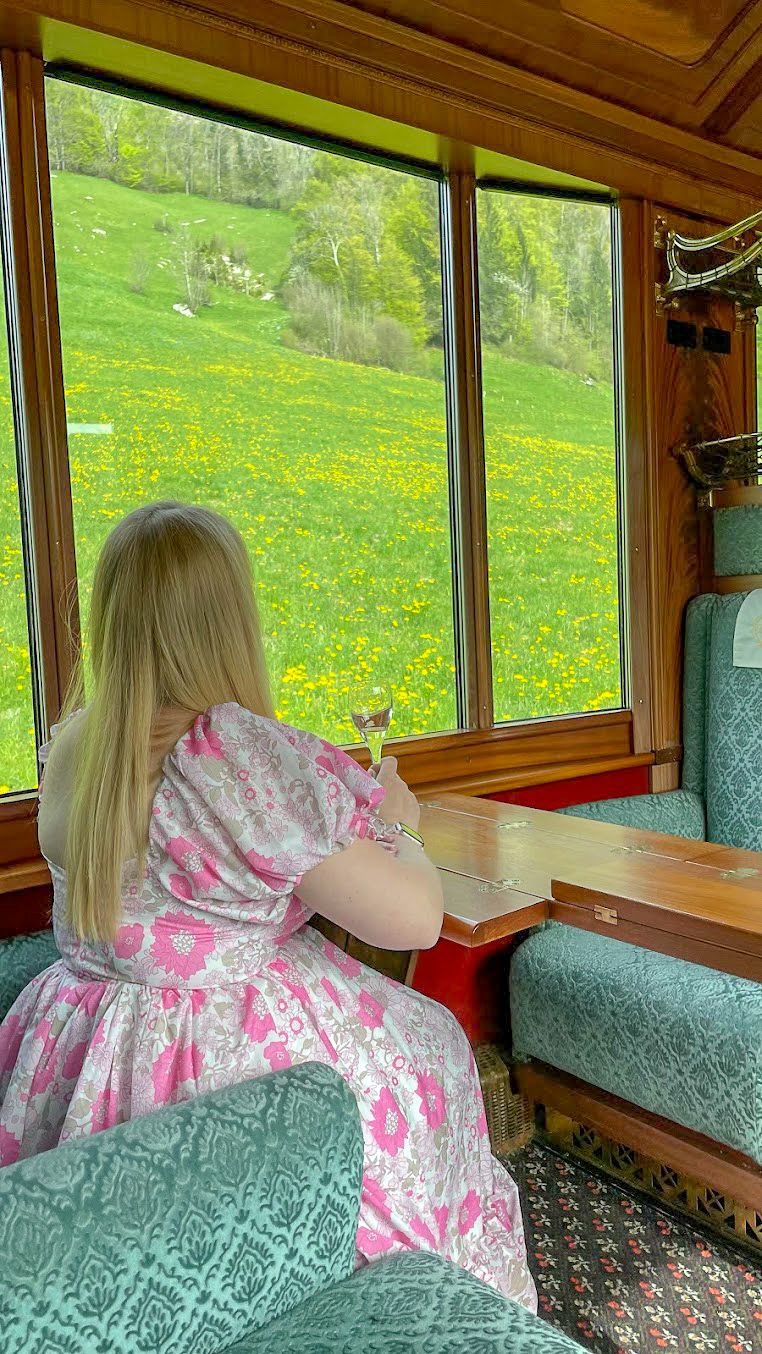
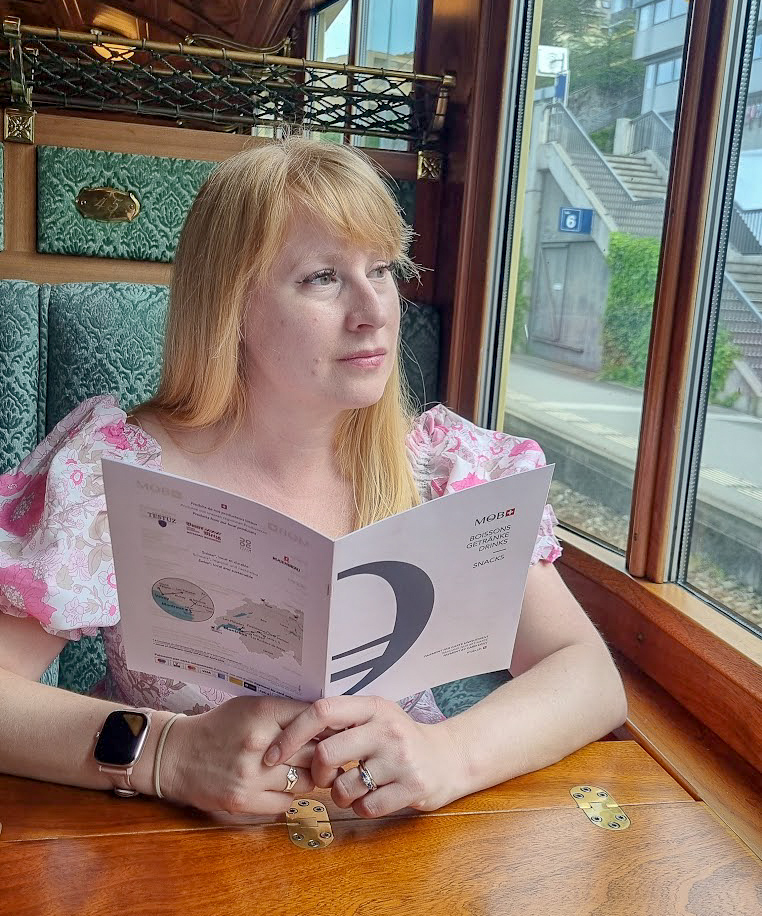
Boasting the same beautiful lakeside switchbacks, and sweeping valley views as the Golden Pass Panoramic, the Belle Epoque train has carriages to rival the superb views outside. The interior is designed to recreate the magic of vintage train travel. The wooden accents and turquoise brocade finishings are warm and inviting, with a clean but vintage vibe. It feels so luxurious.
TOP TIP
The best part is that this train does not cost a penny more than the normal train. You need to check the schedule. You can reserve a seat for €9, or thereabouts, but we found that all the reservations were in one carriage. The next carriage along was empty so it may not be worth it unless it is peak season.
3 – Golden Pass Express
The third of our Golden Pass trio is the newest of the three. The Golden Pass Express is a modern and ingenious train. Whereas you need to change at Zweisimmen on the previous two Golden Pass trains, on the Golden Pass Express you can travel directly through to Interlaken. This is due to the undercarriage wizardry. When the track gauge changes at Zweisimmen, the wheel bogeys extend along with it. If you are seated in the extremely luxurious Prestige Class, there are screens where you can watch it happen.
Taking passengers across the Swiss/Italian border several times a day, the Bernina Express is the most famous train that runs on this track. It travels up from the foothills to the Swiss mountains above through the Bernina pass. There are striking valleys views and cute towns to peer nosily through.
The most famous section of the track is something we all tried to create with our wooden Brio train kits as kids. The Brusio Spiral Viaduct (also known as the circular viaduct), sends the train around a 360° loop as it climbs or descends depending on which way you are travelling. The viaduct is 110 metres long and was built to minimise the slope of the tracks here, whilst avoiding the tedium of switchbacks.
TOP TIP
Although the Bernina Express runs between Switzerland and Italy, you can hop off at Campocologno if you have a Swiss only rail pass. Disembark here before catching the return journey.
5 – Gornergrat Bahn
Hauling tourists from Zermatt up to the Gornergrat for over 100 years, the Gornergrat Bahn is a highlight of any trip to the small resort town. This is the highest open rack rail (cog rail) train in Europe climbing from from Zermatt station at 1,620m up to its top station at 3,089m. The trip takes 33 minutes and has gradients of up to 20%.
TOP TIP
You can pay for priority boarding on the Gornergrat Railway. This is around CHF 7 and is 100% worth it if you want fantastic photos. Either way, try and snag seats on the right-hand side of the train as you face forward. for stunning Matterhorn views.
6 – Jungfrau Railway (With Some Extras)
There are two ways to reach Jungfraujoch. We think it’s worth going both ways for some fantastic trains views (as well as a rather super cable car). First, hop on a Wengernalp Railways train to Lauterbrunnen (this in itself is a very pretty little train ride). If you can, spend an hour marvelling at the gorgeous waterfalls that tumble towards the valley floor.
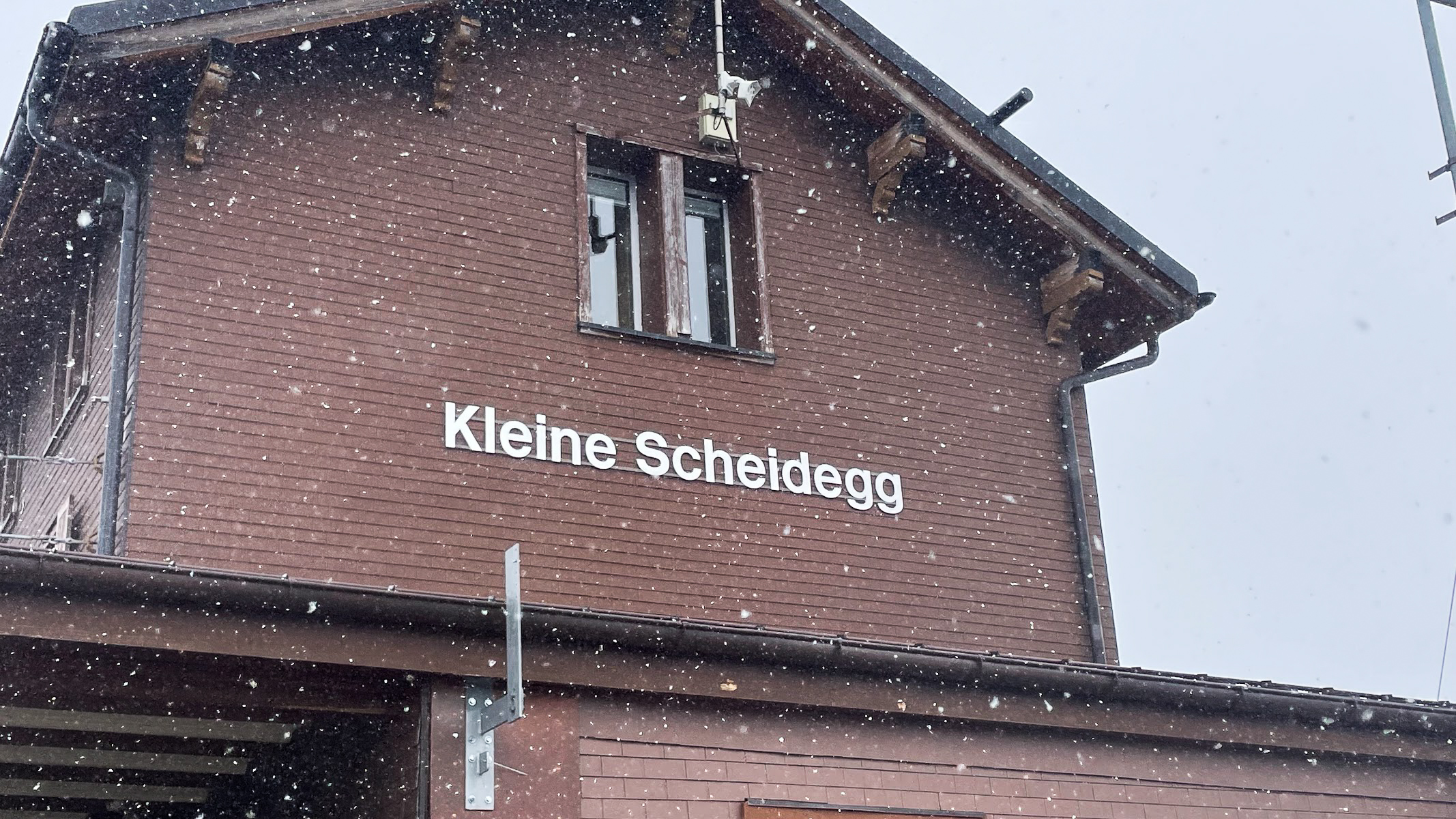
From here, head for Kleine Scheidegg. Here you can switch to the original Jungfrau Railway train to take people up to the Jungfraujoch station. The train passes through the valley and plenty of waterfalls before it curves around the pretty car-free village on Wengen. Then you will find it cranking slowly uphill and into a tunnel that ends at the Junfraujoch station, Europe’s highest station. For this leg, you are going to want to be on the right side of the train as it is facing forwards.
On your way back, the train (Jungfrau Railway) is in a tunnel 99% of the time but it stops at Eismeer Station, down at 3,159m. It has windows with a fabulous view of the Ischmeer (Ice Sea) … or so we hear. The day we visited, the clouds were inpenetrable.
The train temrinates at Eigergletsher Station which has a fun outdoor terrace and from here, you can catch the swanky new Eiger Express cable car down to the popular town of Grindlewald. From there, you can hop back on the cure blue and yellow train down to Interlaken.
7 – Glacier Express
I was thinking of doing a “saving the best for last” moment with the Glacier Express but there are a couple of things people dislike about this iconic train journey…but more on that later.
Commonly known as “The slowest express train in the world”, the Glacier Express takes eight hours to wind its stately way between St Moritz and Zermatt. The slow pace is intentional, allowing people to soak in the sumptuous views. For slightly more than half of the year, snow surrounds the higher sections of tracks but even in summer, it caps the mountains around. As you travel 180 miles between Zrematt and St Moritz, the tracks travel over 291 bridges and through 91 tunnels. Countless gorgeous valleys appear below you and then rise up above. The Schöllenen Gorge will take your breath away, the Landwasser Viaduct is utterly capitivating and the Oberalp Pass, right up at 2,033 m, is the crowning glory of the route.
The most obvious drawback for some people is the price. Although your ticket is covered by your Swiss Travel Pass, you do still need a seat reservation. As many people’s dream trip is sitting in Excellence Class, the £500ish reservation fee can put some people off. The good news is, the views are the same from every carriage so you can definitely just spend enough to sit in second-class and have a lovely time.
TOP TIP
If the expensive Excellence Class is a little out of your budget, (as it is ours), don’t fret! You can bring a picnic on board and enjoy your own food and drink throughout the trip. This means if you really want to sit and sip a bottle of bubbly, you can! Just remember to bring your own glasses. 
8 – Vorelpen Express
The Vorelpen Express travels between Lucerne in central Switzerland to St Gallen in the east every hour. This is the slowest way to connect between these two cities. Going via Zurich and switching trains is actually about 20 minutes quicker, but we are here for a relaxing time. It meanders through the low-lying foothills of the “pre-Alps” and skirts pretty lakes. The modern copper/orange Traverso trains lack the panoramic windows of many of these scenic trains, but they do have nice big windows so the views are still great. Some particularly picturesque sections include the glittering Lake Lucerne with Pilatus rising beyond, Mount Rigi and rolling green of the Toggenburg. Finally, just outside St Gallen, the train crosses the 99m high Sitter Viaduct, the highest train bridge in Switzerland…and that’s saying something.
TOP TIP
Don’t miss the “bistro car” which, rather than being a person behind a counter, is comprised of a couple of vending machines. One serves hot drinks, and then other cold drinks and snacks.
9 – Zurich to the Rhine Falls
As this train journey from Zurich to Schaffhausen trundles through the grey outskirts of the city you will assuredly be wondering why it on the list of best scenic trains in Switzerland. That’s fair, suburbs are rarely stunning. The scenic section comes right before you arrive at Neuhausen Rheinfall, 50 minutes and 23 miles later. The train line edges its way up the Rhine river at its most dramatic point. You are going to get wonderful views across the Rhein Falls, Europe’s biggest waterfall.
TOP TIP
Make sure you are sitting on the right as the train is facing forward for the view.
Full disclosure, we haven’t taken this train to Rhine Falls, but have some some of the route on another trip and got to see the view in the museum at the Rhine Falls.
10 – Luzern–Interlaken Express
It is a lesser-known panoramic train so you will find it much easier to find a seat, and may even have a section all to yourself. The route is plied by swanky modern trains with roof windows, giving lovely views of the valleys it passes through. There are two main sections to this route, one traverses pretty green hills and cute villages. The other curves around the edge of the stunning, milky turquoise Lake Brienz. If you get peckish, there is a bistro car in the middle of the train which serves food and drinks all day.
TOP TIP
Both sides of the train will have fab views during the train ride so there is no need to scramble for seats. If you are departing from Lucerne, Lake Lucerne and Lake Alpnach will be on the left but then the best views switch for the rest of the journey. If you have room in the carriage, you can hop seats but if not, opt for the right. (The train switches direction during its journey but don’t move at this point, you are still in the right seat).
Final Thoughts on the 10 Best Scenic Trains in Switzerland
After two extensive trips through Switzerland by train, I can confidently say I am hooked. The seamless travel and fantastic pass options make travelling a breeze. Thus far, these are the 10 best scenic trains in Switzerland that we have taken, but there may be some more hidden gems. The Gotthard Express and Brienz-Rothorn Railway for instance…we will have to return to try and find them!
Budapest sits on a fault line. As a result, it is blessed with an abundance of natural hot springs, over 100 of them! That is why Budapest is known as the “City of Spas”. Throughout the city, residents and tourists alike are soaking in these healthful pools. There are so many to choose from but on our Interrail adventure, we wanted to see one of the most iconic. Join us for a trip to the Gellert Thermal Baths and Swimming Pool.
This post may contain sponsored content or affiliate links that help support the blog. All opinions are our own.
Gellert Thermal Baths and Swimming Pool
There has been a spring here, emerging from Gellert Hill for centuries. It was first documented way back in the 1200s. The healing properties were recognised straight away and analysis of the water shows that it contains plenty of lovely minerals such as:
Calcium
Magnesium
Hydrocarbonate
Alkalis
Chloride
Sulfate
Fluoride
Honestly, I am pretty sure that calcium & magnesium are what make water hard and not great for your skin and hair but who cares when it is hot and London tap water is the worst anyway so my follicles are used to it.
Arriving at Gellert Bath
We hopped on a tram down from the door of the castle hill. It took around ten minutes and we spotted the entrance from the tram. The baths are attached to the Gellert Hotel (closed for refurbishment during our visit) but it has its own entrance. It is magnificent, so very grand! The Gellert Baths was opened in 1918 and it s quintessential Hungarian Art Nouveau. Passing through the wooden revolving doors, we emerged into a dark lobby with mosaics on the floor. Wooden counters and A few steps beyond the ticket counters was a huge dome with more gorgeous mosaics. We had to tear ourselves away to enter the changing area. The entrance, main pool and wooden changing rooms were all damaged in World War II but an extensive refurbishment in 2008 brought them back to their best.
Quite the entranceWristbands serve as locker keysThe lobby
Changing Rooms
We were lucky enough to be treated to the finest of the changing rooms. There are several levels of changing area from simple plastic doors and lockers all the way up to these stunning art nouveau halls. There are two, both with barrelled ceilings and a balcony around the edge We had a large curtained changing room each with a bed, wardrobe and mirror in. The attendant came to lock our belongings away, ready for our soggy return. This all felt so delightfully vintage.
The Main Swimming Pool
We head straight into the gorgeous main pool. The columns surrounding the pool are all unique, no two alike. You could pop a floor in and the space would double up beautifully as a ballroom. We marvelled at the pool but as we didn’t have swimming caps, we couldn’t go in. Above the water, the iconic roof is retractable so in summer, it is open to the sky. This lap pool is designed for exercise at a lukewarm 27°C and with a length long enough to get a decent sweat on. This area can be very busy at times, particularly popular amongst the older generation. They have aqua aerobics in here sometimes but it was al very quiet during our Sunday morning visit.
Let’s Go Outside
We scurried through the main pool to see the outside space. The weather was unusually cool for May (our whole Interrail trip was plagued by bad weather). However, the sun was properly out and almost making itself known through the spring morning air.
We made a beeline straight for the steam rising in the distance and found where the majority of people were. The heated outdoor pool was very busy so I didn’t really take any photos but it was a plain rectangle pool so you’re not missing much. After a short time in here, we thought it best to have a look around the rest of the outdoor area, and then head inside where it was still nice and empty. Plus, for the first time in a couple of weeks, the sun was out and shining and we were not wearing any suntan cream.
The main pool outside had a really low water level. It was a good, long ladder to get down to it. Mr Fluskey thought he might hop in for a couple of laps but as soon as his foot hit the unheated surface he shot back up the ladder like a ferret. Turns out, the water level is so far below the edge because in summer it is a wave pool that goes every hour. Around the pool was a curious blend of foliage covered follies and statues. This was contrasted with the white tiled showers which screamed early 1910s seaside. It was a slice of Art Deco surrounded with neo-classical flourishes. It was a very pleasing juxtaposition.
We made our way through the maze of changing rooms, up and down tiled stairs, giggling to ourselves. It was early in the day so the whole place was still quite empty, and we sort of felt like naughty school kids running around where we shouldn’t be. Honestly, we were lost for a good five minutes.
The Thermal Baths
The prettiest part of the baths (in my humble opinion) is the Thermal Bath area (the one awash with blue paint). One of them is 36-40°C, the other is 35-38°C.
Our feet were a bit chilly from running around in the changing rooms, trying to find our way back to the thermal pools. When we found them, we made a fatal mistake wading in as quickly as possible. I descended into the first pool I reached without paying any attention to the temperature. It was gloriously warm and just right to soak in for 30 minutes. Sadly, as our bodies had adjusted to the temperature popping into the pool opposite was not as nice. Where we had accidentally picked the warmer of the two pools, the other felt like a tepid bath that needed a shot of hot water from the tap.
Beyond the thermal pools was the spa area. There was a steam room, sauna, relaxation room (which was a bit cold for my liking) and the cold plunge pool which was definitely to cold for my liking. I thought that we should be brave and dunk in but it was quite busy and I didn’t want to disturb the rest of the patrons with my squealing.
The Sitting Pool
At the end of the main pool was a smaller semicircular sitting pool. Here, swimming caps are not required so we plopped in for one last moment of relaxation, watching people under the small fountains and listening in on Hungarian gossip that we couldn’t understand. Time marched on quickly and we had to get going. We wanted to see the Budapest Statue Park before leaving on the train that afternoon.
There Were More Baths!?
So, I thought I’d seen the thermal baths. Mr Fluskey insisted that there was another section of thermal baths but I was adamant. Well, I had to eat my words when we checked the map of the complex and there were, in fact, more pools! Considering the baths used to be divided by gender (right up until 2013), it makes perfect sense. I’m not sure why my logic entirely failed me. We went around but didn’t take any pictures. They were a lot less ornate and they were packed with people so I didn’t feel comfortable taking photos there. Imagine a similar set-up to the blue pools but with a green barrel roof.
Final Thoughts on the Gellert Thermal Baths and Swimming Pool
What an absolute treat to have so many of these wonderful hot spring spas on your doorstep. We have had the pleasure of visiting both the Gellert Baths and the Szechenyi Bath and they both have such distinct personalities. The less ornate but more local vibe of Gellert really appealed to us. It seems like we would hop over to Buda for a Sunday soak often if we lived in Budapest. Even if you are just visiting, Gellert Thermal Baths and Swimming Pool is an excellent choice to relax those backpacker shoulders or work-weary backs.
The GoldenPass is a pretty train line that runs between Montreux and Lucerne. For part of it, two gorgeous trains take tourists in style. The GoldenPass Belle Epoque is a vintage style train, and the GoldenPass Panoramic is equipped with extra windows for fabulous views. We took a day trip to Gruyere travelling one way with the Belle Epoque and the other with the Panorama and it was the most fun train geek day! However, if you can only take one, which one should you go for? Check out our comparison as we settle the debate of GoldenPass Belle Epoque vs GoldenPass Panoramic – The Battle of the GoldenPass.
This post may contain sponsored content or affiliate links that help support the blog. All opinions are our own.
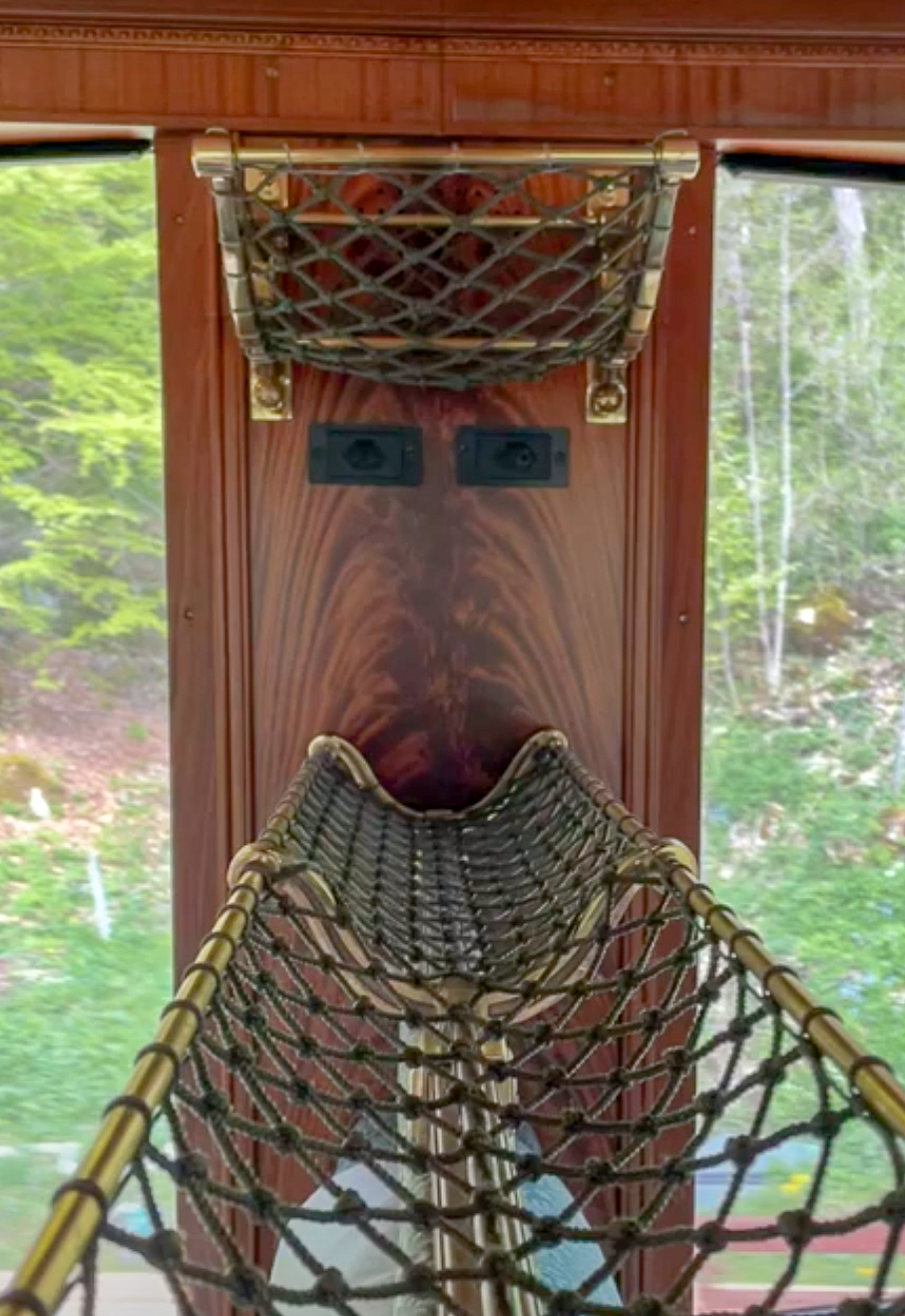
The turquoise jacquard of the Belle Epoque, along with the real golden wood is so pretty. The seats are very upright so may not be too comfortable for a long journey, but they do look stunning. There are luggage racks and even the plugs, belying the Belle Epoque’s vintage vibes. Seats in second class are identical to those in first class but have a 2:2 configuration. The tables can fold out, making getting in and out easier. This is especially handy if you don’t know the people you are seated with.
On our journey, there was a big group booked in the same carriage as us, so it was really crowded, but the other first class compartment was completely empty. We didn’t have to share a table after all. We still recommend booking a reservation to ensure a seat, but then check out the rest of the train and see if you can move to make things a little quieter.
GoldenPass Panoramic
The GoldenPass Panoramic has a slightly dull dark grey and blue colour scheme with seat covers very reminiscent of British Rail in the 1990s. The seats are large with curved backs to help with ergonomics and comfort. For a longer trip, these would be better for a long ride for sure. The plastic tables fold out which again, is great for getting in and out. Seats in second class are grey and less plush, set in a 2:2 configuration and with no large tables. This isn’t ideal if you want a picnic…but I am sure you’ll manage.
Winner : GoldenPass Belle Epoque
The View
As these two trains traverse the same stretch of track, they both get top marks for the scenery. This battle is going to come down to the windows…
GoldenPass Belle Epoque
The windows of the Belle Epoque are big, but nothing special. They do make sure that the tables and chairs match the width of the window so everyone gets a good view. You aren’t going to pay for a window seat and end up with a wall instead.
As you expect, the windows on the panoramic train are a little bit special. Not only are they wider and taller than those on the Belle Epoque, but they are additional windows up on the ceiling giving extended views up to the mountains and the sky. Plus, if you are sitting in first class, the chairs are elevated, so it feels like you have windows from your knees upwards. It’s all landscape all the time!
Then, if you are willing to splash a little extra cash, there is something rather exceptional. For an extra 16 CHF or so, you can go all the way to the front of the train. Under the driver, you can sit by a large front-facing window, or is that just a windscreen? It’s pretty unique and the views along the tracks are very cool, especially during the big turns, when you have a mountain looming in front of you and sweeping down towards the lake at Montreux.
Winner : GoldenPass Panoramic
The Catering
GoldenPass Belle Epoque
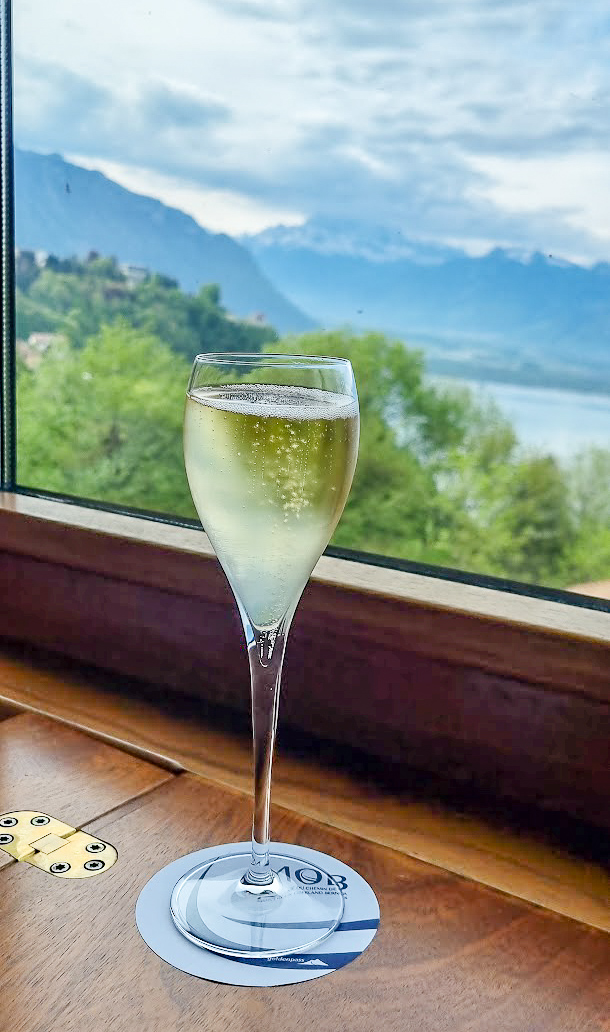
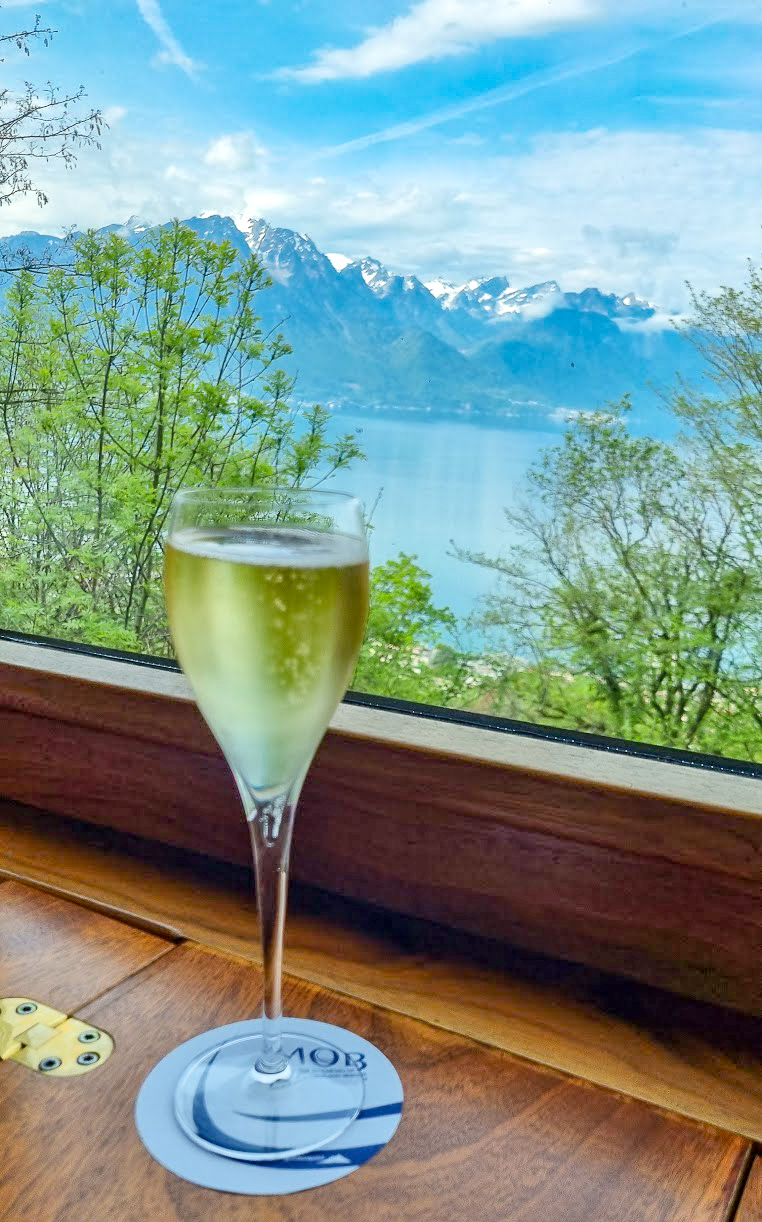
There is a menu of food and drink available available for purchase, but you can bring your own picnic. (If you have seen Instagram setups with afternoon teas and fancy tablecloths, those people brought that with them). The website says that catering is only for groups that have rebooked but we were able to order at the table so maybe this only refers to proper meals? We bought an eye-wateringly expensive glass of champagne to share, and the gentleman next to us was impelled to do the same. It just felt right in the fancy surroundings.
GoldenPass Panoramic
There is no food and drink option on the GoldenPass Panoramic, but again, you can bring your own picnic.
Winner : GoldenPass Belle Epoque
The Overall Experience
GoldenPass Belle Epoque
The Belle Epoque celebrates the golden age of train travel. Gleaming wooden panels and beautiful brass details give it a sense of authenticity, even if it is a new and slick Swiss train. Anyone British is hard-pressed not to mention Agatha Christie in their description of any lovely old train and I am trying hard not to…but it evokes the magic of Murder on the Orient Express. It has unmistakable 1920s vibes, and if you can snag a table for two, it is very romantic. If you are in it for the experience, then the Belle Epoque is for you.
GoldenPass Panoramic
The panoramic train is very modern and the interior is not particularly pretty. However, it is not the looks of the carriages that are its big selling point. You won’t be looking at the inside of the train at all with all that window to the outside on offer. If the scenery is the most important thing for you, then you will definitely want a seat on the panoramic.
Winner : GoldenPassBelle Epoque
Final Thoughts on GoldenPass Belle Epoque vs GoldenPass Panoramic
As you can see, there are plus points on both of these trains, and I’m pretty sure you will have an excellent time. No matter which you pick. However, for me, it has to be the Belle Epoque as I don’t think I will ever get over the beauty of vintage trains. This is a fraction of the price of taking many luxury trains around the world, especially if you have a Swiss Travel Pass, Interrail Pass or similar.
Travelling at the front of the GoldenPass Panoramic, with the giant windscreen, was definitely novel and I think for families that it is the way to go but as a couple, capturing the magic of vintage train travel is always going to be a winner.
Both of these fantastic trains offer unique experiences so if you can try both then why not give it a go? You can change at any of the stops along the way if you are travelling on any kind of train pass. You’ll just have to wait an hour for the next train.
Strasbourg, located in the Alsace region of France, is a pretty city famous for its beautiful architecture, rich history, and delicious food. It has a unique Ascharm which is no surprise as it changed nationality between France and Germany 4 times in 75 years. If you only have 2 days in Strasbourg, this two-day Strasbourg itinerary, combined with your Strasbourg Pass will help you make the most of this special spot.
This post may contain sponsored content or affiliate links that help support the blog. All opinions are our own.
The Strasbourg Pass
Commonly referred to as the Strasbourg Pass, this handy tourist pass is actually called the Strasbourg City Card. It gives holders access to special discounts throughout the city for 7 days from activation. The Strasbourg City Card costs just €5 for adults & €3.50 for children and you can make that back in just two attractions.
For example, you will save €4 on the climb to the Cathedral roof and €3 on the boat tour with Batorrama. Those are our first two suggestions for day one of your Strasbourg itinerary.
2 Days in Strasbourg – Day One Exploring the Old Town
Cathédrale Notre-Dame de Strasbourg
Start your day at the imposing Notre Dame de Strasbourg. The size may take you by surprise if approaching from the narrow street in front as you cannot see the total facade or the bulk that lies behind. This is one of the world’s largest cathedrals (and the tallest building in the world from 1647 – 1874) with a tower that stretches up to 142 metres. Yes, there is only one so it does look a tiny bit lopsided. The original plan had two towers but the second was never built.
That single tower was nearly destroyed in 1793 by the mayor of the town who was destroying churches but someone popped a red hat on top (the favoured headgear of the revolutionaries) and it was left standing. There was talk of completing the second tower by the Germans when they regained Alsace in 1871 but locals fought against it as they believed it would stand as a symbol of German occupation.
The Astronomical Clock
The famous and intricate astronomical clock inside the Cathedral is the third of its kind on the spot. Even this third iteration is from 1843. Its dials and displays show a calendar, the gravitation of the planets in the solar system and the lunar phases. Every day, at solar noon (12:30) it puts on a show. Figures file past Jesus and are blessed as a cockerel crows three times. (Remember, it is a French rooster so it says “cocorico”). If you plan on seeing this, be here EARLY. Turning up just on time means you are late.
The Rooftop
Purchase an extra ticket to climb to the roof terrace. There aren’t many places to get views across the city so this is one of your only chances. Bear in mind that the climb is steep and many of the spiral staircase windows are open to the elements so it can be windy. It is not for those with a fear of heights.
Petite France
If you have seen photos of Alsace, I am willing to bet that it was the gorgeous half-timber buildings that attracted you to the area. Well, Strasberg doesn’t disappoint with a stunning part of town known as Petite France.
Many of the unusual buildings, with multiple wooden floors, were actually tanneries. Luckily, the distinctive aromas of the tanning industry are a thing of the past. Consequently, the river that flows through Petty France, split by the picturesque islands is clean and pretty. Take a stroll through the area, crossing bridges, passing locks and soaking up the jovial atmosphere on the cobbled streets.
Once you have explored on foot, it is time to have a fuel stop. This is a perfect time to try an Alsatian classic like flammekueche, a thin tart traditionally topped with creamy soft cheese or creme fraiche, onion and bacon lardons.
Ponts Couverts
Built in across the River Ill in 1250, this large bridge was the first line of defence for Strasbourg. The name (Covered Bridges) comes from the wooden roofs that no longer exist but protected patrolling soldiers from attack…and the weather. These were removed in 1784 but the name stuck. Its distinctive square towers once served as prisons. Oh, and those little holes in the bridge are called the Mouths of Fire as they were designed to fit the muzzles of cannon.
Barrage Vauban
In 1690, the newer, bigger dam and defence system Barrage Vauban was built in front of Ponts Couverts. Its recent restoration has both strengthened it and allowed the space to be used for art displays. Head upstairs when you visit for beautiful views of Ponts Couverts. (This is especially popular at sunset).
Cruise the Canals on a Batorama Boat Tour
One now, it is time to see Petite France from a different angle. Every day, the boats of Batorama take visitors around the centre of Strasbourg. You take a seat and plug in a set of headphones (they do provide some, but bring your own from print sound quality). They have commentary in several different languages and even ones, especially for the kids. It is not constant, and it makes the whole boat jump when it’s been silent for a while which is quite amusing.
The tour takes around an hour and is a relaxing way to see the city, particularly fun is there. Particularly fun is passing through the big lock in the centre of Petty France. Your boat quickly becomes a tourist attraction all of its own as crowds gather to watch the water rise, and the boat ascend to the higher level of the canal.
The boat glides around the river, allowing small glimpses of the New Town and its slightly more modern buildings (its all relative). Then, it takes the straight path out to the European Parliament buildings, a real contrast to the medieval centre and even the New Town’s architecture. The shining silver building (free to visit but impossible from the boat) was completed in 999 so it too will soon be “classic”.
Dinner – Chez Yvonne
Dark wooden walls and booths, plenty of trinkets, and thick curtains all give you a sense of being in someone’s cabin, high in the Alps. Although being Alsace, I suppose I mean deep in the river valley. The food at Chez Yvonne is staunchly traditional, delightfully hearty, and unfailingly delicious. When I visited, my French let me down and I ordered the wrong dish. I thought I was going to have a tasty fish fillet but instead was presented with a fillet of beef. Never mind, it was perfection with a nice pink blush and seriously crispy potatoes on the side. The wines were all local, featuring plenty of dry Reisling and Pinot Gris so I treated myself to a carafe. Don’t skip on the choucroute, the Alsatian pickled cabbage that is cooked in wine and isn’t quite as sharp as raw pickled sauerkraut.
2 Days in Strasbourg – Day Two Museums and Meanderings
Enjoy a Breath of Fresh Air in Parc de l’Orangerie
Start the day by hopping on a bus or a tram out to Parc de l’Orangerie. This feels a world away from the hectic centre of town and is the perfect place for a quiet stroll before attacking the sightseeing ahead. Around the park. There are some nice cafés for a quick morning coffee and a beautiful lake surrounded by cute follies and inhabited by storks which were bred here to save them from disappearing. It gives great people-watching opportunities as dog walkers, joggers, students and ladies, who lunch promenade the paths. Pavillon Joséphine houses temporary exhibitions so see what is on offer if you are swinging by. Even when it is shut, the formal gardens in front are lovely.
All. de la Robertsau
Take a walk west, towards town, along All. de la Robertsau. This is not the most exciting walk if I am honest, but there are some beautiful old art nouveau buildings to pique your interest. Keep your eyes peeled for number 56 which is a blend of French and German art nouveau styles. The European Audiovisual Observatory at 76 is also rather attractive. The building on the left here is neither of those…I just liked it.
From the entrance of the park, it is around 18 minutes to reach our next stop, Eglise Réformée Saint-Paul.
Pont d’Auvergne, Église Réformée Saint-Paul. & Pont Royal
St Paul’s Church may look as gothic as the cathedral but it’s actually gothic revival built in the 1890s. It was built for the German Lutherans who occupied the area at the time. They had to build 19 entrances to ensure that every military rank could come through their own special door. The rose window is particularly lovely but has been reconstructed after both Allied bombings in WWII and a huge hailstorm in the 1950s. From afar, the towers are the most striking features and they are best snapped from one more bridge along, Pont Royal.
A Drink on the Ill
Have a drink on the river in one of the bar boats lined up along Quai des Pêcheurs. These are total sun traps which makes them the perfect stop for a quick Aperol Spritz. If you don’t fancy a drink and want to keep walking, there’s a very good just past the last boat. It may be a nice place to return to before dinner if you haven’t walked your socks off by then.
Learn About Amazing Alsace at the Alsatian Museum
This small museum is absolutely packed with artefacts and information about Alsace. Visitors learn about local dress, architecture, customs, and design, and there are weird and wonderful quirks unique to the region. In one room, you see a birthing chair, in another, the scary, but very cool mouths of the flour barrels. Even the building itself feels like a part of history with its creaking wooden floors and pretty courtyard.
Lunch – La Bolée de Cidre
This is slightly out of the way…but only slightly. If you love crepes and/or cider then it is something to seek out. There’s two kinds of cidre, sweet or dry and they are served in the cutest set with either 25cl or 50cl in. You can choose from savoury Breton crepes including ham, cheese…or ham and cheese, eggs, mushrooms, bacon and chicken. Alternatively, you can have a savoury white flour crepe with fillings like Nutella, fresh fruit and berries, caramel, Kinder and cooked fruits like caramelised apples and bananas. It is the perfect lunch, big enough to keep you going and light enough that you won’t be weighed down as you do. Plus, cider is the best!
Join a Walking Tour
If your feet can take more walking, and your brain has more room for information, then join a walking tour. There are several in the city, but we favour Happy Strasbourg‘s Original Walking Tour. The guides are fun, informative and you can donate what you like at the end as the tour is free. There are several places along the route that you will not have visited or may have passed without knowing what they were so it is definitely worth it to see a little more of the old town and to discover the new town. The tour lasts just shy of 2 hours and each guide will take a slightly different route. Here are some of things I saw on my tour:
Dinner – Les Chauvins Père & Fils
As you peruse the menu, the owner of the restaurant may pop by with an iPad. On said tablet, you can see the dishes on offer, which could help you make your choice more easily. If anything, it is a way to see the whole of this interesting menu. The cuisine at Les Chauvins Père & Fils focuses on local produce and traditional dishes given a modern treatment. Particularly good were the asparagus cappuccinos, the trout and horseradish sushi and the planchette of local cheeses. The atmosphere is busy with families, dates, nights and groups of friends having a wonderful time. I think the wine list that is full of Alsatian tipples adds to the jollity.
Final Thoughts on Your 2 Days in Strasbourg
This itinerary offers a mix of history, culture, and Alsatian cuisine, allowing you most of your 2 days in Strasbourg. Of course, there is more to see and do in Alsace, especially if you are heading to nearby pretty villages or cycling through vineyards but. Even if you only have a short time in the city, use this two-day Strasbourg itinerary as a jumping off point and you are going to love it!
There are a few quintessentially Viennese activities that everyone should try when visiting the capital of Austria. Grabbing a hot dog with a glass of champagne is a good one, attending a ball may be top of your list and eating a slice of dark Sachertorte is a must. However, taking a carriage ride in the city is one that mustn’t be missed. Join us for a journey across Vienna in this Riding Dinner review.
This post may contain sponsored content or affiliate links that help support the blog. All opinions are our own.
Viennese Flakers
Fiaker comes from a French word evolving from the name of a carriage stand in Paris. They dominated the streets in the late 1800s, ferrying the great and the good between their homes and the famous Viennese balls. They were also popular for the odd tryst between secret lovers. Unlike many other places around the world, the popularity of carriages hasn’t dwindled although they are definitely for tourists rather than the average Austrian commuting to work. Bear in mind that not all carriage rides are created equal and the experiences run by Riding Dinner are more than a nose in front of the competition.
Secrets of the Fiaker Riding Dinner Review
The Stables
The tour begins at the stables in the 11th district of Vienna. When we arrived we saw Marco, the chap who founded Riding Dinner, giving a talk to the large group who were a lot more on time than us. Turns out everyone else was German-speaking so he had to give the talk twice for our benefit. I didn’t mind a jot though as it was so nice to know that the many families there might be local and just curious to see the story behind the fiakers on the streets of Vienna.
Our first glimpse of the horses was two utterly adorable Shetland Ponies. This is a 4th generation business and the Shetlands are given to the children of the family. This helps them learn how to respect and care for horses. They are pint-sized, just like the kids, and so can be managed. The children who were there for their carriage rides were going nuts for them. Honestly, it was too cute!
Then the group moved into one of the main stables to see the gorgeous horses themselves. This is one of the stables owned by this family. There are a few around with around 85 horses. The stable was beautifully clean and clearly well-maintained so you can tell they take amazing care of their charges. Of course, you may have concerns for the horses’ welfare but the horses of Riding Dinner’s stables are so well kept. They have gentlemen whose sole job is to keep them fed, watered clean and cool (or warm if its chilly) during the day as they wait at Michaelerplatz. The Riding Dinner horses are given 3 days off a week and between 5 and 8 weeks of holiday on a big ranch in the countryside. They get more rest than most working Americans… it is the European way! Oh, and they get to retire there too.
The Carriages
The horses were led out and backed themselves into place at the front of each carriage. They stood patiently as the staff busied themselves harnessing them in. The gleaming wooden carriages looked complete. These are all original, revamped carriages and you can really imagine the lords and ladies of years gone by passing in these beauties.
The other carriages that had been prepared were loaded up with families and pulled out. We all waved goodbye excitedly. Then we were presented with our beautiful, black and white coach. It was previously owned by royalty and we can see why. It was so elegant and incredibly restored. the shining laquear and pristine leather spoke of refinement.
Our Bubbly Breakfast
For out Riding Dinner review we have to talk about bubbly breakfast(!). Now, this is not provided as standard on the Secrets of the Fiaker tours. However, as this was the only chance we had to visit, it was combined with the sparkling sightseeing feel by letting us enjoy the wine. Don’t worry, we had a big hostel breakfast with a few courses to ensure we weren’t drinking on an empty stomach. Especially in a rolling carriage, we thought we should be sensible.
The wine was an Austrian sparkling white with a blend of Grüner Veltliner & Welschriesling which wasn’t too dry. It was still reasonably complex though, not just bubbly nothing. So perfect to sip as we trotted into town. I was so excited when we discovered that the table had a built-in wine cooler and the wine glasses slotted in. I am a very clumsy person and even I managed to go the whole way without spilling!
The Ride
We began our journey into town. The ride was due to take around 45 minutes and so we settled back with our glasses in hand. The journey took us through the quiet suburb of the 11th district. This previously industrial area was sleepy first thing in the morning but it is a lively place by day with lots of new, creative businesses taking up residence here. It was very weird to be on the road in the carriage and those people who spotted us seemed quite surprised to see us. I mean, it took a while for it to seem less strange to us. Stopping at a red light and passing under a large flyover in such a fancy carriage was definitely two worlds colliding.
As we got closer to the older part of the city, the roads became wider, and the buildings grander. We trotted along the side of the road, unbothered by the traffic. The horses do this route everyday so they knew exactly what to expect and where to head.
The carriage was a beautiful vantage point to take in the surroundings. We were above the level of pedestrians and not moving so fast that we didn’t have to take it all in. It was a wonderful way to see the Ringstrasses in particular. Riding Dinner offers sightseeing that goes all the way through the main sights on this iconic road and I bet it is wonderful as the coachman is also a tour guide.
Information
Our journey was a blend of two experiences. The Secrets of the Fiaker doesn’t normally include a bottle of wine but Riding Dinner very generously offered us one. If you want one, book the Sparkling Sightseeing, Culinary Sightseeing or City Sightseeing tours.
Riding Dinner can accommodate guests with disabilities so drop them an email to let them know your requirements.
Final Thoughts on our Riding Dinner Review
There is something about combining ponies and plonk (or fillies and fizz) that just feels correct. The Secrets of the Fiaker tour was the most incredibly novel way to start the day. It was so amazing to see behind the scenes and we loved the chance to learn all about the horses from the people that are passionate about them.
Bratislava, the capital of Slovakia, is a surprising city. Some people are surprised it exists, I was surprised at how much the city had to offer. One of the coolest experiences in Bratislava is to take a trip up to the top of the striking bridge that crosses the river.I am take a stroll around the top…in a harness…outside. Read on for our full UFO Skywalk review.
This post may contain sponsored content or affiliate links that help support the blog. All opinions are our own.
The UFO Bridge
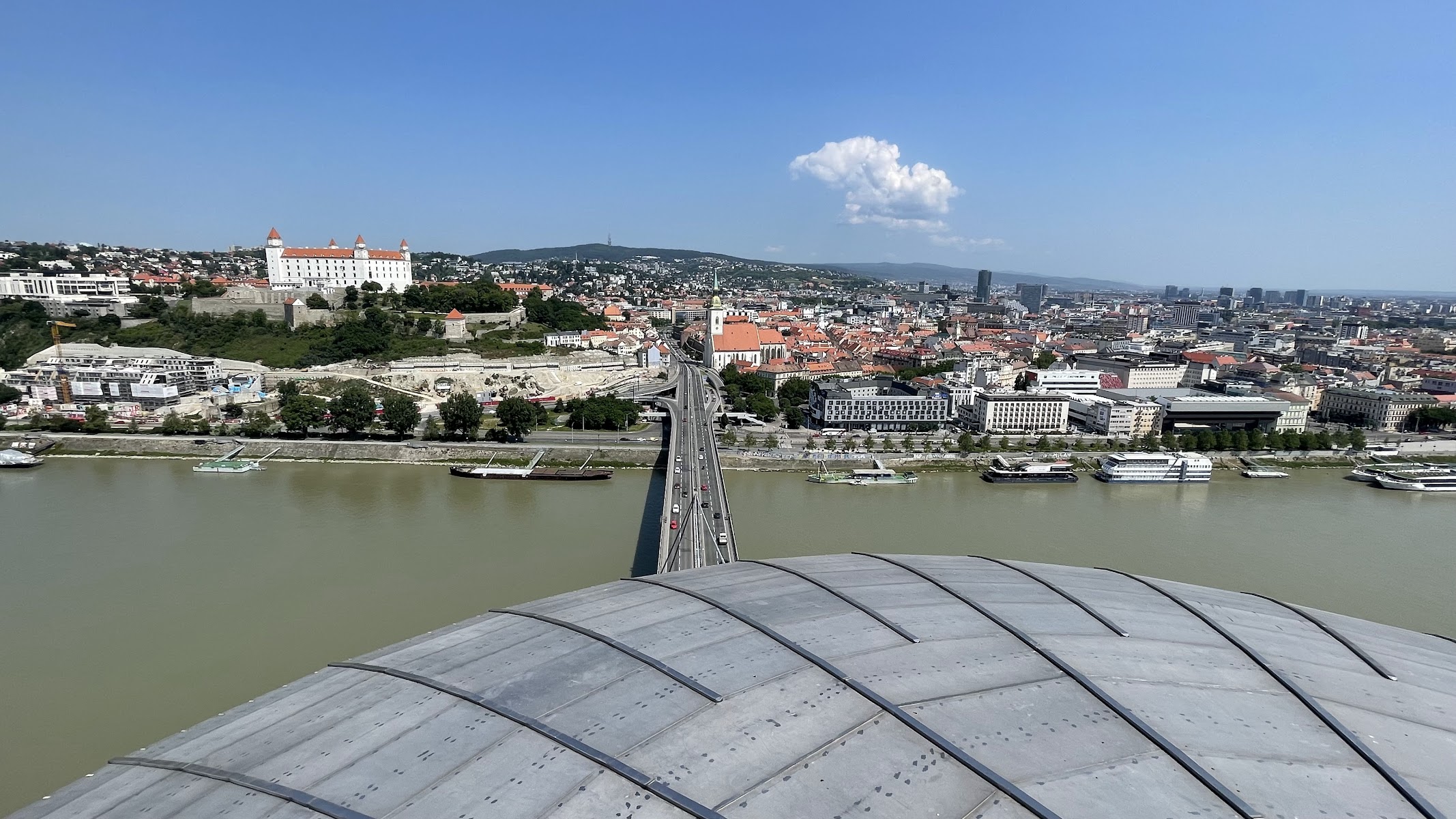
Emerging from the Bratislava skyline, you might be alarmed to see a UFO rising into the sky. This flying saucer, however, is the crown of an unusually towered bridge. The Soviet Most SNP (Bridge of the Slovakian Uprising) was finished in 1972. Pragmatic as ever, the Communists ploughed the large highway down the side of the old town. In fact, the vibrations from the road are now causing problems to the mediaeval cathedral nearby. The structure, now called Novy Most (New Bridge) is real marmite architecture, you either love it or you hate it. I kind of love it and it’s sci-fi vibes. On our first trip to Bratislava, we visited the bar with our friends and laughed at how expensive the VOSS water was. On this occasion, we were going to see the UFO from a whole new angle.
UFO Skywalk Review
Our Arrival
We followed Google Maps and caught the bus across the bridge. It dropped us on the wrong side of a very busy road with no clear way to get across or down. Don’t you just hate the Google maps dotted line of doom! We had a mini freak out until another kind passenger, waiting for her bus, pointed us in the right direction. It was further along the road down a slope, under the road, and around in a big loop to the eastern foot of the tower.
Even with our detour, we arrived early. There was no one around and we, and are slightly panicky state, started to wonder if we have made a mistake. After a couple of minutes, however, are there brave, tourists appeared, and soon after, the staff. We did a quick check-in and squeezed into the lift with our fellow arrivals. It ascended the 80m leg of the triangle to the spaceship above.
The Preparations
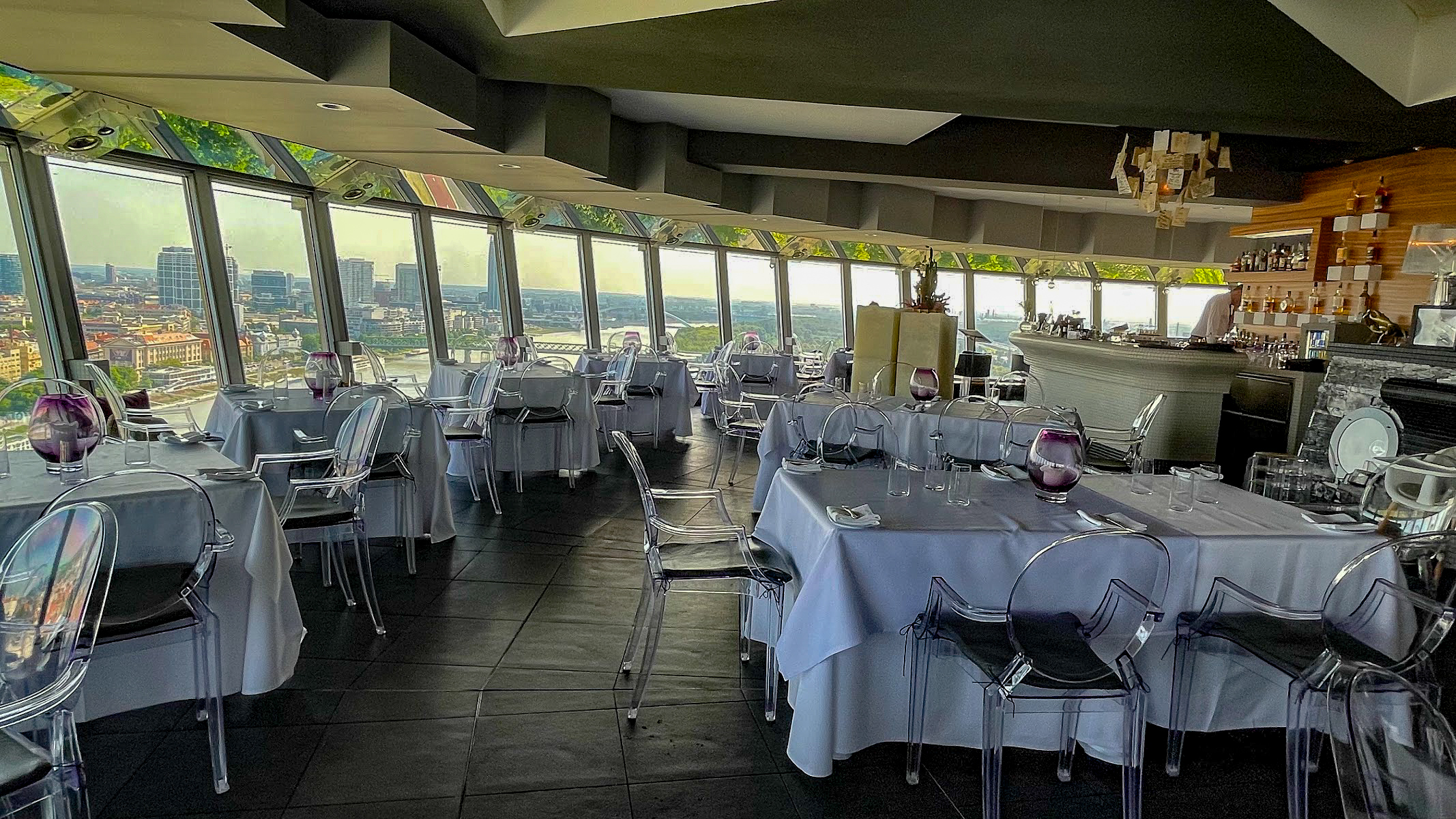
And inside the UFO is a rather nice restaurant and bar. It is open for breakfast, but only a certain section is set out as a dining room. The rest is laid out like a cool cocktail bar or trendy coffee shop. Finding a seat, we signed our lives away with a waiver form (This always makes me nervous, don’t trust their equipment?!). We had just enough time to take in the view to the bridge below which suddenly felt an awfully long way.
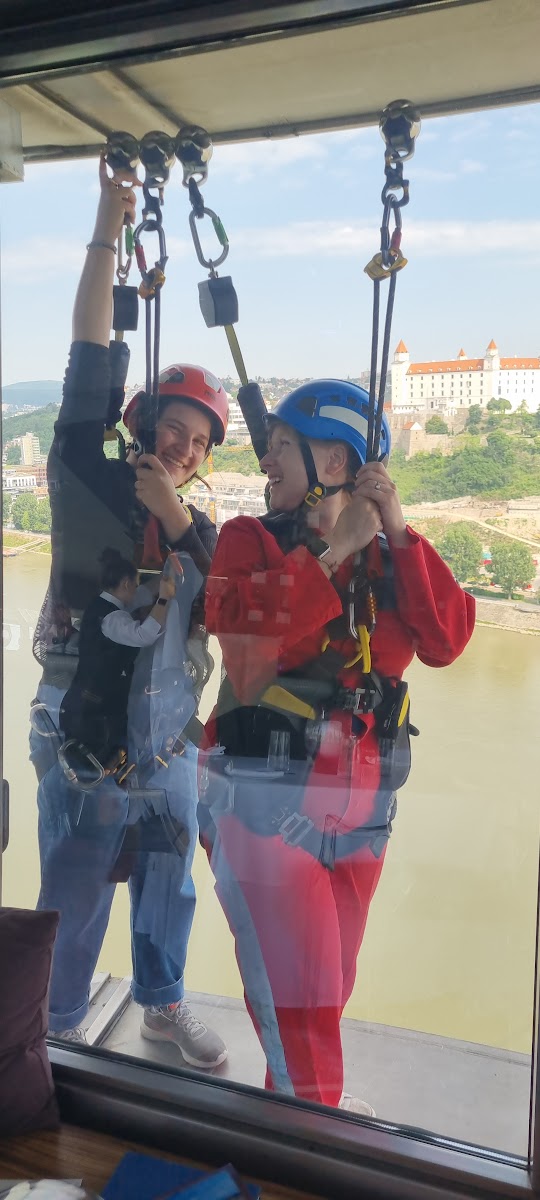
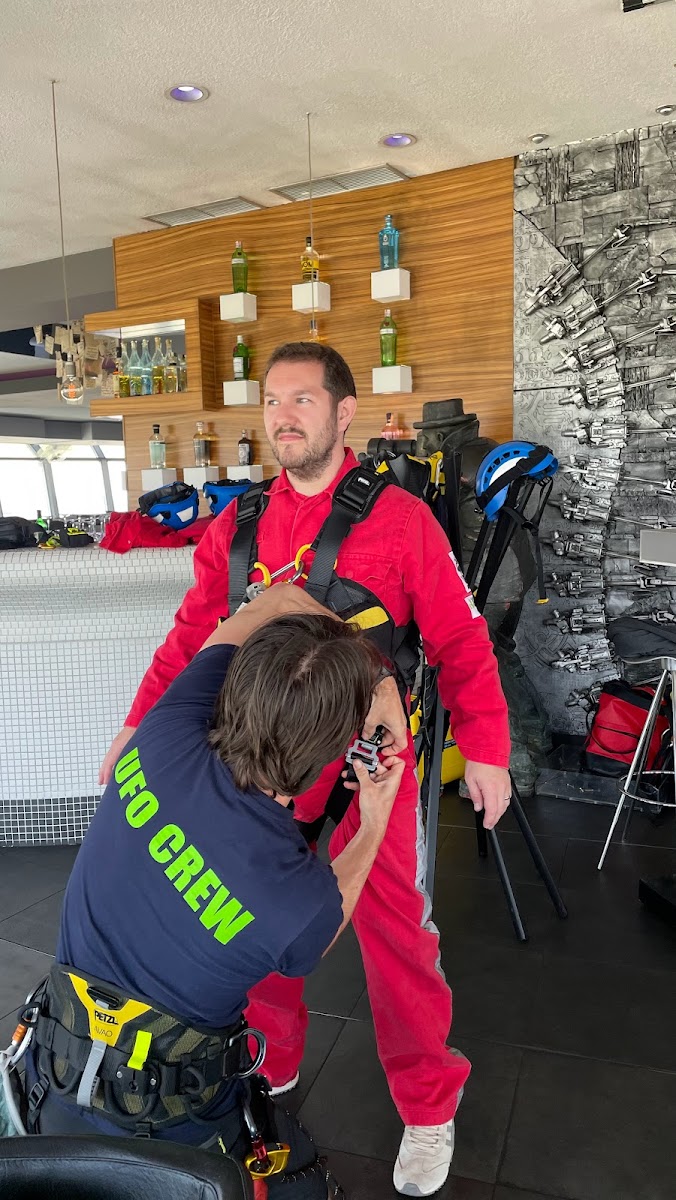
Then it was time to suit up. We clambered into the fetching Red boiler suits emblazoned with the logo of the UFO skywalk before being harnessed up. There is something about being strapped into a harness that makes me nervous and giggly, which is quite embarrassing.
Circumventing the UFO
The First Few Steps
I went first, stepping out of the open window with distinctly wobbly legs. My clips were secured first and the reassuring tug as they were tightened helped somewhat. Still, it took me a little while to trust my self. Those intrusive thoughts were loud and clear.
“You are so clumsy. Somehow you are going to trip and break these harnesses and that is the end of you”.
However, the nice thing was that the rope to guide us around was attached to something that you could hold onto yourself. Not having your hands blindly, clearing out the air, but instead, having something to hold onto, made the world of difference. Soon I was taking jolly little mini steps along the edge.
It took Mr Fluskey a while longerto ease into the experience. Many moons ago, he did a bungee jump in South Africa, and ever since has had a small fear of heights. This always surprises him, and me, as it seems to get a little worse over time. For the first five minutes of his walk, he was clearly distinctly uncomfortable…and it wasn’t just the harness around his nether region.
I think you can tell from these two shots where we were both mentally.
Having a Swing
Whilst walking around the building, we were sat a few challenges. The first was to prove that we had trust in our harness. We were asked to sit in the harness and take a seat from the floor, sitting and swinging in the breeze.
We both took our time slowly bending down and getting up the nerve to take off feet from the floor. Once I did, however, I very much enjoyed it with lovely views across the river and up to the castle on the hill. I am not sure Mr Fluskey enjoyed it quite so much but that was task one completed.
Making Stars
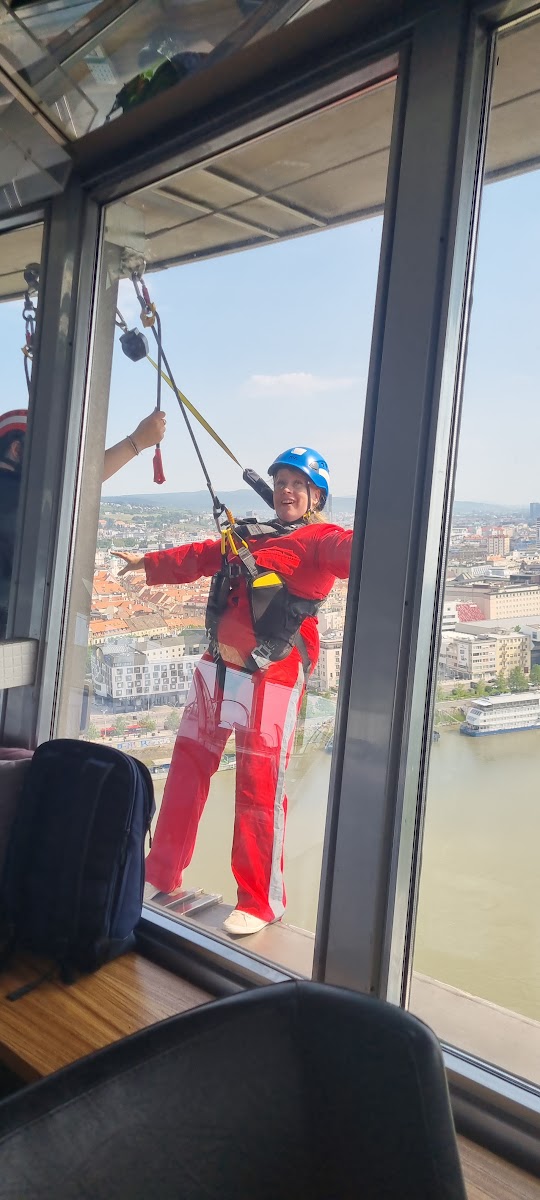
Challenge two was even scarier. We had to stand on one leg and extend the other arm and leg out over the bridge. Bearing in mind that I had just been making jokes about falling off, and my amazing guide had been telling me about someone who fell off and hit a car, and somehow survived, my nerves were a little jangly. I felt okay to release my arm and leg. But tipping sideways towards the void was a little trickier. After a couple of failed attempts, I flung my limbs out, pretending to do ballet for surprisingly effective in my own head.
When it came to Mr Fluskey’s turn I got the giggles. He was hanging onto his rope for dear life, staring into the soul of his guide, and willing himself with all his mates. Eventually, he managed it, but didn’t really lean out to the side, which he was very surprised about when he saw the photos afterwards. He had definitely felt as if he was tipped over the road. Even I thought I’d been much further out than I was. It’s amazing the tricks your mind plays when it’s in survival mode.
The Lean Back
Let’s call the third challenge the trust fall.…but without the falling. We had to turn our backs to the world and shuffle our heels to the very edge of the platform. Then the idea was to let go of the rope and extender our arms Jesus style, and lean backwards. This was a struggle. Letting go of that little rope, our safety blanket, felt so difficult. It was more difficult than stepping outside in the first place for sure. With one hand off, I was more than happy, but taking that second one away took several attempts.
I did manage it after some gentle persuasion and was very pleased with myself. Then the guide suggested she could loosen the rope a little and let me lean further. Well, I gave it a go but tipping back without feeling a taut rope supporting me was a bit much and I chickened out.
I honestly didn’t think that Karl was going to manage this one. His face was deeply unhappy, and I could see his leg wobble as he stepped backwards towards the edge. Sadly, a table of early morning brunchers was sat right at the point of challenge three, so I couldn’t get in there to support him. However, slowly and shakily, he tipped backwards and I couldn’t have been more proud.
Taking a Seat
Around the last quarter of the circle, you go past the washrooms. In between the two bathrooms, in front of what I think is an office, was challenge number four. I am not sure if everyone gets the same challenge here, or if they judge your level of bravery and adjust accordingly. my test was for that safety rope to be loosened as far as it would go and to sit on the edge of the lip with my feet dangling down. This was very cool, but being 5 foot nothing, even with the rope fully extended, my bottom was very slightly lifted from the edge, so I couldn’t sit down entirely which was quite scary. I was clinging on with my fingertips to steady myself and ensure I didn’t slide into oblivion. Yes, I know I was still attached, but your brain does strange things at height.
We both completed the walk and what a rush! The adrenaline was pumping as we gabbled away to each other about the experience. Anyway, lets continue our UFO Skywalk Review.
A Loo with a View
Here at Flying Fluskey, we love a loo with a view. I popped to the bathroom and really enjoyed taking in the view without the nerves. I would definitely advise nipping in, if only to wash your hands.
The Observation Deck
Upstairs is a lovely sun trap of an observation deck. It felt strange to have the physical barriers after having nothing between us and the sky for so long. Still it felt very freeing to lean right up against the wall and really take notice of what things were in the distance. Around the observation deck where comparisons of other towers around the world, and as always, we enjoyed seeing where we have been and where we have yet to visit.
There is a term, soft adventure, which refers to things that boost your adrenaline and make you feel awfully brave without being too extreme or physically demanding. UFO skywalk is just one of those activities. We hope you enojyed our UFO Skywalk review. We were both immensely proud of ourselves for managing the circuit around the top, and although our hearts thumped an isle palms sweat, it was just a nerves and not physical exertion. This is an amazing experience, and if you are planning a visit to Bratislava, check the dates because it’s one you won’t want to miss.
Italy is a world of culinary wonders. It is only by exploring the country and discovering the local cuisine that you realise it is still a series of states linked by a common country name. In Verona, joining a food tour is the perfect way to learn about the best of Veronese food and wine. After some research, I decided to join Romeo and Juliet’s Sunset Food & Wine Walking Tour in Verona. Read on for our full review.
This post may contain sponsored content or affiliate links that help support the blog. All opinions are our own.
Romeo and Juliet’s Sunset Food & Wine Walking Tour
The group slowly assembled by the beautiful Portoni della Brà. This ancient gateway is part of the old wall that runs to the fort. We met our lovely guide, Alessia, who escorted the group for the afternoon and taught us all she could about the city and its culinary traditions.
Cafe Pasticceria Barini
A Veronese breakfast involves one very small, very strong coffee and some sort of pastry. Make your first stop Cafe Bar Pasticceria Barini. The stone counters and wooden walls are beautifully mid-century and have a perfect coffee shop vibe. This is not the spot to sit and savour a long latte (well, you could but we have places to be). Instead, pick up your €1 coffee, dump in some sugar if necessary, and perch on the edge as you slam it down. You could also try a risini, a pastry stuffed with sweet rice. It is a carb-on-carb bomb that, combined with an espresso, is just the energy boost you need for a long day of sightseeing.
Strolling the Stradas
From Piazza Bra, we took a walk past the stunning Roman amphitheatre, now used for concerts and opera, and up Via Mazzini, the most popular shopping street in Verona. (Shame, I had to trek out to the far less attractive mall to go to Primark the following day). Alessia taught us all about the layers of history in the architecture all around us as we walked. Then we topped at an unusual little courtyard with a water well in the centre. She shared the love story of Corrado and Isabella, Verona’s original star-crossed lovers. As with the more famous Romeo & Juliet, this was a tragic tale and both lovers ended up jumping into the well. Is it dark tourism if it is romantic?
Locandina Cappello
It is weird to say that we stopped for lunch on a food tour but this was a nice restaurant and we had a good sit down here so it felt like stopping for lunch. The first thing to appear was a bottle of crisp white wine. Soave is produced around Verona and has a zingy, fresh flavour. It is light and perfect for the nibbles that came next. The small bites served in Verona are similar to Venetian Cicchetti but are a little smaller. Plus, the bread seemed much softer but that may have just been the style at Locandina Cappello. After the cold starters, we were treated to glorious little oven dishes full of polenta. It was creamy and topped with salty, mature Monte Veronese cheese. It was divine!
Enoteca Baraldi
Our next stop gave us the chance to learn more about local wine, and this one is world-famous. Amarone della Valpolicella is a deliciously dry red wine that comes from the hills around Verona. There were 3 to taste and despite not being a massive red fan, I actually really enjoyed the tasting. I think it is because I would never normally opt to give these a go, I mean Amarone means “great bitter” and I have quite a sweet tooth when it comes to wine. It doesn’t have a lot of acid though so it was quite rich and went very well with the food that we were offered.
Charcuterie platters of cured meats and cheeses appeared. We had strong, hard Parmigiano Reggiano which is made nearby. i loved how the acidity of the cheese balanced out the wine beautifully. The salami was exactly the kind I enjoy most. It looks innocent but when you bite into it a burst of oil sends flavour running across your tongue. We were also presented with great slabs of focaccia from the Focacciaria a few doors down, which again were absolutely heavy with delicious olive oil, chunky salt, beautiful olives, or tomato. I don’t know if bread that is already that packed full of ingredients can soak up a glass of Amarone, but I enjoyed letting it try.
Colle San Pietro
The Castillo San Pietro Funicular zips up 159m to the top of 55m high Colle San Pietro (also called Monte Gallo) in a little over a minute. The group piled in with the tickets that were included in the tour. At the top, we had a reserved table at Cafe Bar Re Teodorico which has a super view of the city.
Spritz O’Clock
…more commonly known in Italy as Aperitivo. We were offered either an Aperol or Negroni spritz (or a beer if that wasn’t your poison). Spitz is a big deal in North-East Italy. Every day, people grab this yummy blend of liqueur, prosecco and soda water before dinner. The idea of the spritz originated in Venice but being such an enjoyable idea, it spread from here across Italy.
After two weeks of rain, it felt just fabulous to be sitting, chatting with new tour buddies in the sun, cradling a cocktail. This is where Alessia left us and pair by pair, the group split off to go for dinner (how?) or to watch the sunset.
Final Thoughts on my Food & Wine Walking Tour in Verona
I love a food tour. Trying all sorts of food from the local region is a total treat and I always learn so much. Romeo and Juliet’s Food & Wine Walking Tour in Verona was the perfect way to start my solo city break. It allowed me to get my bearings in Verona and discover yummy things to try more of during the trip.
Vienna is one of Europe’s grandest cities. It is blessed with stunning architecture dating back hundreds of years, iconic dinners and world-famous horses. If you only have a weekend in Vienna what should you see, and where should you eat, drink and chill to ensure you don’t waste your time? Never fear, we are here to show you how to spend 2 days in Vienna!
This post may contain sponsored content or affiliate links that help support the blog. All opinions are our own.
A Little About Vienna
Vienna is the capital of Austria and is known as the Imperial City. For almost four hundred years (1558 – 1918) Vienna was the capital of the Habsburg (Austo-Hungarian) Empire. This included modern-day Austria, Hungary, Slovakia, Slovenia, Croatia, some of Poland and Romania and even a little of Italy. This is why it seems so strangely tucked in the far east of the country. It used to be in the west of the vast empire and through its break up after WWI it now lies further east than Prague (considered by many to be Eastern Europe). You’ll see an awful lot of grand buildings from the 1600-1800s and it makes the city so magnificent to walk around. If you like your walks a little greener, despite not being in the Alps, the foothills are nearby so it doesn’t take too long to be on a pretty hillside. In fact, just north of town, you’ll find several vineyards with views over the city.
When to Visit Vienna
Vienna has a few distinct tourist seasons:
If you visit in January/February it is ball season. You can buy a ticket and as long as you adhere to the dress code, you are free to join one for waltz or two.
In spring, cafes open up their shop fronts and rooftop bars reopen for the sunny season.
Summer sees tourist numbers swell and locals picnicking on the grassy spaces in the city or travelling out to nearby vineyards for some wine and charcuterie.
In October the long night of museums is a must for culture vultures. Galleries stay open late and many serve drinks or snacks as you go around. Plus, the very seasonal, very local drink of Sturm is served. It is grape juice that is only partly fermented so blink and you’ll miss it.
In late November/December it is Christmas market time and the city is decorated with twinkling lights.
How Many Days for Vienna?
It is possible to see lots of the main sights of Vienna in one day but it will feel rather rushed. It also doesn’t really give you time to go into any of the museums or to eat enough of the delicious dinners on offer. With 2 days in Vienna, you can take a little more time. It allows you to head out to the slightly further away sights like Schönbrunn Palace, or stop for a drink/torte for a while without getting those itchy sightseeing feet. A long weekend is probably best, with that extra half day afforded by arriving on Friday afternoon or leaving on Monday afternoon. This means you can visit a vineyard in warmer weather or if you have a whole day, catch a boat to nearby, Bratislava (the capital of Slovakia).
2 Days in Vienna – Day One, The Ringstraße
A quick disclaimer, you will not have time to go in and out of museums all day so I would pick one or two that you really want to explore.
The Ringstraße (Ringstrasse) is a semi-circular road that surrounds the old centre of Vienna. It was laid out in 1860s is lined with beautiful buildings. For a super speedy way to see it, hop on a tram We have a bit more time though so let’s take a walk around it and see the prettiest or most interesting points along the way.
Dr. Karl Lueger Platz
Start your day at Dr. Karl Lueger Platz. In the centre of this square is a statue. This has been the subject of debate, a focal point for protest and a bit of a conundrum for the city for years. The statue depicts a former mayor of Vienna who was rather right-wing, and actually a bit of an inspiration for one Adolf Hitler. His political, anti-semitic views were extreme. In June 2023 (just after these photos were taken) and almost 100 years after the statue was erected, the decision was made about what to do with it. The city has decided to tip it 3.5 degrees to the right, giving the viewer an uneasy feeling, It is another interesting take on the worldwide debate on what to do with statues of people with uncomfortable pasts.
Museum of Applied Arts (MAK)
MAK is to Vienna, what the V&A is to London, the city’s museum of design. The museum covers the history of Austrian design over the last 400 years from baroque candlesticks to intriguing wooden furniture, to the proliferation of “isms” over the last century. The building itself was designed in 1871 by Heinrich von Ferstal and the neo Renaissance building, especially its ceilings and stunning atrium are a fitting spot for a design museum.entry to the shop and the restaurant does not require a ticket, but bear in mind that this is not a casual museum café, instead of rather upscale restaurant, so if you want a casual cuppa head across the road.
Opposite MAK, Cafe Prückel is a quintessential Viennese coffee house. Possibly a better option to sit and sip a quick hot beverage. It opened in 1903, but now has a mid century interior, giving it at once a casual and wooden clad formal atmosphere. Here you’ll find strudel-scoffing students, newspaper perusers, and coffee connoisseurs, all enjoying their mornings.
Stadtpark
The 28-acre Stadtpark is a popular place for a wander, its meandering paths crossing the Wienfluss (Vienna River) and winding around many a statue. The glimmering bronze Johan Strauss is a stand out so but the penguin fountain might be my favourite. There is also a wonderful old weather station from 1813 which tells the chance of rain and temperature amongst other things. It is fun to compare it to your phone’s weather app.
St Charles Church/Karlskirche
On the south side of Karlplatz (always exciting with a Karl in the team) is St Charles Church. You need to come a little off the main road but it is worth it for Vienna’s most beautiful baroque church. Karlskirche was commissioned by Charles VI in the 1700s and although the interior is very baroque, the outside is more eclectic. The facade is a pleasingly symmetrical combination of thick baroque towers, thinner columns based on Ancient Rome, a temple-style facade modelled on ancient Greece and a nice, big dome. It is a very interesting mix of styles but works so well.
Inside, coloured marble glows in the daylight, huge paintings dazzle the senses and the theatre box style sides of the church covered in scrolling are seriously curvaceous. To get a closer look at the ceiling you can take the slightly terrifying lift. This elevator whisks you right up the top of the church and there is a crazy view down. You can also take the stairs up to the organ and out onto the panoramic terrace which has lovely views across the centre of Vienna.
Vienna State Opera (Wiener Staatsoper)
Up there as one of the most famous opera houses in the world, Vienna’s State Opera history is esteemed. The building opened in 1869 and has played host huge operatic spectaculars, pretty ballets and concerts galore. Inside, red velvet seats adorn and arena of boxes. The incredible foyer is bedecked with stunning carvings and grand statues. The stage now has around 360 performances but you can organise to just take a tour if you can’t snag a ticket.
You can buy seated tickets on the website but if you are on a budget there are around 500 standing tickets to many performances which are much cheaper. You can register for these online ahead of time. Alternatively,, if you are feeling spontaneous, get in the queue on the Operngasse side of the building. Get to the line for the Stehplatz-Kasse (Standing Area) around 2 hours before the show and you can purchase a ticket a little after.
Monument Against War and Fascism
In a city full of baroque palaces and grand churches, the Monument Against War and Fascism is an extreme contrast.
It stands in the middle of Albertinaplatz, look for the rocks. The open space here was created by a WWII bomb that demolished a building a killed hundreds. The statues were installed in Albertinaplatz in 1988 by artist Alfred Hrdlicko as part of Vienna’s “Year of Reflection”. It looks back at all the victims of war and fascism throughout the city’s history but particularly when the city was under Nazi rule. The more you look at the four sections of the monument, the more the dark roots of the sculptures are. We will let you explore it by yourself but do take the time as it is a deeply intricate and moving memorial.
Across the road, pass the Bitzinger Wurststand towards Burggarten. Don’t worry, you will have another chance t try these bangers. Instead, we are heading for lunch at ….
…The Palmenhaus
The Palmenhaus is a large Victorian glasshouse that sits at the top of Burggarten. In one wing is a butterfly garden, the other is empty and in the middle is the Palmenhaus brasserie. This is the perfect place to come for lunch with plenty of natural light streaming in. If you sit inside you can spot the butterflies flitting by the windows as you eat. The fare is Viennese with a focus on seasonal dishes. The white asparagus and smoked salmon dish was a summer-tastic delight. The burger was cooked perfectly medium and the wedges were top-notch. Nothing on the lunch menu is heavy …or cheap, so you and your wallet will both feel light when you leave. They have a lovely, long wine list but stick to one or two, it is only lunch and we have a whole afternoon of sightseeing left.
After lunch, take a moment to walk through the Burggarten and find the Mozart statue.
OK, here is where the afternoon gets complicated. We are about to enter the Hofberg Palac complex which sits opposite the Museumsquartier (museum quarter). If you visited every corner of every museum here, you are looking at a good few days. Instead, you should either pick one from this list and take your time or pick two and whizz to the specific galleries that interest you.
Imperial Treasury Vienna – If bling is your thing, then head to the Treasury. This large collection of secular and religious treasures is stuffed full of shining gold and glittering gems. Here you can see the Habsburgs crown jewels, including the Imperial crown, orb, and sceptre. On the religious side, the imperial crown of the holy Roman Empire doesn’t fail to delight.
Weltmuseum Wien – The Weltmuseum is full of anthropological collections, obtained by the Habsburgs from across the Empire and beyond. As well as being an amazing collection of International curiosities, it does a great job of sparking debate about colonialism.
Museum of Modern Art Ludwig Foundation Vienna (MUMOK) – A huge modern art museum that is a work of art itself. There aren’t many paintings here, instead the galleries are full of abstract pieces, sculptural works and more exporational art.
Kunsthalle – The word Kunsthalle means temporary art exhibition, and this is what separates it from normal art, museums. The controller Vienna does not have any permanent exhibitions, instead, it focuses on new, evolving modern art from across the world and the debate that comes along with it. Expect challenging pieces and plenty of mixed media.
Albertina Museum – This is a wonderful graphic art museum housed in an 19th-century Habsburg palace. There is a large collection of architectural drawings, rings and paintings, some of which are so rare and delicate that they are only taken out for display once in a decade.
Leopold Museum – The collection of modern Art in the Leopold museum is crowned by the many works of Egon Schiele. They have 40 of his paintings and over 150 of his drawings. For another brilliant view of Vienna, take the stairs up to the rooftop which is free without a ticket and a nice place to take in the surrounding area.
Kunsthistorisches Museum – The first of two museums that stand opposite each other, either side of the Maria-Theresien-Platz, the consideration is a museum of fine art whose interior is almost as beautiful as the artwork is it contains. There is a beautiful rotunda, surrounded by granite floors, marble, columns and grand murals. In the galleries, you will find Masters, such as Rubens, van Dyke, Canaletto, Klimt, and the largest collection of Bruegel in the world..
Museum of Natural History – On the other side of Maria-Theresien-Platz is the Natural History Museum. This lays claim to the largest collection of meteorites in the world, some very cool dinosaur skeletons, and a limestone figurine of the Venus of Willendorf that is over 29,000 years old. Walking around the building itself is interesting enough as it has carvings of figures associated with natural history…all in German of course, so you will have to do some translating.
Parliament Building & City Hall (Rathaus)
Just a little further around the Ringstrasse are our last stops. Take in the grand Austrian parliament building’s impressive neoclassical architecture. The striking white façade dates from the 1880 but the Greek revival style feels like it could have been built any time in the last 2000 years. The magnificent 5m tall Athena fountain that stands outside is topped with a gleaming golden crown. She is carrying a spear in one hand and a miniature statue of Nike (goddess of Victory) in the other. Below Athena are two females figures representing legislative power and executive power. Below them are the gentlemen that represent the four important rivers of the Austro-Hungarian empire.
Oh, and the cupids riding dolphins? They are just cupids riding dolphins.
The last sight is the City Hall. This was built around the same time as the parliament building but in a distinctly different style. It is designed in high gothic style with towers like a cathedral. Right at the top of the almost 98m steeple is Iron Rathausmann, a symbol of the city. This medieval soldier may be so small that you almost can’t see him in our photo, but he is quite large in reality at 3.4m tall, 650kg and with a shoe size of 63!
Glacis Beisl
For a chance to try traditional Austrian food in a modern and relaxed atmosphere, head to Glacis Beisl. In warmer months you can sit in their large, leafy beer garden, and when it is cooler, they have a sleek dining room with plenty of glass that is actually 300 years old. This is a brilliant place to try Vienna’s most famous food export, one that is named after the city in fact, the Wienerschnitzel. A traditional Wienerschnitzel consists of a piece of veal, cut thinly and then bashed until it is even thinner. It is then coated in flour, egg and breadcrumbs before being fried in lard or clarified butter. As the breadcrumbs aren’t pushed into the meat, it all puffs up, creating a unique bubbly, crisp texture. It is served with some lemon to cut through the richness and usually some sort of potato salad or slaw on the side. Pair it with a glass of wine or beer from their extensive drinks list and you’re onto a winner. Just remember, if you opt for the linen tablecloth, napkins and bread, you will have an extra cover charge so to save some pennies, go for the informal tables.
A Classical Music Concert
No trip to Vienna would be complete without a little music. Luckily, there are about a billion concerts that take place everywhere across the city, every day. You won’t fail to see the ticket sellers in the centre of town, especially around the opera house. You can see who has the best pitch or you can book something in advance to ensure you get exactly what you want. The most popular concerts are of course homegrown talents Mozart or Strauss but you can pick whichever classical music makes you happy!
2 Days in Vienna – Day Two, Palaces and Ponies
Schönbrunn Palace
Schönbrunn Palace was originally constructed in the 1500s as a hunting lodge (as all good palaces were). In 1683, Emperor Leopold I gave it some extensive renovations and added some pretty formal gardens. Then, in the 1700s, Maria Theresa completed an extensive renovation and it became the official summer residence for the Habsburgs. The gardens were extended and beautiful follies were added for the family’s entertainment.
Schonbrunn Palace is vast at a smidge over 31,000m2. It is the largest palace in Austria. The imposing width of the palace speaks to the breadth of the empire. The standard ticket gives visitors entrance to the staterooms. The Rococo-style gilded hall of mirrors is particularly majestic and once played host to a precocious little six-year musician, called Mozart. The other great gallery, The Great Gallery, is decorated with impressive murals which burst with Rococo glam.
Some of the prettiest rooms are in the second part of the tour but this is much shorter so there is a balance of time, price and interest to be considered.
Make your way behind the building to the gardens next. The large formal gardens behind the palace, are many times greater than the palace itself, as huge as that may be. The gardens are mostly free and open to the public so you will see a few joggers weaving their way through the tourists. You could lose an entire day exploring between the hedges and along the paths but here are some highlights that we think I worth searching out.
The Arboretum – Perfect for the ‘Gram.
The Neptune Fountain – The most extraordinary of Schonbrunn’s fountains depicts the god Neptune holding court over his soldiers riding seahorses. You can walk up and behind the fountain and see it up close which is cool
The Maze and Labyrinth – There has been a maze at Schonbrunn since 1720. The smaller of the mazes you can explore is based on the original. The larger, The Labyrinth, is all new and full of fun games and surprises. (Additional ticket required).
The Rose Garden – The Rosarium has a huge selection of roses to stick your nose into and enjoy. It isn’t huge but the sheer variety of roses means it is worth seeking out.
The Zoo – This is the oldest working zoo in the world. Of course the conditions for the animals have greatly improved since its conception but it is nice to see some of the original 18th century buildings still in operation. (Additional ticket required).
Roman Ruins – These ruins are fake news…but that doesn’t make them any less impressive. In an era that loved follies in the garden, this may be the best folly in the world. The ruins are based on the Temple of Vespasian and Titus.
The Gloriette – Climb the 60m hill to the glorious Gloriette. This folly-cum-summer house is a large, attractive construction that was added in 1775 to improve the view from the palace (or so it is said). It has the feel of a triumphal arch and some lovely sculptural detail when you get up close. Plus the view from up here to the palace and the city is wonderful. From here you can make your own way back down through the gardens or hop on the land train that comes every half an hour (€8 for adults, €4 for reduced mobility).
Schönbrunn Palace is one of Vienna’s most popular attractions so getting here when it opens is a good plan. The ticket office is a good ten-minute walk from the train station so build that walk into your timings.
St Stephens Cathedral
Vienna’s cathedral, the mighty, Gothic St Stephens, is the tallest church in Austria. Looking at the steep roof, you can see why. The roof is stunning, with patterns extending to the sky. It’s extreme slope heps snow to slide off in winter. There are 230,000 glazed tiles that make up the extreme zigzags and the coats of arms including the Imperial and royal double-headed eagle seen below. The tall tower is nicknamed “Steffl” and stands at 136m. You will have seen it in most of the views we have seen of the city. It is pretty mind-blowing to consider it was completed in the 1400s.
Before you head inside, take a little time to check out the door you are passing through. The Riesentor, (the Giant’s door) is huge and highly decorative.
Inside, the soaring ceiling is quite plain but the treasures that are around the naive are beautiful. There are so many carved flourishes and deep, dark paintings that is hard to know where to look. If you buy a ticket you can explore them up close. Without a ticket, you can wander down one side of the church and see the six chapels and the crypt. You can also climb the South Tower. It is 67m tall and the climb involves 343 steps. It is hard work but we love a view. (For a nice view of the church, stay tuned for a spot that has a lift coming next).
Lamee Rooftop Bar
For another perspective of the church, and a very overpriced drink, head two streets over to Lamee Rooftop Bar. Drink prices are almost as high as the bar, but the sun feels fantastic up here and the Aperol Spritz was a good one. (which is lucky because it is one of the cheapest cocktails). Of course, they have the normal sodas/soft drinks but also, some rather lovely homemade lemonades at just €5.50 so you don’t have to have boozy bevvies to have a fun drink. It feels like a place to see and be seen with a cool vibe and chilled house background beats.
The Plague Column
For something as dark as the black plague, the monument to it in Vienna is strangely cheerful. It was created in 1679 after a particularly bad breakout of the disease. The baroque artwork features men on the lowest level, angels on the second and the holy trinity at the top.
Buffet Trzesniewski
Buffet Trzesniewski Dorotheergasse is one of those food spots that is simple perfection. There is a counter stuffed full of little rye bread open finger sandwiches, Belegte Brote. The founder Franciszek Trzesniewski, came to Vienna from Kraków and set up his cafe in 1902 but this idea has become thoroughly Viennese. You can choose from 21 sandwich varieties. In 2023 the prices were 5 for €8.50 or 10 for €17. You make your way along the counter, pointing at the ones you would like and the lovely ladies will pop them on your plate for you. The majority of options are meat or fish-based but there are almost enough to fill 10 slots without any repeats. Along with the sandwiches, you can get a pfiff (a “whistle”) of beer which is around 200ml for just €1.70 or a little wine spritz for €3.60. Once you have paid for your drink, make your way to the other end of the counter and hand your chip in and you’ll get the beverage.
The Spanish Riding School
Vienna is home to the oldest riding school in the world. It has been training world class riders for over 450 years. Pop your head into the stables (look for the point called Advent in der Stallburg on Google Maps) before heading to the Riding School. There are a few different ways to visit the school. Some people like to see where the horses live, some like to see them in action. To do both, you’ll need two tickets.
The rehearsal sessions are a pretty unique attraction. You get to enter the Winter Riding Hall, the main training space for the beautiful white and grey Lipizzaner horses. There are two sessions with 6-8 horses in each. The horses and riders concentrate on their own training, running drills, trotting, cantering, dressage steps and some more advanced skills. Their practice session is all set to a classical music soundtrack. The riders are immaculately dressed in their Spanish Riding School uniforms and you can see the relationships they have with their equine charges. If you love horses, you will be spellbound.
You will need to book your tickets well in advance as every session sells out. Of course, you can come to a performance in the evening but this is a cheaper way to see it.
Demel
Vienna has a rich history of cafe culture, replete with rich cakes. The most iconic cafe is our next stop. Demel has been serving up many a melange since 1789. (A melange is a bit like a cappuccino…but not. Austria has its very own coffee variations and you can learn more about them here). This is the cafe that served the first Sachertorte, Vienna’s most famous cake. Sachertorte is layers of dark chocolate sponge and apricot jam, covered in beautiful chocolate icing and served with unsweetened cream. It is rich heavy, and superb! The cake was created by Franz Sacher who took his recipe when he setup his own establishment and that is the other best spot to try it. If you don’t fancy one of those there is a huge selection of cakes, pastries and patisserie to choose from.
Did you know? The reason breakfast pastries are called viennoiserie is because many of the most famous ones aren’t French, but Austrian! Croissant, pain au chocolate pain au raisin and more are from Vienna….so maybe get a croissant!
Prater & The Wiener Reisenrad
Vienna’s giant Ferris wheel, the Wiener Riesenrad has stood in Prater Park since 1897. It gives visitors great views of the city and the theme park below with a huge dose of vintage charm. The wheel may only be 65m high (half the size of the London Eye) but its slightly swinging carriages and clear Victorian mechanism make it seem much more fun. In fact, its iconic wooden carriages are so well known that have been featured as the setting for dramatic scenes in two Hollywood films, The Third Man and James Bond! A trip around the wheel takes around 15 minutes and costs around €15 (some easy maths there for you). The Prater theme park has no entrance fee. Instead, you pay for rides individually. This means you can spend as little or as much time in the park as you like.
Bitzinger Wurstselstand
On the way out, towards the U-Bahn station, you will find a small stand on the right. This unassuming sausage stand isn’t your average fast food pot. This is one of Vienna’s iconic wurstselstands. There’s a more famous branch of Bitzinger Wurstselstand in Albertina but it always has a long queue and no seating. On the other hand, this one has chairs, tables, leaning spots and a much shorter wait. There is a large selection of sausages but those in the know opt for the Kasekrainer. (Kase means chees in German which gives you a hint to its USP. This sausage has little chunks of cheese in and although this might sound weird, it just makes it really juicy and delicious! You can also order a bottle of champagne to sip as you sausage which is thoroughly novel…and very tasty.
Final Thoughts on Your 2 Days in Vienna
This itinerary for 2 days in Vienna takes in the city highlights, running around the Ringstrasse and through the centre. From Vienna’s grandest palaces to its humblest eating establishments, this weekend in Vienna has something for everyone to enjoy. Yes, there is more to see and we will be back for sure! See you there.
Verona is often found on the list of hidden European gems, which is nuts! Verona’s compact centre is chock full of interesting ancient sites, excellent Italian eateries, and layers of history. If you only have a day to Verona, you will still be able to soak up oodles of charm as you explore the cobblestoned Veronese streets. This is your perfect way to spend one day in Verona, Italy.
This post may contain sponsored content or affiliate links that help support the blog. All opinions are our own.
The Perfect Way to Spend One Day in Verona, Italy
Cafe Pasticceria Barini
A traditional Veronese breakfast involves one very small, very strong coffee and some sort of pastry. Make your first stop Cafe Bar Pasticceria Barini. The stone counters and wooden walls are beautifully mid-century and have a perfect coffee shop vibe. This is not the spot to sit and savour a long latte (well, you could but we have places to be). Instead, pick up your €1 caffe, dump in some sugar if necessary, and perch on the edge as you slam it down. You could also try a risini, a pastry stuffed with sweet rice. Its a carb-on-carb bomb that, combined with an espresso, is just the energy boost you need for a long day of sightseeing.
I Portoni della Brà and Piazza Bra
Portoni della Brà, a historic gateway in the heart of Verona, leads you through to Piazza Bra, the largest square in the city. The battlement-style top gives a hint to its previous life (it was built in 1480) as a link between Castelvecchio and the Citadel.
Surrounded by the renowned Verona Arena, Gran Guardia, and Palazzo Barbieri, Piazza Brà is the centre of life when the sun is out. One end is lined with restaurants (some local…and a Hard Rock Cafe). You’ll street performers, friends strolling through and people running past to catch the busses that run past the bottom end of the square. From here, for a good few hour, you are going to be on car free streets which is so nice and relaxing.
Arena di Verona
Rome’s Colosseum may get all the press but Verona’s Arena is more complete. has been wonderfully restored and has a magnificent opera festival every summer. Arena di Verona dates back to 30 A.D. so plan your trip right and you could be there for the 2000th anniversary. The added seating and modernisations are sympathetic to the bones of the building so whether you visit in the morning as a tourist as we suggest, or you come to a concert in the evening, you will get a real sense of the millennia of entertainment performed here.
These days there will only be 22,000 spectators inside but it used to fit up to 30,000. Imagine the whole place baying for blood. From June to September there is a large opera festival and it is renowned as being one of the best in the world. If you do attend, get one of the cheaper marble seats but remember to bring a cushion as those three hours performances can be murder on the bottom!
We suggest you start your day here and it’s best to have your tickets booked in advance. You can find tickets HERE and pick your entry time as the first slot of the day.
Via Mazzini & Corso Porta Basari
When you leave the Arena, turn right up the pedestrianised shopping street Via Mazzini. This popular retail thoroughfare plays host to designer brands and high-street favourites alike. You could do a little shopping (I needed to buy some tights here when I ripped mine) but that is not the main reason to traverse this street. A couple of blocks up is the United Colors of Benetton shop. Head inside and down the stairs to menswear for a little slice of Roman history. Down here, you will see the floor of a 1st-century villa, with its 2nd-century renovated floor tiles.
Take a left at Via Valerio Catullo until you reach Corso Porta Basari. Here you can see another one of the city’s gates. This white limestone Roman gate was renovated in 265 AD and that is the facade you see today. From here, head away from the gate, all the way until the passageway emerges into Piazza delle Erbe.
Piazza delleErbe & Piazza dei Signori
If shopping in a market is more your speed then you’ll love Piazza delle Erbe. In the centre of this buzzy square are market stalls selling everything from backpacker trousers to elegant silk handkerchiefs, to fresh flowers and overpriced soft drinks. Around the edge of the square are plenty of restaurants and cafe bars serving Aperols to those who want to enjoy some people-watching. The centerpiece of the square is the ornate Madonna Verona Fountain but don’t miss the other statue of note. Italian poet Berto Barbarani stands watch over the square. Barbarani was a local boy and wrote often in the Veronese dialect about the city and its people.
Pass through the arch with the whalebone. No, nobody knows why it is there but it may have been there for over 500 years. Take in the gorgeous palatial architecture of Piazza dei Signori with its arches and loggias. The statue in the centre of the square, placed here in the 1860s, is of the poet Dante (of inferno fame).
Torre Dei Lamberti
Torre dei Lamberti, dates back to the 12th century, stands at 84m and is still Verona’s tallest building. The clock tower can be climbed but involves 368 steps and a whole lot of puff. For this reason, most people opt to take the lift which is considerably easier. The views from here are beautiful. You can see across the roofs of Verona and into the countryside beyond. There are two huge bells in the tower. The first, Marangona was rung to alert the city to fires and the hours of the day. The other, larger, Rengo was rung to bring together the city council or to prepare the city for battle. It’s unlikely there will be an imminent attack during your visit but you could take earplugs if you’re nervous!
Locandina Cappello
This is a nice spot for a light lunch and it is right opposite our next stop. Unusually for restaurants right on the tourist trail, it has fresh, tasty food. For a nice snacky lunch, order from the selection of tartines and crostinis. These little canapes are similar to Venetian Cicchetti but are a little smaller. Most are one or two bites but packed with simple, delicious flavours. Of course, they do a huge selection of other big dishes including yummy pasta, meat-laden mains and actually, a fair amount of great seafood. (See if you can find something with a side of their perfect cheesy polenta because it is comfort food perfection.
Tartine selection
Juliet’s House
Varona will be inextricably linked to Shakespeare in many a mind, and Romeo & Juliet in particular. Although it is mostly a fictional story, it seems to come from a grain of truth and as it is wont to do, myth will blend with fact and over time become one. There are a few spots in Verona that will forever be “the actual Juliet’s house” and “the actual Romeo’s house”. That is why the Capulet’s mansion is a super popular sight in Verona. Now, this may not be Juliet’s actual balcony…but it is because we have all said so.
Head into the courtyard and pay a quick visit to the Juliet statue. People like to rub her right breast for good luck in love so don’t be alarmed that she seems to be getting a good old group. They have actually had to replace the statue as it was getting so damaged on one side. There is also a wall covered in love locks (at least they aren’t weighing a bridge down) and a postbox so you can write to Juliet for some romantic advice.
You can see the famous balcony from below and stand upon it. You probably won’t have time for a full soliloquy as there is normally quite a large queue behind you. Upstairs in the Capulet mansion, you’ll see some gorgeous original wall designs and some more Romeo and Juliet paraphernalia.
We highly recommend getting your tickets in advance online. Even with the Verona Card, you need to book a time slot to visit.
Church of Sant’Anastasia
The Church of Sant’Anastasia is a Gothic church that dates back to the 13th century. It took about 150 years to build and it still stands as the largest church in Verona. On entering, you will surely be impressed by the soaring vaulted ceilings. The church’s highlight has to be the incredible Pisanello altarpiece, a masterpiece of Renaissance art. However, there are some other super details to look out for. The hunchback font bearers are reminiscent of Pompeii victims and the side chapels have beautiful altars and frescoes to explore.
Ponte Pietra
Make your way block over to the river and head around until you reach Ponte Pietra, the Stone Bridge. Unbeliably the bridge has been standing here since 100 BC. Well, it had been here for 2000 years until WWII when it was blown apart by retreating German troops. Thankfully, it was rebuilt using the original materials.
Sometimes, in summer, you will see people floating beneath it in a popular pastime. Rafting along the Adige has become a very popular way to have fun and see the city.
Colle San Pietro
The Castillo San Pietro Funicular takes just over one minute to run 159m to the top of 55m high Colle San Pietro (also called Monte Gallo). At Just €2 for a return trip, it’s a great way to enjoy lovely views on the way up and saves the walk. Yes, it is possible to walk, but you’ve had a long day so enjoy the ride. At the top is cafe bar Re Teodorico, a nice spot to stop and sip an Aperol or Negroni spritz, especially if it is a warm evening. The view is great but the service isn’t so order at the bar and grab any seats you can.
From here, make your way to Castel San Pietro and the lovely big terrace outside it. This is the best spot in Verona to catch the sunset. You get a stunning view across the spires and turrets, and the Adige River, snaking towards the setting sun. This is a very popular place so arriving early is vital if you want a prime spot.
Peperino Verona for Dinner
From the top of the hill, you are going to head all the way back to Piazza Bra. This is because the atmosphere here is lovely and lively in the evening. Plus, if you need to get a bus anywhere, this is where you need to be. There are lots of places with tables on the square but just one road away is a nice spot with some of the best pizza in Verona. The pizza menu here is large and full of unusual varieties that celebrate local flavours on either a Roman or Neapolitan base. Below is my mortadella and pistachio pizza but given the chance, I’d have ordered several more to try as well. (They have gluten-free pizzas too).
It can be busy; book a table for 40 minutes after sunset to give yourself a nice stroll back here. It is also worth remembering that this is a big place so service can be slow. Order a few drinks and make it a leisurely dinner.
Osteria La Mandorla for a Drink
If you are still going and fancy a nightcap, then this casual hole-in-the-wall bar is a perfect way to end the night. Osteria La Mandorla is not about fancy cocktails or lines of shots, just delicious, cheap local Suave wine or cold beer with a fun atmosphere. There may not be a seat as it is quite small and very popular but standing and having a beverage outside in the summer night, with locals, is exceedingly pleasurable.
The Verona Card
Throughout this one day in Verona itinerary, we plan to duck in and out of chargable attractions. If you are planning to follow this itinerary, then it might be worth getting a Verona Card. There are two types available: the 24-hour card for €20 or the 48-hour card for €25. Included in our itinerary were the following spots, all free on the card.
Juliet’s House (free with the card but you must book a time slot)
Arena di Verona.
Church of Sant’Anastasia.
Lamberti Tower.
If paid separately, they would cost about €17 but the card also includes public transport for the full 24/48 hours so it is great if you are arriving by train (the old town is not close to the train station). Plus, if you have more than one day in Verona then you get another whole day’s worth of entrance to attractions for not much more. (If you are sticking around, be sure to check out the Castelvecchio Museum included with the card).
Final Thoughts on The Perfect Way to Spend One Day in Verona, Italy
If you only have one day in Verona then this is the best blend of historical sights, culinary treats and beautiful views. If you can wangle two days in Verona then it is definitely worth visiting some more of the churches, spending some time in Castelvecchio and considering a food tour for a chance to try lots more local dishes. This overlooked little Italian gem, nestled in a lovely loop of the Adige River is worth a visit, even if you only have one day. Romeo and Juliet would be heartbroken if you didn’t.
Whether you are a lonely goatherd, a flibbertigibbet or someone who just wants to taste their first champagne, then a Sound of Music tour is a great plan. The Original Sound of Music tour guides you through Salzburg and its gorgeous surroundings, the backdrop for this iconic movie musical. Read on for our full Original Sound of Music tour review.
Disaclaimer: There is a way to get prosecco on the tour, but not champagne.
This post may contain sponsored content or affiliate links that help support the blog. All opinions are our own.
The Sound of Music
Rodgers and Hammerstein, esteemed musical theatre composers had Broadway hit after Broadway hit. Their powerful partnership produced some of the most famous musicals of all time, and among the most loved is The Sound of Music. The musical won the Tony Award for Best Musical and in 1964, the cast and crew arrived in Salzburg to film the movie version. When it was released It was a smash hit everywhere (apart from in Austria funnily enough). It had a rather good night at the Academy Awards picking up Best Picture, Best Director, Best Film Editing, Best Scoring Music and Best Sound statues.
If anything, time has only improved its fan base. Across the world, people don nun’s habits and warble their way through film singalongs, every Christmas people get day drunk as it plays in the background and I defy anyone to not at least hum along to Do Re Mi!
The Real Sound of Music
One of the most extraordinary things about The Sound of Music is the true story that lies behind it. Maria Augusta Kutschera was real, and Baron Georg von Trapp and his seven talented children were real too. The show, hit musical film (and less popular film) were all based on Maria’s own biography written in 1949. Maria was a novice nun and was sent to be governess for one of the Baron’s children. The family fell for her as she fell for the Baron and after a struggle between her love and her Christian devotion she married Baron Von Trapp in 1927.
The family really were a choir but whether or not that learned their scales with an adorable musical number we can’t be sure. We do know they started performing in public in 1937 and escaped to the USA in 1938…but let’s not let the truth get in the way of an excellent Hollywood plot.
Original Sound of Music Tour Review
As usual, I was running slightly late but I dashed up at 14:00 on the dot, had my name ticked off and grabbed a couple of spare seats on the coach. I had two seats to myself, behind a group of four Brits. As the tour went on, I could tell that the two ladies of the group were really into the film, one of their partners was up for a good time and the other wanted to sink into his seat. They were a fun bunch.
We began making our way through Salzburg and I realised that this was going to be a real whistle stop tour. I guess that with only four hours, and a lot to see it was always going to be the case.
Nonnberg Convent
From the coach, we saw the Gothic roof of the Benedictine Nonnberg Convent. It sits at the bottom of the big Festungsberg that looms over one side of the city. There has been an order here for over 1300 years. Its most famous resident, Maria Kutschera, was sent from here to be baroness to the Von Trapp children. Nonnberg Abbey is a very quick drive by stop on the tour but it is possible to visit the church and churchyard from central Salzburg easily if you want to return. It’s a 10-15 minute walk from the centre of the Old Town.
On The Coach
We then began our first bit of driving. Along the way, we had a lovely mix of commentary from adorable tour guide Peter, video clips from the film or documentaries all about The Sound of Music or fun singalongs I pulled up the lyrics on my phone as a back up so I could really go for it without making a fool of myself. It is worth noting that the coach had excellent refreshment offerings. A mini bottle of Prosecco can be had for a few euros and it really helps to oil those vocal chords! I got one and it was a lovely sipper as we visited one of the stops.
We drove past a couple of other spots from the movie, including the house that served as the front of the the Von Trapp’s house. This is a music school and so it is very understandable that they don’t want tourist buses spilling out a whole lot of tourists wielding cameras. I didn’t get a decent snap as my phone couldn’t quite cope with the zoom required. Bring a better camera than mine!
Red Bull
Now, this isn’t part of the tour officially but as a big Red Bull fan, I was a little overexcited to be on the correct side as we passed the Red Bull headquarters. Emerging from the front of the unusual office is a herd of bronze bulls called, Die Bullen von Fuschl (The Bulls from Fuchl). You will only see half of the statue from the road as half of the bulls are inside the building. Mind you, it is the largest cast bronze sculpture in Europe so whether you enjoy the energy drink or not, it is still quite impressive.
Schloss Leopoldskron
Schloss Leopoldskron is seen in the Sound of Music from one angle, its rather attractive backside. The back of the building was used as the Von Trapp’s house. It is a gorgeous Rococo mansion with an incredible location, backing onto the water. The Venetian Salon was also entirely recreated on a sound stage for some more scenes too.
As part of the tour, guests take a walk around the lake. That’s the lake from the film that the kids and Maria tumble into from their small boat. From afar you can see the Schloss and its boat dock seen in the film. It is now a hotel so the public can’t wander around unless they are guests. If you are a huge Sound of Music fan then why not book a room here? The library is stunning and the grounds are full of S.o.M highlights.
Schloss Leopoldskron used to be home of a certain gazebo that may have heard of but it was vandalised and had to be moved. Never fear though…we will see it soon.
Now in fact!
Schloss Hellbrunn
Hellbrunn Palace is the new home of the legendary gazebo that played host to Leizl and Ralph’s, “I am 16, going on 17” number. Of course not the whole thing was filmed inside (there wouldn’t be room) but plenty of it was. During our visit, the benches were missing for rebovation but normally they are in there. Either way, you can’t spin around it yourself. I’d imagine there would be far too many broken windows and/or broken ankles for that. Near the gazebo is a touching information board all about Charmian Carr, the actress who played Leizl. She was an extraordinary women but I’ll let you read all about that.
After seeing the gazebo you get around ten minutes to explore. I ran up to the house to see the front, up a long and dusty drive way. but taking a little stroll in the gardens is probably more pleasant.
In summer, I would definitely recommend returning to the palace to see the trick fountains. You can see more info about it in our Salzburg Itinerary.
Mondsee Abbey
Our coach sang their way through the countryside until a glittering blue lake came into view. We wound our way down to the edge of the quaint little town of Mondsee.
The real Maria Kutschera and Georg von Trapp got married in the church at Nonnberg Abbey, Maria’s order in Salzburg. However, in the film, the location was the rather striking Mondsee Abbey, also known as Basilika St. Michael. The late-Gothic church was built in the 1400s and is the second largest church in upper Austria. It’s pretty Baroque exterior was added in 1714 and the whole place was refurbished in the 2000s making it shiny.
Take a little time to look at the altar and its glimmering gold and silver details. Then look again and see if you can spot the skeleton of Abbot Konrad II with his lovely sunburst crown. There are four other skeletons beneath him and several more relics to discover too.
…oh, and you can pick up a little bottle of holy water.
Mondsee Lake
The group were given some free time in Mondsee. I think it was around 45 minutes. Most people took a spot in one of the pastel coloured restaurants and cafes opposite the church. I decided that it wasn’t for me and decided to take a little trip down to the water instead. I’d been travelling for two weeks with pretty bad weather and it was a relief to be in the sunshine.
Walking straight towards the water from town brought me to a nice waterside cafe bar. I ordered a glass of Most (Austrian style cider) and sat on the jetty listening to the lake water lapping against the wood and a band warming up for an afternoon gig next door. It was so relaxing and much more pleasant than the rammed places in town. I think I was the only tourist there for quite a while.
Top tip: If you are thinking of doing this too, pop a pin on Google maps for the coach park to make it easiest to find your way back on time.
Mirabell Gardens
Our final stop was an optional extra. Some people disembarked the coach and disappeared off for the rest of their afternoon plans. Peter offered to show the rest of us the way into the Mirabell Gardens. These beautiful formal gardens, surrounding the Neoclassical Mirabell Palace are best know by Sound of Music fans for being one of the Do Rae Mi locations. The children march around the Pegasus fountains (so name for the winged horse in the centre) and up and down the nearby stairs. These would be entirely overlooked if it wasn’t for their moment in the final sequence of the song. Plenty of people can be seen jumping up and down and standing proudly at the top with their arms up a la Maria and the kids. It rather lovely to watch…or to do.
There are two tours a day, one at 9.15 am and again at 2.00 pm.
The tour lasts around 4 hours.
For the best views you will want to sit on the right side of the coach as you face forward. This will give you gorgeous views as you head down to Mondsee (plus the Red Bull statue).
Final Thoughts on Our Original Sound of Music Tour Review
For a short tour, one that fits neatly in-between lunch and dinner (or breakfast and lunch) the Original Sound of Music Tour packs in a lot. I know there are longer tours, ones that allow you to see more of the palaces. Some take you to a gorgeous mountain so you can spin in true Julie Andrews style, but I only had 2 days in Salzburg so this was perfect.
I can’t claim to be the biggest Sound of Music fan. I know most of the songs to a point (or entirely), I have attended a Sound of Music singalong with friends dressed as a kitten and a girl with a blue satin sash (IYKYK) but at heart I’m probably more of a Mary Poppins gal. The Original Sound of Music Tour definitely satisfied my desire for a Sound of Music slice of Salzburg. Didn’t see any Edelweiss though so I’ll have to come back!
Salzburg, Austria’s Alpine capital, sits astride the Salzach River. The beautiful streets and squares ooze classical charm, and classical music in equal measure. If you only have 2 days in Salzburg, you are still able to see the sights, soak up the culture and even explore some nearby nature. Grab your Salzburg Card and follow this 2 day Salzburg itinerary to see the best of this European gem.
This post may contain sponsored content or affiliate links that help support the blog. All opinions are our own.
The Salzburg Card
Some city cards are not worth the price, some are surprisingly lacking in included activities. The Salzburg is NOT one of these. Picking up one of these little beauties will save you plenty of money during your visit to Salzburg. If you have 2 days in Salzburg, choose either the 48 hour (€35) or 72-hour (€45) option, depending on your arrival time. For these prices, you will get unlimited transport included, and this goes all the way out to the Untersberg Cable Car. You won’t need much on the first day of this itinerary but it does include the castle funicular and trust me, that’s worth it for sure.
As well as transport, you will get:
Free entry to around 20 Salzburg museums.
Discounted entry to another 30 or so activities/concerts/tours/attractions.
Purchase your Salzburg Card online and you can use the digital card on your phone straight away. Alternatively, you can pick one up at the tourist information offices in Salzburg or at the reception of many hotels. It activates the first time it is used and then you have 48 or 72 hours to cram int he culture.
DAY ONE – Salzburg’s Old Town
Breakfast at Tomaselli Cafe
Start your day right with breakfast at the iconic Tomaselli Cafe. This heritage establishment is Autria’s oldest coffee house, in operation since the 1700s and owned by the Tomaselli family for over 150 years. It is wonderfully traditional with doilies a-plenty, striped awnings dripping in flowers and serving staff attired in black skirts and white frilled aprons. For sunseekers, try and book a table on the first floor balcony, for shade, opt for the ground floor.
It is not all flounces though, the pastries and cakes are delicious and a satisfyingly sweet start to the day. Sat at your table, you can wait for one of the “Kuchendamen” to bring a selection to you. You will also find a large range of very indulgent creamy-topped and liqueur-filled coffees. If you are more into a savoury breakfast, you have options including cooked egg dishes including poached, scrambled, giant, baked omelettes, delicious sausages and cold continental offerings. This is the most relaxed, sundrenched and cheapest time of day to visit so fill your boots.
Stroll Across Mozartsteg (Mozart Bridge)
Take a quick stroll across the Mozart Bridge. This gives you a beautiful vantage of the Salzach River. The river takes its name from the salt that was transported downstream from here, an important export from the area. From the pretty art nouveau bridge, if you look one way, it is all Salzburg’s old town, in the other you get a sense of just how surrounded the city is by nature.
Get Some Context at Salzburg Museum
This small museum is spread across 2 1/2 floors of the Neue Residenz. You’ll find the entrance through the courtyard. It is a great multimedia museum, full of city history told through the lens of the people that lived there. The expiations are unusual in the way they are presented. The main galleries are called, Unique Salzburg and The Salzburg Myth. They have a huge array of artefacts from throughout the city’s history, tied together through stories and themes rather than just a timeline.
Stop to Listen to Salzburger Glockenspiel (Carillon)
Make sure your visit is done and dusted and you are back in the courtyard by 11:00. The clock above you on the tower, puts on a performance at 11:00 (or close to it). The 35 bells play a few tunes to the delight of the watching public (it is much less busy in the courtyard). The huge cylinder can play over a hundred pieces and it is turned by an electric motor now, but was manual, and could still be if they really wanted.
Marvel at DomQuartier
DmQuartier is not just one museum but a collection of varied and beautiful museums to explore. Pick up an audioguide and begin to make your way through the beautiful baroque halls of the Alte Residenz. You will learn about the history of the palace and those who lived there. Then, upstairs there are more rooms but they are lined with beautiful artworks. Residenz Gallery is full of European painters (and the most beautiful radiators).
From here you cross an outdoor bridge that overlooks the square and you will enter Salzburg Cathedral. This is the level with the organ so take a moment to look both ways. There is a small museum up here too with artefacts from the cathedral and other churches around the city. Finally, there is a gallery stuffed full of curiosities. The Chamber of Art and Wonders is presented in a series of cases representing a theme of nature or science (or both). This museum methodology fell out of favour in the 19th century but this is an excellent example of this popular renaissance style.
Be Furst in Line for Your Mozart Chocolate
It is time for a sweet treat.
Salzburg has a very famous son and a very famous confectionary named after him. Mozart chocolates (Mozartkugal) are dark chocolate balls full of marzipan, pistachios and hazelnut nougat. They are rich and filling and the only acceptable way to eat marzipan in my humble opinion. There are plenty of places selling these tasty treats but Paul Fürst was the original inventor of the chocolates in 1890. They are the only producers who still make them by hand (you can tell from the little chocolate nipples on the balls). You can either stop by Cafe Konditorei Fürst or pick up a few from one of their three shops in the Old Town. You can get nice presentation boxes and cute bags but if you are eating them, just ask for individual chocolates and you’ll save some money.
Resist a Dip in the Horse Bath
The Pferdeschwemme may look like a monument to a brave cavalry regiment but it is actually a bath. Now, we don’t mean broncos bathing in bubbles or fillies frolicking in foam, this is more of a dunk tank. In 1603, when horses were the main way of travelling and the hardest workers in the city, they needed to be kept clean. This was especially true for the parade horses owned by prince-archbishops (the guys who lived in the Alte Residenz).
There are not normally fences here but it was a marathon day
More Treats at Stiftsbackerei St Peter
You’ll find this famous bakery next to a beautiful old water wheel. This bakery was the granary of the nearby St Peter’s Abbey, utilising the flowing water to turn the flour mill. Here you will find extraordinary sourdough, rye packed with caraway and sweet bread studded with raisins, baked using flames as it has been for centuries.
Wander St Peter’s Churchyard
Too pretty to be morbid, the churchyard of St Peter’s is more of an attraction than the chapel itself. The abbey dates back to the 7th century with the original building commissioned by Saint Rupert, the Bishop of Worms (how appropriate for a church built on a famous burial ground). You will find graves here that are over 800 years old but most of the churchyard dates from the 17th century. There are politicians, artists, musicians and other Salzburgers of repute here in tombs, under the arches and with plaques on the church’s exterior wall.
Up above the churchyard, carved in the precipitous Mönchsberg rock, is an ancient church complex. Steep stone stairs lead you up to mausoleums that are thought to have been created up to 1600 years ago. These predate the abbey below The Salzburg Card gets you free entry to this additional, fascinating site.
Gertruaden Chapel
Head Up the Hill from Festungsbahn
It is possible to walk up to Hohensalzburg Fortress which sits atop the hill but having done it, and in rather a rush, I would recommend the funicular for sure. The Salzburg Card includes a return ride and it goes every ten minutes. It has been whisking people up the slope for over 100 years and although the amazing views haven’t changed, the whole thing was modernised in 2011.
Explore Hohensalzburg Fortress
The Hohensalzburg Fortress is one of Europe’s largest medieval castles (if not one of the prettiest\0 and was constructed by order of the Prince Archbishops all the way back in 1077. There was a fort here even earlier than that, built by the Romans which just goes to show what an amazing defensive position it is. In fact, no enemies have ever managed to conquer the fortress so it really has proven its superiority.
Give yourself a couple of hours to explore the fortress grounds and its museums, most of which are included in the Salzburg Card. Some highlights of the fortress are:
The Castle Museum walks visitors through the history of the fortress and how it has protected Salzburg through the ages. You’ll see armour, toys and other artefacts that paint a picture of the past here.
The Puppet Museum celebrates the history of Salzburg’s Marionette Theatre, stringed puppets that can be used to tell funny, sad, intricate stories.
The Rainer Regiment Museum celebrates the military and specifically the infantry here.
The Panorama Tour leads visitors right up to the tower (the Reckturm) which has incredible views 360 degrees around the fortress.
Especially magnificent in the are the Princes’ Hall, Golden Chamber and the Golden Hall. The stunning ceilings and columns are unchanged from the 16th century and still equally astonishing.
The reason we come up here later in the day is to catch the sun setting across the city. There is a huge terrace that has wonderful views out across the skyline and into the mountains beyond. The sun stretches into red rays over the rooftops and sets the river ablaze. There is nowhere else to be for your sunset in Salzburg. Of course, this doesn’t work all year, with closing hours and sunset not quite matching …officially. I have heard many sources describe a gate that allows you to walk down the hill for up to two hours after closing time. As you pass through the gate, it’ll close behind you. The funicular won’t be running so it will be a walk for sure
Down to Dinner in the Old Town
After all that walking, you’ll want a delicious dinner. Choose from one of the many cosy restaurants in the Old Town and savour traditional a healthy helping of Austrian cuisine. Zwettler’s Wirtshaus is an excellent option with a menu packed with Austrian classics you may have heard of and probably a few you haven’t. It is all very hearty so come hungry. This spot has a buzzy, pub-like atmosphere and the staff are really friendly. There is also an extensive beer and wine list and a great Most (cider) too.
DAY TWO – Mountains and Music
Relax in a Traditional Coffee Shop
Cafe Bazar has been serving diners and coffee fanatics alike for over 100 years and this Salzburg institution still going strong. Inside still has the atmosphere of days gone by, you can’t smell the pipe smoke but somehow you know it was there. Daily newspapers hang from a wooden stand and the wooden panels, and marble table tops with dark cast iron legs are timeless. You can sit inside and soak up the atmosphere or head out to the sunny area by the riverside. The menu is full of breakfast options and there is a cabinet full of cakes to be sliced and devoured. Personally, I very much enjoyed the hty coffees with cream and a boozy shot. but for this time in the morning, there are lots of less alcoholic options. Autria has its own names for popular coffees and those in the know opt for a Melange.
Bear in mind that Cafe Bazar doesn’t open until 09:00 on Sunday so you may struggle to get this whole day in if you decide this is one not to be missed.
From here, hop on the number 25 to reach the last stop on the route.
Up Up and Away on the Untersberg Cable Car
45 minutes on a bus from most city centre train stations will leave you in a grey suburb but not so with Salzburg. Instead, you will be at the foot of a cable car rising 1,320 m to the top of the mountain. The trip takes eight and a half minutes and affords visitors stunning views over the grey fields and grey rock of the surrounding area. At the top, the view is even more spectacular as it opens up 360°. The vistas across the Alps are striking and it feels a million miles away from the city.
If you are feeling short of time, or particularly hot/cold then you can hot foot it up to the top and back down in time to catch the next descending cable car. If you fancy a little longer, or to grab a coffee at the cafe then you add another 30 minutes. Bear in mind that each cable car takes 50 passengers and the ticket machines count them down so be in the queue in good time if it’s busy. It’s also good to remember that the terrain is a bit rocky so a decent pair of shoes would be good. (I visited in ballet flats and it was a little uncomfortable to walk).
Garden Giggles at Schloss Hellbrunn
Taking the number 25 bus back towards Salzburg, make sure to disembark at Schloss Hellbrunn. This attraction is only open from 31st March to 1st November so skip it if it is winter.
The sunshine yellow Helbrunn palace is a baroque delight. Included in your Salzburg Card is a ticket for both the house and the closed-off area of the gardens, which you shouldn’t miss! In our opinion, the highlight has to be the beautiful, intriguing and downright cheeky trick fountains,A visit to the fountains takes around 50 minutes with the audioguide and it is such fun. Prince Archbishop Sittikus had these silly spouts created in 1689 to entertain his guests. Fountains playfully squirt at (and occasionally soak) visitors. If you are visiting on a cooler day, bring waterproofs or a change of clothes. Amidst the fountains, you’ll find some very irreverent jokes and some water automats, water-controlled scenes and models that move when the water is activated. Don’t miss the musical mechanical theatre which is utterly charming. The rest of the park is free to visit and has plenty to see too, little castles and other mini theatres await discovery.
Inside Schloss Hellbrunn is a cool permanent exhibition about Prince-Archbishop Markus Strittikus, the ruler behind the palace and its gardens. Grab another audioguide and a visit here will take about 30 minutes. In one room, they have a spinning seat you can hop on and take everything in whilst resting your feet.
When you are ready to leave, catch the 25 back towards Salzburg and disembark at Salzburg Makartplatz.
Hang Out in a Beer Garden for Lunch
Salzburg has a few beer gardens of note but the best has to be Sternbrau. You’ll find it through an archway, leading off from the popular, pedestrianised shopping street Getreidegasse. This pub/restaurant has 11 rooms and 3 gardens to relax in. If you’re not that hungry or want to try lots of dishes, opt for the tapas-style restaurant (it’s all Austrian). If it is warm then opt for the large courtyard. The old chestnut trees, lively atmosphere and casual self-service really make this a convivial spot for lunch. You will obviously find plenty of beer in the biergarten. They have craft beers from plenty of local suppliers, but we recommend the pint brewed for Stern themselves. You can get anything from a salad to a full pork knuckle, hearty roast pork roll and pasta dishes.
A Musical Afternoon
Vienna is inextricably linked to music. Classical composers Haydn, Mozart, Strauss and Liszt all lived there. Then, musical theatre composers Rodgers and Hammerstein brought the city to a whole new generation of music fans when they created The Sound of Music. For our musical afternoon, we have two suggestions one classical, and one theatrical.
Option A.) Meet More of Mr Mozart
Salzburg’s connection to Mozart doesn’t just extend to his face on chocolates. The prodigy first explored the world of music in Salzburg. For any Mozart fans, these two attractions are a must see:
Mozart’s Birthplace
Mozart was born in Salzburg in 1756. His childhood home, Hagenauer Haus is just down the road from Sternbrau at 9 Getreidegasse. His family owned it for 26 years and his parents and talented sister stayed here when they were in Salzburg. Inside you will find an exhibition full of unique Mozart family possessions. There’s a series of rooms reconstructed as they would have been during their residence and a temporary exhibition that changes yearly. A highlight has to be Mozart’s very own instruments.
Mozart’s Residence
Dance Master’s House on Marketplatz was Mozart’s address for 14 years from 1773-87. The spot got its name from the gentleman who offered young ladies dance lessons to prepare them for court. It would be terrible to try a quadrille when your partner is going to gavotte! In the pretty, bright rooms are lots more musical artefacts including Mozart’s very own pianoforte and original family portraits. The museum’s beautiful flooring and incredible condition are due to extensive refurbishments following serious damage during WWII.
Now, I don’t want to burst any bubbles but Mozart wasn’t actually a massive fan of the city. In fact, he was known to drag it!
” I hate Salzburg. There isn’t a penny’s worth of stimulation in this town”.
Wolfgang Amadeus Mozart
Option B.) Take The Original Sound of Music Tour
Did you know that Rodgers and Hammersmith’s musical The Sound of Music was based on a real family Von Trapp and a real Maria? Well, Salzburg is full of sights you may recognise from the film version made in 1965. For fans of this most famous movie musical, and a few unwilling partners, The Original Sound of Music Tour is a must-do. The coach will take you from Salzburg to nearby sights that you will recognise from the film including the gazebo from “I am sixteen, going on seventeen”, the church they used for the Von Trapp wedding and the lake the children fell into. Along the way, you will learn some fun facts and enjoy a bit of a singalong. The lake at Montsee is a lush spot to relax but you’ll have to leave most of the group behind as they stay in the coffee shops near the town.
The last stop on The Sound of Music tour is the Mirabell Gardens. So whether you end here with the tour, or wander up independently, they are worth a trip.
The gardens of Mirabell Palace are a beautiful place for a walk. They have been have had three major redesigns in 1689, 1730 and 1913, each leaving a stam on the greenery. In the same way, the Palace has also been rebuilt several times. The neoclassical palace you see now dates from 1818 and houses the office of the Mayor of Salzburg. As you take a walk, some things to look for include:
Dwarf Statues – Carved in 1715, these creepy little statues were modelled after real court entertainers, peasants from the town and other local characters.
PegasusFountain – This pretty statue of the famous winged horse has been here since 1913,
The Do Re Mi Steps – These stairs would be unremarkable without the famous scene from The Sound of Music where the children ended the big Do Re Mi number.
Rose Garden – Pretty and delightfully perfumed.
Walk the Salzach
The stretch of Salzach River between Staatsbrucker and Eisenbahnbrücke is a popular place to relax on a sunny, summer’s evening. There are places to perch on one stretch and a beach of sorts. You’ll find teenagers strumming guitars, little kids playing in the sand and big kids paddling. Grab a bottle of Gruner Veltliner (Austrian white wine) or a beer and watch the sky turn golden.
Take in a Classical Concert
Every evening, classical musicians throughout Salzburg prepare to earn their dinner money. There are lots and a lot of small concerts, especially focused on local performers (and Mozart most of all). Some include dinner, some are in the iconic spots we have seen throughout the day and some come with puppets! You will find your perfect show through a ticket site like Viator or Get Your Guide.
Final Thoughts on Your 2 Days in Salzburg
With 2 days in Salzburg, you can truly soak up a sense of this magical city and its unique blend of history, music, and beauty. From the majestic Hohensalzburg Fortress overlooking the rooftops to the city’s musical legacy, every corner exudes a timeless charm. Plus, anywhere you can eat a chocolate with Mozart’s face on it has to be a bit special right?
Welcome to Bratislava, one of Europe’s hidden gems. This compact capital has a wealth of pretty attractions, fun bars and exciting activities that make it a perfect weekend getaway. From utilising the Bratislava Card to exploring the city’s rich history and culture, this itinerary is the best way to spend 3 days in Bratislava.
This post may contain sponsored content or affiliate links that help support the blog. All opinions are our own.
Is Bratislava Worth Visiting?
When considering a trip to Central Europe, Bratislava is often overlooked, overshadowed as it is by nearby Vienna. Vienna is a great city but it is also crowded and expensive when compared to Bratislava. This capital city has lots to offer visitors with its blend of history, interesting architecture and personality quirks. This 3 day Bratislava Itinerary should give you a great overview of the city and plenty of reasons to love it.
Bratislava CARD
The Bratislava CARD provides free access to a large number of museum and activities for free or with a discount, as well as free public transport. This even includes the airport bus which is a great benefit, giving easy access in and out of the city. The best thing about having one of these cards, however, is the chance to dip in quickly to museums and galleries around town.
3 Days in Bratislava
DAY ONE – OLD TOWN CHARMS
Coffee and Croissants at Mondieu Cafe
Mondieu specialises in chocolate beverages so whether you enjoy a hot chocolate or I want to choose from the large range of speciality chocolate coffee is there will be something to wake you up. They also have plenty of savoury breakfast options like this scrummy stuffed croissant.
Snap a Pic With Čumil
Bratislava is blessed, with an abundance of street statues. These were added to give the communist streets a little flavour. The most famous of these is that of a rather cheeky chappy poking out of a manhole. Cumil is a sewer worker and has been delighting visitors since he was installed in 1997. You’ll find him in the corner of Panska and Rybarska Brana.
Take an Old Town Tour
With a full tummy and wobbly knees, it is time to make your way across the bridge, there are pedestrian walkways below the road, and into the old town for a bit of orientation and history. Included in your Bratislava card is a Freetown tour provided by the tourist office. These last around one hour and a half and a wonderful way to see the highlights in the centre of Bratislava with somebody who knows everything about the city.
Grab Some Chips
Now it is time to quickly line our stomachs. There is a great Belgian chip spot called Orbis that will fill you up with excellently fried chips. Your fries are topped with a variety of interesting sauces. and the best thing about chips? They are vegan, vegetarian, and delicious!
But why the stodgy lunch…?
Hit the Wine Room
In the basement of the. Is the national Slovak wine collection. It is possible to come here and try just two or three wines, but as nice as that is, it is not why you should visit. Instead, it is time to exercise yourself control whilst drinking 72 wines in 100 minutes. guests are given two glasses and a little platter of local cheese and bread and left to their own devices in a series of rooms lined with bottles of wine. Now, we are all grown-ups here so if you are planning to try as many as possible you have to be incredibly reserved with your pours.
The majority of wine is on offer or white, in fact, white wine makes up, almost 90% of the wine is on offer, so if this isn’t your thing, then give it a miss. If you like white wine, however, you will find the full range from sparkling to ultra dry to incredibly sweet. It is a lot of fun working your way around, reading the descriptions, and finding wineries that produce your favourite samples. Then, later in the trip, you can find the same wineries on menus and be pretty confident that you will enjoy your wine selection.
Fill Up With a Traditional Slovakian Dinner
And we do mean fill up. Slovakian cuisine is delightfully stodgy with potato, cream, cheese and bread, all making appearances throughout the menu. There are two great spots to try something that will leave you both stuffed and happy.
Slovak Pub
This is a hugely popular restaurant in the edge of the Old Town. It is busy but the huge number of rooms means it never feels to overwhelming. Each room has a different feel so take a bit of time to wander round first. The menu is vast and you’ll find plenty to choose from but one of the cool things is their double- ended entrees. You get to try two classic dishes in one. (Beware, all the potato and cream is VERY filling).
You’ll get 10% off with your Bratislava Card.
Bratislava Flagship Restaurant
This feels much busier as the majority of tables are in a large hall. it’s raucous but that’s half the fun. Most people opt for the tongue-tingling garlic soup. This creamy flavour bomb is served in a bread bowl which you can demolish as you go. Be warned, this is NOT a good dish if you’re planning on doing some smooching afterwards.
You’ll receive 10% with a Bratislava Card
DAY TWO – VIEWS, VIEWS AND MORE VIEWS…and stairs
Head Up the UFO Bridge for Breakfast
One of Radoslav’s most famous architectural wonders is the weird and wonderful UFO bridge. At one end of the bridge is a tool concrete stand, topped with an observation tower with a distinctly extra terrestrial vibe. At the top of this tower, you will find a restaurant/bar which is open all day. It is a little pricey as is to be expected, but the views are great. The cheapest meal of the day is breakfast so it’s a good time to come. You will get 10% off food and drink with the Brastislava Card.
Oh, and don’t miss the view from the toilets.
If you time your visit correctly, you could even give the UFO Skywalk a go. Brave participants strap into a harness and walk around the edge of the restaurant getting amazing, 360° views along with an elevated heart rate. Even if you don’t all participate, it is great fun watching your friends through the glass windows as they circumnavigate the UFO.
Upstairs is an observation deck, so even if you don’t get a chance to walk around the edge, you will get some wonderful views in the open air. You will get 20% off the observation deck with the Brastislava Card
Climb Up to the Castle
The way up to the castle is steep so it might be worth taking a bus or tram, included in your Bratislava Card. (Mind you, with all that chocolate, you’ll have the energy to walk). When you reach the top you will get gorgeous views across the river.
Inside is a museum, which is perplexingly empty. If you keep making your way around, you will find some exhibitions dedicated to famous Slovakian singers, famous Slovakian, nativity scenes, and other religious icons. It is worth persevering to reach the tower which you can climb for some nice views out across the city.
St Martin’s Cathedral
Back at the bottom of the stairs, you will find the grand St Martin’s Cathedral. It is free to enter so you may as well pop your head in. The thick stone, standing since 1452 contains a reasonably plain interior but the vaulted ceiling is very impressive.
Outside, look up to spot St Stephen’s crown on the top of the tower. This was replaced in the 2000s so it is nice and shiny in the sun. You can also see the old wall which the church was built into. These old city walls were knocked down to make way for the UFO Bridge by the communists. The architects of the bridge didn’t think about the constant vibration of the traffic so the old wall and cathedral may suffer some damage in the future.
From here, you can follow the path of coronation path backwards back into the Old Town. Follow the crown tiles on the floor and you will be tracing the walkways of royals who processed out the town into the cathedral for their big day.
Michael’s Gate
Look out for the beautifully preserved Michael’s Gate. The medieval tower, which dates back to the 1400s, looks almost Moorish with its domed top but the shape was from renovations in the 1700s after a fire damaged it extensively. It is a beautiful example of the city’s old walls and its gates. There is a armory museum here and a viewing platform on the sixth floor here but we are about to go to another museum which has a little bit of everything (including weapons) so it mmight not be worth a visit.
Old Town Hall Museum
Entering through the courtyard you may not see the size of the museum but it is a minimum of an hour to visit. It is threaded through the building which itself dates from between the 14th and 20th century, the story of Bratislava is told. From the photography exhibition located in a palatial suite of rooms to the charming cultural section that tells the story of the people who lived here, you can get lost in here for a long time. Don’t miss the tower in the northwest corner. It’s a whole lot of stairs but gives lovely 360° outside views.
Primates Palace
Next door, is the pretty neoclassical Primate’s Palace. Inside, you will find the office of the Mayor of Bratislava (but you can’t just pop in and say hi). During a renovation of the palace, they discovered six incredible tapestries produced in England in the 1600s. They are stunning! You may also get to visit the Hall of Mirrors which is now used for council meetings but gives all the ballroom vibes.
The Blue Church
The Church of St. Elizabeth is a stiking catholic church that graces many a postacrd of Bratislava. It was built in the early 1900s in the Hungarian secessionist style (a fancy version of Art Nouveau). The blue colour is found on the roof, the exterior walls, the pews and pretty mosaics. You can’t enter but it is worth swinging by to see it for yourself and to take a few photos. It’s too cute not to.
Devin Castle
Make your way to the riverside and hop on bus number 29 for around 25 minutes to Hrad Devin (this is free with your Bratislava card). This will bring you to the ruins of Devin Castle. This is one of the oldest castles in Slovakia with some parts dating back to the 9th century. There have been mentions of Devin Castle throughout it’s history, most notably when it was shelled by Napolean in the 1800s and as a Nazi base. In the 1970s and 80s, the area surrounding the castle was covered in barbed wire and was militarised. It was right on the border between the west and the Eastern Bloc.
When you arrive, you will be walking up a relatively steep hill, and there is little no shade so bring a drink to take with you in summer or a scarf in winter. The site is quite big and open with a few information boards with plety to read. Climbing up the castle wil give nice views of the Morava and Danube rivers and surrounding countryside. On your way back down, there is a nice bar at the bottom of the hill with cheap, good sparkling wine…a good place to refuel.
It is also possible to catch a boat to and from Devin which is a nice way to see some of the river, especially nice in summer. It is €20.00 return and runs out to the castle twice a day. You can find tickets and timetables here.
DAY THREE – COMMUNIST MOMENTS
Test Your Grey Matter in an Escape Room
Did you know that the escape room was invented in Bratislava? These fun group puzzle games are now everywhere across the world but these are the OG. BRAINTEASELAVA is all themed around a 1970s Soviet flat and its links to the secret police. It is an amazing group experience that puts your senses to the test. There are two rooms so you can go with groups from 2 – 10. We tried this on our first trip to Bratislava and had a brilliant time!
A Walk Through A More Modern Bratislava
There isn’t any going inside of the next few sights, this is just a walking route that takes you past soemm interesting architecture…
Grassalkovich Presidential Palace
This wide and imposing building is not open to visitors but is worth a stop. The architecture is mostly rococo with late Baroque styling. Built in the 1700s, it was home to many a fabulous music concert and ball. It had to be extensively renovated in the early 1990s after a couple of generations of communist Pioneer children’s groups caused an awful lot of damage while it was their base. It now houses the President of Slovakia.
In the square, outside is the large Fountain of Peace that is extremely tempting when the weather is hot, when it hot. 230 jets fire water at the large earth-like globe in the middle. It weighs 2 tonnes!
French Garden
To reach this park, you will have to walk up the road a little on the palace’s left. It is a two-minute walk until you find the gate but once inside it is a very nice place for a stroll. The formal gardens are a lovely spot to stop for a picnic lunch. You will find a few trees planet by politicians from across the world as a sign of support and friendship for Slovakia. Plus, you will find public bathrooms here, which are few and far between unless you know where to look.
Freedom Square
From here cross the road and take a diagonal through the next section of open space until you reach the wide open space Námestie Slobody (sometimes known as Gottko). The square is dominated by yet another UFO-style construction, Slovakia’s largest fountain. The Fountain of Union was built in 1980 and this socialist, 12 tonne beast depicts a linden flower. Unfortunately, it has been dry since 2007. Restarting the fountain could cost a million euros. The square is currently being renovated but there are no plans for the fountain. Whether it runs or not, it is still very striking!
Slovak Radio Building
Your next stop is the Radio Building, probably the most iconic communist structure in Bratislava and a bit of a Marmite building. You are either going to love it, or you are going to hate it. I sort of love it. The building took 16 years to construct, from 1967 to 1983, the upside-down pyramid not being the most logical of structures for a building. It has been broadcasting radio ever since.
Bratislava Train Station
If you still have some energy, wander up to the station to take a look at the cool mural. This is a communist fever dream installed in the original 1905 ticket hall during a remodelling in 1960. Hero workers, smart scientists, diverse women, children with doves and even a little hint of the Soviet space program are all crammed into this gorgeous picture above the departures board.
I am not going to post a picture and spoil it. If you don’t fancy the walk, just google it (other search engines are also available).
From here, you can hop on a tram back into the Old Town.
Final Thoughts on Spending 3 Days in Bratislava
We have been lucky enough to visit Bratislava twice. Once as a large group of friends and once as a couple. On both occasions, we have found it a charming city with more to offer than it is given credit for. It makes an excellent weekend break or a side trip from Vienna. Oh, and if you visiting on a Saturday, check out the pretty old food market (something we havent had a chance to do).
Honestly, I think you could fill more than 3 days in Bratislava if you included trips out of the city to take a boat on the Danube River or enjoy some of the adrenaline activities offered nearby. If you are planning a trip to Central Europe, put Bratislava on your bucket list.
Rosie xx
This website uses cookies to improve your experience. We'll assume you're ok with this, but you can opt-out if you wish.AcceptRejectRead More
Privacy & Cookies Policy
Privacy Overview
This website uses cookies to improve your experience while you navigate through the website. Out of these cookies, the cookies that are categorized as necessary are stored on your browser as they are essential for the working of basic functionalities of the website. We also use third-party cookies that help us analyze and understand how you use this website. These cookies will be stored in your browser only with your consent. You also have the option to opt-out of these cookies. But opting out of some of these cookies may have an effect on your browsing experience.
Necessary cookies are absolutely essential for the website to function properly. This category only includes cookies that ensures basic functionalities and security features of the website. These cookies do not store any personal information.
Any cookies that may not be particularly necessary for the website to function and is used specifically to collect user personal data via analytics, ads, other embedded contents are termed as non-necessary cookies. It is mandatory to procure user consent prior to running these cookies on your website.
Cookie Consent
We use cookies to improve your experience on our site. By using our site, you consent to cookies.
Contains information related to marketing campaigns of the user. These are shared with Google AdWords / Google Ads when the Google Ads and Google Analytics accounts are linked together.
90 days
__utma
ID used to identify users and sessions
2 years after last activity
__utmt
Used to monitor number of Google Analytics server requests
10 minutes
__utmb
Used to distinguish new sessions and visits. This cookie is set when the GA.js javascript library is loaded and there is no existing __utmb cookie. The cookie is updated every time data is sent to the Google Analytics server.
30 minutes after last activity
__utmc
Used only with old Urchin versions of Google Analytics and not with GA.js. Was used to distinguish between new sessions and visits at the end of a session.
End of session (browser)
__utmz
Contains information about the traffic source or campaign that directed user to the website. The cookie is set when the GA.js javascript is loaded and updated when data is sent to the Google Anaytics server
6 months after last activity
__utmv
Contains custom information set by the web developer via the _setCustomVar method in Google Analytics. This cookie is updated every time new data is sent to the Google Analytics server.
2 years after last activity
__utmx
Used to determine whether a user is included in an A / B or Multivariate test.
18 months
_ga
ID used to identify users
2 years
_gali
Used by Google Analytics to determine which links on a page are being clicked
30 seconds
_ga_
ID used to identify users
2 years
_gid
ID used to identify users for 24 hours after last activity
24 hours
_gat
Used to monitor number of Google Analytics server requests when using Google Tag Manager