Tag: Interrail

  • Kolbász, Cakes and Unicum – Taste Hungary Review

    Kolbász, Cakes and Unicum – Taste Hungary Review

    Budapest may not be your first thought when considering Europe’s culinary capitals but join a food tour and be prepared for a surprise. From plump paprika-laden sausages to perky pickles, there is a whole host of Central European treats that await you. Taste Hungary runs a huge variety of courses and tours that cover food and wine from across the region and we were thrilled to join them on a 4 hour Culinary and Wine Walk tour that took us from the Great Market Hall, through the Old Town and into a world of food we had never tried before. Read on for our full Taste Hungary review.

    This post may contain sponsored content or affiliate links that help support the blog. All opinions are our own.

    Budapest Great Market Hall

    Budapest’s Great Market Hall (otherwise known as the Central Market Hall) opened in 1897 and it is very reminiscent of a Victorian train station. Its wide brick frontage and pointed trainshed-style roof, all constructed in girders could easily be the city’s main station. Instead, it is a celebration of all things food. You will find it on the Pest side of the river, right next to the Liberty Bridge.

    A Cheesy Treat -Turo Rudi

    We met our guide, Angela, and she started the tour in excellent fashion with a lovely little sweet treat. The tour starts early in the morning and has 8 food stops. The advice is to arrive hungry so we had skipped breakfast. The sweet cheese bar was the perfect little starter, preparing our tummies for the goodies to come. They are a popular snack in Hungary and have been since the 1960s. We don’t have much that is similar in the UK and the sweet, refreshing curd wrapped in chocolate was a delight.

    Another Cheesy Treat – Lángos

    Often described as Hungarian pizza, garlicky, cheesy Lángos may actually be a tiny bit better. Well, I know which I’d rather have after a night out. The base is a fried flat bread and the topping consists of lashings of sour cream and a mountain of cheese. The flatbread at the bottom can be plain or contain potato or cream and it can also be topped with cabbage, ham or sausages. I am not sure why you would pick cabbage over cheese and cream but I guess that is a personal preference. We had a couple of pies to share between the group and after everyone had scoffed a slice or two each, there was one left. I had already had two slices so didn’t feel like it was mine to take. Angela insisted we finish the breads and after a minute of coaxing, I did the honourable thing and enjoyed my third slice. This stuff is so delicious, hot, cheesy, addictive. I would have happily had the whole thing.

    Confession time: We arrived at the Taste Hungary tour with quite a hangover. We had been out doing the very cultural thing of drinking at a ruin bar. I was so hungry and am hanging, I crave things that are super savoury things. That is why the Lángos went down so very well, and why our next stop was perfection.

    Curative Cured Meat

    Deli meat, curd meats, continental meats…whatever you call them, I love sliced, salty salamis, chorizo and other sausages. We got to try four different kinds on a little platter. They were all delicious but the bright red Kolbász, packed full of paprika was my favourite. It was almost smoky with the spice, thickly cut and perfectly chewy.

    Potent Paprika

    Next door was a whole stall dedicated to that tasty paprika. Hungary is one of the world’s biggest paprika producers and it is probably its most famous food export. You can pick it up in many forms, powder or paste, sweet or spicy. In fact, according to Wikipedia, there are 8 different kinds. It is made of red peppers (bell peppers) and is used in cuisines across the globe.

    Lovely Lavender

    The next stall along was an array of lavender products. My mum went through the biggest lavender phase. We had strings of lavender bunches strung across every room of the house Lavender tea, lavender ice cream etc etc etc. I couldn’t smell the stuff for a long time but happily, it is coming back around. We visited a lavender farm a couple of years ago and I did enjoy the field and the lavender cider. I was a little hesitant to try the lavender honey we were offered (oh the childhood flashbacks) but it was delicious! It was tempting to buy a few more products to try and test my tastebuds but I changed my mind, scared that it would all taste like potpourri…I still have some years to go I think.

    Perfect Pickles

    The art of pickling is a magical thing. The pickling spices, the balance of salt and sugar, and knowing which ingredients match each concoction is such a skill. We head down to the lower ground floor, to the dark underbelly of the market hall to discover a stall that was stacked with pickled goodness. At first glance, it looks nice and colourful and then, looking closer you see the adorable pictures the proprietor has created in the jars of veggies. So cute! Angela ordered a selection and then we all sat down for a little pickle picnic. The sauerkraut was pretty good but the highlight for me was the baby watermelon. It was sweet, sharp and so unusual.

    A Walk Through the Old Town

    Emerging into the sunlight, we crossed the road and wandered into the old town. We followed along, listening to snippets of information and meeting our fellow tourists. It was nice to get some history of the area and the wider city. Budapest, in my opinion, is missing a good city history museum, so to have a linear account explained to us was so helpful. We passed old city walls, memorials to city floods and beautiful buildings. At every point, Angela gave us a slice of social history and we lapped it up.

    A Shot of Unicum

    No tittering, please!

    Pronounced oo-nee-coom, this herbal liqueur is one of those medicinal concoctions that are necked by some and sipped by others in Hungary. Of course, the name is rather funny, especially to visiting university students so it graces many a booze shelf around the world too. As with many of these old herbal liqueurs, it started life as a medicine and comprises over 40 different herbs We definitely indulged in some of thick thick, black booze on our first trip to Budapest so I was very happy to try the plum variety this time around. I can report…it is still quite extreme. To be fair to Unicum, my hangover probably made it worse than it was. It probably is a very good hair-of-the-dog being so full of herbs! We learned all about the history of the drink and a little more about Angela as we slowly sipped at the drinks. It was nice to take a rest and have a chat.

    The cafe we visited to try the Unicum was a very cool, slightly hipster place with some real 1970s communist vibes. Take a minute to poke around if you get the chance.

    Right, no more nibbles and hopefully no more Unicum, it is time for a big meal.

    A Traditional Hungarian Lunch

    The group walked around the corner, chatting more freely after the shot of liquor and we claimed our table outside in the sunshine for this next stop. Locals popped in and out with reassuring frequency from the butcher’s shop style restaurant. Inside there was a counter full of pickles, salads, creamy side dishes of all types…I didn’t know what any of it was but I was really excited to see what we were due to try.

    Super Soup

    The meal started with a little bowl of goulash each. Goulash is one of those soups that has seeped into my consciousness without actually having any idea what it is. Turns out, it is a thin, paprika-infused broth with beef and veggies inside. It was both relatively light and also very comforting. I can imagine a big bowl of this on a cold night would be a delightful dinner.

    Meat Munchies

    After our starters came the meat course. We split a couple of sausages and two huge duck legs. The sausages were fried and stuffed with different levels of…you guessed it…paprika. I think these were varieties of Kolbász. One had a lovely spicy kick and just begged to be paired with beans and tomatoes in a hearty stew or whacked in a big bun with some lemon mayo. The duck was crispy skinned with soft meat underneath. I was getting really full but it was still hard to stop eating the duck. It was only fear of judgment that stopped me from picking one of the legs up to gnaw upon. To the side, we had some sweet, pickled red cabbage (always a winner, especially with these meats) and a variety of potato salad and coleslaw-type dishes. It was a fab dinner and as I was licking my fingers, I realised we hadn’t been to 8 stops yet and I needed to find more room. Whoops.

    Dessert Stomach Activated

    Luckily, our next stop was a 10-15 minute walk away so I had a little time for digestion before we hit dessert. The light, airy, Geraldine cafe was tucked just behind the Hungarian National Museum and served a lovely array of cakes, pastries and other sweet treats. We were all allowed to choose a cake and drink. I opted for the espresso tonic, a bubbly cold coffee that kicked me in the pants! My cake was the strawberry version of their signature cake, only available in season. It was like a millefeuille and the light strawberry mousse was divine. Mr Fluskey opted for a multilayered raspberry and pistachio opera cake and he demolished the lot. I almost didn’t even get a taste! Both cakes we absolutely lovely and worth hunting the cafe out for.

    Wine and Cheese O’Clock

    With another short walk, we arrived at our last stop for the day. Turns out, we were at the Taste Hungary hub. The company runs lots of food and wine tasting experiences and many of them are based here. We walked up to our own little from and got a small cheese board each, along with three wines to sample.

    Taste Hungary’s wine aficionado popped in to give us a quick talk about the different wine-growing regions of Hungary and to talk us through the wines we had to try. We started with a sparkling which obviously we thoroughly enjoyed. The still white was delicious. Turns out, I am all about Central European white wines. I loved Tokaj and sadly, forgot to photograph the bottle so I will never find it again! The red wine, however, was a lot more challenging. It was complex, tannic and too difficult for my hungover tummy. I traded it with someone who didn’t fancy the wine. As for the cheese, we were so full that we only managed tiny nibbles of each. (The middle medium soft cheese was the total winner and I forced the lot in).

    Final Thoughts for This Taste Hungary Review

    Our Culinary & Wine Walk with Taste Hungary was utterly eye-opening. I knew goulash was a thing, and I vaguely knew paprika was a thing but honestly, I couldn’t have told you much else about Hungarian cuisine. Turns out it is a varied and interesting range of foods. In writing this blog post, I have had the worst craving for a langos and would you believe, there is nowhere near me in London that delivers!? Being the original food tour in Budapest, Taste Hungary have really nailed this walking tour down to a fine art. Four hours flew by and we were so full, and so happy when we left. I can’t recommend it highly enough!

    Rosie xx

  • A Dairy-licious Day Trip to Gruyères Festival

    A Dairy-licious Day Trip to Gruyères Festival

    When you think of Switzerland, what pops into your head? Trains? Cheese? Heidi? Well, a day trip to Gruyères from Montreux offers two of three and I am sure you could recreate some Heidi moments while you are there. We took a day trip to Gruyères on the best day of the year to do so. Join us for our accidental day trip to Gruyère festival.

    This post may contain sponsored content or affiliate links that help support the blog. All opinions are our own.

    Oh, a quick note on spelling. The cheese is Gruyere and the town is Gruyères. I have tried to get it right throughout but I can’t guarantee it!

    The Belle Epoque

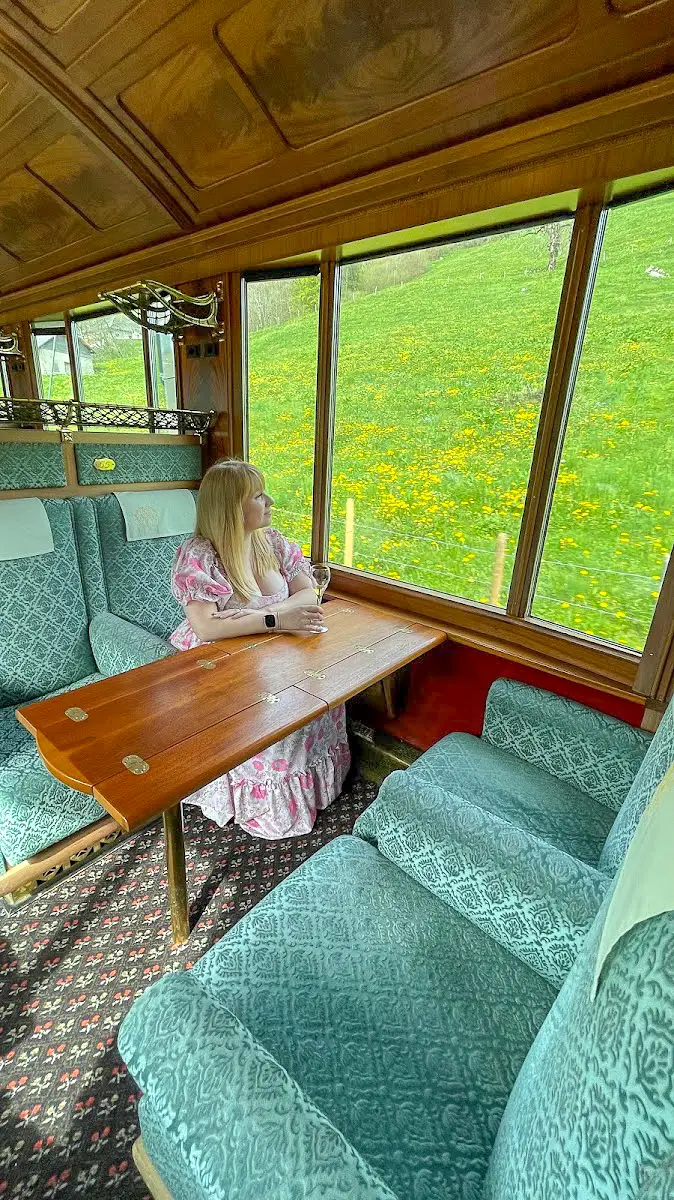
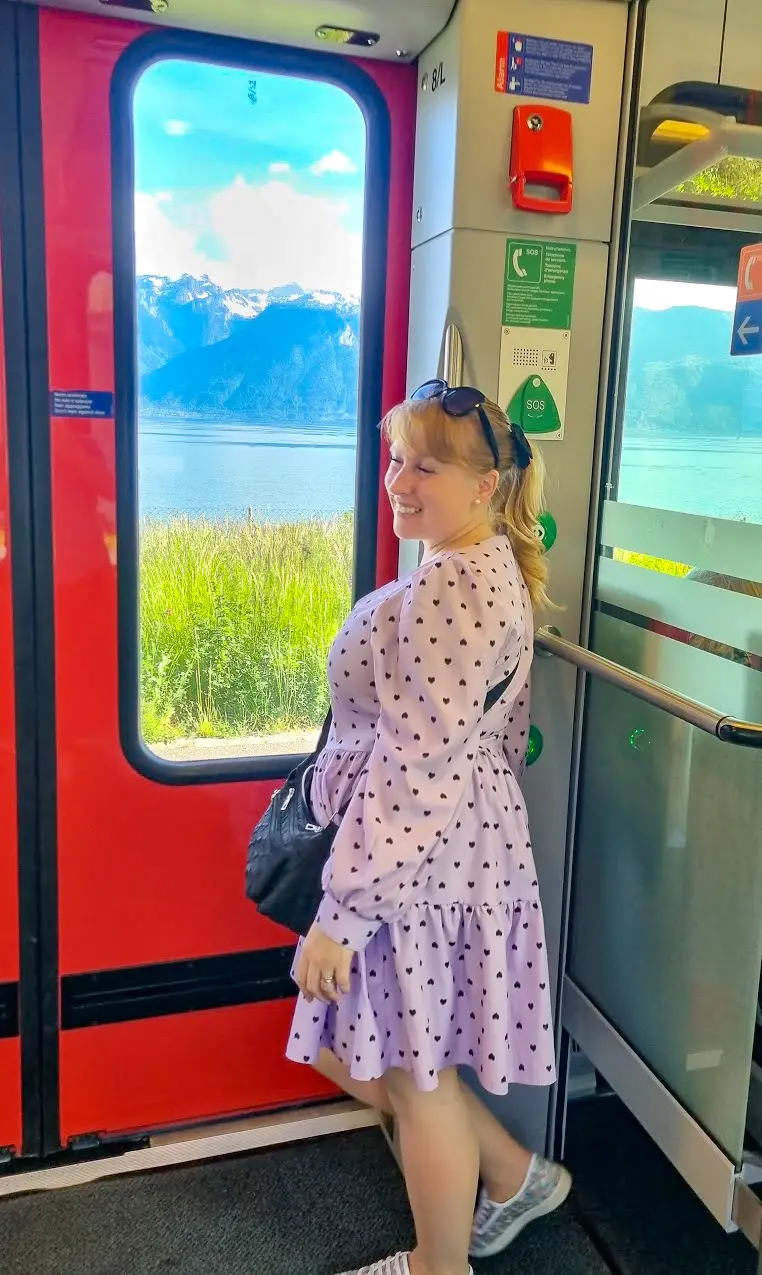
    We decided to use our Interrail passes for one of their coolest perks and get special trains both ways. In fact, this was half the reason we wanted to visit Montreux. To reach Gruyères we first boarded the beautiful 1930s style Belle Epoque train. By rights, a train this gorgeous and vintage should be hauled by a steam engine. You’ll forget that it’s not as soon as you enter the carriage lined with turquoise brocade and gleaming wooden seats.

    We ordered a glass of champagne to share (budget travellers over here) and our bad influence got the guy next to us to get one too! The views were gorgeous as we climbed the switchbacks by the lake and then we trundled up through the valleys for about 40 minutes.

    All Change

    We changed at Montboven. It was a tight connection, just four minutes so everyone that was due to change was getting very twitchy as we pulled in. More fool us to doubt the Swiss Travel System. Our train to Gruyères was across the platform and someone was there to point us right to it.

    La Maison du Gruyère

    Our first stop was right next to the train station and one, not to be missed. The cheese that has taken its name from this area is made right here in town and you can see them creating the mildly nutty delight on site. Even if people aren’t visiting the museum, they can see the giant cheese cave. This is a huge room with row upon row of maturing cheeses. They sit here for 5 – 12 months before being demolished by happy diners, picnickers…and me.

    The first choice you have to make is whether or not to buy the little tasting packet that is on offer. We jumped at the chance and with our cheese in one hand and audio guide in the other, headed into the busy museum. There was a small area dedicated to what makes the milk here so special. It all comes down to grazing. The cows are free to roam /on the mountains for half the year and on the plains for the other half. They munch their way through all kinds of delicious wildflowers, grasses and herbs so their milk is full of yummy things too.

    As with most audioguide-led exhibitions, people shuffle along nodding and smiling at each other while they listen intently to the commentary. This was designed for all the family so it was slightly…well…cheesy. Fun though!

    The guide leads you into an observation area that surrounds the production floor and people gather to gaze down upon the cheese makers. This kitchen, with its floor slick with ivory milk, has about 30 cheese moulds full to the brim with milk. There are also huge copper vats with swirling milk, churning away. It is strangely fascinating to see the workers follow their daily routines, filling, draining, flipping and measuring the proto-cheese. We did our little cheese tasting as we watched the milk spin, moving from the mildest to the punchiest (and saving one of the packets for a later lunch…we are such backpackers).

    Click here for more tips on saving money in Switzerland

    Up the Hill to Gruyères

    The old village of Gruyères is a 15-minute walk away from the station and we followed a steady stream of tourists heading in that direction. Already slightly stuffed with cheese, I wasn’t too keen on the steep hill that led up to the grand ramparts. I am not convinced you can see just how steep it was but trust me, we were very much out of puff at the top of the 53m hill. At the top of the hill are the walls of the town you can climb them and take in the view (but catch your breath first).

    The Gruyere Festival

    We emerged through an arch onto a street heaving with bemused tourists, satiated cheese fans and plenty of locals who clearly knew all the best spots. It was so blooming pretty. The town and its walls date back to the 1190s so it had serious medieval/fairytale vibes. We took a wander around the stalls. There were local handicrafts and lots of food offerings including some gorgeous baked goods and of course, cheesy treats.

    More Cheese Please

    By watching the people, we clicked who knew lots of people and what they were doing. These casual strollers didn’t have walking shoes on or rucksacks strapped to their backs. After a short investigation, we realised they were all heading for one particular food truck. We sidled over and found it offered raclette and a glass of white wine for just 6 CHF. This sounds like a lot but for Switzerland, it’s quite the bargain. We perched on a wall and luxuriated in the joys of melted cheese and crisp Swiss wine.

    We also grabbed free cheese samples from the official Gruyères Festival tent, and samples of hot, unctuous fondue from another. How much cheese is too much? I will tell you when I have found out.

    Taking a Stroll Through Gruyères

    We had planned to pop into the incredible Giger Bar, featuring the artwork of H. R. Giger. He is a Swiss painter whose strange art is most commonly known from the film Alien. However, it was rammed and very hot so we had a quick nosy and then backed out. If we go back, we will take the time to visit the museum and the bar for sure!

    Gruyères has a castle, Château de Gruyères, which perches on the edge of the town, raised and with amazing views across the Fribourg hills. It was built in the 1200s and now houses an art museum inside the medieval walls. You can see murals and stained glass windows that have been created over the centuries.

    We wanted to give the castle a quick visit but decided to circumnavigate it first. We took a path that looped around the castle…or at least, that was the plan. The path actually ended up going down a hill so we just followed it. Distracted by the views and having a nice natter, we hadn’t quite realised the length of our descent until we looked back up. We didn’t fancy walking up again so we followed the trial to the church.

    Alphorns

    As we came out, we caught the strains of Alpine horns on the gentle breeze. We scrambled up some stairs and came out right to where the horns were performing. Alpine horns are long wooden instruments with a rounded end. They are designed to send sound a LONG way across the hills and valleys of the Alps. You can see Alphorn players across Switzerland but in Gruyères, they have a rather fun extra flourish in the form of a flag tosser. As the horn orchestra blew melodically, the tosser (no giggles please) threw his flag high into the sky, catching it with ease and a cool nonchalance. He had two flags, one with the Swiss flag on and one with the crane, the symbol of Gruyères.

    Greedy Cream Creatures

    Every menu in Gruyères has the same dessert: cream, meringue and fresh fruit. It is an Erin neat if you will. Gruyères doesn’t just make delicious cheese, but that same world famous milk is turned into unbelievably thick double cream. Well, we couldn’t find this dessert for less than 10 CHF which felt excessive but Mr Fluskey REALLY wanted one. Luckily, he found a hack in the form of an adorable village shop. Inside they had pots of rich, silky cream and packets of meringue. We were missing the fruit but that is what imagination is for right?

    We sat on the step outside the shop and dipped mini meringues into the cream, both delighting passers-by and our tastebuds all at once. It was a little embarrassing but tasted so good that I was equally ashamed and ecstatic. We managed to stop halfway down the pot and meringues, stuffing them into our bags….until we finished it for dessert at dinner time.

    I can’t bear to look up the caloric intake we put our tummies through that day….whatever it was, it was worth it.

    The GoldenPass Panoramic

    We rolled back down the hill, past the cows that make all that magical milk, en route to the station. we had a date at Chillon Castle and had to get there before it closed. We took the connecting train before making another quick swap at Montbovon.

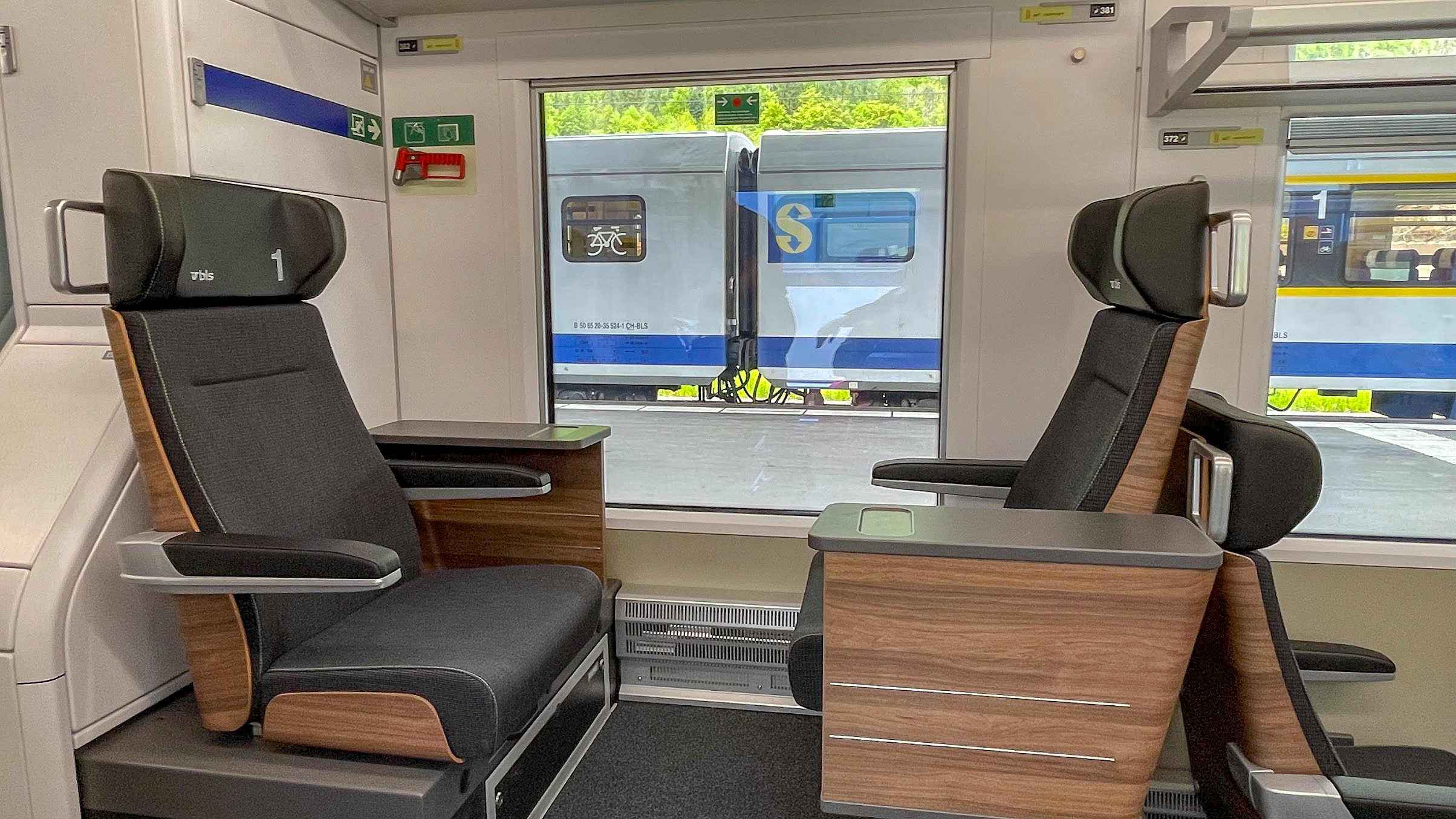
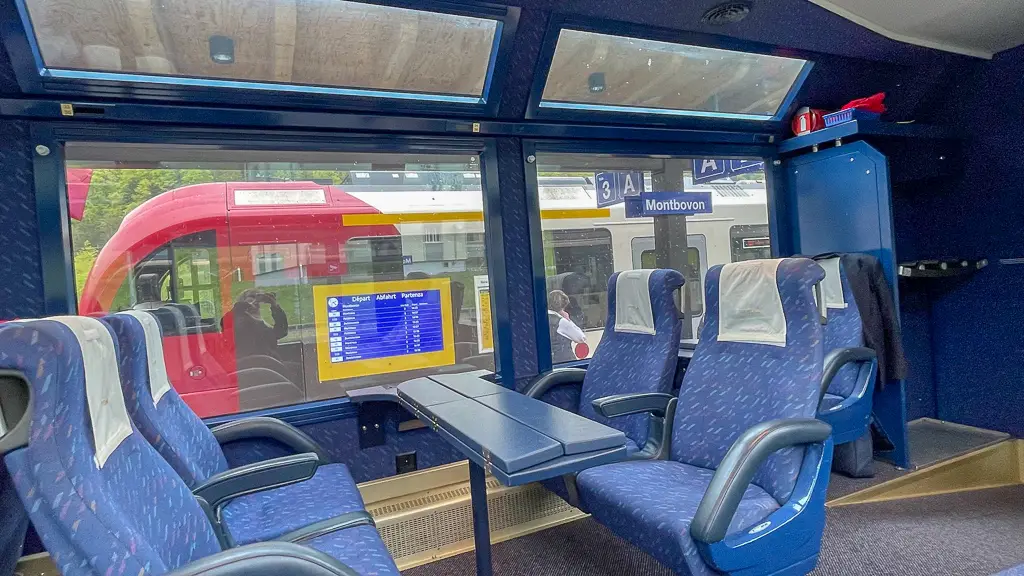
    Our train back to Montreux was the GoldenPass Panoramic which takes it name from the huge windows and the small extensions that edge the roof. These give fantastic views across the valleys, up to the snowy peaks that almost touch the sky.

    The first class cabin is a little raised giving even better views. However, even better than this is the very, very front of the train. Here, the driver is elevated allowing passengers to sit and enjoy the giant windscreen (complete with windscreen wipers). This costs extra so we decided not to bother, we could see some of it anyway. However, the conductor invited an adorable little boy and his grandma to sit there. As she took them down, she waved us to sit there too and so we jumped at the chance, revelling in the special treat.

    Final Thoughts

    I can’t believe how lucky we were to time our trip to the Gruyere Festival. It was a total fluke but really made our visit special. That being said, even if it hadn’t been a festival day, Gruyères is such a worthwhile trip. The factory was really interesting and got us very much in the mood for cheesy feasting.

    Oh, and there is a double cream festival in early June too so you have two chances to stuff your faces festively!

    The old village of Gruyères was incredibly picturesque, resembling a scene from a fairytale. We would have certainly visited the castle if there hadn’t been so much activity happening outside. It would be brilliant to return and see the castle and that super cool Giger Bar properly so maybe we will see you at the next Gruyere Festival!

    Rosie xx

  • The Pros and Cons of Interrail and Eurail

    The Pros and Cons of Interrail and Eurail

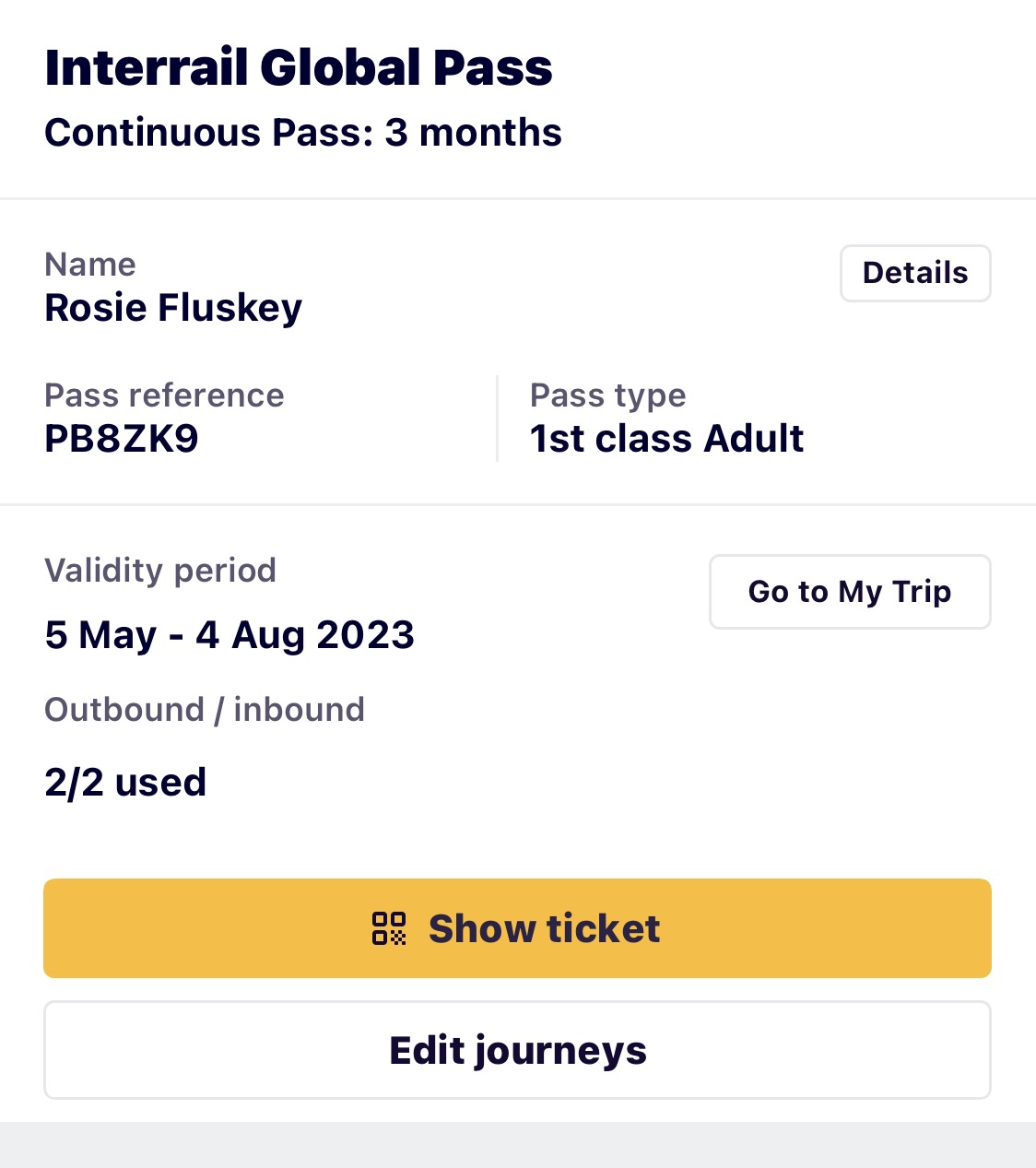
    In May of 2023, we spent a month travelling around Europe with an Interrail pass. Mr Fluskey was there for some of it too but had to work a bit. We had Global Passes with unlimited travel days so their most flexible and wide ranging pass. After a month of travel, I have compiled a list of the pros and cons of Interrail and Eurail to help you decide if it is for you.

    This post may contain sponsored content or affiliate links that help support the blog. All opinions are our own.

    THE PROS

    The Possibilities

    Travel planning is exciting!

    Well, I think it is anyway. Scanning through your possible destinations are lousy, the joy of research and discovery. You may start with a plan to see all the big hitters, London, Paris, Berlin, etc, but instead find a list of gorgeous underrated spots that sparks your wanderlust. Perhaps you decide to take an Instagram Odyssey with photo shoots covering Venice and Prague. It could be that you find you would rather take the slow route, hopping off at local stations. You’ve never heard of just to see what’s there.

    How exciting is that?!

    Flexibility

    It is true that Interrail can sometimes be a little more expensive than booking a bunch of advance tickets we ahead of time. However, these nice cheap tickets are normally non-flexible and non-refundable, meaning your itinerary is fixed. however, you can change your mind at a moments notice when you hold an interim past. Just add a new journey to your app and off you go.

    There are two exceptions to this joyful, flexible travel:

    • Travel Days – You can only travel on your “travel days”. Many passes have a certain number of these included (5 days in 30 for example). Once your travel has begun on any given, that is your day used up. You cannot change it once travel has started. (More on this on the cons section).
    • Reservations – This one will only affect you if you’re planning to take popular routes or fast trains that need reservations. Changing your mind at the last minute could mean you can’t find a new seat and/or you will lose your reservation fee. (More on this on the cons section).

    It’s Better for the Environment

    Now, I cannot claim to be a sustainable travel addict. I work for an airline and we fly long haul on a semi regular basis. However, we don’t have a car and I am a big advocate for public transport so train travel is one of my favourite ways to travel. It is wonderful to know that, although you are covering hundreds of miles, you aren’t having a terrible impact on the environment. On my Interrail trip, I travelled almost 5000km and the Eurail app tells me I saved up to 90% CO2 on flying. I also popped it into a carbon calculator and it was a third of the same distance by car….which is nice.

    No Designated Drivers

    Now I don’t just mean after a night out. Travelling around Europe is exhausting. There is so much to see and do, meaning you will be out and about, walking all day and repeating that day after day. If you then add driving on to this, you will be knackered! A long train day means everyone can have a nice nap…plus, you can all have a drink whenever you fancy.

    A glass of Aperol Spritz and a champagne flute with a red bubbly drink in Dubrovnik, Croatia
    Cocktails, cocktails, cocktails!

    Leading on from that:

    I’m Blind

    Well, visually impaired. This means, if I want o travel independently, I cannot drive. Sitting on a train requires no vision on my behalf so it is a great way to travel! If there is any reason you cannot drive, then catching the train is a great option for you too.

    Extra Discounts

    The Interrail past comes with a few little discounts that you wouldn’t get just travelling by train independently. Sam Hostel’s work with Interrail to offer people discounts on their beds, some cable, cars and vernaculars in Switzerland will give you up to 25% off, and even better if you are staying in Interlaken, Switzerland, you can take lake cruises completely free. One of the most useful and widely used discounts is 10% of anything on get your guide.com, discovers day, tours, food, activities, theme, parks, like Disneyland, Paris, and bottomless and boat trips in Budapest that leave you a little more than tipsy.

    Trains vs Buses

    One thing Europe blacks is seriously luxury coaches. I am sure they exist on the odd route, but for the main part, coaches in Europe, white standard with not that much legroom and not that much for Kline on your seat. This is one of the many reasons we’ve ever trains. Here are three more:

    • You can easily hop up and use the bathroom. Sometimes you will have the bathrooms on a coach but they tend to be cramped and a bit mucky. Obviously train toilets aren’t ideal, but they are a little bigger, usually a little cleaner, and there is more than one.
    • Trains can go slowly, obviously, but there is something a little less depressing about being delayed in some pretty countryside than on a motorway. In general, we think the views from the train are prettier than those on the road.
    • In general, the ride is more comfortable. You are not stopping and starting like you are on the road, you can get up and stretch your legs whenever you like, you aren’t wearing a seatbelt, so you feel a little more relaxed, and if you have lots of seats and are exhausted, you can have a little snooze stretched out across the lot.

    Trains vs Planes

    Now, I work for an airline, and I do enjoy flying, but there is no doubt that some aspects of travel by train are much better than those in an aircraft.

    You don’t have to deal with airports. Turning up three hours early, carrying teeny weeny liquids to comply with the rules, queuing, queuing, queuing, it is all the preserve of the airport. (It is worth saying that the Eurostar can feel a bit like this at the terminals but it still isn’t as bad). Train stations are usually in European city centres so once you disembark, you are right there in the thick of it. Over multiple stops, this really saves you a lot of time. Plus, the views from a plane are nice but they can’t beat those at ground level for interest.

    view out of a plane window of the wing and Rome when landing

    The App

    Finding trains was so easy with the app. To find a journey, you pop in your origin and destination, date and time and it will bring up all the options. You can filter search results by “No Reservations” or “No Changes” etc. I really enjoyed playing around to see different choices. My last few days of travel weren’t confirmed until we were already on the road….or is that rails….and I spent a happy hour or two looking at all the different ways to get back to London. Where I could stop, how long the different ways would cost and how long they would take!

    THE CONS

    The App

    Yes, the app can be glitchy too. My pass kept timing out strangely, meaning I had to deactivate it every time an inspector came around. This could be a few times with trains that crossed borders and it was a bit stressful when it wasn’t cooperating.

    The Price

    Overall, if you are going on a big adventure then the Interrail is a great option. If you are looking at the one country, minimum travel day passes then I am not sure it is worth it.

    It is also worth checking where you want to use it. If you have a Global Pass but spend two weeks in Poland where train travel is really cheap, you probably aren’t getting value out of your pass. Whereas, it is a thousand percent worth it for travelling on Swiss trains.

    Booking Reservations

    You’ve bought your pass and then you are bombarded with a bunch of “Reservation Required” messages. This does remove a bit of the flexibility on your trip. You will find that during high season or public holidays, you will need to organise these reservations ahead of time as they will run out.

    Most reservations cannot be made in the app, rather you will have to go to the Eurail website or the individual train operators website. This is a bit annoying. It is time consuming.

    Now, trains can be delayed and this may mess up your onward reservations. If this is the case, when you reach your transfer station, hot foot it to the ticket office and they should change your reservation for free. It’s always good to be fast and get their ahead of the other people on your train so you can request a window/aisle/any free seat.

    Reservation Fees

    There are plenty of trains that require you to pay for a reservation fee on top of the ticket price. If you are taking lots of fast or long distance trains, you will rack up the costs very quickly. It is possible to avoid reservation fees in most places by taking slow locals trains with lots of changes. But this may not be possible if you don’t have a long time to travel. It is also not possible when travelling from the U.K. to the continent. The Eurostar always requires a reservation and this is around £30.m each way.

    In total, for fast trains through France, return Eurostar trains, Swiss reservations and a night train, I spent an extra £100 or so.

    Being on a Schedule

    Yes you can hop and off trains but realistically you are going to be travelling between big urban centres. There may only be one train a day that goes directly between those two places and so you are beholden to their schedule.

    Travel Day Drama

    This is not something we experienced personally as our pass had unlimited travel days. On many passes, you choose how many travel days you think you’ll need. You can only take journeys on these days. (Night trains will run into the next day but won’t use another day unless you change onto another train). Once you have commenced travel on one of these days, it will be used up no matter how plans change/fail. You can’t change your mind and reset so once you have set foot on your first train, you are committed! If for any reason, you have to travel on more days than you planned, you will just have to pay for the extra transport as there is no way to add days to the pass.

    Your Luggage

    Choosing independent travel rather as part of a tour means dealing with your own luggage 100% of the time. Running through a train station, lugging bags up and down stairs is a world away from getting them on and off your group’s coach.

    City Transport Costs

    The Interrail Pass doesn’t cover travel within cities in most places. You might get lucky if they have a mainline rail system that passes through. But buses, metros, trams etc will need to be covered as an extra cost. This is one of those quirks that can catch people out so at least you are forewarned.

    Final Thoughts on the Pros and Cons of Interrail

    We had a blast Interrailing in Europe and although I’ve listed some cons, the the pros really outweighed them. It was a wonderful adventure and having the app allowed us to travel with a sense of control and freedom. If you can afford to Interrail then I cannot recommend it highly enough as an excellent way to see Europe.

    Rosie xx

  • 10 Reasons to Choose a First Class Interrail Pass

    10 Reasons to Choose a First Class Interrail Pass

    Travelling across Europe with interrail (for Europeans) or Eurail (for the rest of the world) is a travel rite of passage. Whether you are a hard-saving graduate, millennials after a fun adventure that is different from your normal holiday or recent retirees with time to travel, it is an amazing way to see the continent. There is no question there, the question we hope to answer is why you should choose a first class Interrail pass like we did. Here are 10 reasons you will love a first class Interrail pass.

    This post may contain sponsored content or affiliate links that help support the blog. All opinions are our own.

    If you haven’t already booked an Interrail ticket, use our link. It won’t cost you any extra but will help support the blog – BOOK NOW

    1.) More Personal Space

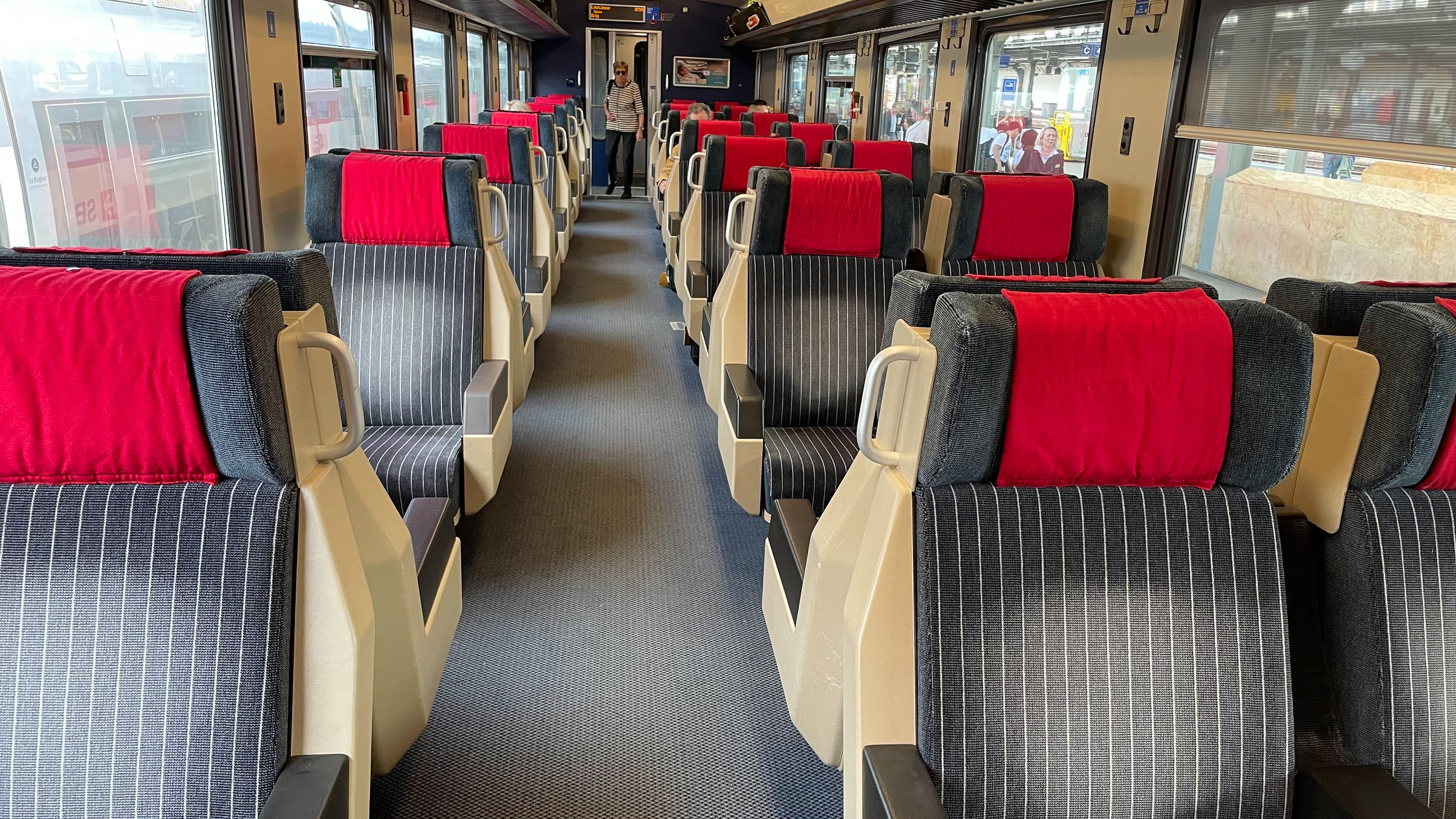
    The first and the most obvious difference between first and second class on European dreams as a side and comfort of the seats. This isn’t true on every train, sometimes the only difference is literally the addition of a small headrest cover (southern railway I’m looking at you). However, on 90% of services, you can expect a seat with more legroom, which is wider than standard or second class, and often with a nicer cover and more padding. And some trains have in the visually reclining seats, and Sam, like the French TGV, have comfortable foot rests that flip up to support your lower legs.

    2.) More Space in General

    In the carriages, you’ll often find that the seats are less densely packed. Many first class carriages have single seats on the side of the aisle, perfect for solo travellers. This is especially handy if you have to use a laptop as you won’t need to worry about your flapping elbows whilst you type.

    As the prices for first class on European trains can be a lot more expensive than standard. It is possible you will have carriages half empty or entirely empty. This is great for peace of mind…and peas in general. less people means less stress that your bag or go missing, less noise in the carriage and more relaxing for you.

    3.) The Toilets

    Even the bathroom in first class can be fancier, and as they are shared with fewer travellers, they are normally a little fresher too. (No matter which class you are in, remember that many stations charge to use the bathroom so using them on board is always a good plan).

    Going Interrailing? Check out our Interrail packing list here

    4.) Physical Convenience

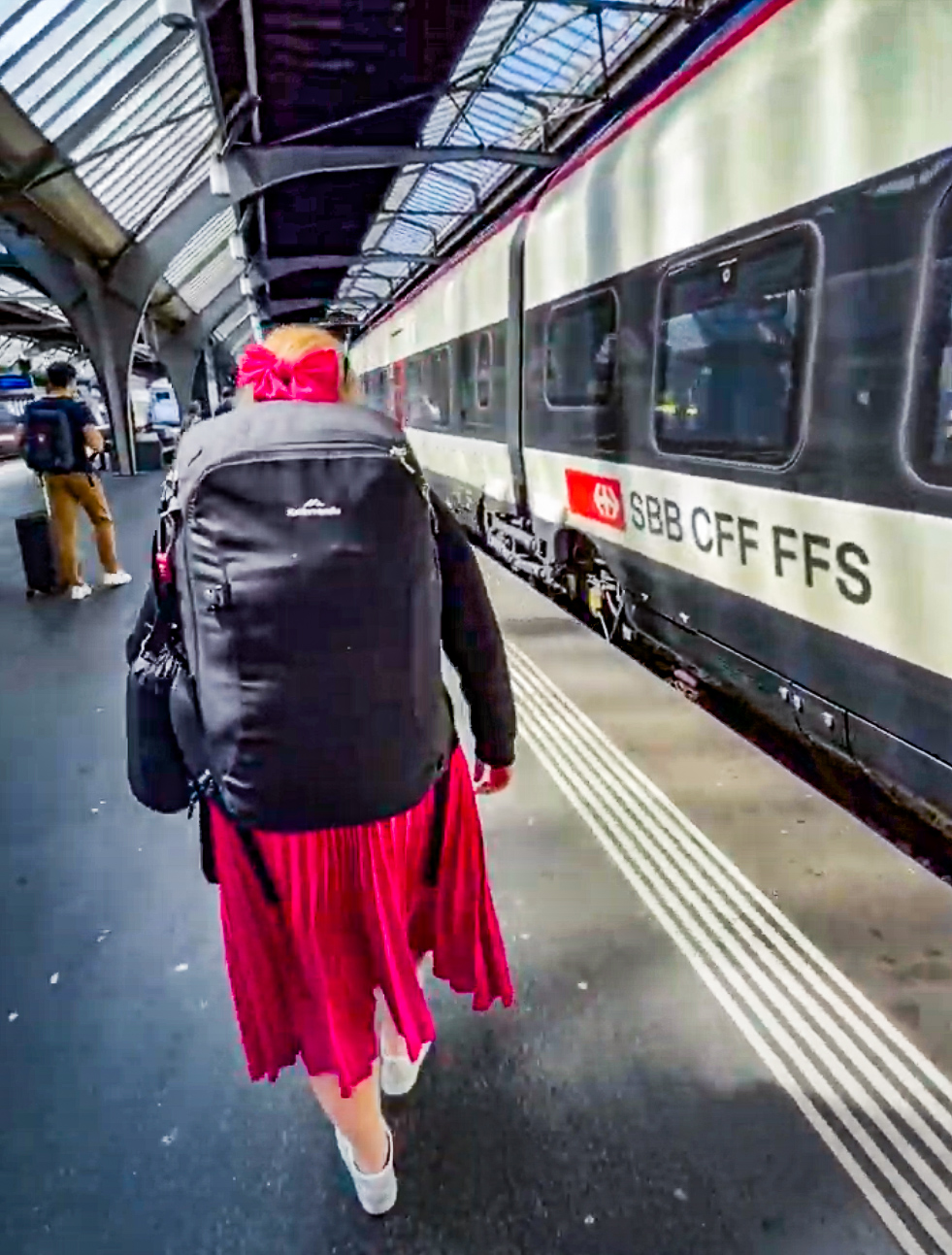
    Train companies will oten arrange their carriages so that the first class are closer to the entrance or exit (at the front or back of the train). Look for this on Thalys and Eurostar in particular. This is probably designed for people who have to rush off to their very important business meetings but if you are Interrailing, you may just appreciate the time saving for a tight connection or just so you don’t have to drag your bag so far.

    5.) Easier Booking

    First class reservations are typically easier to snatch up as there are less people trying to reserve the seats. Often we strolled through packed second class cabins to our reserved first class seats in a nice, quiet cabin.

    6.) Those Little Extras

    Fancy a free newspaper? Or maybe you need some more modern entertainment. Perhaps a plug and free Wi-Fi would suffice? Well you’re funny little extras in many of first class carriage in Europe. The newspaper is more of a rarity, but I am guessing the power outlet for every seat is probably more useful in this day and age.

    7.) First Class Lounges

    There aren’t loads of lounges on offer to first class Interrail pass holders but those that do exist after a chance to sit and relax. In huge busy stations like Vienna heading up to the quiet sanctuary of the SBB lounge is a godsend. Are you fine plugs free Wi-Fi is, snacks and drinks. I’ve visited and stocked up on nibble before my Nightjet train to Strasbourg..

    If you haven’t already booked an Interrail ticket, use our link. It won’t cost you any extra but will help support the blog – BOOK NOW

    8.) At Seat Service (Paid Food)

    There are a few trains that offer at sea service. You will need to pay but it’s nice to pick something from the menu and have it arrive at your location. The alternative, staggering through a cluttering train and queueing at the buffet car seems a lot less appealing. The service can range from tea and coffee, to full on meals on some long-distance trains and even glasses of champagne on some special Swiss trains like the Glacier Express or the Belle Époque.

    Check out The Battle of the GoldenPass – Belle Epoque vs Panoramic

    One company that offers what I think is the best at-seat service is Regio Jet. These trains operate between Vienna, Budapest and Prague. The reservation to sit in business class is just €2.50 with your first class Interrail pass. This includes a welcome drink and you can opt for sparkling wine so that makes the fee worth it alone. Then you have a menu full of incredibly cheap food and drink options to choose from. Sushi and a slice of cake for €3.50? Nice!

    9.) At Seat Service (Free Food)

    In the UK you may get a meal, especially on the East Coast services that travel up the country. At the very least you should get a coffee on a long distance train. Check individual company websites to see what they offer.

    When travelling on the Eurostar, first class Interrail pass holders are in Standard Premier. In this carriage you are served a small, cold meal with juice or wine. It makes the reservation fee feel a little more worth it and the journey a little more luxurious.

    10.) The Superior Views

    A nice view is a nice view, I’ll grant you that. However, in some trains, especially in Switzerland, the first class carriage gets a superior window set up. Panoramic windows that extend right up to the ceiling give travellers beautiful views right up to the sky. Combine these with reclining seats and you have an exceedingly pleasant way to spend a few hours whilst covering a few miles.

    Final Thoughts

    Whether you’re travelling for leisure or business, using a first class Interrail pass promises a much more comfortable and convenient way to travel. It would definitely help make a truly memorable train adventure across Europe.

    Rosie xx

  • A Bed in Ljubljana – B&B Hotel Ljubljana Park Review

    A Bed in Ljubljana – B&B Hotel Ljubljana Park Review

    In 2023, we took a month-long Interrail trip through Europe. We revisited several favourite spots but decided we should see somewhere new, and settled on Slovenia. During our visit to Ljubljana, we stayed at the B&B Hotel, a chain we had never heard of before (of course now, we see it everywhere). Read on for our full B&B Hotel Ljubljana Park review

    This post may contain sponsored content or affiliate links that help support the blog. All opinions are our own.

    Location

    We chose Ljubljana as a base for our few days in Slovenia and so needed a hotel with a great location. B&B Hotel Ljubljana Park is halfway between Ljubljana’s train and bus station and the old town. It was just ten minutes in either direction, making it perfect for carrying luggage and exploring the town. The hotel is in what looks like a tower block on a leafy housing estate. It is an old 1960s tower block but don’t let that put you off. Turns out the building next to it is full of pensioners (found out on a bike tour we took) and the park is very quiet. It is great to have nice high rooms with views over nearby buildings and many leafy trees.

    A Look Around B&B Hotel Ljubljana Park

    On arrival, I discovered a clean, modern interior with some fun touches of hipster decor. I had arrived solo from Salzburg and so checked in by myself with the very friendly reception staff. Mr Fluskey was due to arrive just a couple of hours later and he also had a wonderful staff interaction. We had both witnessed them slip seamlessly from one language to another…very impressive.

    Our Room

    There are  207 rooms, 1/3 are standard and the rest are superior. Our superior guestroom was lovely and large, with a wide entryway and plenty of room around the bed. On the way in was a large area for luggage, a kind of open wardrobe. Attached was a writing desk and a space that clearly used to house a mini ridge but this was no longer there (more on that later). By the bed, we both had plugs and USB sockets, a very welcome addition. We love a plug by the bed so three each was brilliant.

    The colour scheme was a mix of calming neutrals and a funky geometric mural on one wall. It was bright with the big window and so the whole aesthetic was nice and airy.

    The Bed

    Our bed was a true double but set in the European style with two single duvets. We had become quite used to this by week three of our trip but it is something to bear in mind if you are used to sharing one bigger sheet. The mattress was quite firm which suits me but might not be to everyone’s taste. The pillows were very soft.

    The Bathroom

    The bathroom was reasonably sized with a nice large, walk-in shower on one side. It had a great rainfall head as well as a handheld one. I liked the patterned tiling which went well with the plainer frey tiles and wooden sink unit. We were provided with liquid soap in the shower and by the sink and a hair dryer in the bathroom too.

    Dining

    We continue our Hotel Ljubljana Park review looking at the food. On my first night, before Mr Fluskey arrived, I treated myself to a glass of wine in the restaurant. There were several people dining in there but I had eaten. I just had the €1.50 house wine and it was really quite delicious for the bargain price. I took a quick glance at the menu and there were plenty of popular international standards as well as local dishes (with locally sourced ingredients). There are good value set lunches and dinners alongside the a la carte.

    The restaurant is split into two, with lots and lots of tables on offer. Some look out on a leafy section od garden and some have less of a view but more light. There were also a few tables outside of the frot of the hotel but it was a bit chilly during our visit to sit outside. I think it would be really nice to be outside in the morning to enjoy breakfast

    …speaking of breakfast…

    Breakfast

    There was a decent spread at the breakfast buffet. Coffee came from either a filter coffee pot or a decent cappuccino machine. A particular highlight was the pancake machine. This automatic bringer of joy produced little pancakes somewhere between an American pancake and a tiny crepe. It was fun to watch them slowly trundle through the machine. However, you couldn’t leave them or some cheeky chap might nick your pancakes (as happened to a bereft Mr Fluskey). My tip is to grab a coffee first and enjoy it as you hover, syrup at the ready.

    Guests could also choose from a selection of cereals, meats and cheeses, breads and pastries and even a salad bar. We were both very partial to the scrambled eggs. On our second morning I just had pastries and coffee but with all the pastries being o good, it was perfect.

    The Roof

    We were quite unfortunate with the weather with the weather during our Interrail trip. Despite it being May, usually well into summer on the continent, it was actually quite cold. We still popped up the roof to see what was up there and it was lovely! You could see how lush it would be to sit up here on a nice, warm evening with the fairy lights on and the sun setting through the large picture windows.

    The Honey

    On the other half of the roof are the hotel’s permanent residents. On the roof of the B&B hotel are four buzzy beehives. They are part of the Beepath program set up in the city and they have the best hives full of very productive bees. These precious pollinators gather nectar from the urban plants and produce 40kg – 57kg of rather tasty honey every year. If you are lucky, you’ll see some at breakfast.

    As well as the beehives, there are a fair few more green initiatives. at B&B Hotel Ljubljana Park. They are genuinely trying to create a sustainable property; it isn’t just greenwashing.

    • They offer a discount to anyone that arrives by public transport. That’s 15% off for those arriving by train.
    • The mantra is, “Reduce, reuse, and recycle” and they encourage all guests to do the same with recycling bins in the lobby and reduced single-use plastics in the hotel.
    • Even the staff are given incentives to be greener with help to purchase electric vehicles and bikes.
    • Food waste is minimal and ingredients are locally sourced where possible.
    • The mini fridges from the rooms are gone, reducing energy usage massively for something that may or may not get used.

    Final Thoughts for our B&B Hotel Ljubljana Park Review

    Since we stayed at B&B Hotels we have started noticing them everywhere. We hope to see a lot more as we very much enjoyed our stay. It wasn’t pretentious, the rooms were lovely and large, the breakfast was great, the price was very affordable and the staff were so friendly! We hope you’ve enjoyed our Hotel Ljubljana Park review. We found it was the perfect blend of things that any flashpacker would need. (Plus free WiFi)!

    Rosie xx

  • Interrailing Switzerland on a Budget – How to Save Money in Switzerland

    Interrailing Switzerland on a Budget – How to Save Money in Switzerland

    Interrailing in Europe is a rite of passage for travellers from across the world. The ticket can seem expensive but one country where it really pays off is Switzerland. You will save money when compared to booking individual trains for sure. However, there soon comes the realisation that you need to pay for everything else in Switzerland too. So, how do you save money on food in Switzerland? How do you save money on accommodation in Switzerland? Is Interrailing Switzerland on a budget even possible? We share all this and more!

    This post may contain sponsored content or affiliate links that help support the blog. All opinions are our own.

    A Few General Tips

    Always Pay in Local Currency

    This is for card payments. If anyone asks if you would like to pay in your home currency, decline. The exchange rate when you do this is always terrible, with the business pocketing the difference. Pay in Swiss Francs and enjoy the better rate from your bank.

    Bring a Fee Free Card

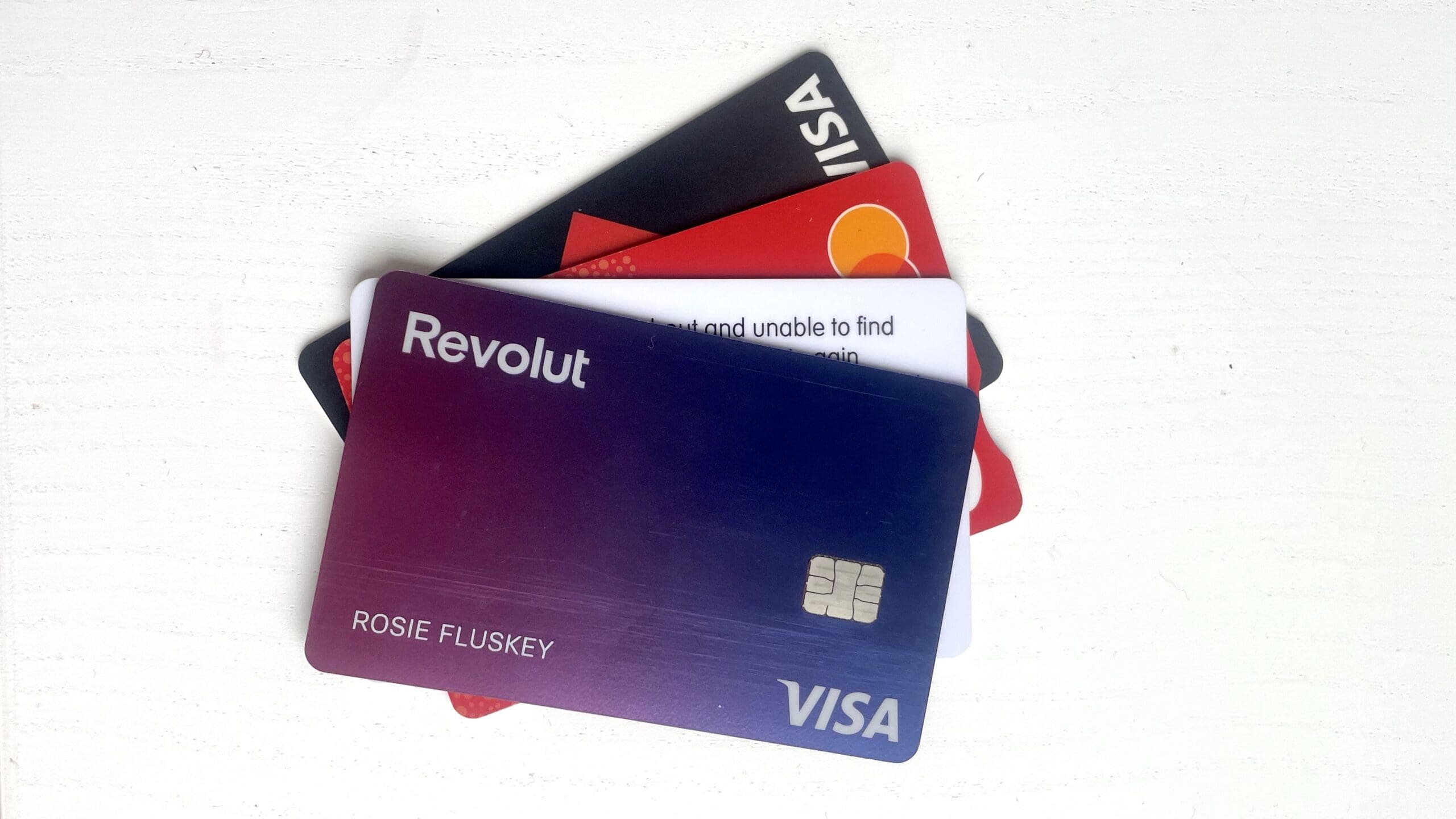
    Get a card that allows you to use and to get money out in Switzerland with no additional charges. We love Revolut but this isn’t great for getting money out. There are plenty out there so do your homework before you travel. If at all possible, bring a selection of cards (Mastercard/Visa and debit/credit).

    Plan Ahead

    Yes, Interrailing does offer wonderful flexibility but if you are passing through expensive and/or popular spots in Switzerland then it is a good idea to book a few things in advance. Getting your accommodation sorted for the key points of the trip is a good start.

    Make Sure You Have Travel Insurance

    This is an initial financial outlay but trust us, you will be so grateful you have it if things go awry! You may have to pay out of pocket at the time but knowing they will be paying you back is so reassuring, especially in an expensive country like Switzerland. This is especially important if you are planning on doing any sports or adventure activities during your trip. We recommend EKTA for your insurance needs.

    Get a Local Sim or an e-sim

    Using your phone abroad can be expensive. If you are coming from outside the EU then Switzerland is no exception. Your phone provider probably charges a fair amount every day to use your phone in Europe. You have two better options. Either pick up a pay as you go local sim when you arrive. You will only really need data so look for the cheapest data-only sim you can. However, our preferred method is to get an e-sim. This can be done in advance (as long as your phone can use them) and activated on arrival. This saves the hassle of finding a phone shop and our favourite brand Airalo is great value.

    How to Save Money on Transport in Switzerland

    First Things First: Have An Interrail Ticket

    If you have your main residence in Europe, the Interrail allows you unlimited train travel in 33 countries. This includes Switzerland. If your main residence is outside Europe, you benefit from the same discounts and opportunities with the Eurail Pass.

    There are two main types of Interrail Passes:

    • The Global Pass – The Global Pass gives users the freedom to travel through all 33 countries included in the pass. The only exclusion is that only have one day to leave your home country and one to return. This is perfect if you have a long time to travel, want to see lots of different spots or want the flexibility to make a decision later on (even whilst travelling).
    • The One Country Pass – The Switzerland Country Pass only allows you to travel within Switzerland This is ideal if you have a shorter trip, or want to explore Switzerland in more depth. Bear in mind that there is no unlimited travel option so you need to pick how many travel days and the length of pass you require.

    If you haven’t already booked an Interrail ticket, use our link. It won’t cost you any extra but will help support the blog – BOOK NOW

    Once you have booked your ticket, you are free to use local and regional trains free of charge on the days you have chosen as your travel days. This makes travelling around the country so easy and cheap. We used it to hop around the lake in Montreux, chopping and changing as we found new adventures along the way.

    Hop on the Panoramic Trains

    OK, so technically this doesn’t actually save you money BUT you will be amazed at the trains that are included with the Interrail Pass. You can have some truly special train rides without forking out for the wildly pricy Goldenpass Express and its other luxury brothers and sisters.

    • The Belle Epoque – This runs between Montreux and Zweisimmen and has gorgeous 1930s style carriages, lined with wood and turquoise seats. It feels like something from an Agatha Christie novel and is included with the Interrail Pass. You could catch this one way, and hop on another train coming back again.
    • GoldenPass Panoramic – The other train that plies the Montreux to Zweisimmen route is the GoldenPass Panoramic. This has windows that extend to the roof, with a couple more on the roof for good measure. These give wonderful views up the mountainside and across the valley of the journey. Combine these two trains and you have a great day out for free! (Bear in mind that these can get booked up in peak season so it might be worth paying the small reservation fee to guarantee a window if you really want one).
    • The Bernina Express Line – Travelling on the actual Bernina Express will cost you a reservation fee, and it is a little steep. However, you can travel the same route (around the famous Brusio spiral viaduct) on local trains for nothing. Just ensure you have a Global Pass if you intend on travelling to Italy. If you only have the Swiss Country Pass, disembark in Campocologno.
    • The Glacier Express – OK, OK, so this isn’t cheap, even with an Interrail Pass BUT you are going to save money if you have one. To ride on this iconic train, you’ll just need to pay the reservation fee. The ticket price goes up dramatically the further you travel but the reservation doesn’t so you can travel from St Moritz to Zermatt for just 49CHF or just do the short trip from Brig for 39CHF.
    City Cards 1

    When checking into hotels in much of Switzerland, you will be given a city card or region card for the duration of your stay. This can give you access to local travel. This is a great addition to your Interrail ticket because that doesn’t include teams, buses etc. For example, if you’re staying in Bern, Lucerne, Basel, Geneva or Lausanne, you get to use local public transport for free.

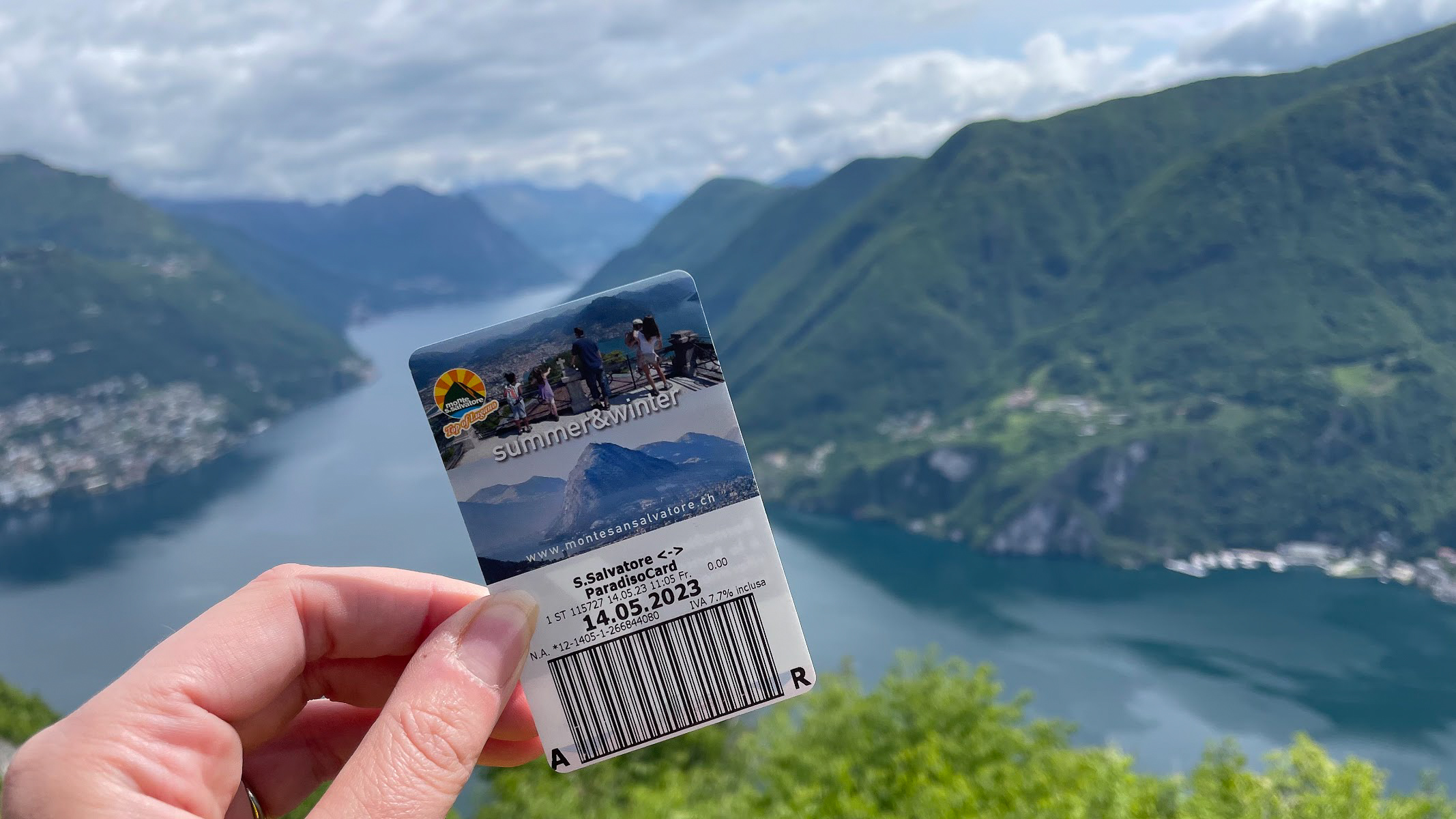
    In Ticino, that’s Lugano and around, not only does it cover the local buses but gives you a discount on the cable cars, funiculars and boats in the region.

    Take Advantage of Free Bike Rental

    If you’re visiting Zurich, Bern, Geneva, Neuchâtel, Zug or Valais, then check out their free bike schemes. You can zip around town for free on pushbikes or e-bikes depending on your preference. Push bikes in Valais cost nothing for the first four hours so you could even take these for a scenic ride into the countryside. E-bikes and mountain bikes, however, start to charge after just one hour. The bike rental spots in Geneva, run by Genèveroule, require a cash deposit and an ID so make sure you have these to hand.

    Take a Hike

    One of the best ways to get around for free is to go on a big walk. Luckily, Switzerland is full of incredible hikes through stunning scenery. Use google or your hostel/hotel reception for advice on the best walks in the area you are staying in. To be honest, we didn’t do any hiking as it was unseasonably rainy, but we definitely plan to return and hit the hills!

    How to Save Money on Food in Switzerland

    Download Too Good to Go

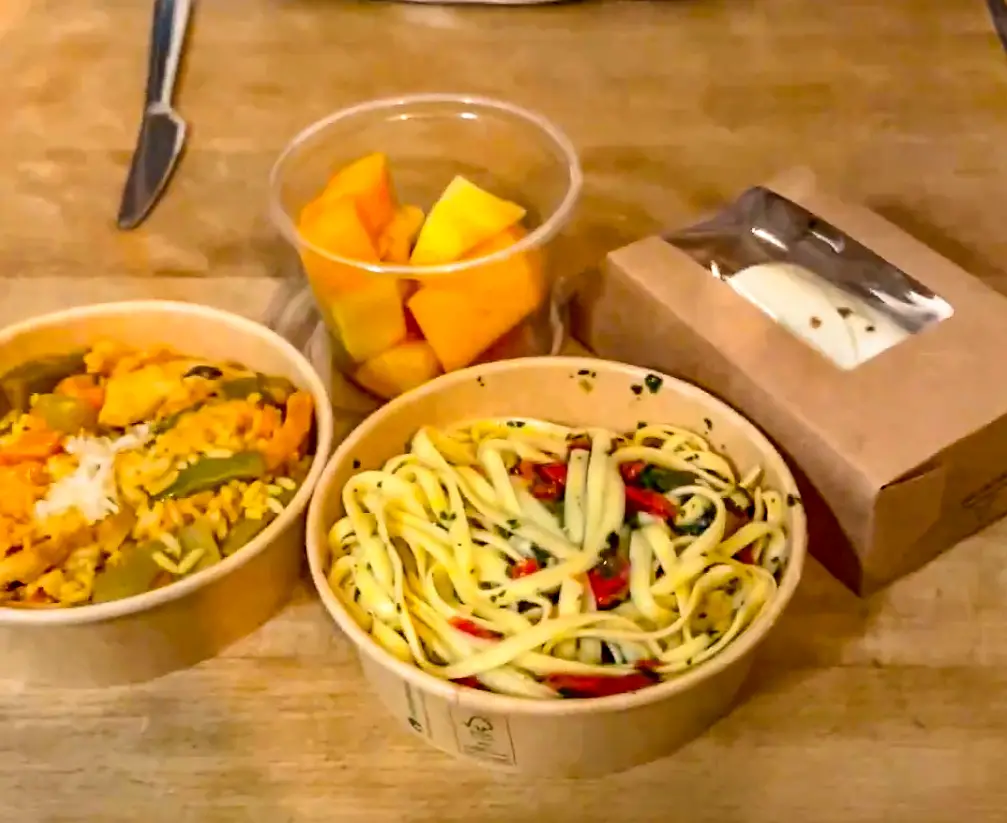
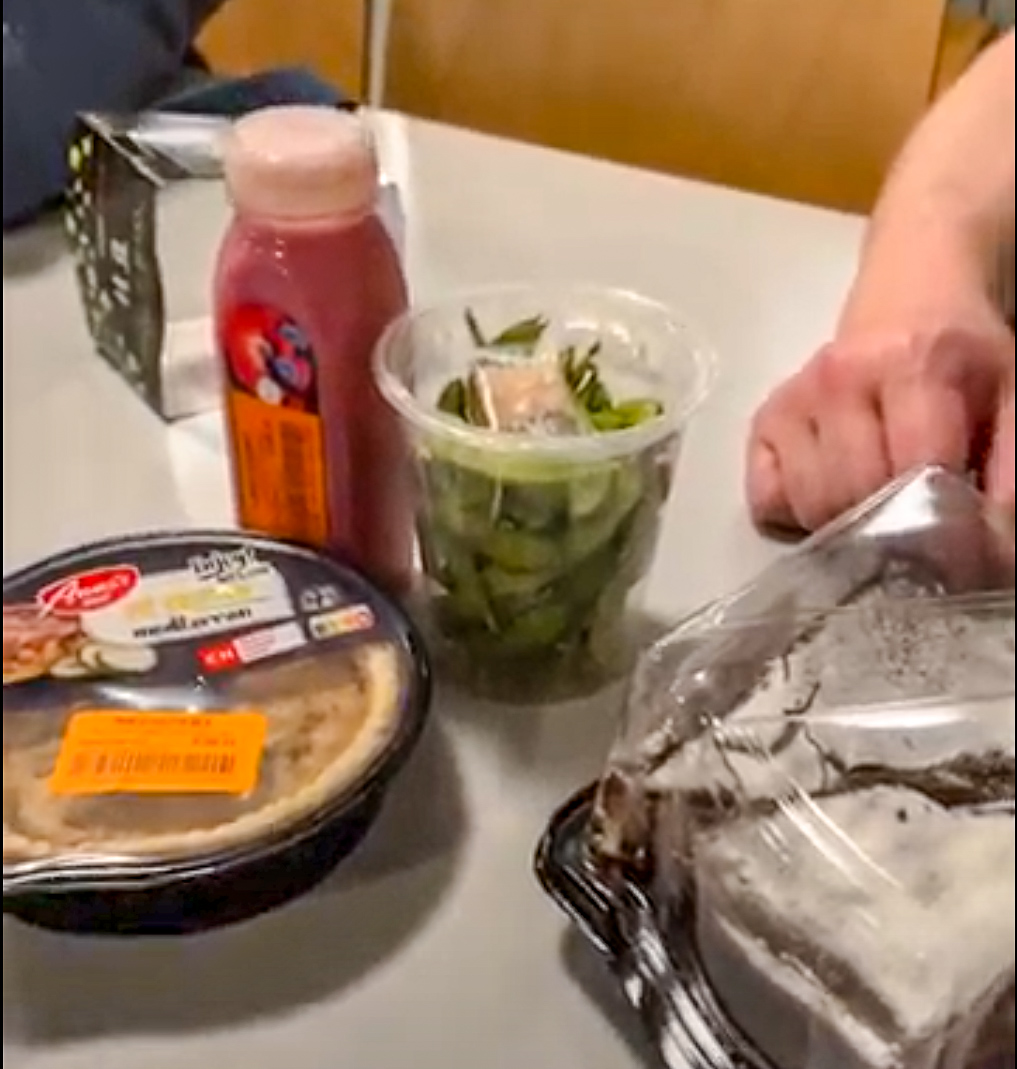
    Too Good to Go is an app created to help reduce food waste, which is great, but it isn’t why e love it. For between 6 and 8 CHF, you can get enough food to fill up. The idea is that supermarkets, bakeries an restaurants send their. Fresh food either at the end of the day, or sometimes, at lunch. Launch the app and search for places around you that are offering food. Pay for it and go and pick it up at the allotted time. You can find baked goods, groceries that will end some proper cooing, things from the ready to eat fridges or even hot food from restaurants. In Switzerland, we had great big hot meals from the Migros hot counters and ready to eat cold food from Coop. Nothing cost us more than 7CHF, which is astonishing when the cheapest main meal we could find in the sit down restaurant was 16CHF.

    Cook Dinner for Yourself

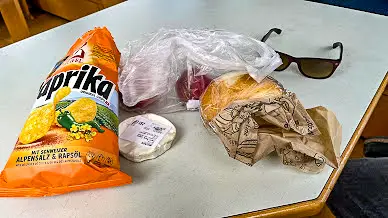
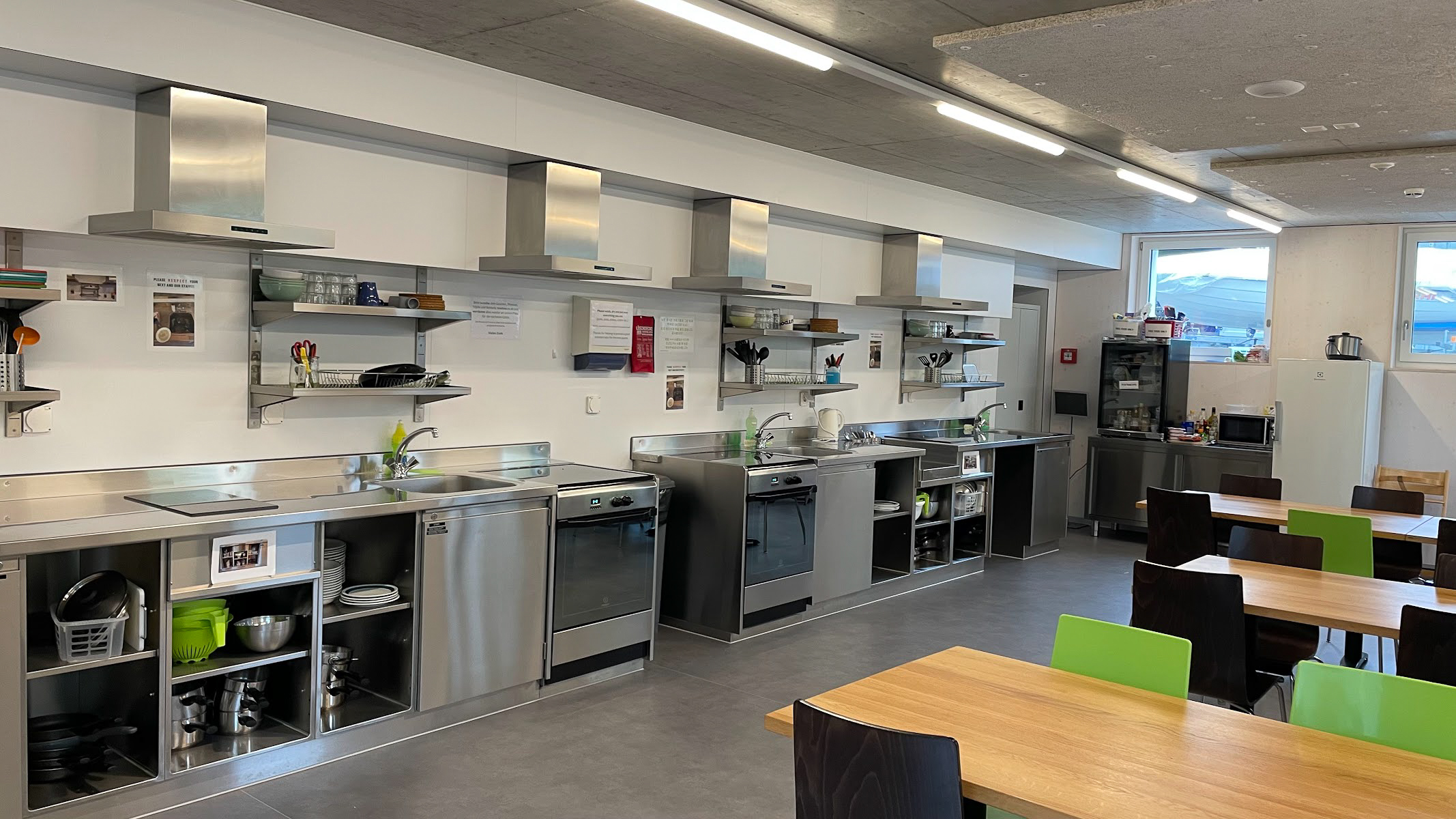
    The cheapest way to eat in Switzerland is to cook for yourself. This does rely on you having a kitchen in your accommodation, and most hotels will have one. At our hostel in Interlaken, there were lots of Korean travellers that cooked up a multi course feast in the kitchen every night. It was very impressive. We managed to boil up lots of pasta that worked for dinner hot and lunch the next day cold. (Don’t forget your Tupperware…silicone folding if possible to save space). Look out for Migros and Co op. Buying a loaf of bread, a block of cheese and a big packet of crisps is going to be cheap, cheerful and can make a few sandwich lunches. Look for red stickers for discounted food with best before dates that day.

    For more Interrail packing ideas, check out our full Interrail packing list here.

    Opt For the Lunch Menu

    If you fancy eating out in a restaurant then make it a lunchtime treat. Many popular restaurants have a plat du jour (dish of the day) which will be much better value than their dinner offerings. You are still looking at 25 – 30 CHF but that could be half the price of dinner. It is also much cheaper to eat the vegetarian option. It can be a whole third cheaper.

    Scout Out Deals Near Universities

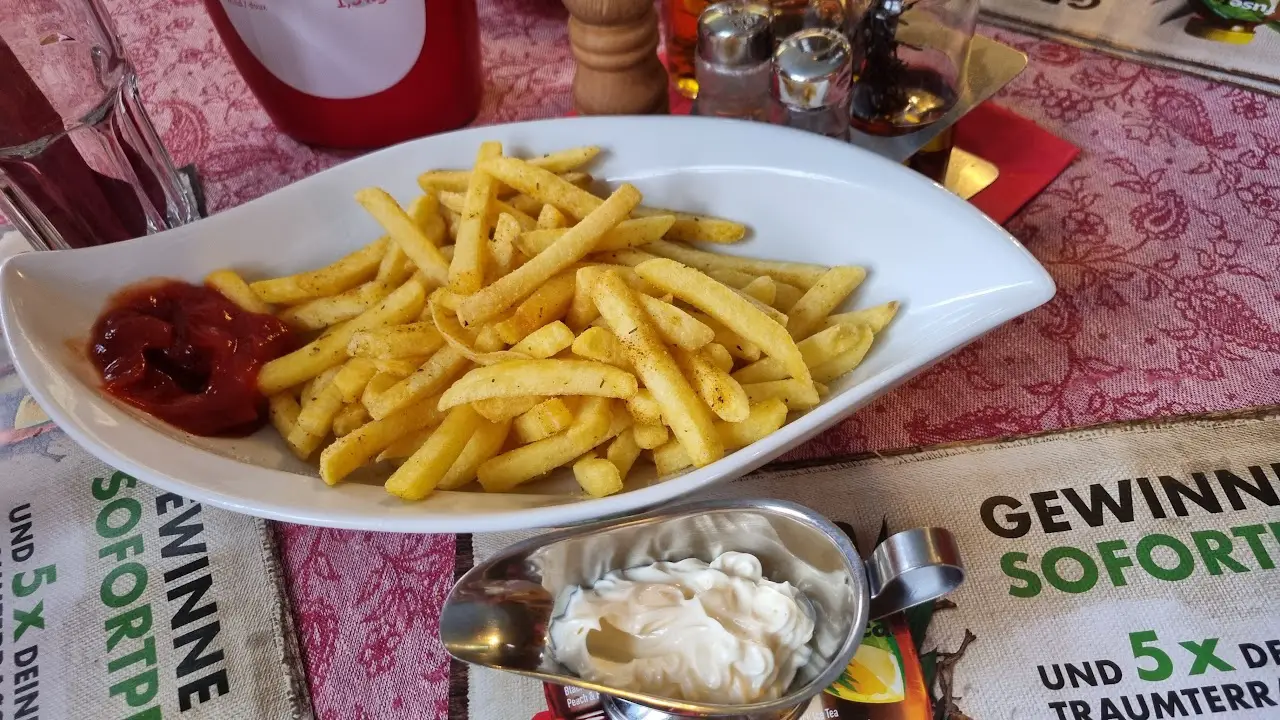
    If there is a university or college in the place you are visiting then there is likely to be a few good meal deals around the area. Take a stroll in the district and see if you can uncover any bargains. Restaurants that serve international food tend to be a little cheaper so keep your eyes peeled for Thai, Chinese and Italian options. If all else fails, find a place to fill up on chips.

    Enjoy the Free Tap Water

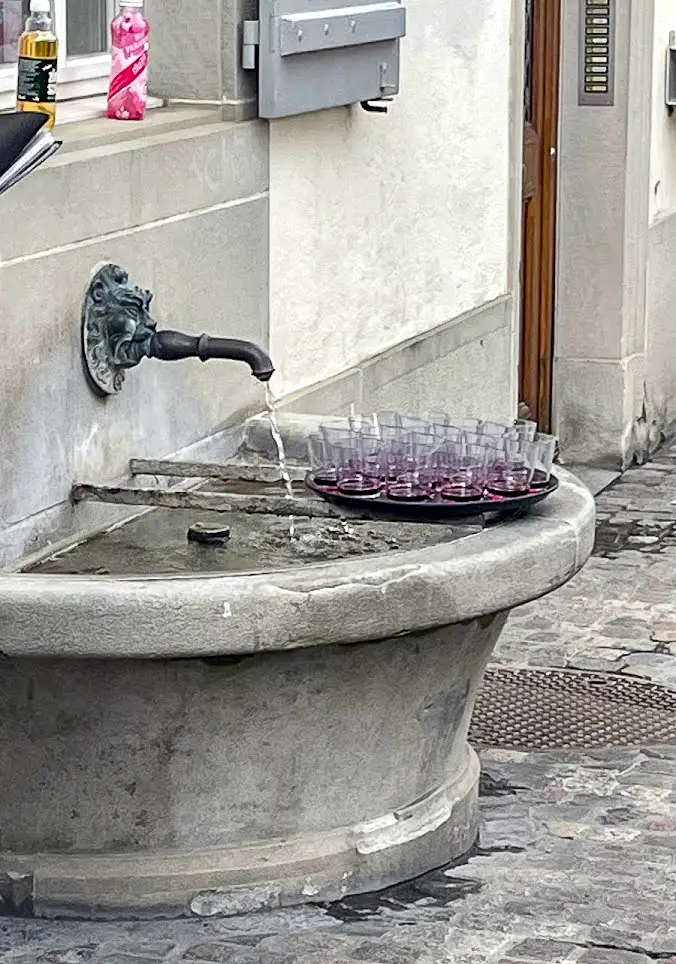
    Tap water is safe to drink, and delicious, throughout Switzerland so ask for a jug when you eat out. This saves you from having to swig from your water bottle in the middle of the dining room. In German, ask for “Leitungswasser., In French, it’s “une carafe d’eau”.

    You will also find free water fountains in plenty of Swiss towns, Zurich especially. You are safe to just fill up your water bottle for free drinks all day. We like to have squash drops to liven up the water on long days out.

    Service is Included

    Don’t forget that it is not mandatory to tip in Switzerland. On a large bill it is typical to round up a couple of Swiss Francs but the service charge is already built into the price of the food. TThis can feel uncomfortable when you are used to tipping 10-20% but it is totally fine to just pay the amount on the bill and leave.

    How to Save Money on Accommodation in Switzerland

    Visit in Shoulder Season

    Switzerland has two major tourist seasons, winter and summer. The low seasons, or shoulder seasons, fall in spring and autumn. If you visit outside of the high seasons then you have a better chance of finding cheap accommodation. Just bear in mind that some places shut for a month in April and October so if you have your heart set on a certain hotel, this might not be an option.

    Try Hostels

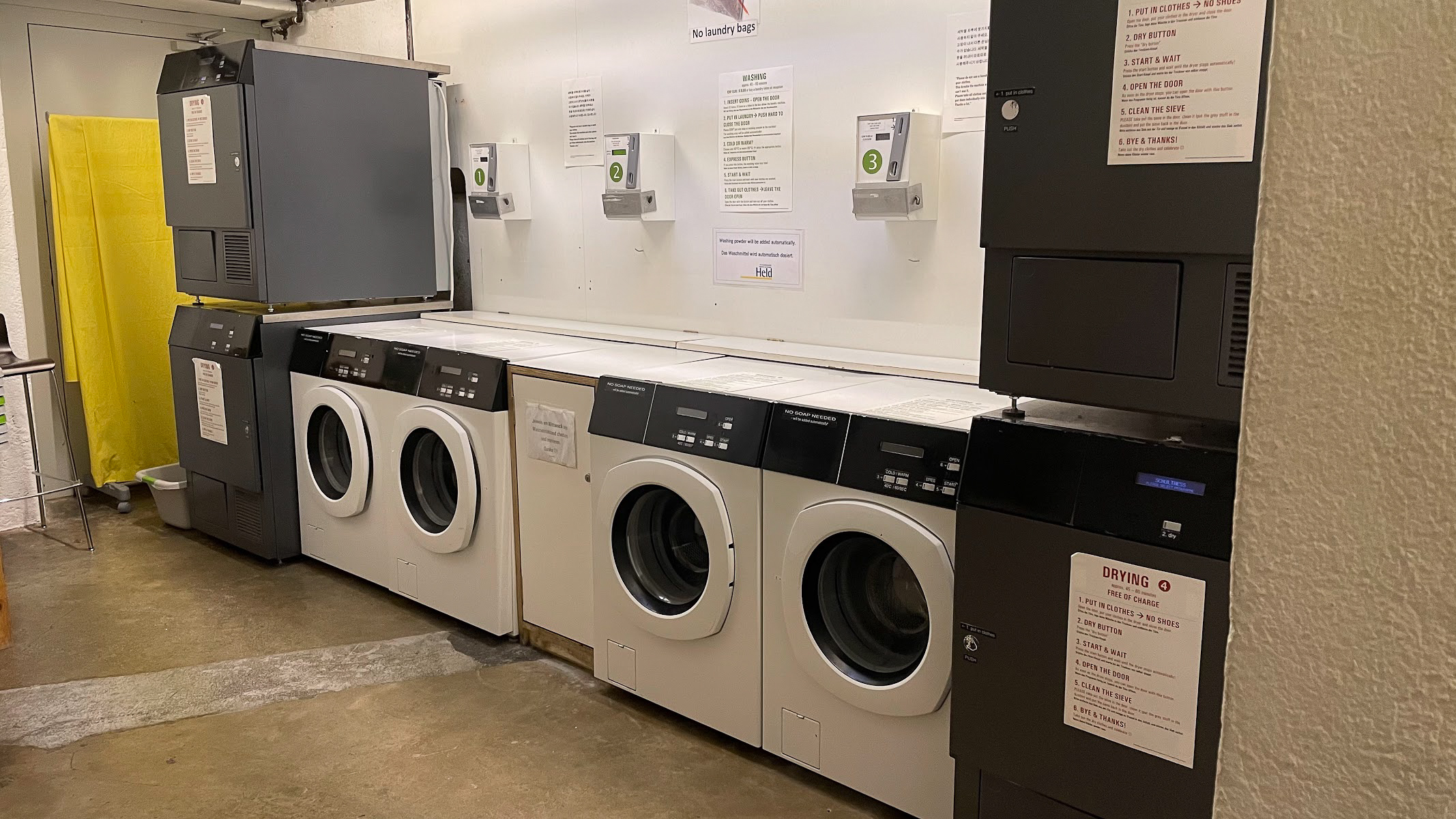
    Don’t let the word hostel scare you. Swiss hostels are clean and excellently run. Many have private rooms and are more like a hotel than you might imagine. As well as having good value rooms, you will also find laundry rooms that are cheap or free to use, games rooms for free entertainment and well equipped kitchens for preparing your own meals. Most also include some sort of breakfast too. Of course, if you are happy to share dorm rooms, you will save a bundle of cash! Just bear in mind that some dorm beds don’t include bed linen or towels so you’ll need to bring these yourself.

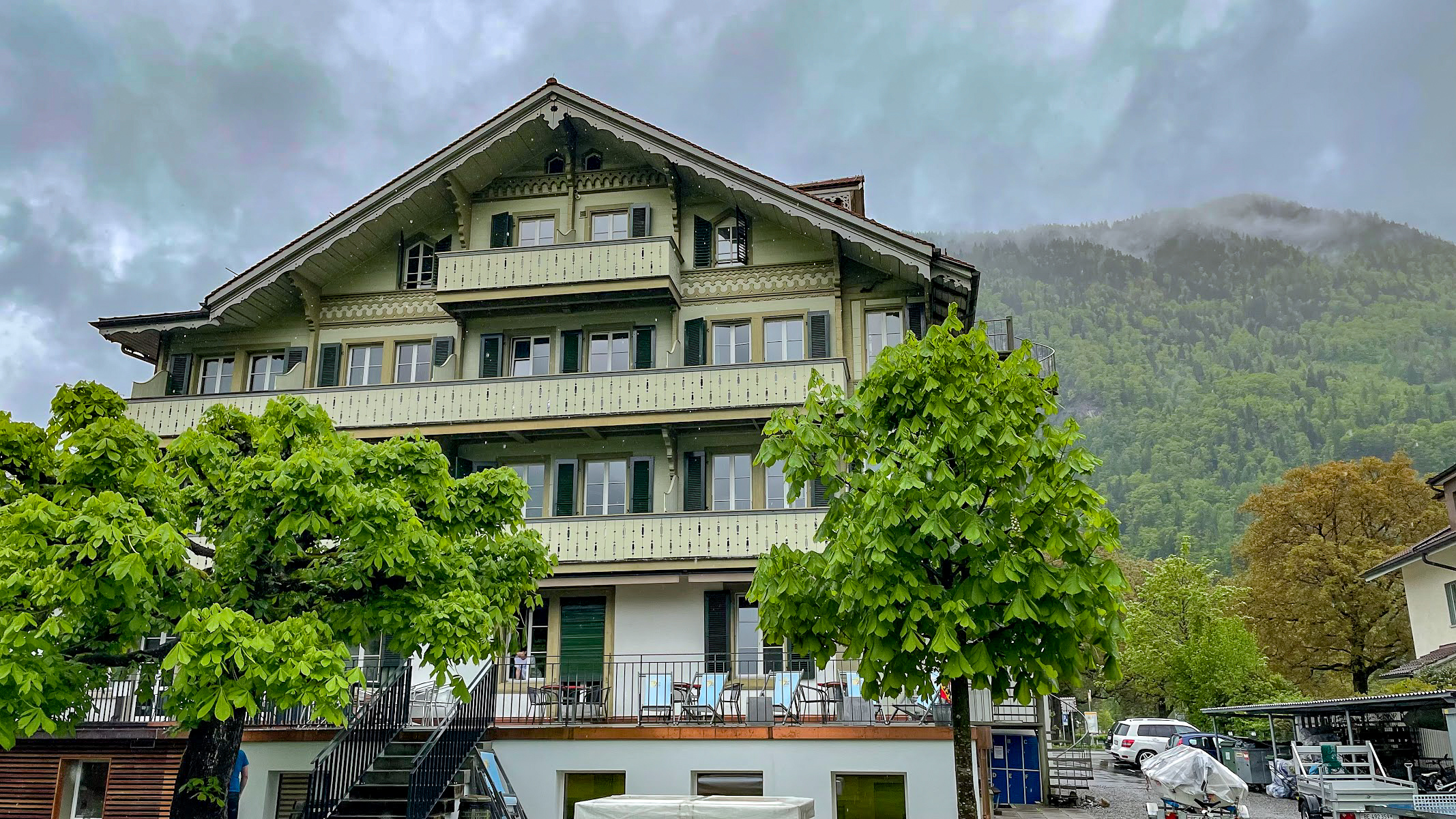
    We stayed in an excellent hostel in Interlaken, see the full review here.

    Find a Good AirBnB

    AirBnB has been the budget travellers’ friend for a few years now, and although hiring whole apartments or houses can still be very expensive, booking a room in someone’s house is still a great budget option. In towns like Zermatt, you can find rooms with postcard views for much less than nearby hotels but these still aren’t what we would call cheap.

    Hashtag Van Life

    Of course, if you are Interrailing Switzerland, you might just want to take the train, but if you have limited travel days you might consider getting a camper van.

    Transport and accommodation rolled into one, the camper van is another brilliant option. Many campsites are cheap to stay in and provide electrical hookups etc. for much less than a hotel room. Of course you need a driver’s license and the constitution to deal with your own toilet clearing but it does allow you to drive to some stunning places on your own schedule and take your bed with you. Do bear in mind that wild camping is illegal so you will need to park at a registered campsite.

    Stay Off the Beaten Track

    Staying in Zurich, Interlaken and Geneva is going to cost you more than in small nearby towns. The advantage of having your Interrail ticket is that you can reach these famous spots quickly and easily by train. You might not need to stay in these big cities at all. Accommodation in smaller towns is significantly cheaper so if you don’t mind the commute, you could save a fair whack.

    How to Save Money on Activities in Switzerland

    Interrail Freebies and Discounts

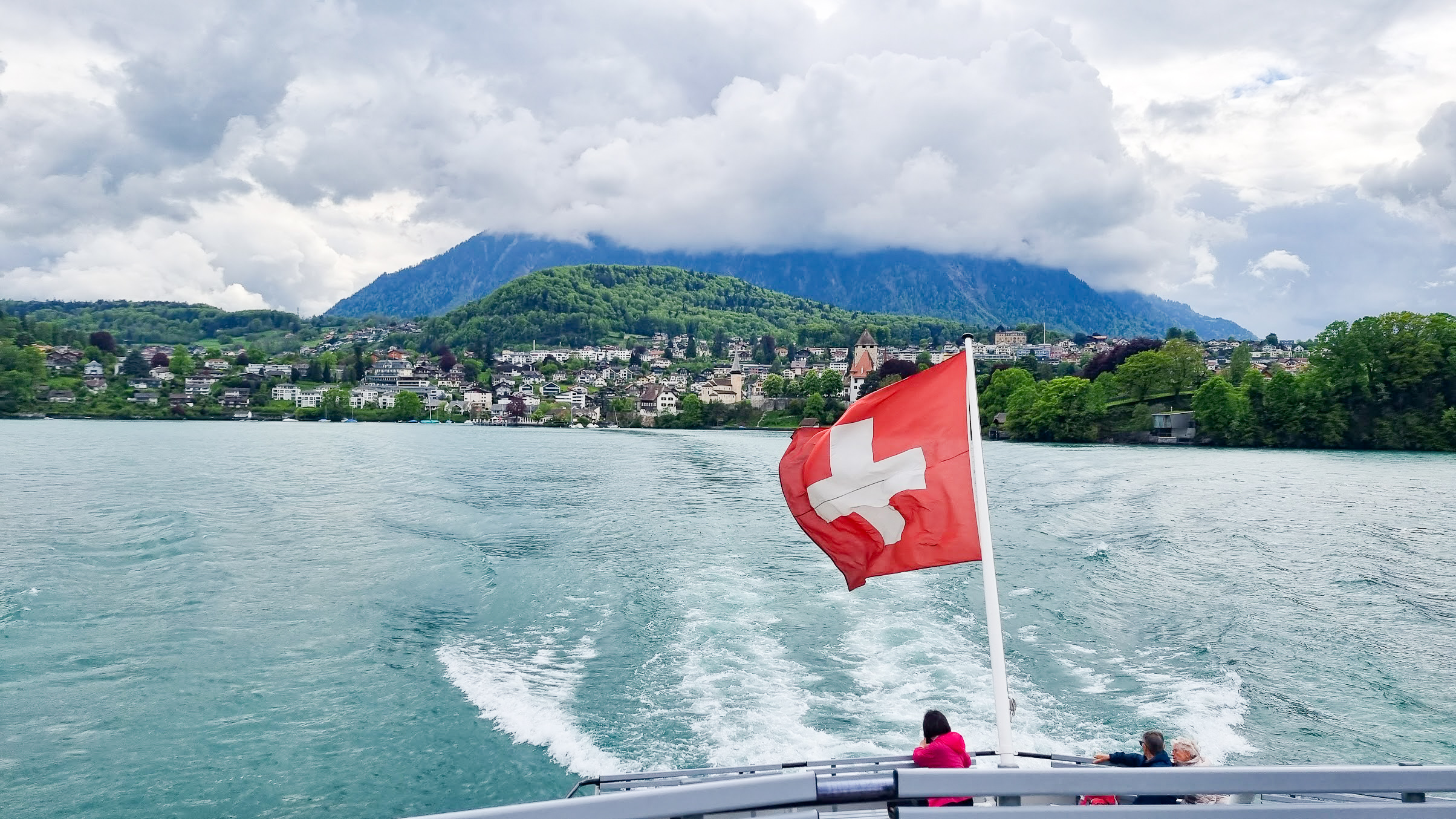
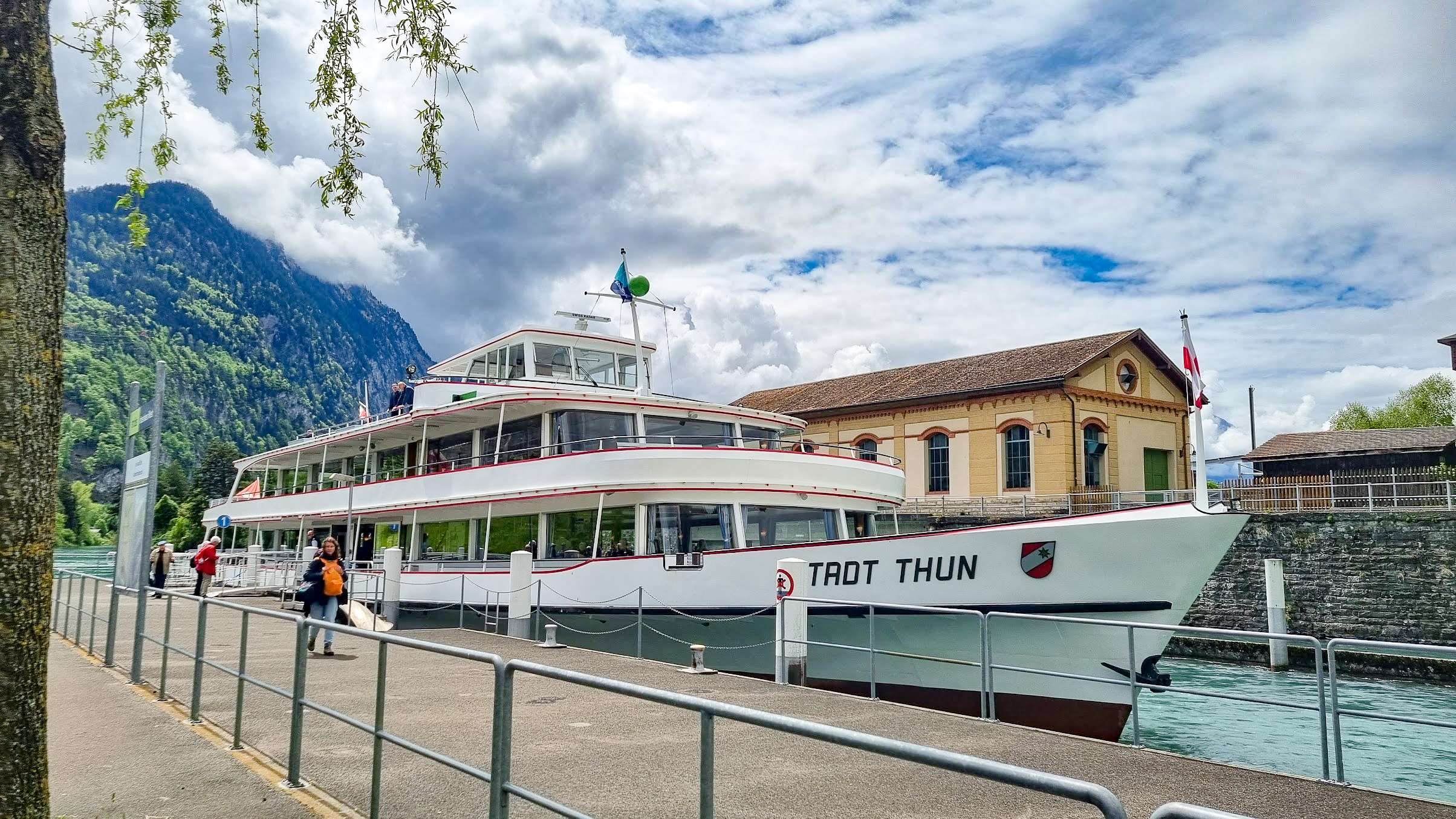
    Interrail doesn’t just cover your train journeys, it can also provide some other fun, free activities. For example, if you’re visiting Interlaken, your Interrail Pass provides free boat trips on both Lake Thun and Lake Brienz. You can take these two hour boats to some seriously beautiful spots which is a fun day out for nothing,

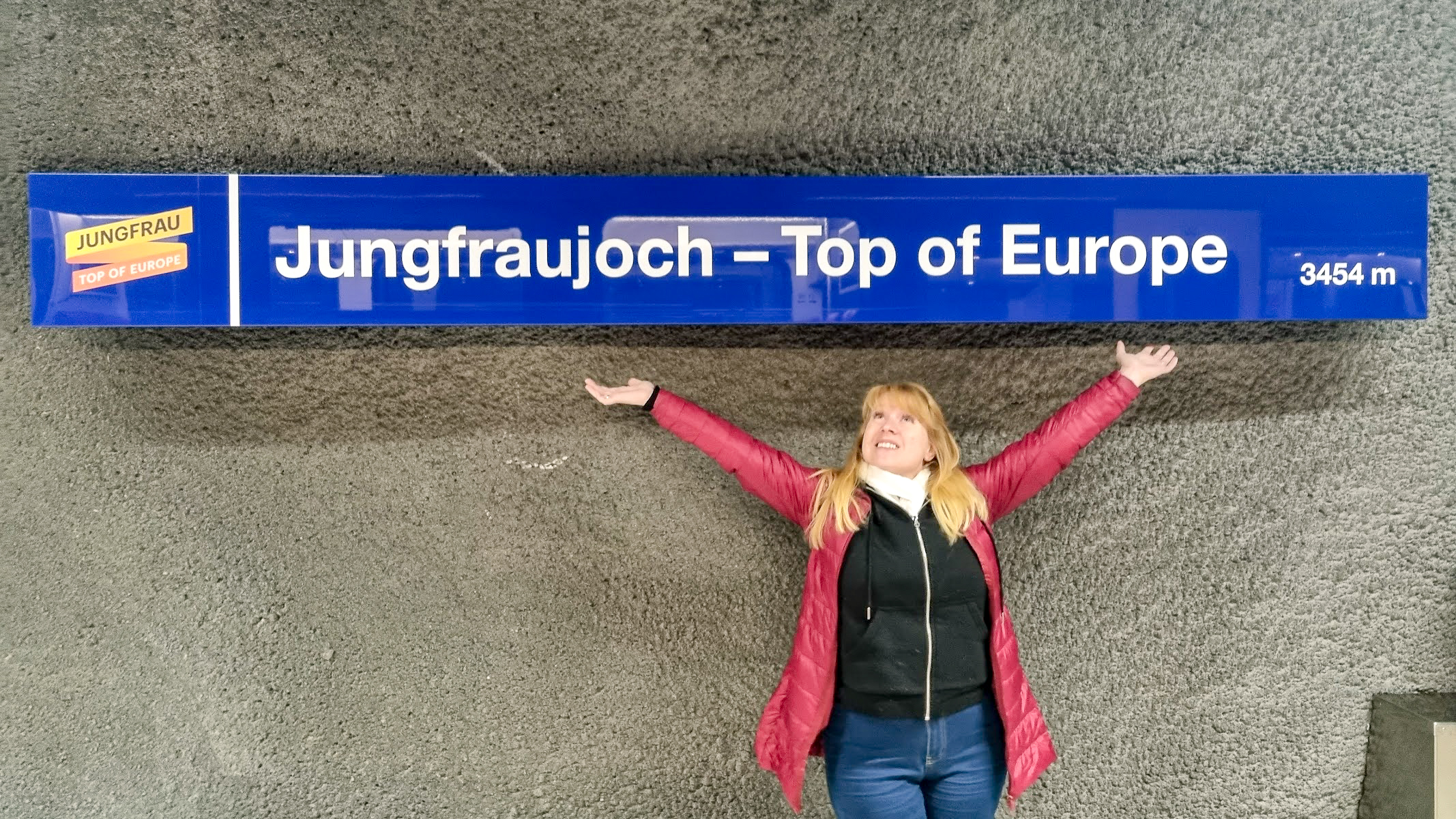
    You will also find a few discounts on funiculars or special trains across Switzerland like 25% off on the Jungfrau railway up to the Top of Europe.

    Guest Cards 2

    Some of the guest cards you receive from your accommodation (hotels and hostels) will offer more discounts on funiculars or cable cars in the region or local area. Interlaken’s includes a free walking tour, free or discounted entry to nearby museums and free entry to a local swimming pool and mini golf. Others across Switzerland have museum discounts (up to 50%), discounts on the numerous funiculars and cable cars that are everywhere in Switzerland and even the odd discount in a cafe so it’s worth checking them out for each area you are staying in.

    Free Walking Tours

    As with most of Europe, you can find decent walking tours in many of Switzerland’s main towns. Of course, these are not totally free as it is encouraged to tip the guides (they are guiding for tips) but compared to a paid tour, where you may also want to tip, they are decent value. Companies like Free Walking Tours Switzerland offer tours across the country.

    Final Thoughts on Interrailing Switzerland on a Budget

    Let’s be honest Interrailing Switzerland on a budget is hard work, and it can get a bit tedious. But if it allows you to travel for longer, it is definitely worth it. Unlike many countries, the beauty of Switzerland doesn’t lie in the big cities. So getting out into nature with a hunk of bread and some cheese really is the best way to spend your time.

    Rosie xx

  • Is Ljubljana Worth Visiting? 10 Reasons Why You’ll Love it!

    Is Ljubljana Worth Visiting? 10 Reasons Why You’ll Love it!

    Ljubljana (lub-lee-ya-na) is the capital of Slovenia and despite being a European capital city it has somehow slipped under the tourism radar. Sure there are tourists here but its more famous neighbours seem to mop up the majority of the tourists to the area. More fool them! Ljubljana is a walkable, green, enjoyable place that makes the most wonderful city break. Not only that but in just half an hour you can be in the middle of the most beautiful nature. So is Ljubljana worth visiting? Absolutely and here’s 10 reasons we think you will love it!

    This post may contain sponsored content or affiliate links that help support the blog. All opinions are our own.

    10 Reasons to Love Ljubljana

    1.) Ljubljana Has Great Food

    You may not have heard of Slovenian cuisine but that is all part of the fun. On your visit to Slovenia, you will get to try some dishes that you won’t find anywhere else.

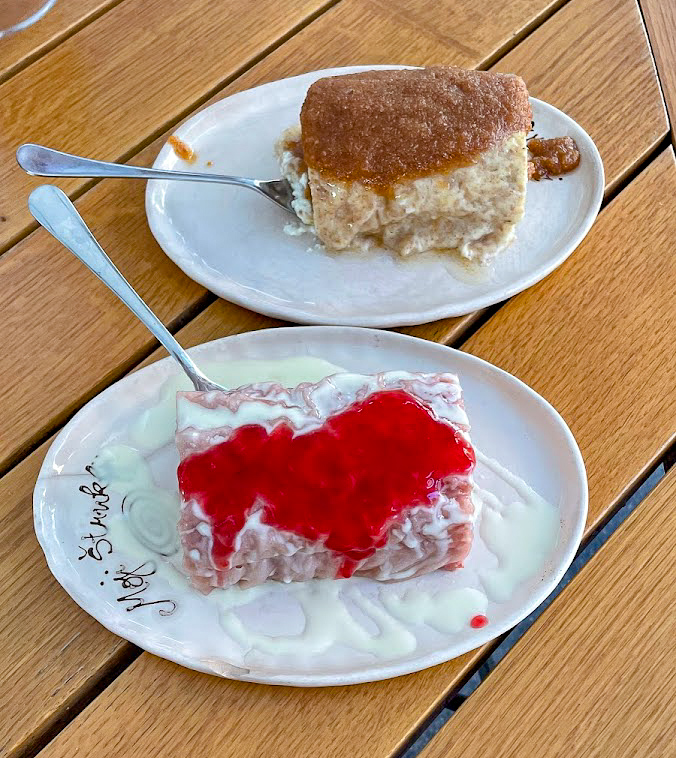
    • When I say, the word dumpling, you might think of the stodgy bread products from the UK, little parcels of pirogi in Poland, or perfect little dim sum wrappers but in Slovenia, the dumplings are very different. Thin filo or similar pastry is rolled with yummy fillings (cheese, poppy seeds or apple for example) and the whole thing is boiled. What you get is a chewy, soft dish about the size of a fist, drizzled in some sort of sauce. Moji Struklji located in the market in central Ljubljana is an ideal to try this unique dish. They do a huge selection of savoury and sweet options with traditional and modern flavours.
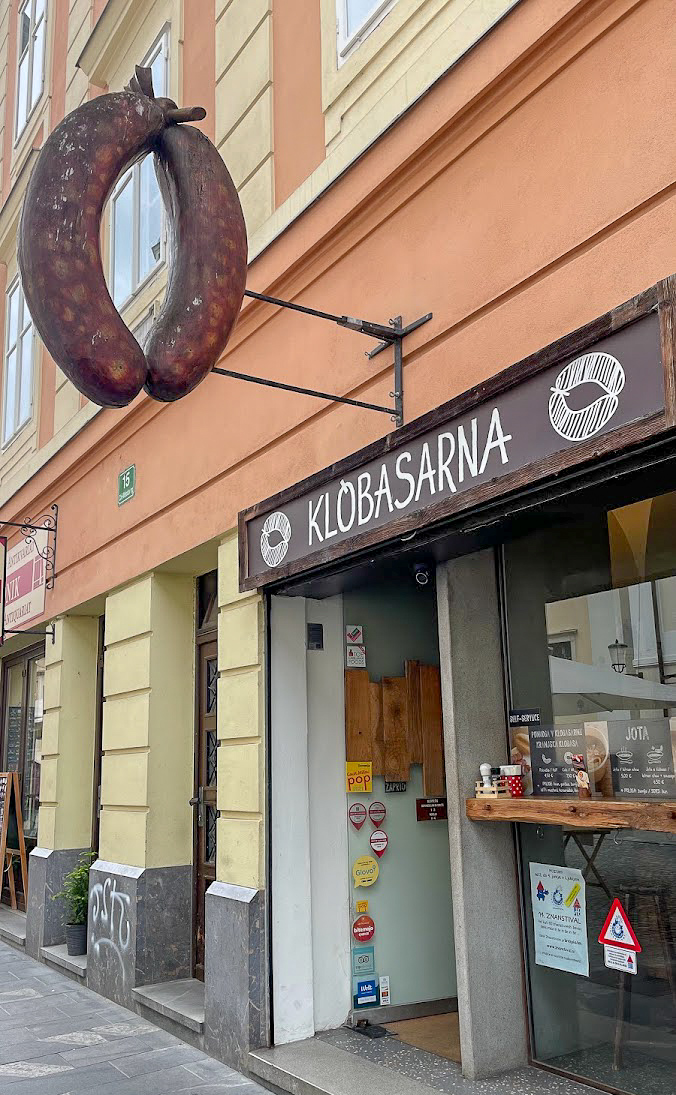
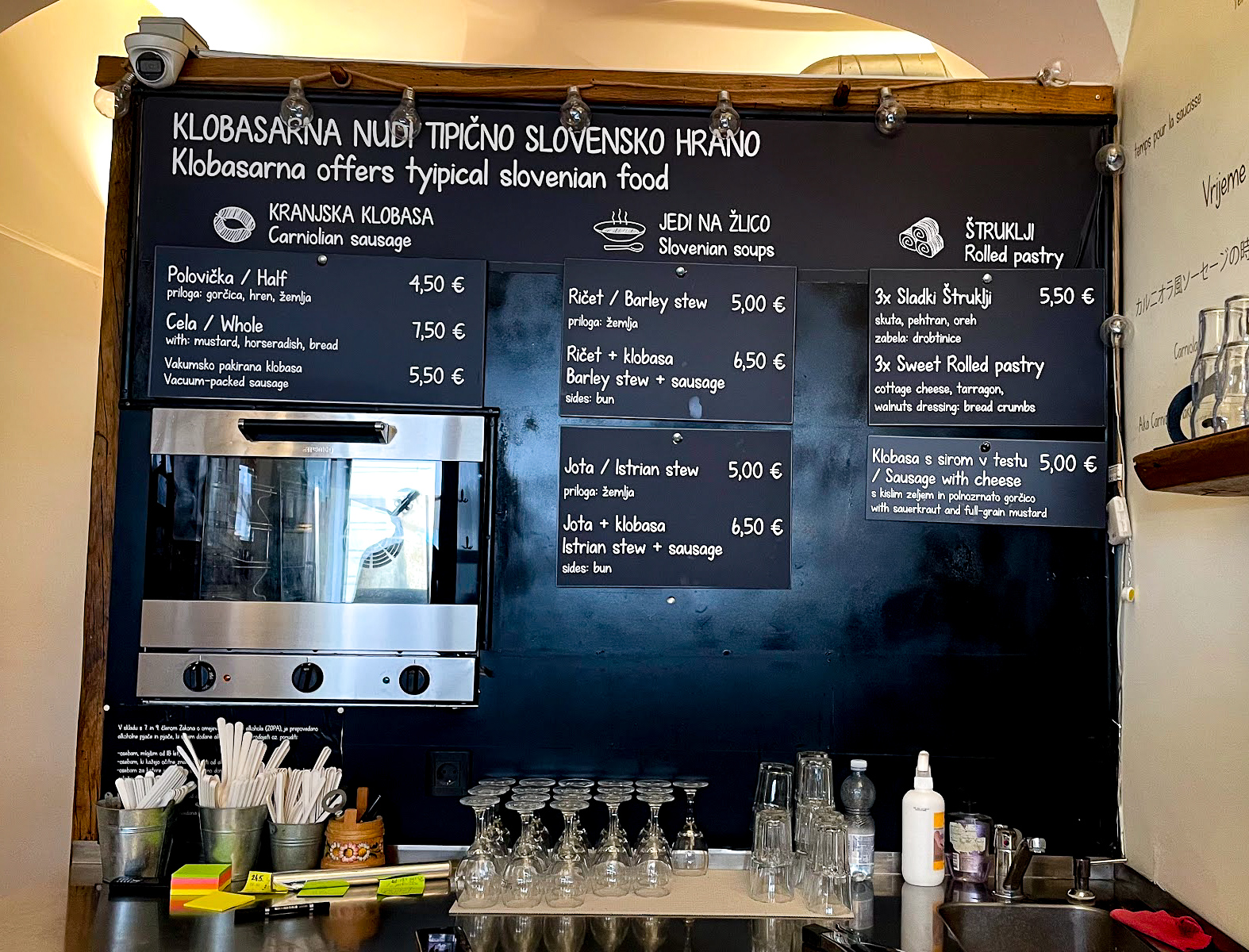
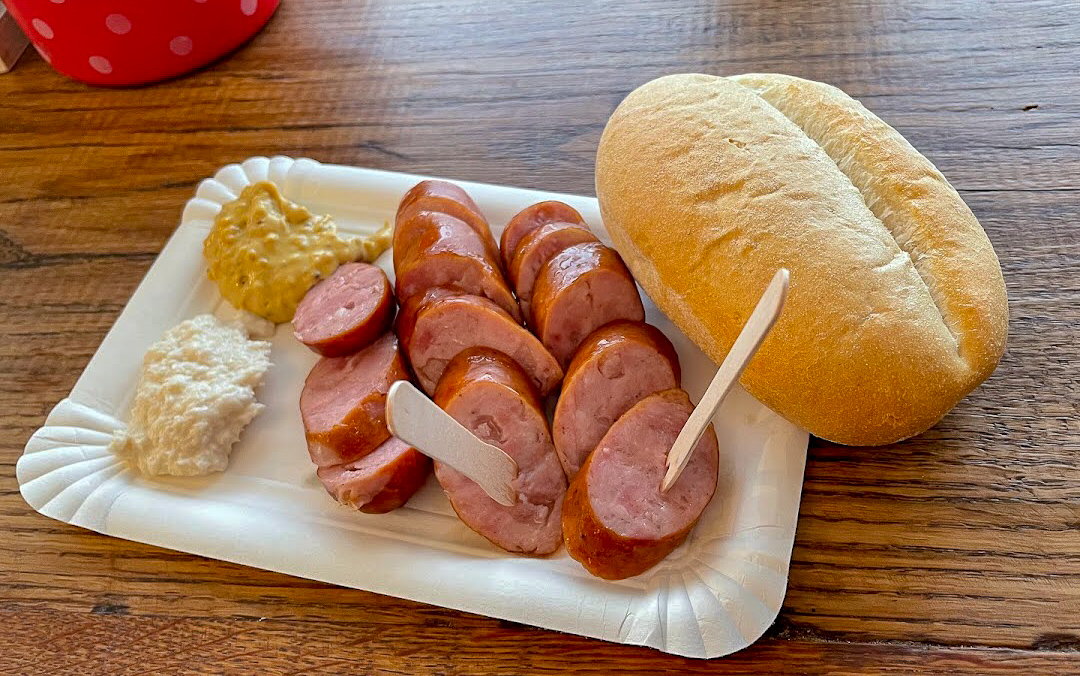
    • Central Europe loves its sausages. In fact, everywhere in Europe loves its sausages. Here the pork sausage (koblasa) is served with a bread roll and some mustard. The best place to try this is Klobasarna. To eat it like a local don’t put the sausage inside the bun, the bread is to be consumed separately. You will also find a nice cheap drink to go with your sausage.
    • You’ll find plenty of pasta and pizza due to the proximity of Italy. Capriccio is oft cited as the best place for Italian cuisine in town but Mirje is another great option.
    • To taste a range of traditional food cooked to perfection and with the odd modern twist, Slovenska Hisa is a great bet. There’s plenty of comfort food with Slovenia’s most famous soups, dishes of potato dumplings, lots of meat and veggie dishes. Service can be slow so come for a leisurely dinner rather than a quick lunch.
    • If you are on a budget, look out for burek. This is served throughout the Balkans and for good reason. Flaky pastry is filled with cheese, spinach or meat and baked until greasy and delicious. This is nice eaten hot and fresh but equally makes a great packed lunch so you pick some up in the morning and munch on it for lunch. Burek Olimpija has been open 1979 and serves hot burek 24 hours a day!
    • Finally, why not take a food tour? The tourist board runs a two hour tour through the market. You’ll start with dumplings and then work your way through all kinds of delicious produce (cheese, bread and sauerkraut for example).

    2.) There is an Abundance of Green Spaces

    Driving in any direction for 30 minutes from Ljubljana and you’ll be right in the countryside. That’s rather lovely but even better than that. It’s just how green the city is itself.

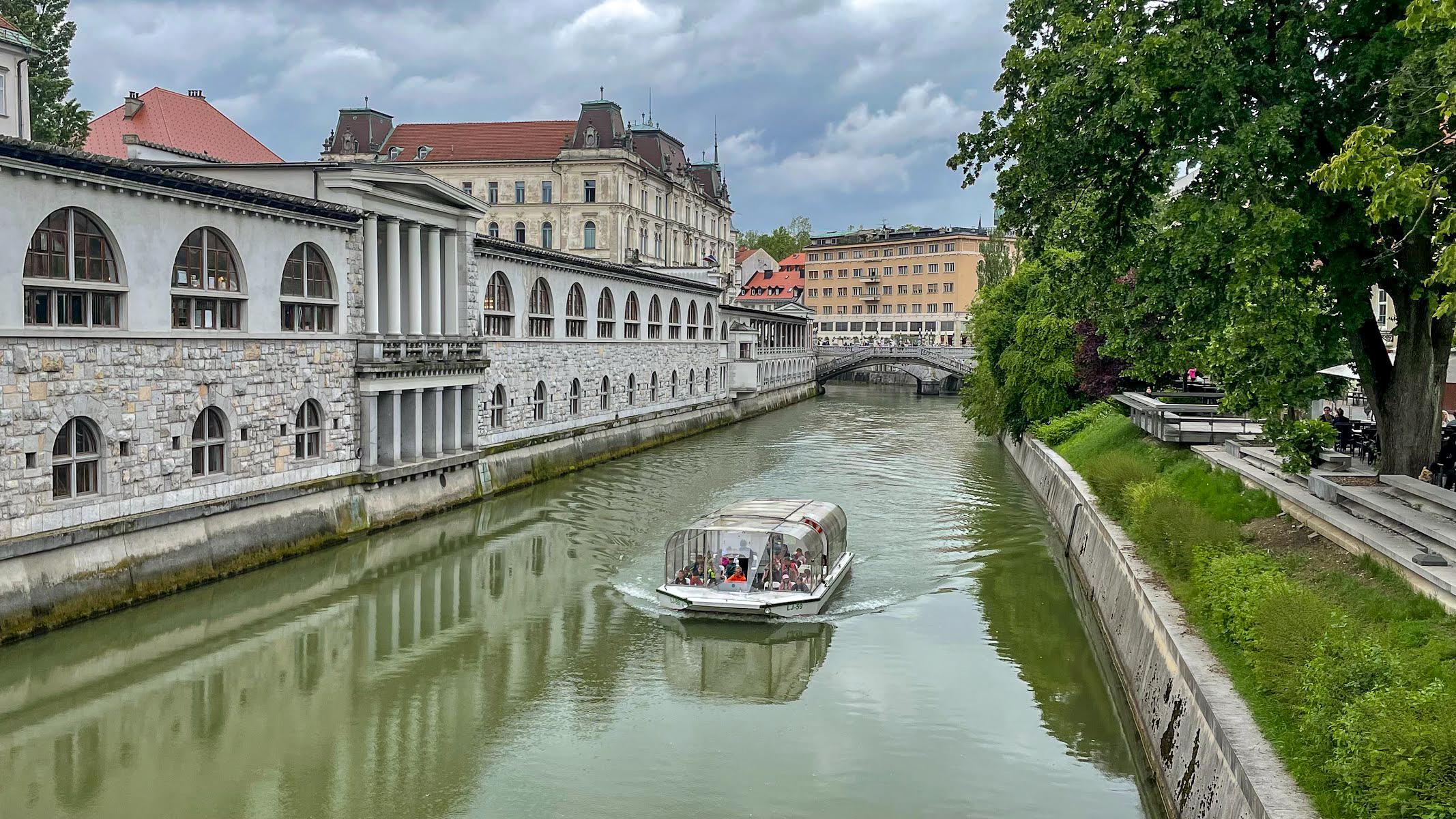
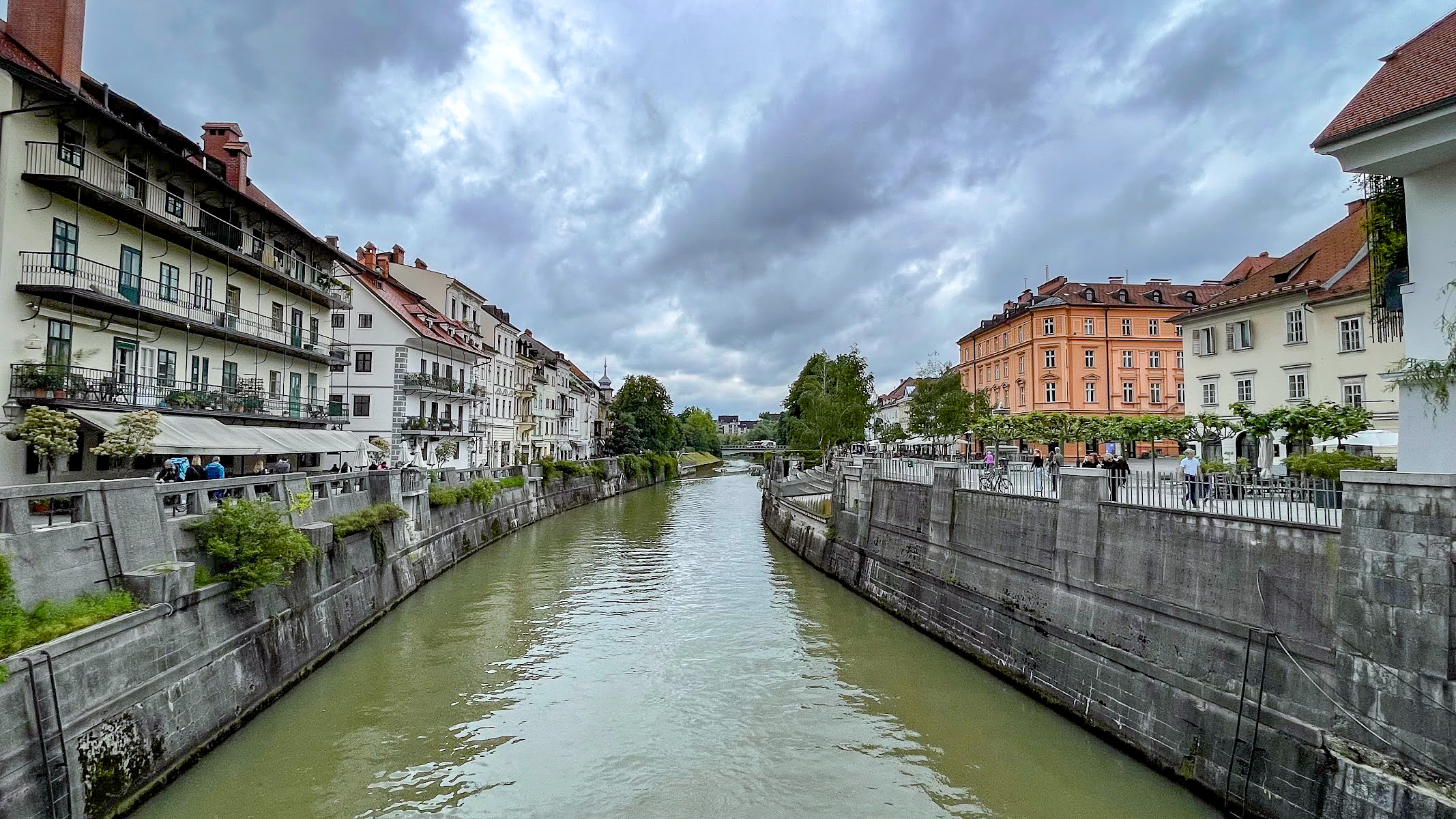
    Running through the city is the canal or river Along the Ljubljanica River Canal is a path edged by greenery. This is a super spot for a stroll or to sit and enjoy a summer evening by the water. The river banks have been redeveloped in the last couple of years, adding stepped decking, perfect for lounging or strumming a guitar with a bevvie.

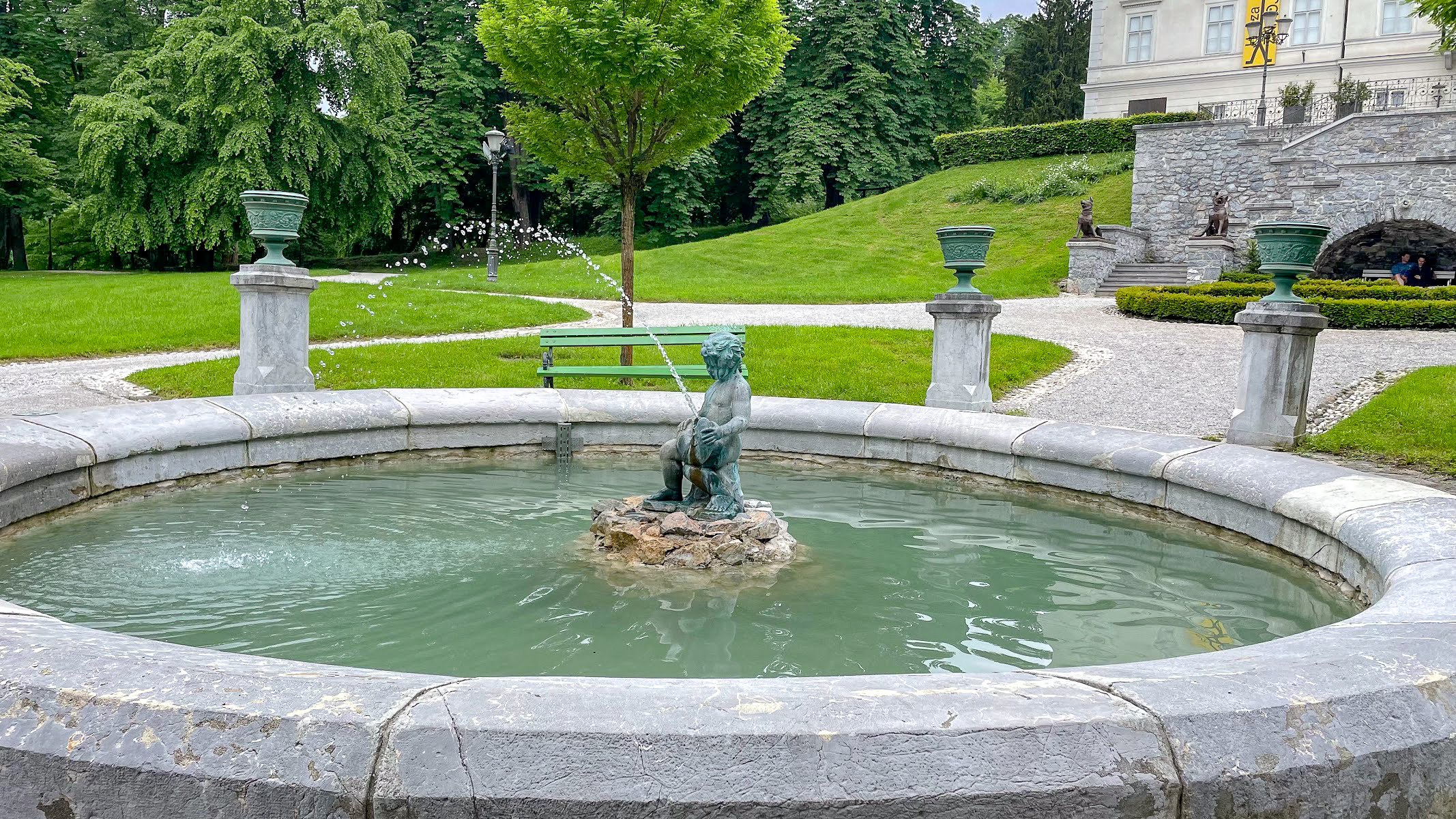
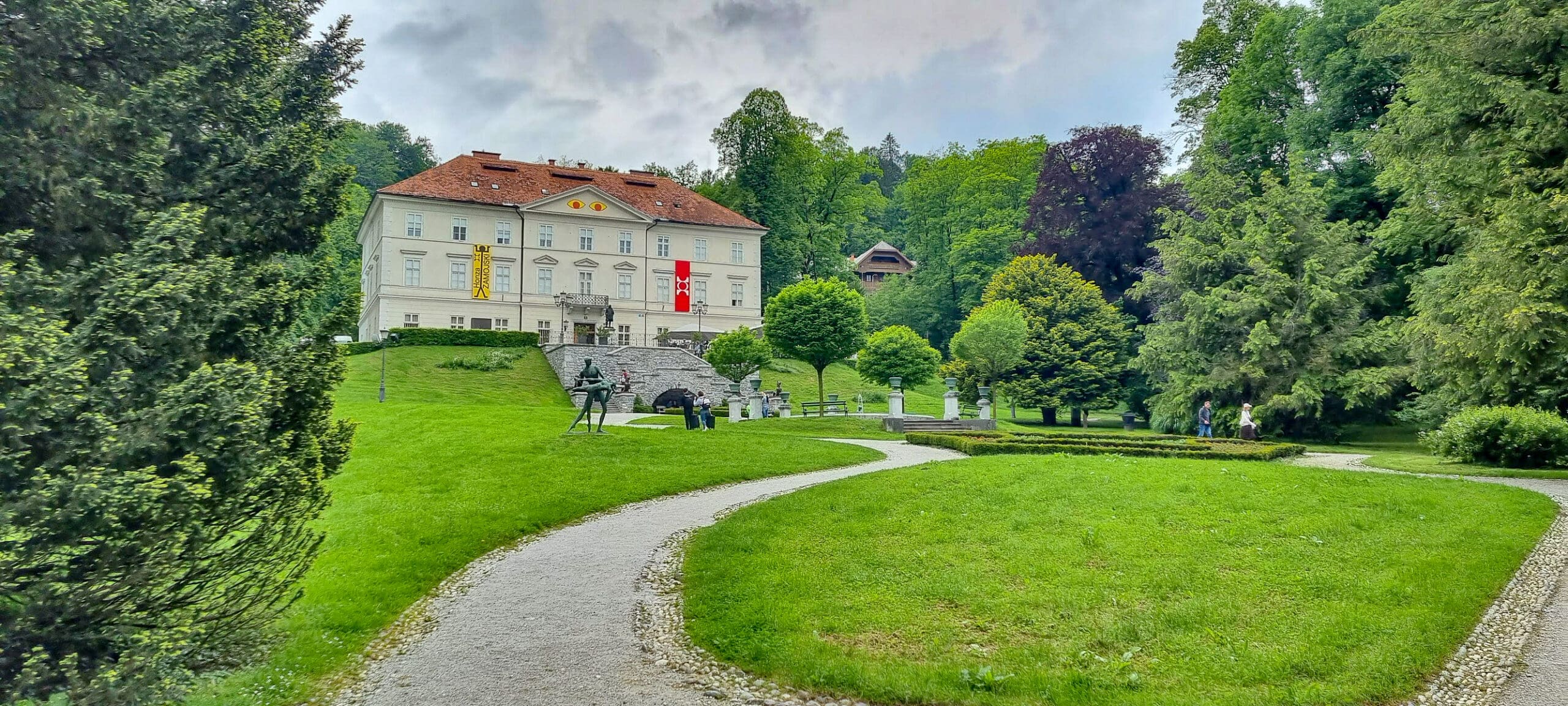
    The popular Tivoli Park is spread across 5 km of the city. The park has been delighting visitors from Ljubljana and beyond for over 200 years. You can promenade through green trees or the neoclassical Cekin Mansion which houses the Museum of Contemporary History. Elsewhere, there is a large botanical garden and children’s play areas, so plenty for all the family.

    3.) Ljubljana Has Beautiful Churches

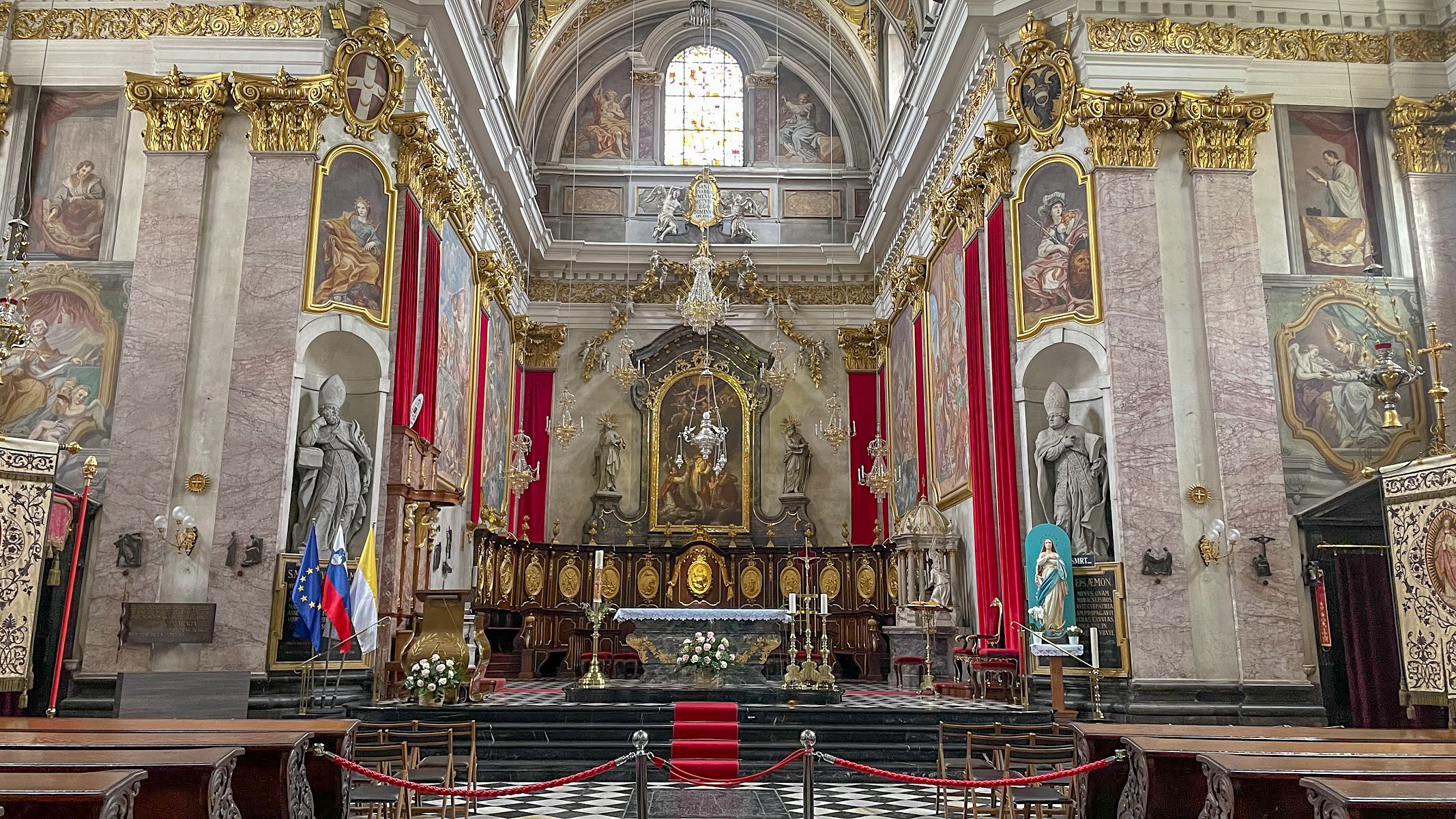
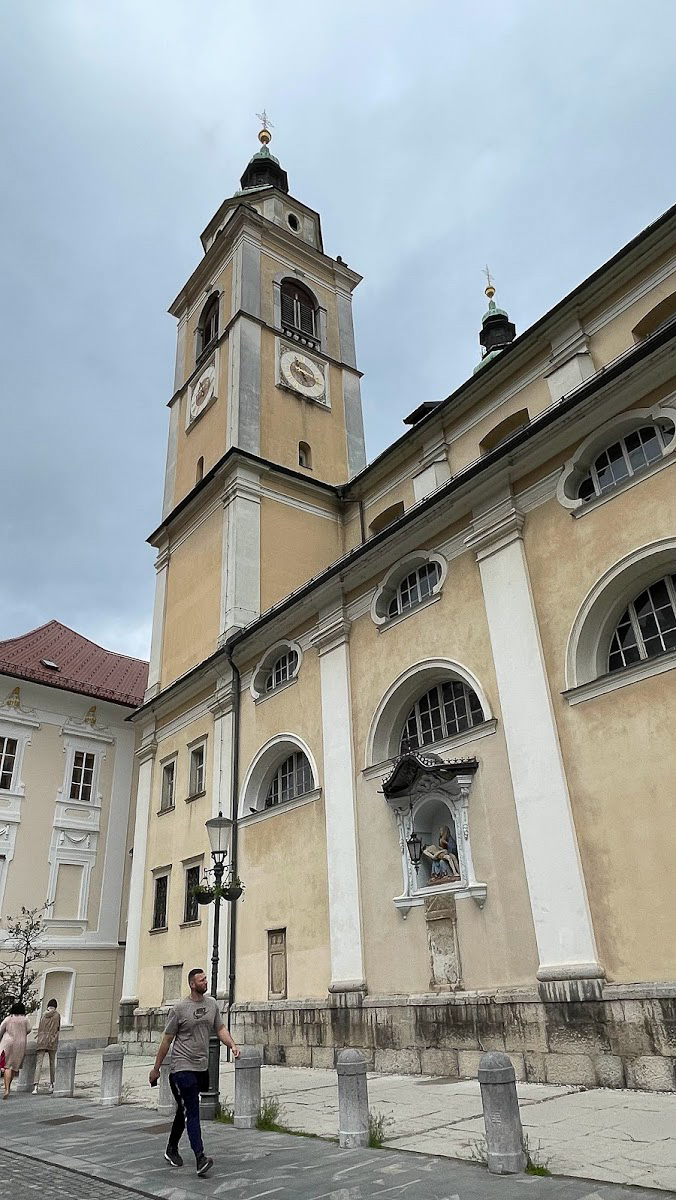
    Unlike many of the great cathedrals elsewhere in Europe, Ljubljana Cathedral (Saint Nicholas’ Church) doesn’t stand alone in a big town square. Instead, you’ll find this beauty tucked into a corner near the town hall. The door is very cool but the prettiest decoration is inside. The baroque church replaces previous buildings tha5t sadly burnt down, but this church has stood like this since the early 1700s. Frescoes inside, painted by Giulio Quaglio, date from this time. Look up to the cupola to spot the four bishops along with angels.

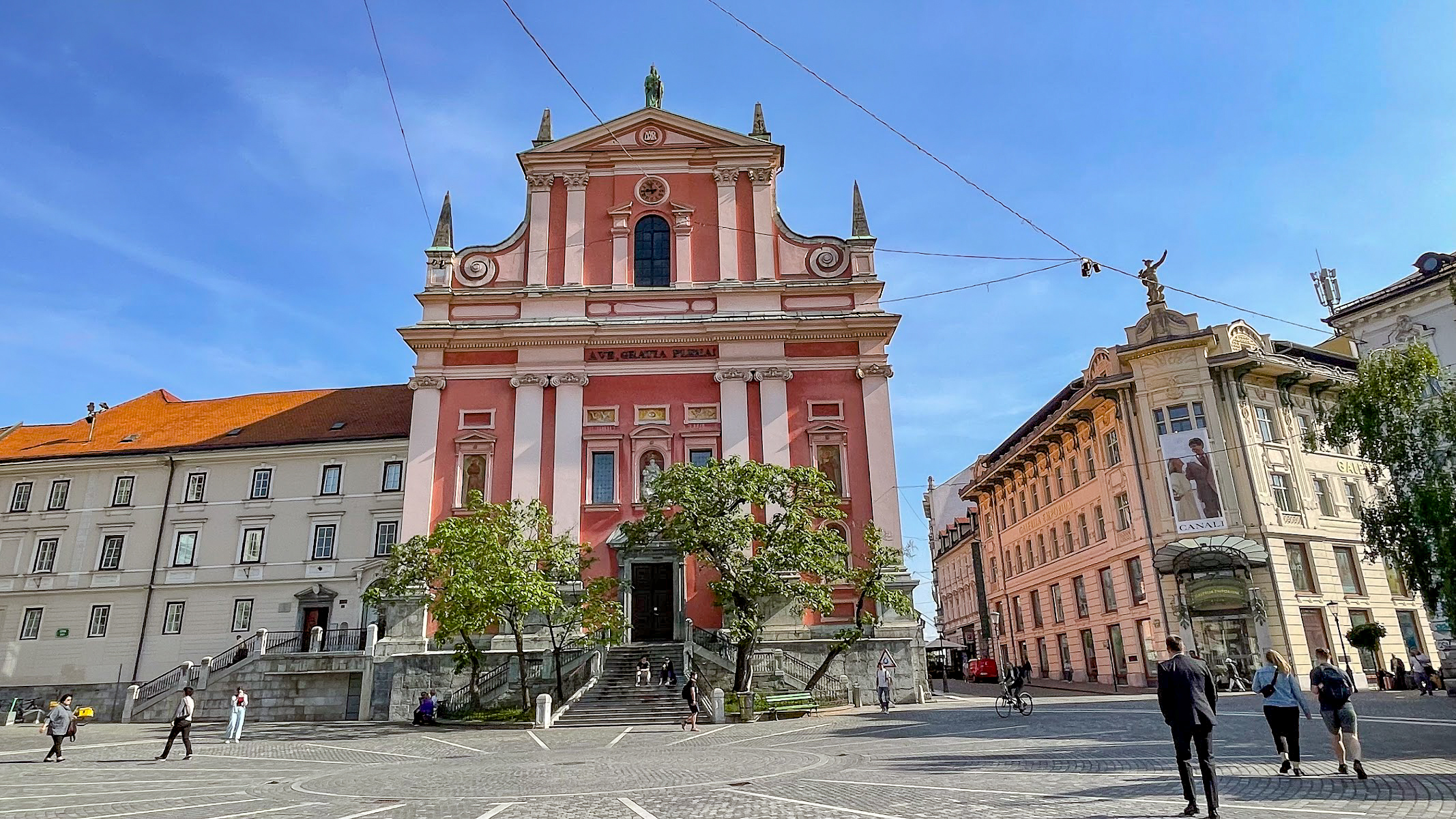
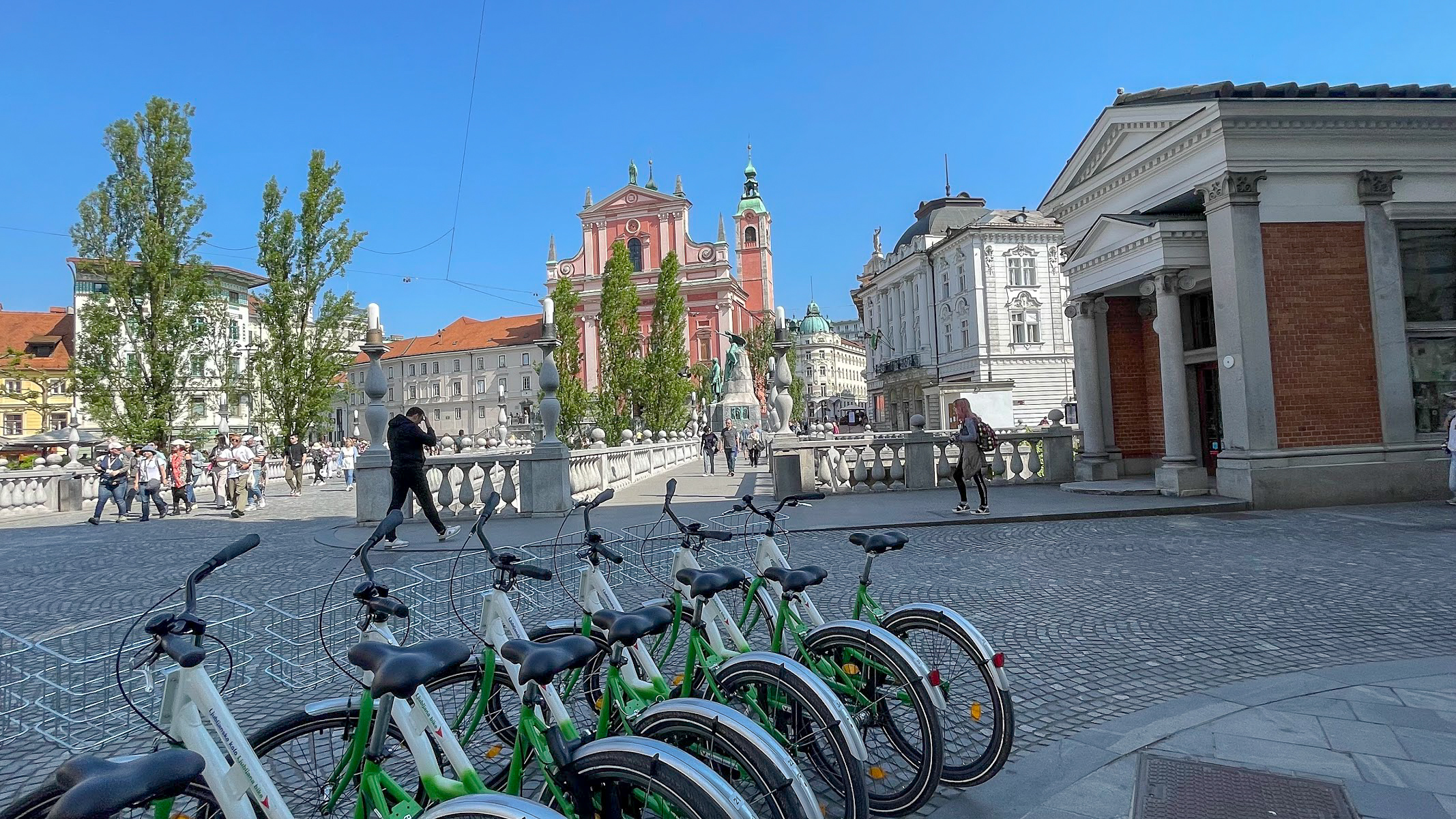
    The striking pink façade of the Franciscan Church of the Annunciation stands over Prešeren Square. The front is distinctly baroque but inside, you might spot some gothic influence too. To the right of the alter is a xcoffin with a window in, in which you can see the remains of St Deodatus.

    4.) Ljubljana is Very Bike Friendly

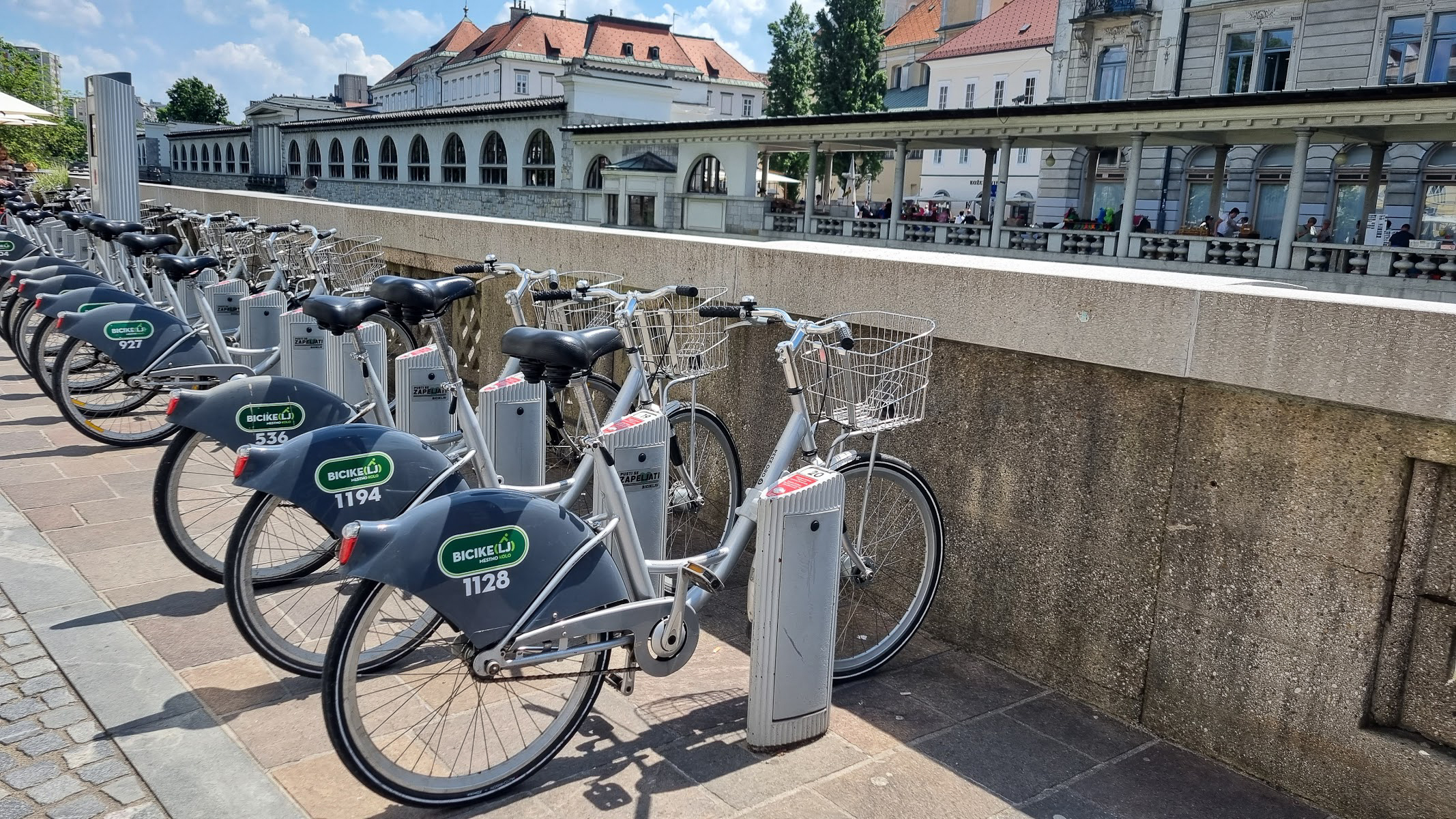
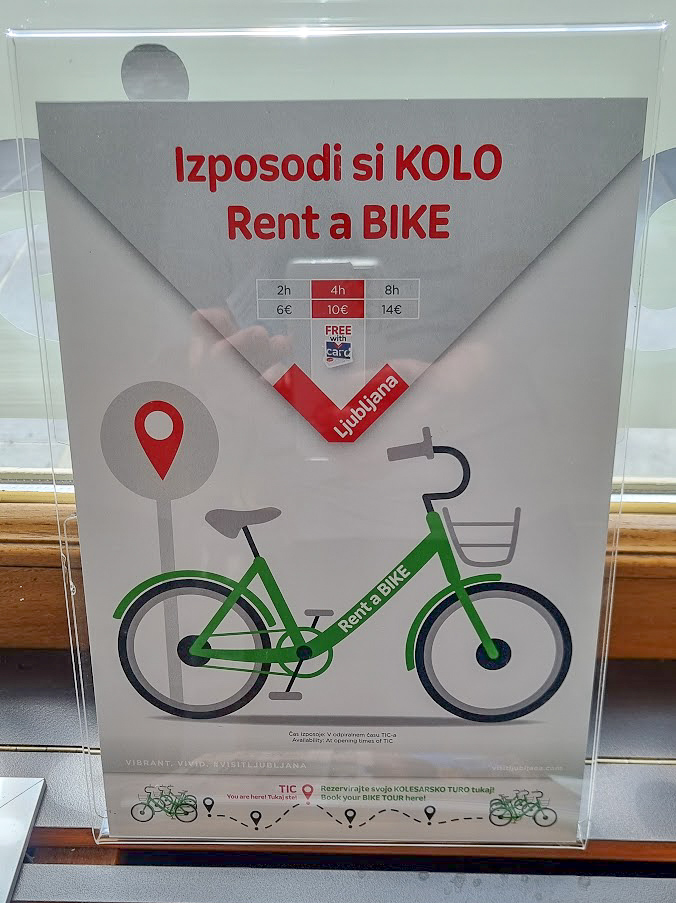
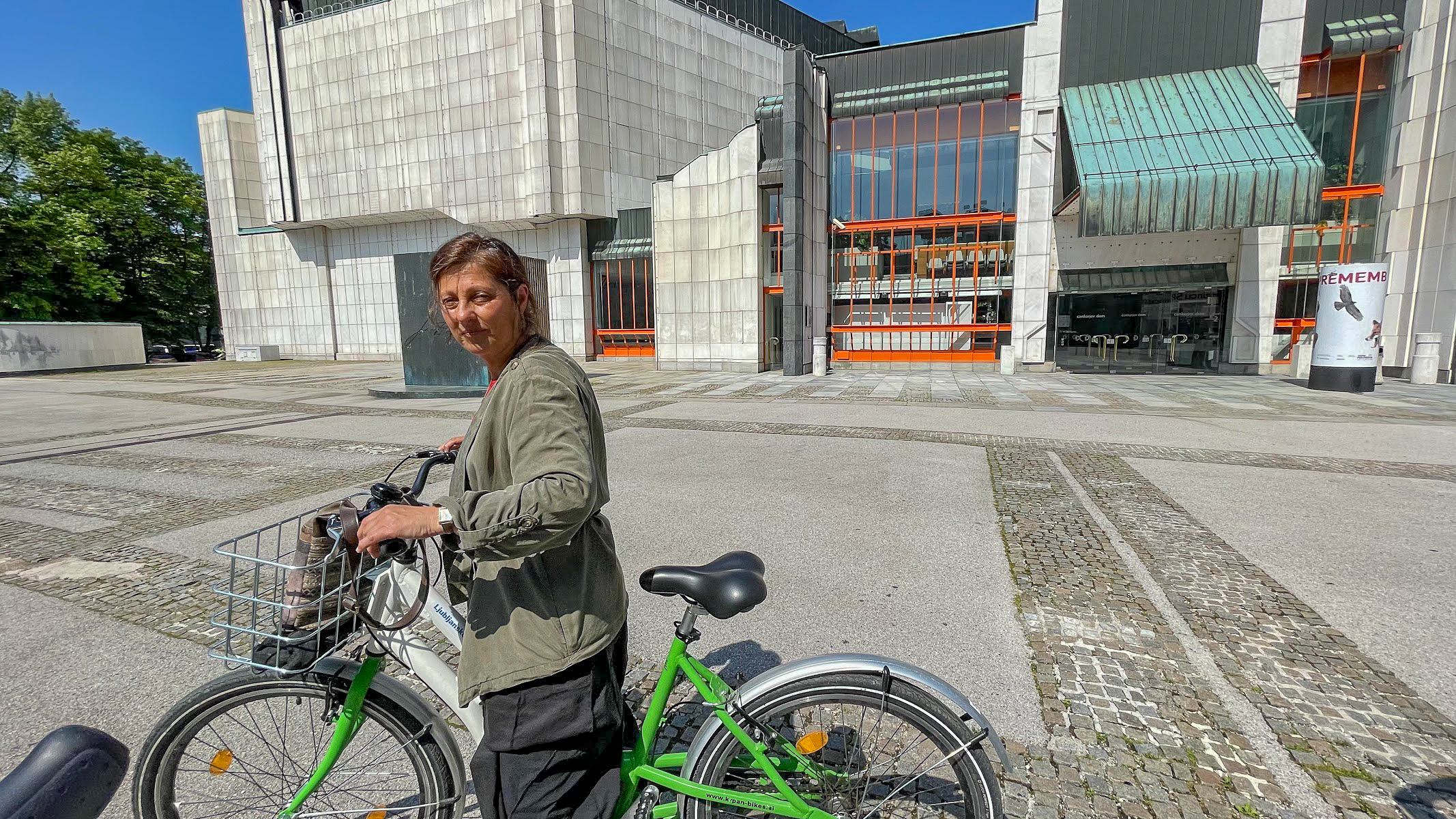
    Ljubljana is one of the most bike friendly cities in Europe for casual cyclists and commuters alike. Sometimes in cities, like London or Amsterdam, you feel like you’re taking your life in your hands when you are on two wheels (even on the bike lanes), but cycling along the bicycle lanes and through the pedestrian areas of Ljubljana is a pleasure.

    You could also join a bike tour. The tourist office offers daily tours taking in a large variety of sites in around 2 1/2 hours. The route is mostly flat so easy enough for people that aren’t regular cyclists.

    5.) Ljubljana Has a Great Castle

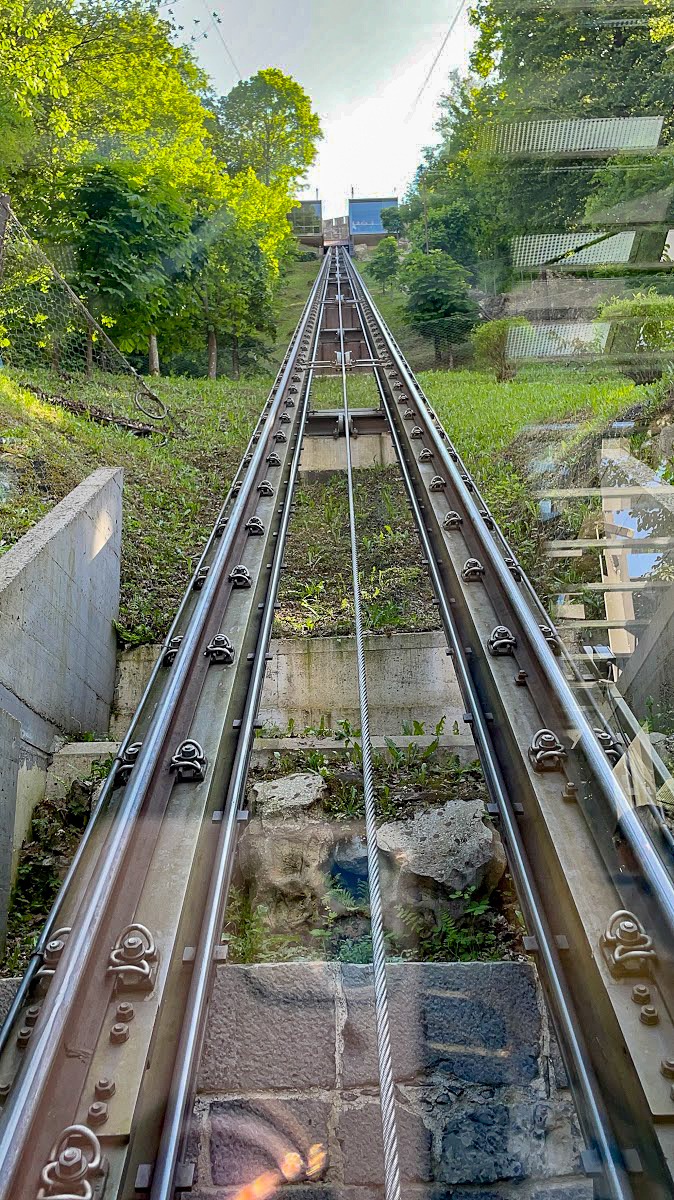
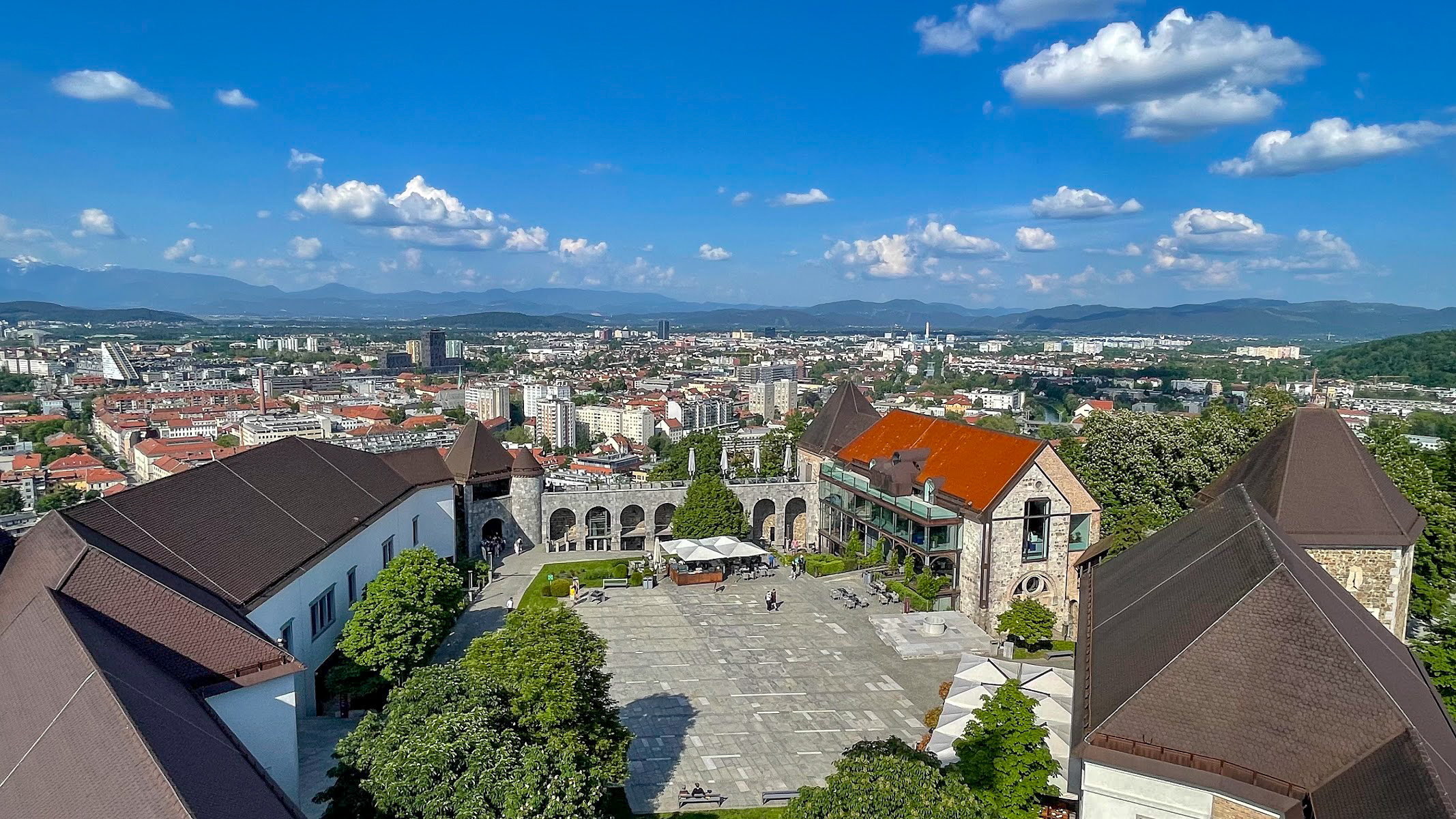
    What would a European bity be without some sort of castle? Well, Ljubljana has a beauty. Hop on the funicular. and in just two minutes, you’ll be at the top of the 375m hill. There has been a permanent fortress here for around 900 years but it has had plenty of overhauls, with most of the buildings being about 400 years old. You can explore by yourself or join the tours that are run by fun, costumed guides.

    The courtyard is surrounded by buildings. When it was a prison (from the early 1800 to 1945) this area was used as an exercise yard but it is now rather pretty,

    For fab views, take a stroll along the ramparts or make your way up the Panorama Tower. This was built to be a fire watch tower so you know the 360° views will be fab. There is a HUGE flag up here too…if that’s your thing.

    If you have time, the puppet museum is a lovely addition to your visit with some beautiful marionettes and a spot or two where you can try out your own puppetry.

    Keep you eyes peeled around the city for its coat of arms, which features the castle.

    6.) Ljubljana’s Museums are Rather Surprising

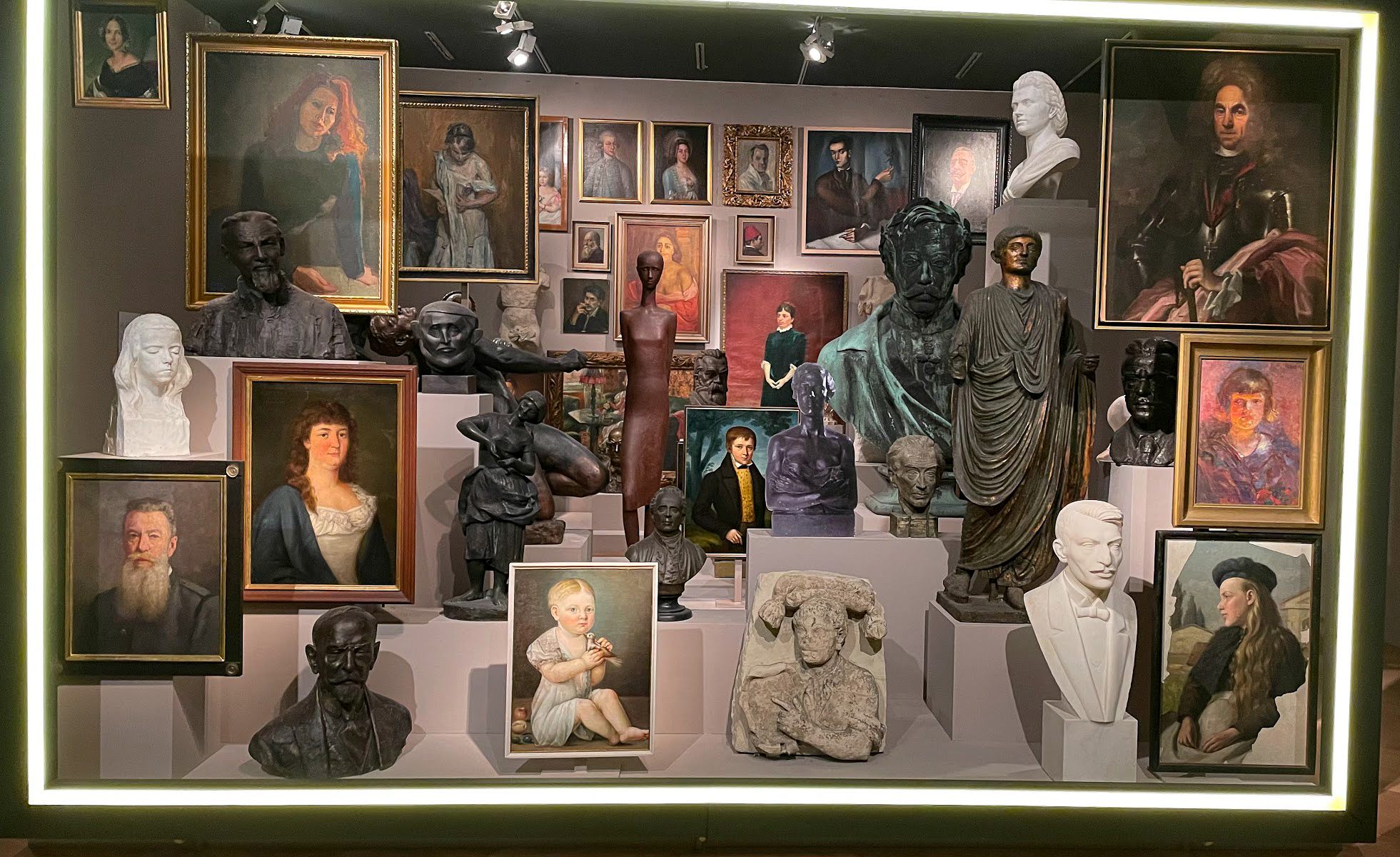
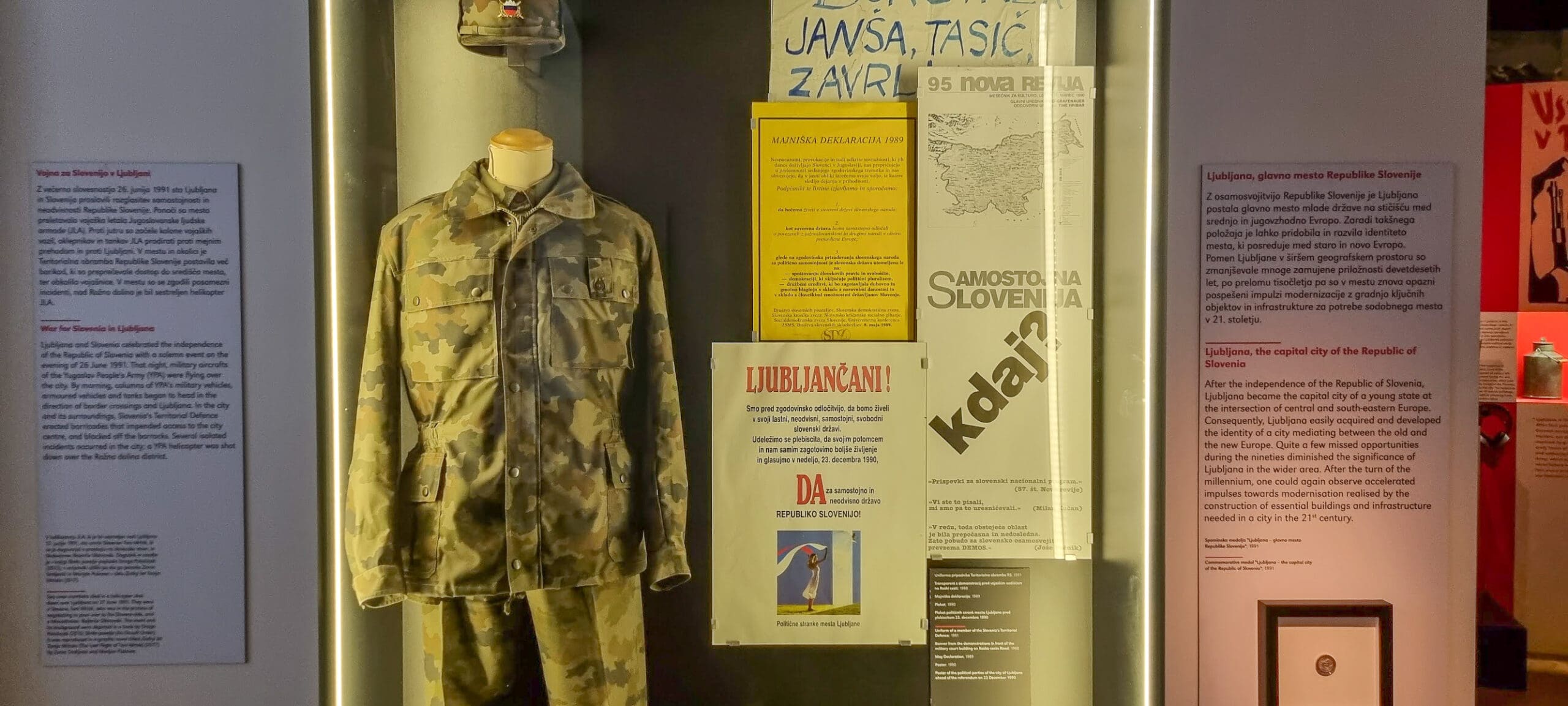
    Did you know that Ljubljana was once a Roman encampment? Neither did we, but you’ll learn all about that so much more at the City Museum of Ljubljana. The main exhibition follows the story of Ljubljana from its earliest history (including the world’s oldest wooden wheel) to its Roman days and through 2000 more years. There are some wonderful artefacts to uncover from a beggar’s medal to a rather fabulous car. Don’t miss the chance to bust out some karaoke in the corridor just outside the exhibition. Downstairs you will find plenty of archaeological discoveries, unearthed since 2000, before walking up into the pretty coffee shop.

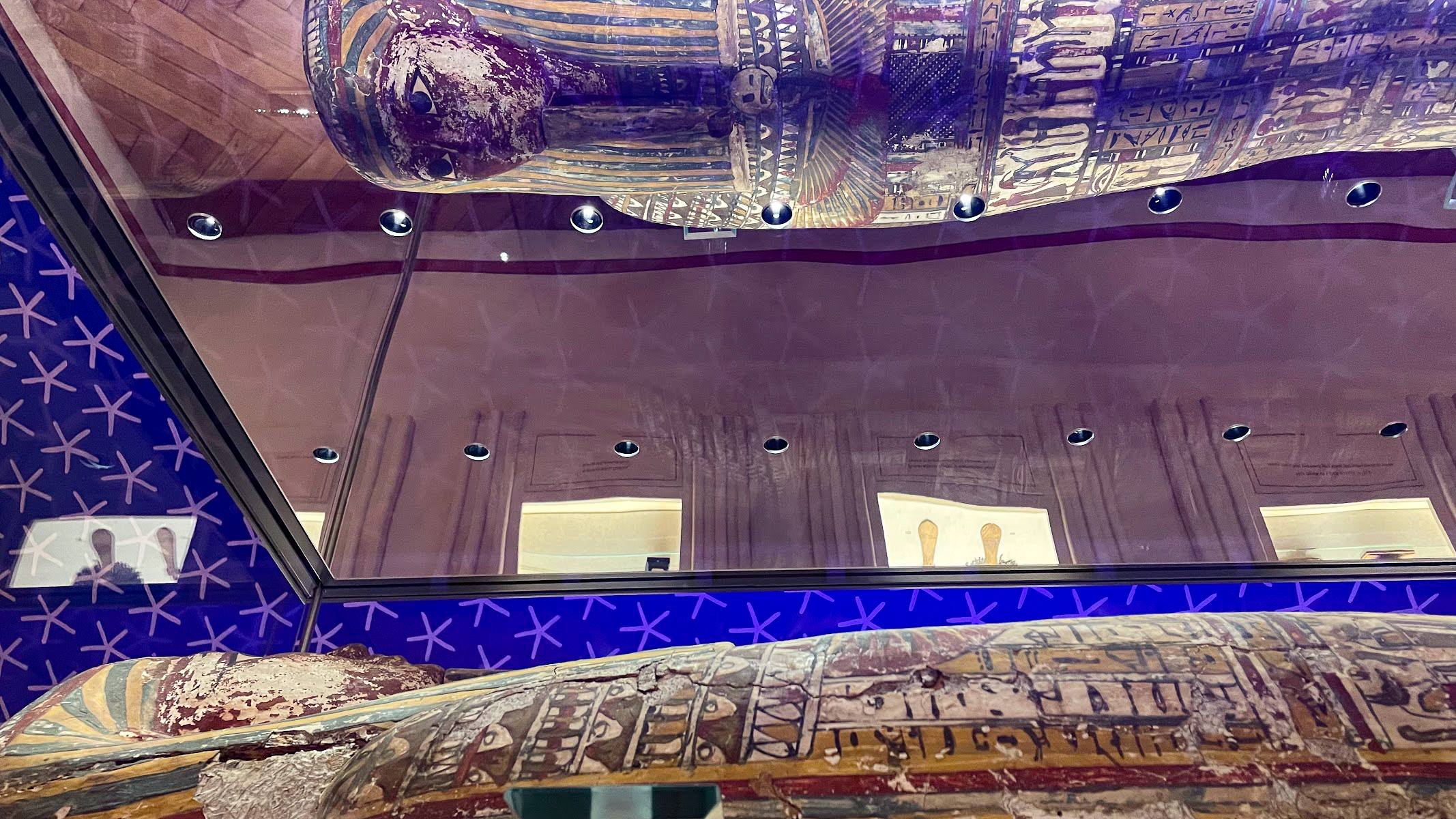
    The National Museum of Slovenia and Slovenian Museum of Natural History share the same building on the edge of Memorial Park. The National Museum is an interesting mix of Slovenia’s history and treasures from around the world. Keep an eye out for the adorable toys dating back a couple of thousand years and the real Egyptian mummy, which is beautifully displayed. You mustn’t miss the 60,000 year old flute which could very well be the world’s oldest musical instrument. Even the staircase is worth a look (but you won’t need a ticket to see this from below).

    7.) Slovenia Makes Yummy Wine

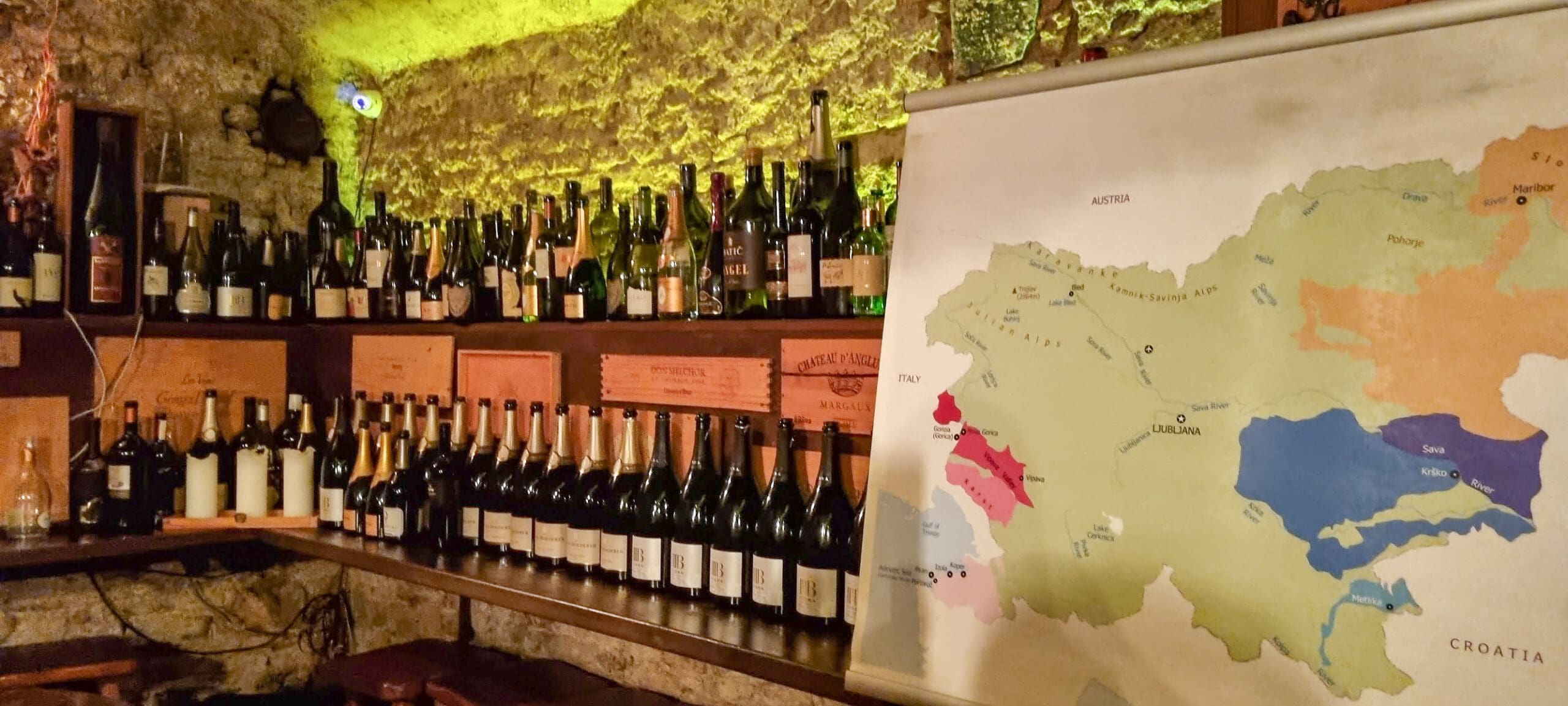
    Did you know that Slovenia has a rather fantastic wine industry? Despite the countries small size, there are plenty of different growing conditions and tell was allowing them to produce a wide variety of wines. If you are interested in viticulture. Then we have two great recommendations for winetasting within Ljubljana.

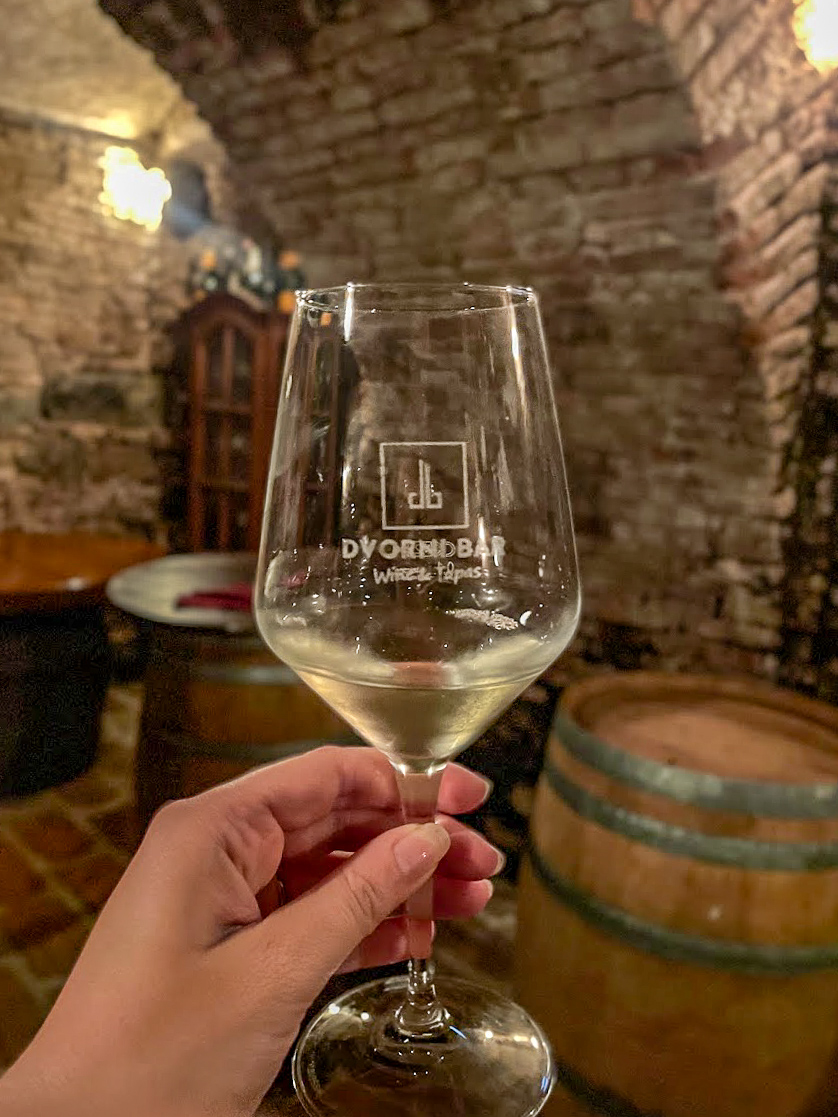
    The first, and most comprehensive is the wine tasting offered in Dvorni Bar;s wine cellar, run by Wine Tasting Ljubljana. During the 2 hour lesson, the engaging and enthusiastic Boris will guide you through a tasting of six wines, combining a little geography lesson, a lot of wine knowledge, and a whole lot of fun. Have you ever done a wine tasting with a blindfold on? Well, you have now! This was a brilliant way to start an evening and we genuinely learned loads about Slovenian wine. Boris truly is the master.

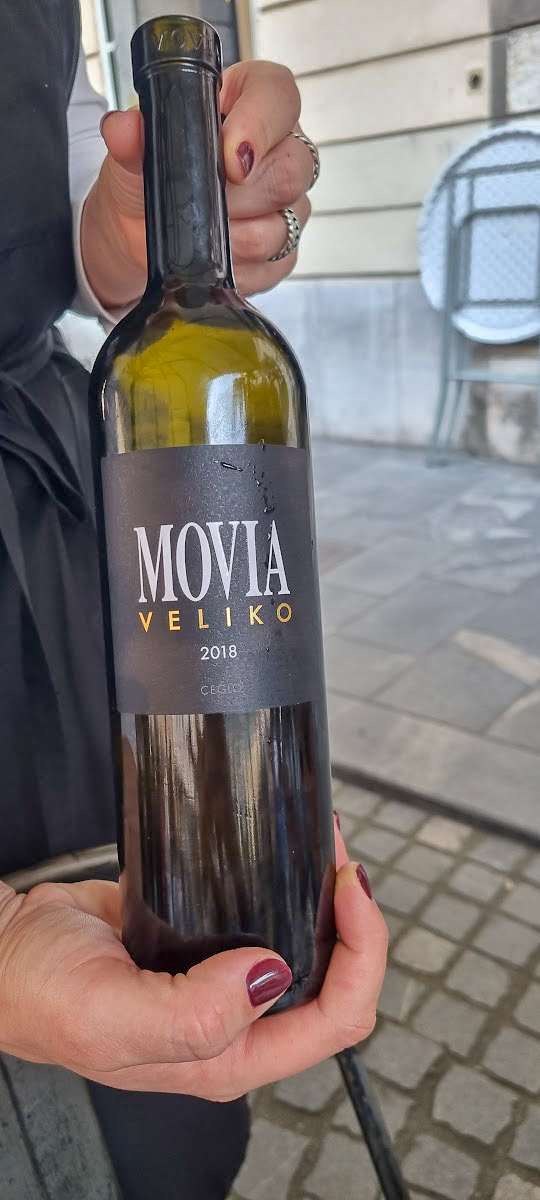
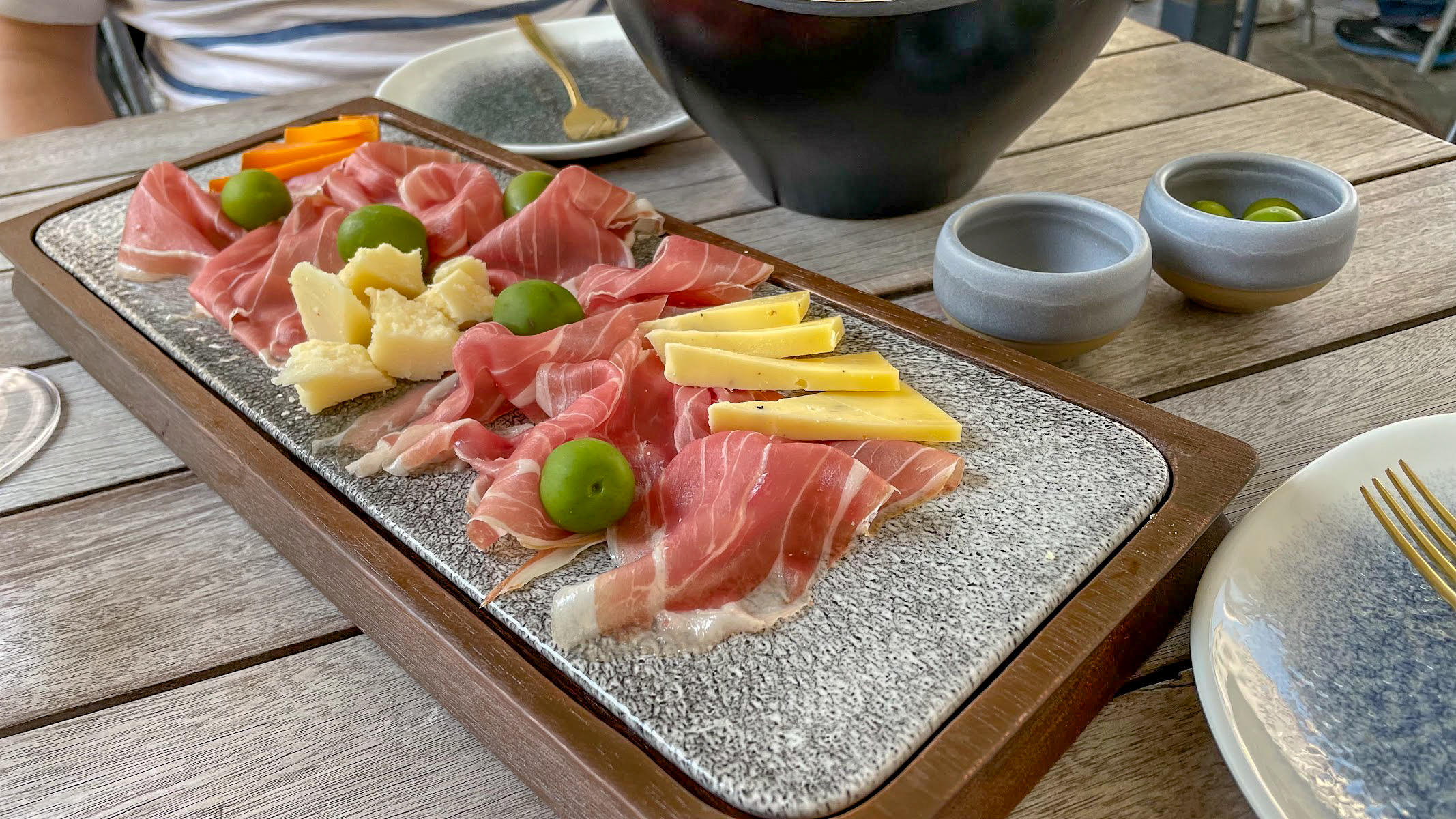
    The second is the main bar for the Slovenian wine brand Movia. Here you can opt to taste one or a flight of wines, along with a little party platter of cheese and meats. There are a few tables outside, which are full of happy, chatting, locals, or, you can sit inside the atmospheric bar. The five wines you taste are top notch and decent value at €35pp for the wine and nibbles.

    8.) Ljubljana Has Some Stunning Architecture

    The Bridges

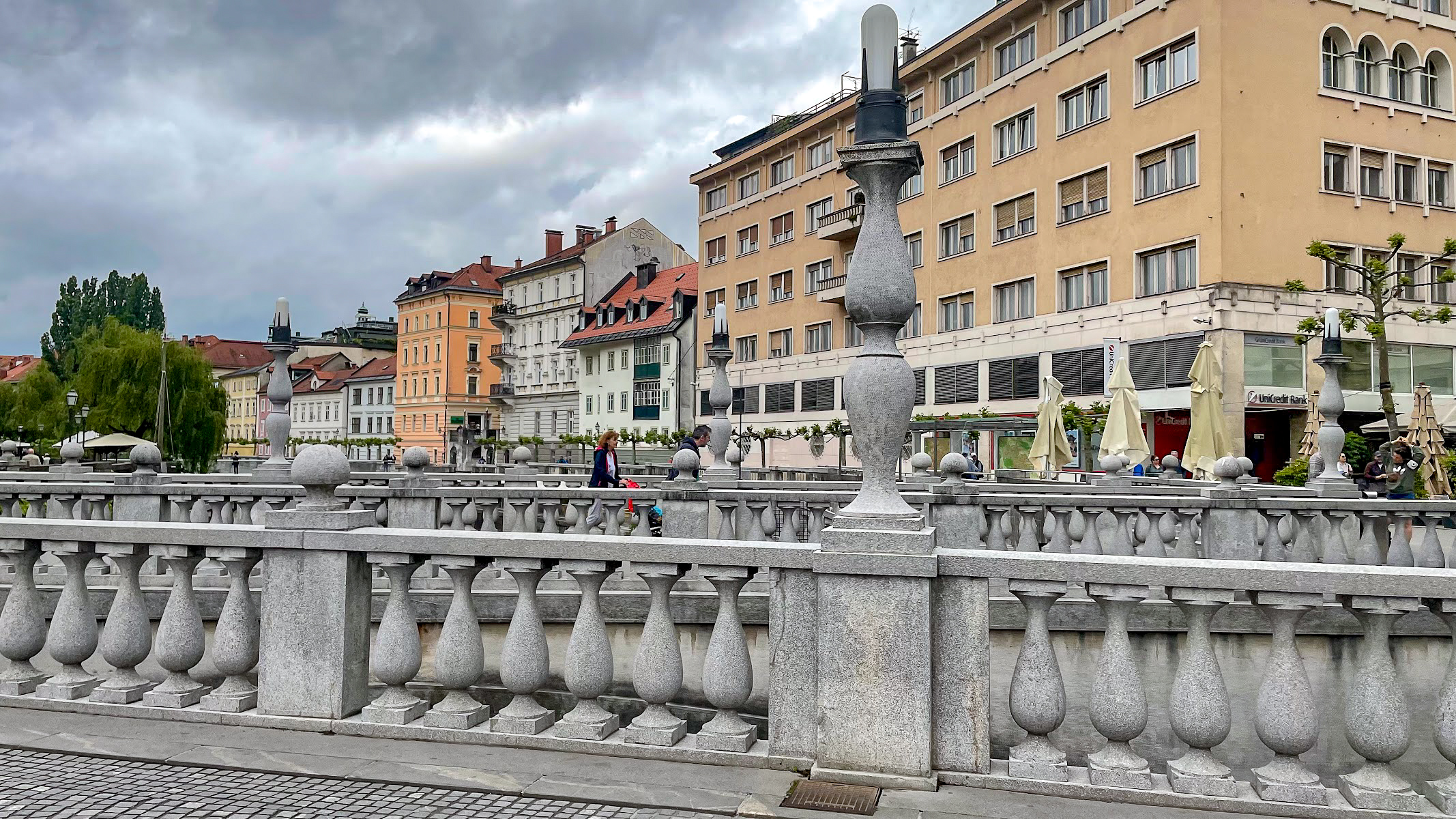
    Right in town you will find the triple bridge. This slightly and even trio of bridges used to be two pedestrian crossings and a large road but in recent years they decided to pedestrianise the whole area and now it’s a much more pleasant place to take a wander across the river. Nearby you will find the iconic Dragon bridge so named for the mythical creatures that stand guard. It was built in the early 1900s when Ljubljana was part of the Austro-Hungarian empire which is why the dragons were created in Vienna. Finally, look out for the Cobblers, or Shoemaker’s Bridge with its columns, both Ionic and Corinthian. This was originally built in the 1300s and housed butchers. The smell was so bad that the emperor paid to move them (they ended up where the dragon bridge is now) and shoemakers moved in. The one you see now still holds the same name but was built in 1931.

    Neboticnik

    Neboticnik Skyscraper is Ljubljana’s own version of the Empire State Building, A 1930s skyscraper with a great view of the city. However, this version is free, just head up Nebotičnik Cafe for a sundowner and a lovely sunset. The beautiful wooden staircase that winds its way down through the building which can be spotted from the cafe and is a gorgeous centrepiece.

    More Architecture Highlights

    Around the city, you will find some really interesting buildings, some old, some new and some a strange blend of both.

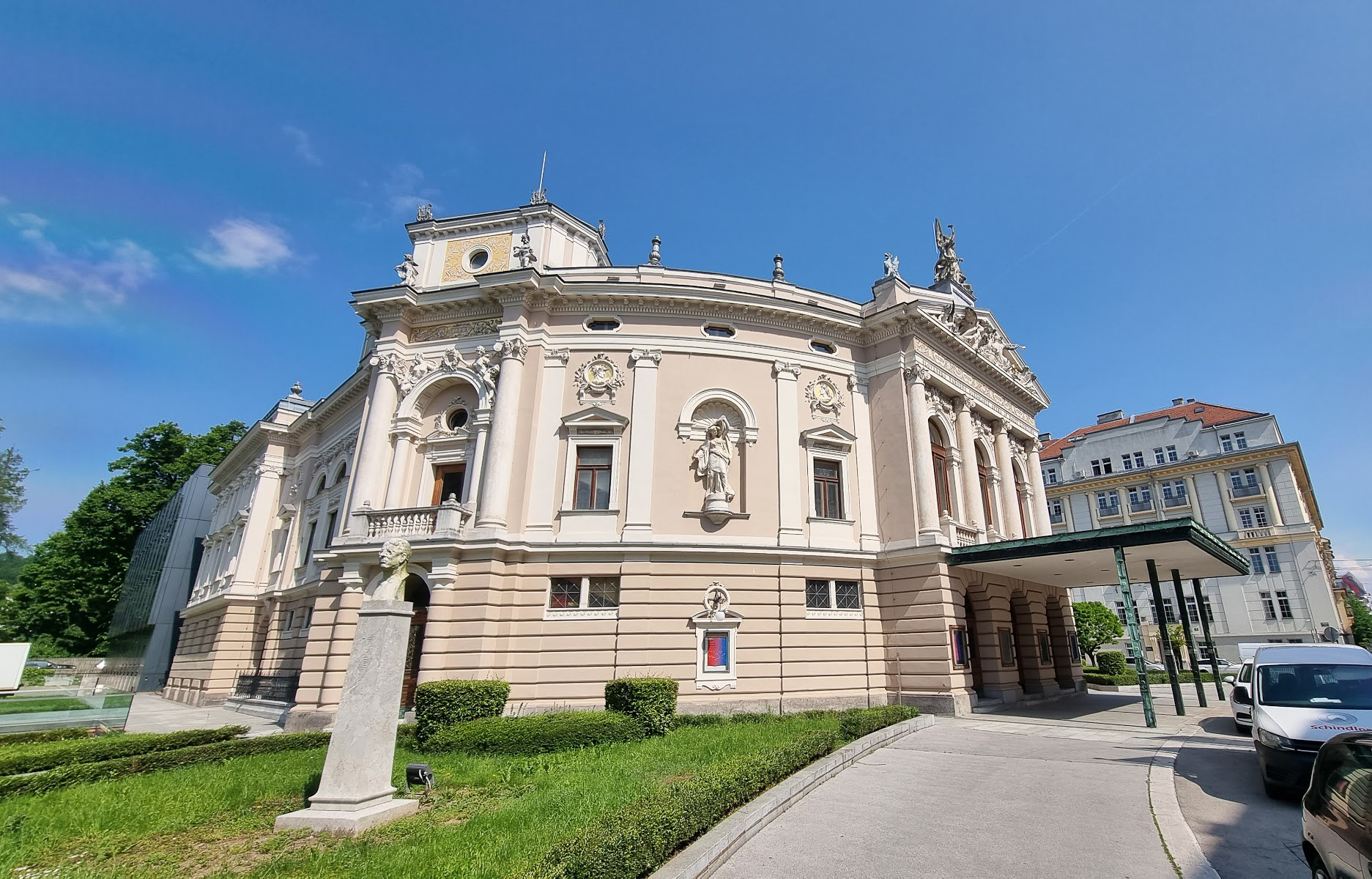
    • Ljubljana Slovene National Theatre Opera and Ballet Theatre – The pretty part of the theatre was built in 1892. To the side it has had a rather unsympathetic expansion.
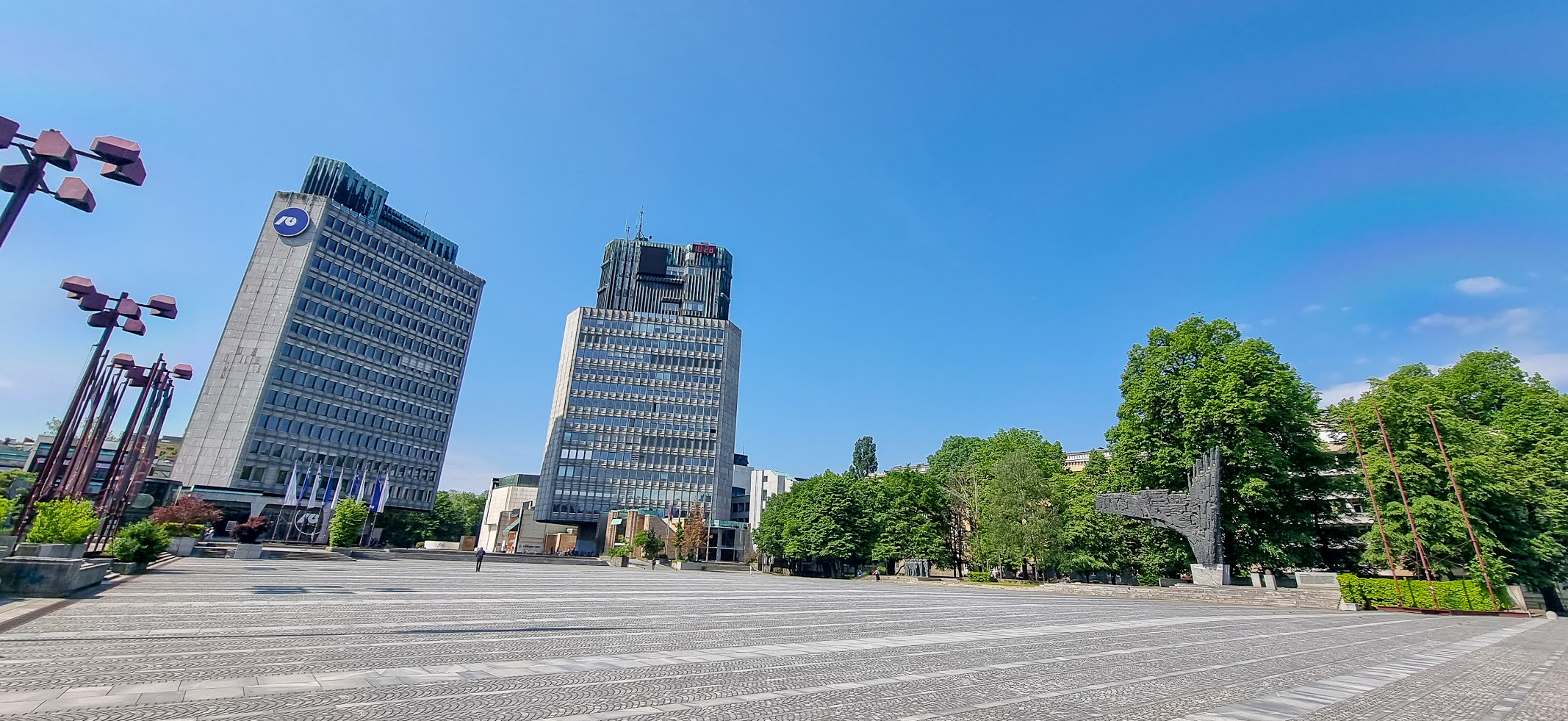
    • Republic Square – Around Republic Square there are almost brualist modernist buildings to be spotted. You can spot the Slovenian parliament, large towers of TR3 and Ljubljanska Banka buildings.
    • National and University Library – The National and University Library is rather a Marmite building. People seem to love it, or hate it. Jože Plečnik, the architect can be seen all over town but this is possibly his most famous construction.
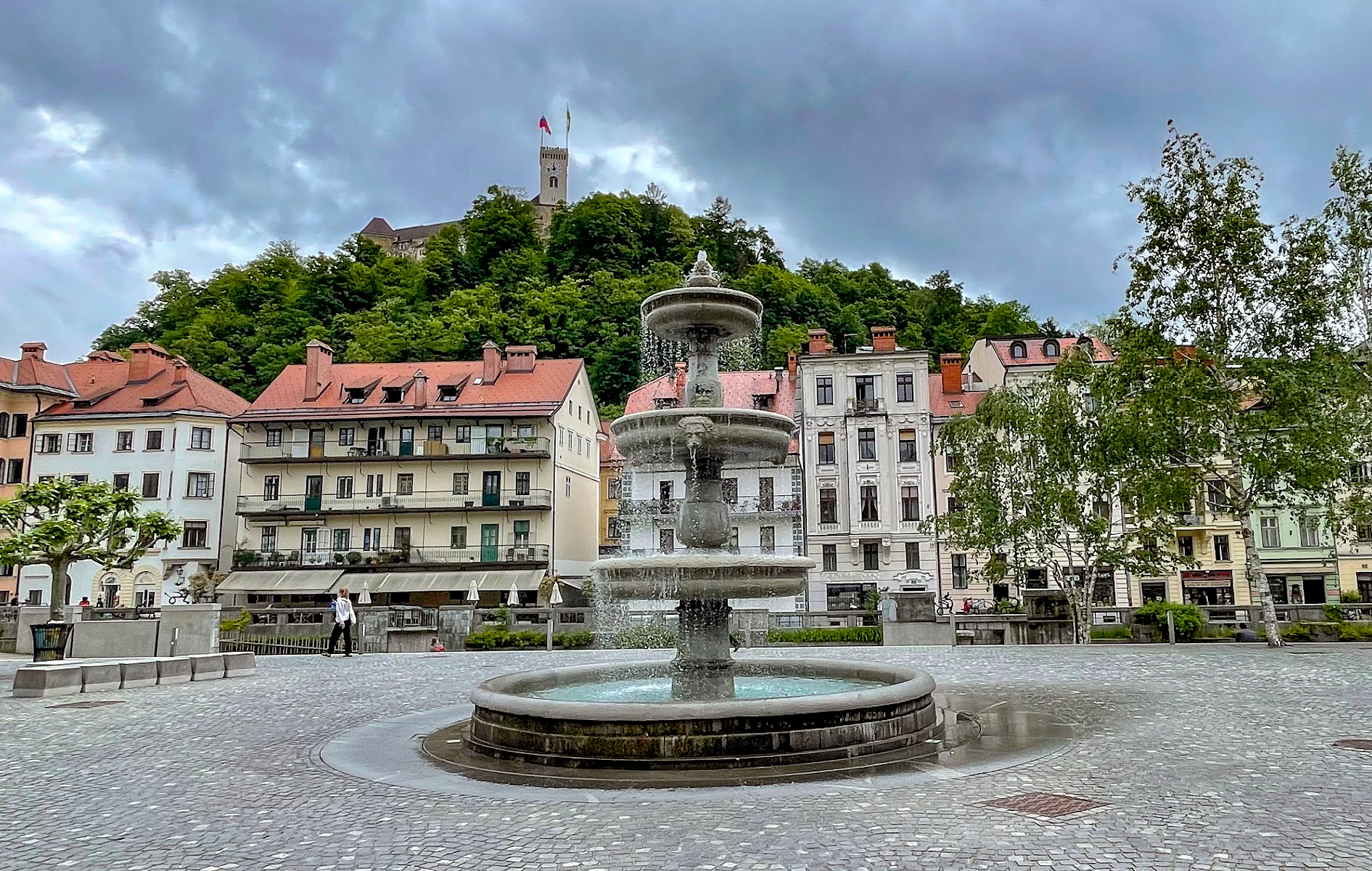
    • Backstreets – Pretty buildings and pretty views are to be found all over the old town.
    • Ljubljana Town Hall – The Baroque renovation of the Town Hall is still be seen despite now being 300 years old. You can enter the Town Hall to have a poke around. You’ll see the Venetian influence in the courtyards just out to the back.
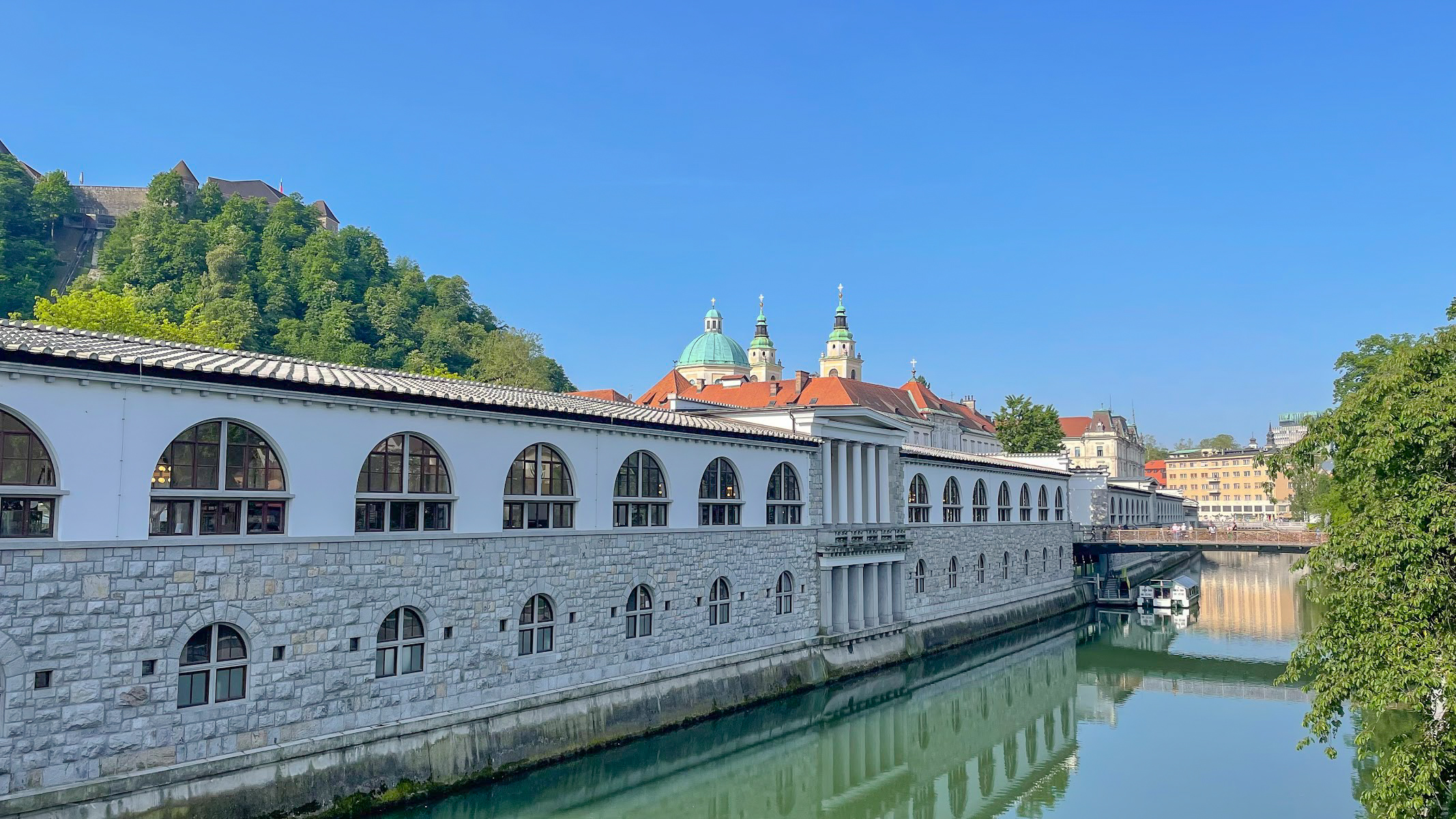
    • Ljubljana Central Market – Also known as, “Plečnik’s Covered Market” its no surprise to lran that this is another Jože Plečnik design. He was inspired by classicval temples and the market building, built between 1940-44 is a brilliant blend of classical and modern. You can go inside and down the spiral stairs to check out the fish and other underground halls with nice views over the canal.
    • The Twiddly Bits – Much like the backstreets, these are to be sniffed out independantly. Don’t spend the whole time looking at your phone as there are a few little twiddly bits to find.
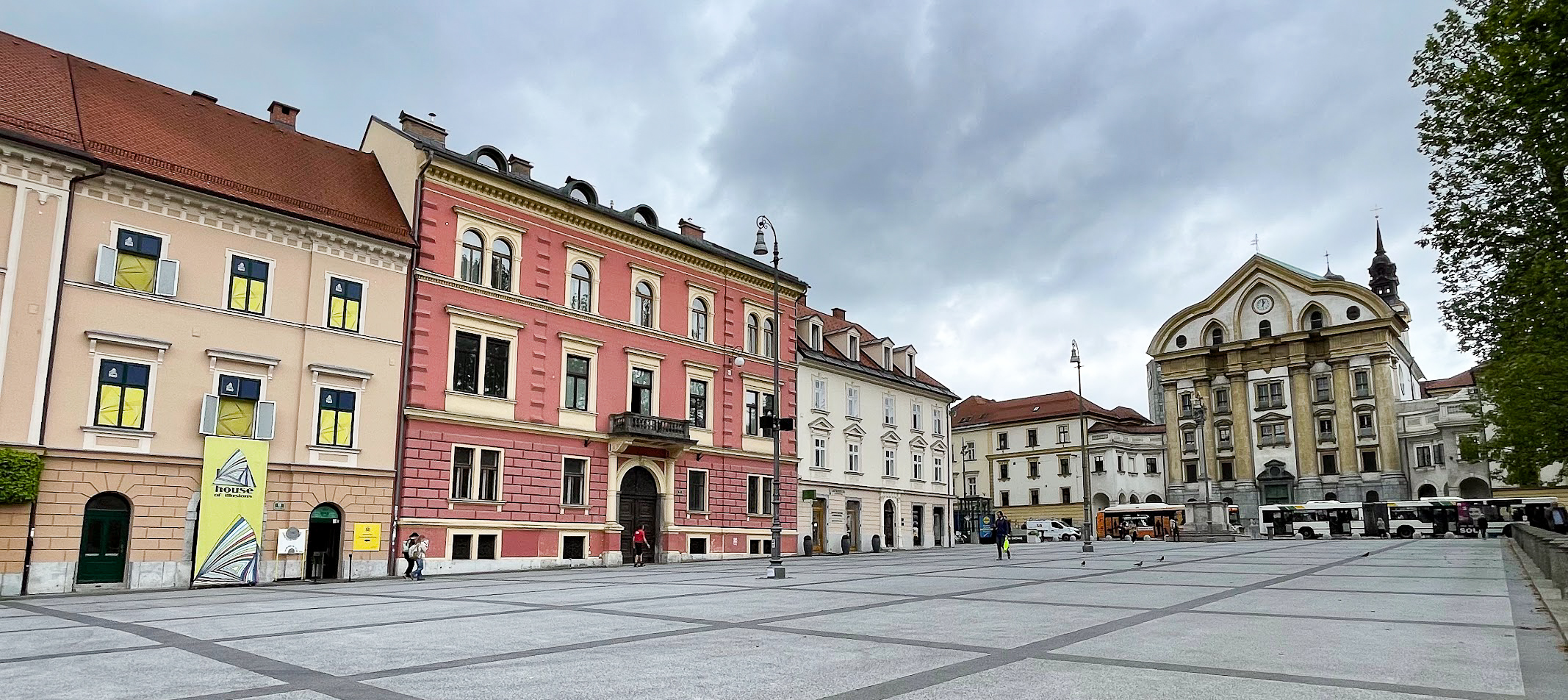
    • Congress Square – Around Park Zvezda you will find the beautiful buildings of Congress Square. Amongst the varied facades are a Barqoue church from the 1700s, a pretty neoclassical casino and the sunny yellow Slovenian Philharmonic building and palace like University building.

    9.) Ljubljana Has an Artistic Underbelly

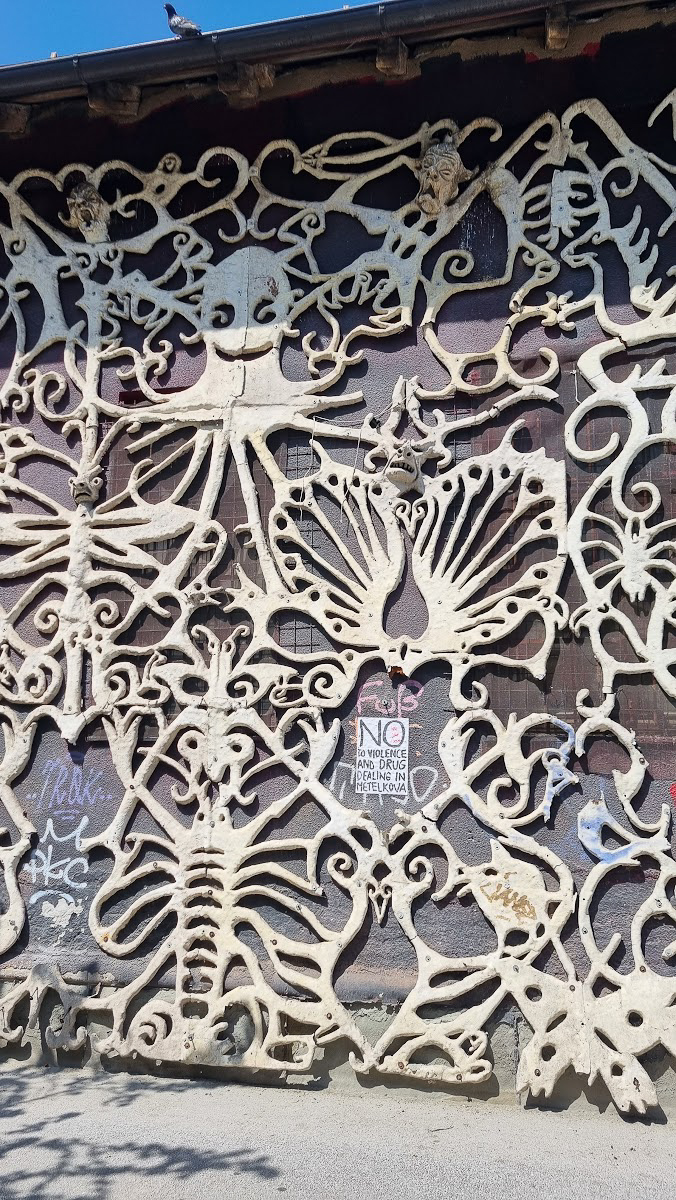
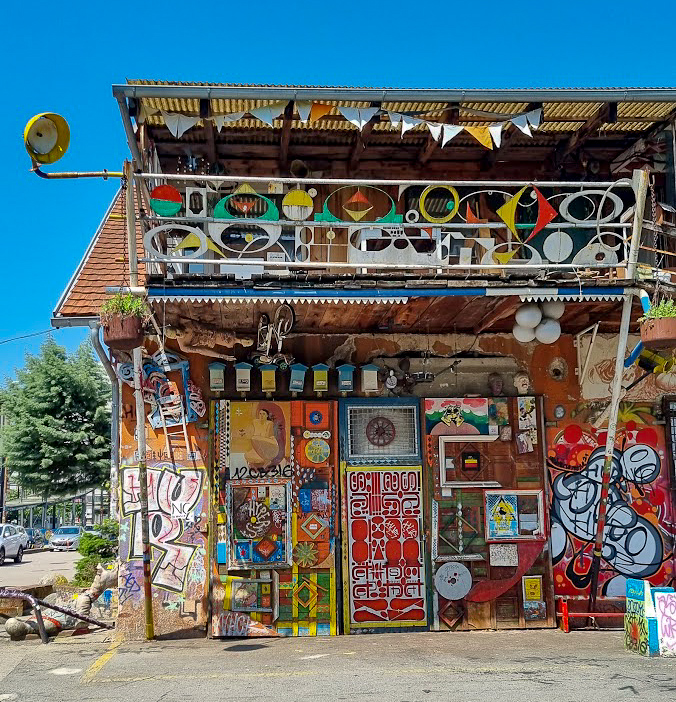
    Ljubjlana isn’t all ancient bridges and pretty canals. There is a hipster side to the city too. The heart of this is Metelkova Mesto, a huge alternative community based in an old army base. The whole space is covered in beautiful street art which, given the artistic residents, is no surprise. If you have ever heard of Copenhagen’s Christiania or Vilnius’ Užupis then you will know what to expect. Since its early years back in the 1990s. it has developed into a whole com0munity offering fun bars, interesting art shows and music gigs. There was the worry that this area would be redeveloped by the city but its future was secured in 2005 and it will remain an fun, edgy, free-thinking and interesting pocket of autonomy near the city centre.

    10.) You Can Take a Side Trip to Lake Bled

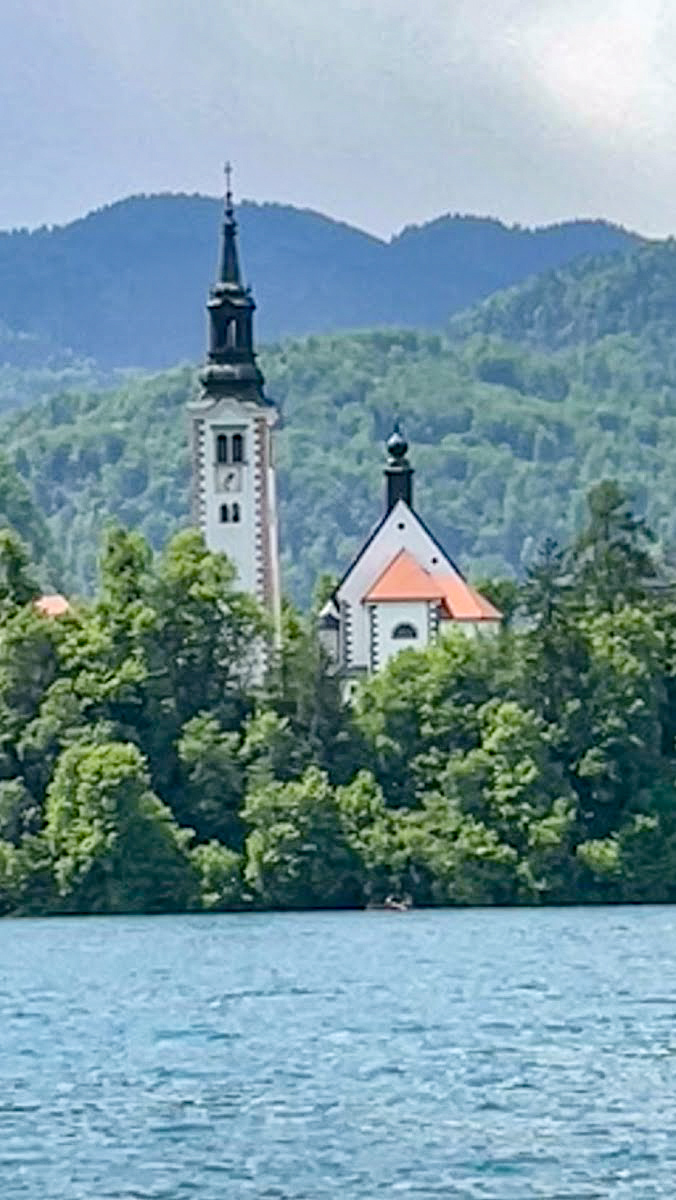
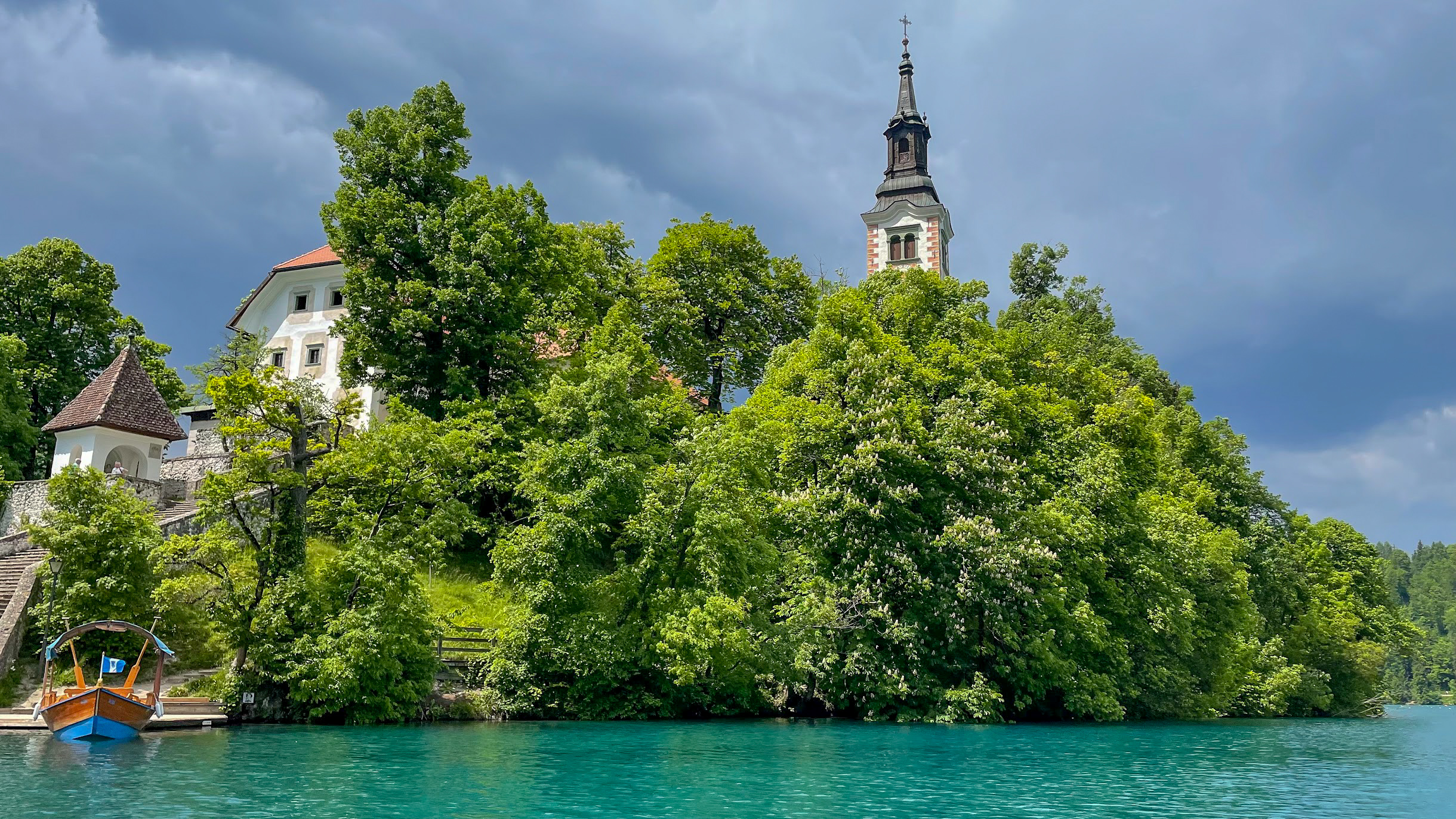
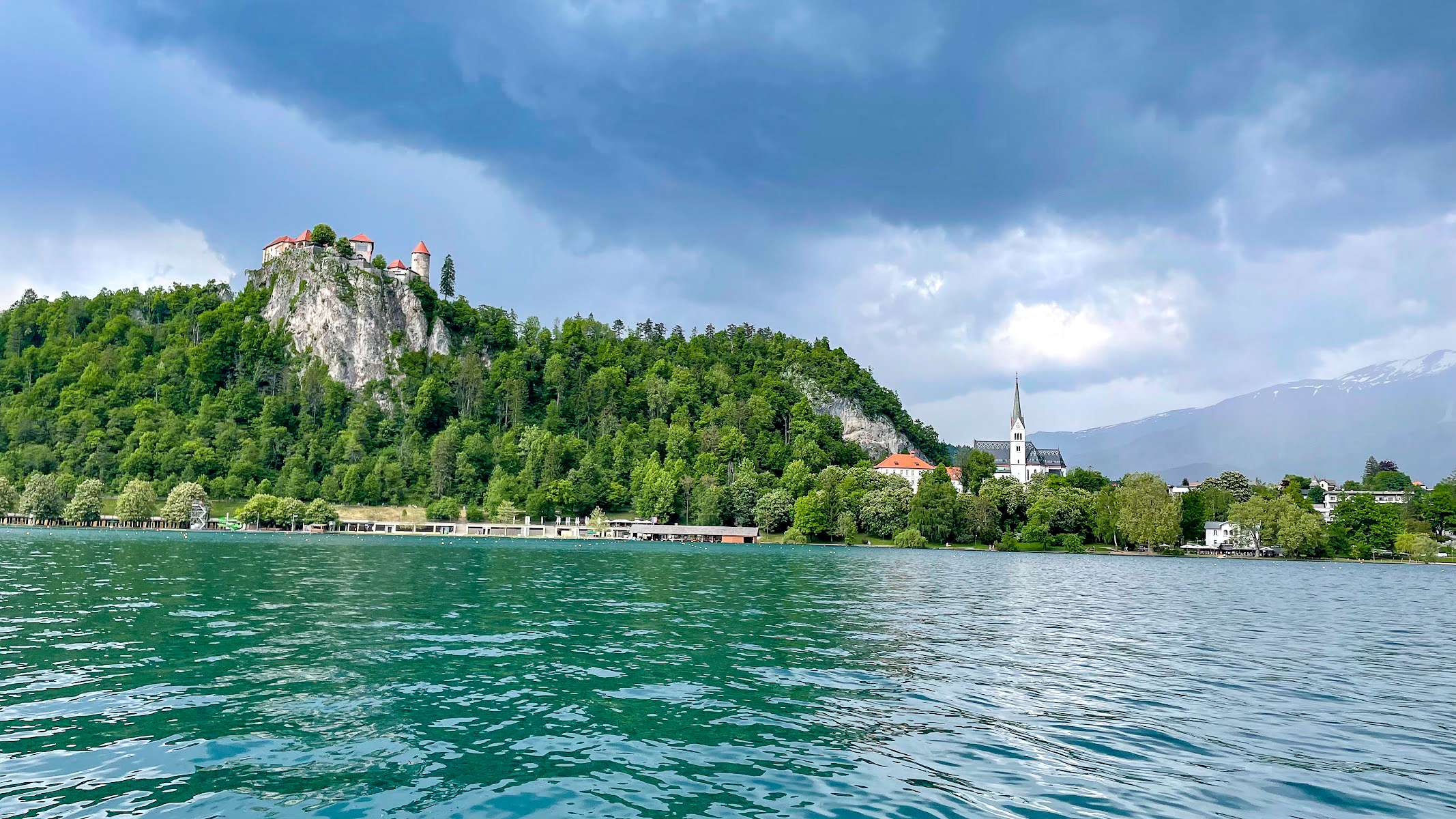
    Hop on a coach, and in just under an hour, you will be in one of Slovenia’s prettiest spots, Lake bled this as your lake is surrounded by the green hills of the Julian Alps, and in the centre is the almost unbearably picturesque church

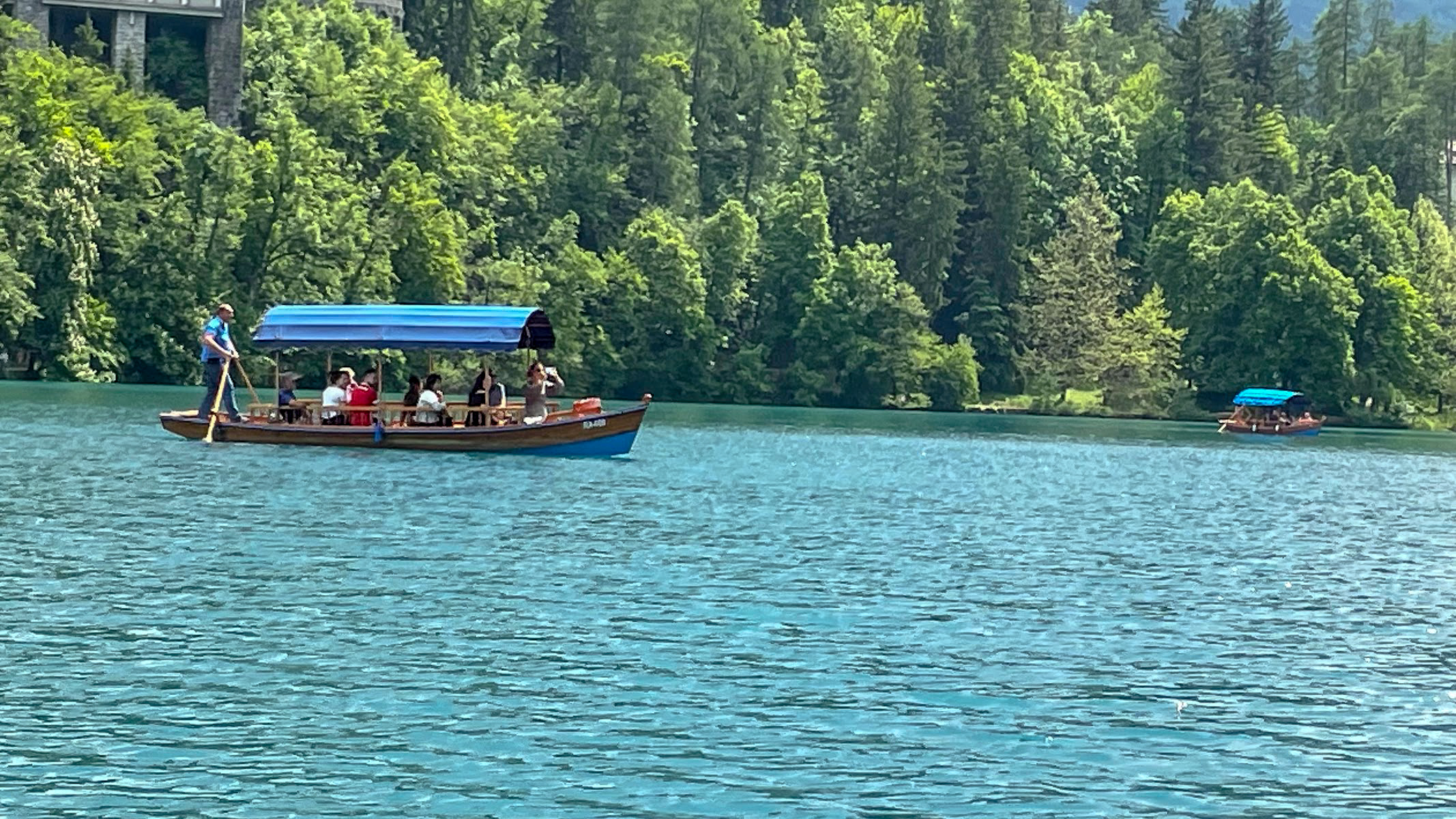
    Start your trip by catching a boat out to the island. You can opt for either the large gondolas Road by handsome young men who are the boats with a motor. Neither are cheap but both are very enjoyable.

    If you take the small trail around 1/2 of the island, you can watch the Wels catfish in the turquoise water below..when you reach the dock on the opposite side, you will see where people who hire rowboats or stand up paddle boards end up.

    Before you catch the bus back, make the trip for a piece of lake bled is the most famous cake. This light but indulgent cake consists of two layers of puff pastry sandwich and a thick layer of sweetened cream mixture and a set custard, both flavoured with vanilla. The original producers of the cake are the park hotel and you can have one in the lounge which overlooks the lake. However, the cute something or other bakery gets our vote for the superior slice.

    Final Thoughts

    Ljubljana has to be one of Europe’s most surprising cities. It’s a total gem with its blend of green spaces, yummy food and friendly citizens. Ljubljana enchants first time visitors, most of whom leave the capital singing its praises and planning their return. We were two of those people and we can’t wait to visit again and find 10 more reasons to love it. So I’m conclusion, is Ljubljana worth visiting? 100%!

    Rosie xx

  • Full Interrail Packing List – Don’t Miss These Interrail Essentials

    Full Interrail Packing List – Don’t Miss These Interrail Essentials

    If you are planning your first train travel adventure in Europe, packing can be intimidating. I am aware that not everyone loves to pack as much as this weirdo over here! Don’t worry, this Interrail packing list, full of your Interrail essentials will help guide you through what you’ll need for your Interrail or Eurail trip through Europe. Oh, and there is a downloadable Interrail packing list at the bottom of the page for you to tick off.

    (more…)
  • How to Spend 2 Days in Zurich

    How to Spend 2 Days in Zurich

    When I first thought of Zürich I didn’t really know what to picture. Fancy cars, fancy watches and lots of fancy bankers came to mind. I thought there was no place for scrappy tourists like us but I was so wrong. There is plenty to see and do in Zürich. If you have 2 days in Zürich then this is a great itinerary. (Oh, and if you only have one day in Zürich then just follow day one)!

    This post may contain sponsored content or affiliate links that help support the blog. All opinions are our own.

    Flying Fluskey in Zürich

    On our journey from London to the Maldives we had an eight hour stopover in Switzerland. At first, I anticipated a long day in a cold airport but with a little more research, we saw how quick and easy it would be to get to the city (one quick train). We spend a very happy five hours exploring Zürich and vowed to return. Six years on and we returned to explore further.

    The Zürich Card

    The Zürich Card provides free public transport for the length of the card, whether that be 24, or 72 hours. It also includes free entry to lots of museums around town as well as discounts at many others. You will also be entitled to a free mini cruise on the lake and some other exciting offers which we will mention along the way. It is best to order your Zürich Card in advance so you can use public transport straight away. It includes trains to and from the airport and it is around £10 each way so this makes the card great value! Remember to validate your Zürich Card when you want to start using them, you will have 23 or 72 hours of use. You can validate these in the machines at the Zürich HB if you are picking them up from the tourist office.

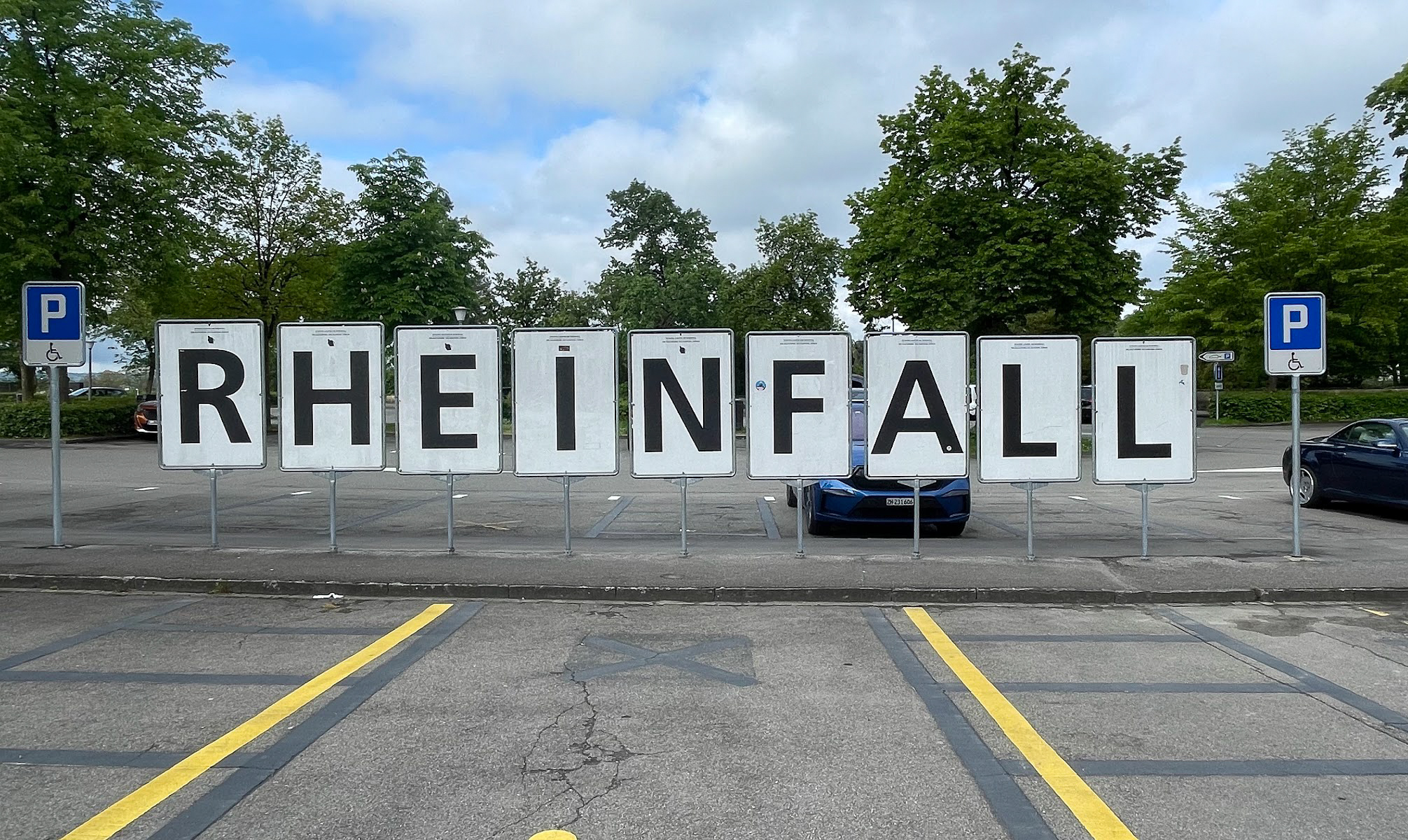
    For a great day trip from Zürich, check out our tour to the Rhine Falls

    DAY ONE

    Take a Walking Tour

    It’s always a great idea to discover a new city with a walking tour, especially if you only have 2 days in Zürich. You will take in some of the best outdoor sights in good time, without getting lost and learning a bit of history along the way.

    The Official Tour – Zürich Old Town Walking Tour

    The Old town walking tour begins at the Zürich HB, outside the tourist office. From here, you will head down to the old town, along the Limmat River through some of the prettiest streets in the city. Along the way, the professional guides will share tons of info and some fun stories. As a bonus, you get to try some syrup which is a concentrated fruit drink mixed with Zurich fountain water which all feels rather wholesome.

    Tours are 50% off with the Zürich Card

    Free Walking Tours

    For a slightly less formal, walking tour, search for freebies like Free WalkingTour Switzerland. Of course, these guides work for tips and so you should definitely bring along some cash before the end of the tour so technically it’s not free but they tend to be a little quirky with guides focusing on the areas that they find most interesting and are most passionate about.

    Alternatively, if you enjoy doing your own thing, the tourist office has free walking tour sheets with a route to follow that will guide you through most of the big sights between Zürich HB and the lake. This is what we did on our first stopover visit and it was a great way to see the city at our own pace. (It was great to rediscover it with some more info on our proper tour though).

    Duck Into These Churches

    You can’t spend 2 Days in Zürich without popping into a church or two. The city has many, but here are 2 of our favourites;

    Grossmunster

    The two main towers of Grossmunster are recognisable from across the city, so it is one of the city’s icons. Built in 1220, the present building was built upon the foundations of an even older church. It used to be a monastery and was founded by Charlemagne. Legend has it, the horse of Charlemagne fell to its knees at the spot the saints of the church were buried.

    The Zürich Card gives visitors access to the right-hand tower so head to the Ticket Desk. They will let you through. The stairs are quite steep, but there are a couple of spots for a breather as you climb one of which has some interesting street art from a famous graffiti artist. at the top, if the weather is bad, you won’t be able to go right out onto the balcony, but the views are still good enough if you are tall enough. On nicer days, you can head right out to the stone balustrade and take in the sweeping views of the lakes and the surrounding city.

    Grossmunster is free with the Zürich Card.

    Fraumunster

    Across the river, is Fraumunster. This was established by Charlemagne’s grandson and was a convent (a fierce rival of Grossmunster across the bridge). The stained glass behind the altar is beautiful, and they know it. In the welcome leaflet, it states that reproducing, photographing or posting pictures of the stained glass on social media is all copyright infringement. The windows were created in the 1970s by artist Marc Chagall and they are seriously stunning. I might not be allowed to post them but here is a link to the google photos results so you can see them…but also, go and see them in real life!

    Fraumunster is free with the Zürich Card.

    Relax on Lake Zürich

    Your Zürich Card entitles you to a free mini cruise of Lake Zürich and this is a great way to rest and recuperate whilst taking in some pretty scenery. The mini cruise takes around an hour and is a must do if you have 2 days in Zürich. The boat has indoor and outdoor seating so you can enjoy it whatever the weather. The boat leaves every hour from 09:45 – 16:45. There are some seats at the front of the boat where you get the best view and some at the back, which is another nice spot to relax if the weather is nice. Alternatively, there are plenty of seats inside on cushioned benches with tables, making this a nice spot for a picnic or to huddle from the cold. The boat travels about halfway along the lake, past the suburbs of Zürich and the green hills beyond before returning.

    The mini cruise is free with the Zürich Card.

    Get Cheesy at Swiss Chuchi

    There are a fair few spots offering fondue in Switzerland but our favourite is Swiss Chuchi. The atmosphere is cosy and jovial while outside is lovely in the summer sun. There is plenty on the menu to satisfy but it’s all about the cheese!

    Raclette

    There are two kinds of raclette, the kind that is melted and scraped off a huge cheese wheel and the kind you’ll find here. Diners are given a little platter of veggies, potatoes and other bits and a plate full of cheese.

    The idea is to load up your mini skillet and melt the cheese onto your chosen receptacle before scoffing the lot. It’s fun…but not as fun as fondue! Maybe we should call it FUNdue?

    Fondue

    Swiss Chuchi has a whole page of its menu dedicated to this boozy, cheesy pot of deliciousness. We favour their unique fondue (Fondue Adler mit gereifteren Käsesorten) with lashings of wine and cherry liquor as you can try the regular stuff elsewhere. Every fondue comes with bread as standard for dipping but you can also order pickled veggies (cornichons, pickled onions and corn), potatoes or meat to dip on as well. Dip, dig in and don’t give up until it’s all gone!

    If you still have room, they have a yummy selection of desserts including seasonal offerings like this meringue, strawberry and deliciously thick Swiss cream concoction, (it is an Eton neat).

    You will receive a culinary surprise at Swiss Chuchi if you show your Zürich Card.

    DAY TWO

    Play Charlie at Lindt Home of Chocolate

    If you have always dreamt of getting one of Willy Wonka’s golden tickets then you are going to love the Lindt museum. It’s an essential taste tour if you have 2 Days in Zürich. Now, unlike a few chocolate tastings you may have been to, the first few rooms are fun, informative and very interactive. Everyone has an audio guide but there’s also plenty to read and play with. Even if you don’t have a ticket, you can visit the shop and lobby and see the huge chocolate whisk fountain that has actual chocolate cascading down the central column….but it is a long way to visit a chocolate shop and the museum really is great.

    Then, once you have a head full of knowledge about the joys and history of chocolate it’s time to taste some and again, this is next level.

    Eating Lindt
    1. The Fountains – if the idea of chocolate fountains fills you with equal parts joy of chocolate and horror of germs then you’ll love the Lindt fountains. Instead of sticky hands under the chocolate falls, guests pump squirts of the melted confection into small spoons. There are three types, dark, milk, and white. If you’re feeling fancy, you could try and get all three on one spoon. Don’t fill up entirely though, as very quickly you’ll be at tasting station number 2.
    2. The Flavour Test – Here will find a cluster of machines all chopping chocolate. The idea is to put your hand out and catch a chunk. These are all dark chocolate blended with different flavours. Guess the addition and there’s a little flap with the answer so you can check how good your palate is.
    3. Lindor Heaven – The first thing you see when you enter Lindor Heaven are two giant versions of the iconic truffle. These are photo booths and if you’re on a tasting mission then you can skip these. Instead, join the queue to pass the see-through capsules full of every flavour of Lindor ball that they produce. You take one of each (unless staff aren’t paying attention, when you could grab more…but we didn’t tell you that).

    The Lindt Home of Chocolate Museum is 10% off with the Zürich Card.

    Culture Time at Zürich’s Museums

    Zürich has plenty of museums to include in your 2 Days in Zürich. Some are free with the Zürich card and some you will receive a discount. Here are some of our favourites:

    Beyer Clock and Watch Museum

    At first glance, this tiny museum seems like five minutes’ work, but you can easily lose an hour here (and they’ll be plenty of clocks to tell you so). There is a large collection of timepieces, some beautiful, some you recognise from your grandparent’s mantelpiece, and some that are downright weird. A particular feature is the section for clocks with unusual mechanisms. No matter how many times you see the movie o’clock ago, he will still be drawn to it every time you hear it roll.

    The Clock Museum is free with the Zürich Card.

    FIFA Museum

    The FIFA World Football Museum is all about the beautiful game. There are cool exhibits here that go back to the very first world cup in 1930. Even if you don’t love football, the interactive elements are a lot of fun. You can test out your football skills; don’t worry if you are rubbish, that is often a lot more fun!

    The FIFA Museum is 30% cheaper with the Zürich Card.

    Landesmuseum – National Museum of Swizerland

    The Landesmuseum is stuffed full of Swiss culture. It includes archaeological artefacts (displayed with amazing interactive screens full of interesting information) and interiors from across the ages. There is so much to see. Pass through stunning wooden rooms and beautiful ballrooms, and marvel at the ancient art. There is a wonderful exhibition that traces Switzerland’s history and it is packed with incredible pieces. This includes the Guild map (in the photo below), right up to the modern age. Even the museum building itself is attractive, designed with French city chateaus in mind in the 1890s.

    The Landesmuseum is free with the Zürich Card.

    Money Museum

    Zürich is known as a banking hub (and all those mysterious Swiss bank accounts) so it is only right that there is a museum all about money here. The museum traces the history of currency and its role in society. It showcases a huge range of banknotes and coins from around the world, with some rather good-looking gold bars.

    The Money Museum is free to enter, which is super but it is only open on Thursday and Friday.

    Kunsthaus

    The Zürich Kunsthaus is Switzerland’s biggest art museum and is spread across a few buildings in the city. Here where you will find fine and modern art from Switzerland and across Europe, some dating back to the 1200s. A particular highlight is the new David Chipperfield extension where you will find gorgeous pieces from Picasso and Monet.

    You will receive 20% off with the Zürich Card. The main collections are free on Wednesday so if your 2 days fall midweek then you are onto a winner!

    Dinner – Too Good to Go

    If your budget is stretched by 2 Days in Zürich, then make sure you have downloaded the Too Good to Go app. This super money saver means you get end of the day food from restaurants, canteens and supermarkets for a steal. We had full bakery bags for less than 6 CHF, hot food from a Migros canteen for 6.50 CHF and random grocery items from Coop for 6 CHF. Its a bargain and a gamble! But, when a pizza can be 25CHF and a Big Mac meal with McFlurry is 17CHF, it’s worth the risk.

    Final Thoughts for Your 2 Days in Zürich

    There is something about Zürich that is surprising and delightful in a way that you wouldn’t expect. The old town has some serious charm and there is something about being surrounded by wealth that is eternally interesting. You could be walking any backstreet in Zürich and the four cars that drive past, will all be rather lovely. We have been in the sunshine and in the rain and enjoyed both trips greatly. If you are travelling to Switzerland, make sure that spending 2 days in Zürich is part of your itinerary.

    Rosie xx

  • A Tour to the Rhine Falls with Best of Switzerland Tours

    A Tour to the Rhine Falls with Best of Switzerland Tours

    During our trip to Zürich, we couldn’t resist the chance to embark on a trip to Europe’s biggest waterfall, the majestic Rhine Falls! In a country full of natural splendours, the Rhine Falls still stands out. Although there are ways to reach the falls by public transport but we thought that the benefits of taking a tour would be worth the extra cost. We took our tour to the Rhine Falls with Best of Switzerland Tours and here is the full review.

    This post may contain sponsored content or affiliate links that help support the blog. All opinions are our own.

    Travelling to Switzerland, check out our other Switzerland content here!

    The Coach from Zürich

    Our journey began at the coach park next to Zürich HB. We took our ticket voucher and exchanged it for a sticker at the little white booth, which I probably dropped twice. I affixed it to my bag and hopped on board., claiming two seats and settling in. This coach was a little older than the double-decker we took on our JungrauJoch tour with Best of Switzerland, but still, it was clean and comfortable. We drove for around 45 minutes, taking a little deto to pass through a very cute village with typical half-timber houses.

    The coach pulled up and half of the group decamped for photos with the big Rheinfall sign. The ever-patient guide Fatima gave everyone a few minutes and then gathered us back together and walked us to the lift. These glass lifts very nearly give you a glimpse of the falls but they are very slightly around the corner so they don’t spoil the surprise.

    If you are visiting Zürich, check out our blog “How to Spend 2 days in Zurich”.

    The Boat

    Everyone on the tour opted to pay a little extra for the chance to get close to the falls on a motorboat. The group were all given their tickets and clambered on board/ The captain aimed the bow at the base of the rushing water. It was a battle of wills as the engines fought the force of the falls. At this point, the weather was pretty grey and rainy so we all had our raincoats on anyway, but it was good to have them as the spray came straight towards us.

    The Observation Decks

    Then it was time to get really up close and personal. The large concrete promontory that sticks out in front of the falls isn’t the prettiest or most sympathetic structure, but it kept our legs dry as the water crashed past at 600m³ per second. The spray fell like rain and whipped up by the wind of the waterfall chilled our faces. We got some photos and a quick real for Instagram before making our way up to the next viewing point.

    Coming out from the rock, the covered concrete platform was mere feet from the plummeting white water. It looked like you could just reach out and touch it…but that was probably a bad plan so I didn’t try, lest I lose a finger. From here, we watched the other tour that the boats run. The motorboat heads to the large rock in the centre where visitors can disembark and have a walk. It clearly took some real skill to get the boat there safely. It was a shame that we didn’t have time to do this as my inner geography geek would have loved it (and in 100,000 years, that rock might be inaccessible so best to visit now)!

    The final spot was a large open terrace overlooking the river and the top of the drop. It was strange that as the river opened up, I could see the volume of water, but lost almost all sense of the waterfall itself. I kept imagining what would happen if you were happily travelling along the Rhine years ago then you notice the water moving a little faster, the roar of the distant falls starting to creep in and realising that you were a LONG way from either river bank. It was a scary thought.

    Laufen Castle

    After catching the lift back up, we took a look inside Schloss Laufen. There has been a castle here for over 1200 years in some form or another. It has amazing views of the falls below. Inside, the museum’s exhibitions range from information about the castle’s history to mock-ups of the way people lived within its walls through different eras. There are also some quite strange rooms, one lined with singing portraits and another featuring a fake train ride. It is a fun distraction, but we zipped through quite quickly.

    With a little time to kill and the sun, making an unusual appearance, we decided to grab a drink and snack and hang out in the children’s play park. We really climbed and we really slid. The park area, opposite the pretty church, and next to the crenellated ramparts was a lovely spot for a picnic.

    We made it back to the coach bang on time as Fatima rounded up the unbothered stragglers.

    Top Tip for Taking Tours: Be at the designated meeting point at the designated meeting time or you will be judged!

    Final Thoughts on This Tour to the Rhine Falls with Best of Switzerland

    Visiting the Rhine Falls with Best of Switzerland, was an interesting mix of independent travel and guided tour. It was nice to have the convenience of a coach both ways and to be pointed in the right direction for the boat and the tours, but I did enjoy the chance to explore on our own for some portions. I wish we had more time at the Rhine Falls; to take one of the nature trails or hop on the train to see the view from the viaduct…but I guess we kind of did in the museum. Overall, it was a brilliant way to spend half a day during a trip to Zürich and a great way to visit the Rhine Falls.

    What a view that train line must have!

    Rosie xx

  • The Perfect Lugano Day Trip – Luxury by the Lake

    The Perfect Lugano Day Trip – Luxury by the Lake

    Lugano offers visitors the chance to live in the lap of luxury and indulge in dolce vita. Surrounded by the soaring Swiss Alps and lapped by the sparkling waters of Lake Lugano, this chic Swiss city blends beauty, Swiss harm and Italian flair. If you only have one day in Lugano or can only take a quick Lugano day trip, then we will help you find the best way to spend your day.

    This post may contain sponsored content or affiliate links that help support the blog. All opinions are our own.

    Lovely Lugano

    Switzerland is a country of rather uneven thirds. It is split between, French, German, Italian and Romansh. The heart of the Italian-speaking sector is undoubtedly Ticino, (it is the only fully Italian Canton) and the heart of Ticino is Lugano. Lugano has been Swiss for over 500 years but still feels distinctly Italian (and not just because its best airport link is Milan). Here you’ll find pizza, pasta and plenty of Aperol. If yu are lucky enough to visit during summer (mid-June to early August) then check out the Lugano Festival listings for all kinds of jazz, blues, world music and other banging beats!

    Funiculi Funicular – Head Up the Mountain

    Start your day by taking in a view of Lugano from above. The best way to do this is by taking the funicular up the steep sides of San Salvatore.

    Visitors board the funicular and head skywards for about five minutes. Then, cross a platform and bird an even steeper funicular. If you want great views, sit on the floor at the front, if you want a seat then take the top row as you’ll get a lovely view through the roof. These lifts will whisk you up to around 910m (2,990 ft) above sea level.

    Soak Up the View at Chiesa Monte San Salvatore

    The church, named for the same San Salvatore is perched right up on the top of the hill. It is a steep climb from the funicular if you are going quickly but the sweeping views give a great excuse to stop for breath. Thank your lucky stars that you didn’t visit during the church’s first 800 years of history when the only way to reach it was to hike all the way up the mountain.

    Pop into the pretty little interior before heading into the side. The stairs here will take you up and out to the roof. Some of them hang over the edge of the church and can be a bit challenging for those with a fear of heights. If you can stomach them, however, you’ll have the most stunning views out across the lakes and Lugano town.

    Linger Over Lunch at Porto Bello!

    Back down the hill, and a short bus ride away, you will find Porto Bello! (The exclamation mark is part of the name, I’m not just yelling at you). This is a wonderful spot for lunch as it sits on the end of a canal leading to the lake. There is a lively inner room but if you can, book a table in their outside space. If it’s chilly, they roll down the windows, keeping it warm and dry. If it is warm and sunny, it is all opened up and you have a lovely lake breeze accompanied by the gentle tinkle of mast lines. It’s very atmospheric.

    Porto Bello offers a menu full of fresh, delicious Swiss Italian fare. They are especially well known for their super fresh seafood prepared to perfection. Tender octopus with crispy edges adorns salads, frutti de mare is bursting with fishy goodness and even the burgers are juicy and delicious. Start

    Plus, they make great spritzes!

    Take a Post-Lunch Stroll in Parco Ciani

    From Porto Bello, head west across the bridge and into the lush greenery or Parco Ciani. This pretty stretch of green is lined with neat flowerbeds and is full of people taking in the relaxing ambience. The edge is licked by lake water and the Congressional Palace sitting proudly at its centre gives it a rather regal feel.

    Continue along the promenade and you will encounter more strolling citizens as well as those who are out for some healthy competition at the giant chess board, or sitting on one of the myriad benches, taking in the view across the lake.

    Explore the Lake with SNL

    After seeing the water from above, and walking along its edge, there is no doubt that it is time to get out onto its shifting surface. Pick up a ticket at Lugano Centrale and hop on the next boat that comes by. You have a few options including stopping at one of the famous grotto restaurants by the lakeside, just enjoying the sights without disembarking or hopping on and off at different stops. If you stop anywhere, we recommend the gorgeous little town of Gandria.

    Gander at Gandria

    Gandria, is a charming village at the bottom of Monte Bre, on the shores of Lake Lugano. Its stone buildings and cobbled streets haven’t changed for over 100 years and so it is an evocative spot for a wander. Have a nosy inside the Chapel of San Rocco, which dates back to 1645, check out the Swiss Customs Museum (open 12-5 Tuesday to Sunday) and explore the lakeside cemetery. La Bottega di Gandria has a lakeside terrace right by the boat stop so it is a nice place to wait with a beverage for your return boat. You could also choose to walk back along the Olive Trail but at 12 miles, you would ideally need to head out here in the morning and skip San Salvatore.

    Sip on a Spritz

    The aperitivo culture in Lugano is strong and so why not indulge in a spritz or two before dinner? Caffe Caruso in the corner of Piazza della Riforma does a great Aperol spritz, a slightly cheaper but equally yummy Hugo spritz and has a very healthy wine list. If you are here for an apertitivo, you may be treated to some accompanying nibbles (a la Venetian ciccheti). Going to the bathroom here is an adventure into the bowels. It is worth noting that they take cash only and if you pay in euros, you will get a rather unhappy exchange rate and the change will be in Swiss francs. Best to bring francs in the first place.

    Do a Spot of Shopping on Via Nassa

    Just around the corner is Via Nassa, a 300m long shopping street full of luxury goods under pretty porticos. Shops shut at 18:30 or so which means, after a spritz or two, you have just enough time to make a slightly unwise decision, picking out a fancy handbag or piece of sparkly jewellery. Of course there are some souvenir shops too if your budget doesn’t stretch to the likes of Swiss timepieces. (If yu are visiting on a Sunday, all of these shops will be shut).

    Savour a Piece (or 8) at Pizzeria del Sole

    For the best pizza in Lugano, you need to head up the hill to Pizzeria del Sole. I wanted to show you how good the pizza was but we all demolished our pizzas before remembering to take any pictures. Instead, here is a link to their menu. All the ingredients are super fresh with the seafood being prepared exceptionally well, even when its on top of a pizza! It is incredibly popular so we recommend booking in advance.

    Pizzeria del Sole is a 20 minute bus ride on the number 7 bus which stops right outside. Alternatively, you could take the 5 or 461 and make your way up the hill by foot for another 10 minutes. If you are taking a Milan to Lugano day trip then you don’t need to take the trip up the hill for this pizza as there is plenty in Milan. However, if you are taking a day trip from elsewhere in Switzerland, then it is worth the pilgrimage.

    Final Thoughts on this Lugano Day Trip

    As our train skirted the edge of Lake Lugano, the sun glinting on the water, we were sad to leave. Even with the sneaky two days we had, it didn’t seem like long enough. We hope this will help you make the most of your Lugano day trip and that you have a wonderful time in this most exciting mix of Swiss and Italian cultures, all played in the most gorgeous location.

    Rosie xx

  • Reaching the Top of Europe – Jungfraujoch with Best of Switzerland Tours

    Reaching the Top of Europe – Jungfraujoch with Best of Switzerland Tours

    When researching Switzerland, there is a huge bucket list of places to visit and things to do. When I learned about Jungfraujoch it leapt straight to the top of mine! Of course, on a train adventure, we had to visit the highest train station in Europe. We are happy independent travellers but sometimes, it is nice to have the extra layer of information, care and simplicity that a tour offers so we decided to travel as part of a group, with Best of Switzerland Tours. Join us as we go up, into the clouds to the Top of Europe, Jungfraujoch.

    This post may contain sponsored content or affiliate links that help support the blog. All opinions are our own.

    Best of Switzerland Tours

    When debating our options within Switzerland, we were taken with Best of Switzerland Tours. They have over 20 years of experience, have multilingual guides and offered just the itineraries I was thinking of. It was a no-brainer. For our Jungfraujoch tour, we had arranged to be picked up in Interlaken and then to travel all the way to Zürich with Best of Switzerland Tours that evening. This is always such a great way to move from one spot to another so check to see if they do multiple pick ups or drop offs on your chosen tour. The large coaches have room for bags underneath so no drama!

    Pick Up in Grindelwald

    All of the Best of Switzerland Tours adventures start from the front of the Interlaken Outdoor Shop. There were a couple of seats but we all huddled when it started drizzling. Luckily, it didn’t last too long and our guide took us around the back to the car park. We passed our big bags over to the driver and then head up the coach stairs to find some seats on the top deck. This gave us super views as the bus wound its way through the valley to gorgeous Grindelwald. Along the way, we had some interesting commentary and important information from our guide, Regula over the coach’s loudspeaker.

    The Eiger Express

    We were given a short bathroom break after everyone disembarked from the coach and then we all gathered together, ready to board the Eiger Express. To reach the first stop, Eigergletscher (Eiger Glacier) everybody used to take the train but in December 2020 a huge new cable car opened. This lovely, modern cable car whisks you up in just 15 minute whilst affording some rather nice views.

    The group had their tickets handed out and we were all told emphatically not to lose them. These tickets aren’t cheap and if you lose it, you are paying your own way back down! We scanned through the ticket barriers and divided into two gondolas. We all had a great view as the cable car whooshed out of the station and over the lush green fields of the Bernese Oberland.

    About five minutes into the ride, we rose into the clouds and rain. Drops gently caught the windows and the photographers of the group started to look nervous as they tried to capture the evergreen forests below. Just two minutes after, however, we had bypassed the rainy spot and instead emerged into a world of white snow and dark rock. The beautiful icy vistas continued until we piled out at our second station stop.

    Eigergletscher Station – 2,320 m

    We had a short break once again to explore Eigergletscher Station or run for a wee. We wandered out onto the snowy plateau, excited to see the snow falling but sad that it was whiting out lots of the view. There were some people up there that had never seen snow before and watching the children, especially, discovering the joys and chilly wetness of it was so much fun. I wonder how many people have had their first experience of snow here in the last 125 years.

    Of course, I dropped and nearly lost my important ticket and so had a quick rethink about where I kept it.

    Jungfrau Cogwheel Railway

    Once back together, the group took the escalator down to the platform for the iconic cogwheel railway. We were all given a pretend Swiss passport which had loads of info about Jungfraujoch and a space to get it stamped at the top. We decided to have a quick flick through it on the train ride.

    The cogwheel railway has been running for over a hundred years and has two tracks. This one took us up and then we hopped on the other to come the other way. The cogwheel (or rack) railway works by combing a toothed wheel and a grooved middle rail. It makes a rather unique noise as it sets off and rattles its way up the hill. Well, actually it is through the hill. This railway actually travels steeply through the mountain in a long tunnel. There isn’t much of a view but it is very novel.

    Halfway up is a stop that it usually pauses at, we were told that we were not going to be stopping there but soon, the plan changed and we found we were actually going to get the chance to see Eismeer Station.

    Eismeer Station – 3,159 m

    The main idea of Eismeer is to give everyone a view of Ischmeer (Ice Sea). We weren’t so lucky. Everyone rushed off the train, with calls of, “Only five minutes” ringing in our ears. Sadly, the fog/cloud had completely obscured any view and it was like the blinds were shut on the other side of the glass. We giggled at our bad fortune, took a photo or two and ran back to the train.

    Touching the Top of Europe, Jungfraujoch – 3454 m

    The next station was the big one, Jungfraujoch! The whole train emptied out, everyone following their respective tour guides. Regula took us straight through the cafe, explaining that we would be meeting back there and the specified time. Half of our group didn’t seem to be listening so I was curious to see how that would go.

    Jungfraujoch – The Sphinx

    Our first stop was a group trip up The Sphinx. This rocky overlook holds the name of The Sphinx, as does the astronomical observatory on top. The public can head out onto the open metal platform and take in the view of the three main mountain peaks visible from here; Eiger, Mönch, and Jungfrau. At least, that was what we were hoping for but we were greeted by a wall of grey. Tourists stood around taking photos of each other against the dull backdrop and of the Sphinx building, the only visible landmark. We did the same but when t started snowing, decided to duck back inside for the indoor activities on offer. (After scoffing our pretty poor packed lunch and waiting for our feet to warm up).

    Jungfraujoch – The Alpine Sensation Exhibition

    The group dispersed as some decided to go through the exhibition and others bypassed it. We wanted to see as much as possible so we head on in. This was a fun museum detailing the building of the railway and Jungfraujoch. I loved the section all about the old hotel which once stood up here that sadly, burned down. It would have been phenomenal to stay up here. Mr Fluskey particularly loved all the old black-and-white photos of the construction years with workers and their families looking so smart. We thought that the moving walkway was a nice touch for those that struggle with mobility but we walked back to take a longer look at the exhibits.

    Jungfraujoch – The Ice Palace

    I had seen photos of the ice tunnel that forms the entrance of the Ice Palace but I never knew the whole thing was frozen!? I guess it makes sense as this has been carved inside the glacier. Everyone half walks, half ice skates along the thin ice tunnel, giggling and trying to skid whilst hanging onto the railing for dear life. It was great fun. We traversed this corridor before arriving at an ice museum. There were some really cool ice carvings and we made ourselves laugh far too hard at the ice bar, (no vodka on offer here though). Sadly, Mr Fluskey’s boots were so good at gripping that he couldn’t skate very well, whereas I loved slipping and sliding through the attraction.

    Jungfraujoch – The Plateau

    We head up three floors and felt a cold wind blowing in. This was the exit to the Plateau. The snow was whipping in and it was a steep little climb out to the wide section of exposed mountain. We saw everyone taking photos over by a big Swiss flag so of course we went and waited our turn. As we did, the snow stopped and it began to brighten up a little.

    As the sky was a little brighter we walked past this mildly cleared section and found knee-deep, untouched snow. It was really tempting to make snow angels but it seemed like a bad plan with no change of clothes. I nearly fell face forward into the drifts as we struggled across. Then, all of a sudden, a cloud shifted, the sun broke through and we could see the mountain peak behind, edged by blue sky. I mildly freaked out with excitement. Finally, a view…and it lasted for three whole minutes. We made our way back down the slope slowly and carefully, deciding to head back up the Spinx just incase we had another glimpse of sky.

    Jungfraujoch – Lindt Swiss Chocolate Heaven

    The Lindt shop is the highest in the world and so we couldn’t skip it completely but we did rather rush through it. There were two rooms, one which seemed like a little museum and then a smaller, very, very busy shop stuffed with delicious Lindt chocolate. We dashed through, mouths watering and thank goodness we did because, on the way out, an extremely kind cashier gave us a Lindt ball each. After our dry sandwich lunch, this was a real treat.

    Jungfraujoch – The Sphinx 2 (Electric Boogaloo)

    We stormed back down the stairs and up the long stone corridor to the Sphinx lift. I could see sunshine as the door opened and ran to the door for the outdoors. There, still hazy but distinctly visible compared to before was one of the three peaks. It was so crazy to see what that grey cloud was hiding, majestic mountains covered in pretty snow. I was far too happy! Soon enough the peak disappeared again but as the clear spot travelled across the mountains, the other peaks made their own cameo in our day. All in all, we got about ten minutes of glorious sunshine and stunning views. I am so, so glad we made our mad dash.

    Jungfraujoch – The Cafe

    As the cloud moved in again, we checked our watches and realised we had about 30 minutes left before the meeting time. We decided to go down to the cafe, wait and warm up. Plus, if they had some sort of delicious boozy hot chocolate to sip while we waited, I was all for it. Sadly there was no Baileys hot choccy to be had but we did find a nice table by the window. I was a little tempted by the schnapps but thought better of it. Giving up on the view, we stamped our pretend passports and waited for our group to appear. At the meeting time, Regula, our guide, and two other people had gathered. She gave everyone five more minutes but the train was leaving whether they were there or not so off we went.

    The Cogwheel 2 – The Descent

    Everybody ran and managed to make the train in time and we all settled in for our cogwheel journey downhill. We had a nice chat with some fellow group members who had discovered a bar. It was out by the area with the adventure sports. I was a little jealous but just at that moment, a lovely train conductor came through and gave us all a little Lindt chocolate bar. Two free choccies in one day!

    The Final Train

    The train came out of the tunnel and into a flurry of snowflakes. The snow we’d seen thus far was light and small but this was real snow, falling in big, insistent flakes. We had a 20 minute change at Kleine Scheldegg and everyone crammed into the warm, dry ticket office.

    The final train of the day took us back into the world of green grass and tourist accommodation. We chugged down the sides of steep slopes through open-sided concrete tunnels and under ski slopes. Train wound down towards and around the car-free village of Wengen where the train filled up with people on their own day trips. The final leg took us through the beautiful town of Lauterbrunnen and its iconic waterfalls. We didn’t actually have any time to sightsee here so i was really glad we saw it the day before.

    The Coach to Zürich

    Everyone walked straight from the train station to the coach park where I ran for a bathroom stop and then back to the coach. We settled into our red leather seats, plugged in our phones and prepared for a comfy three-hour ride to Zürich. We picked the wrong side for the nice views but caught a few pretty vistas. Mr Fluskey slept for quite a bit of the way but just as my eyes started closing, we got some commentary about Zürich. I perked up as it meant Zürich was approaching and we were soon driving through the city streets. We pulled into the main bus station and grabbed our bags, ready for the fifteen-minute walk to Krone Zurich Pop Up Hostel.

    Final Thoughts for Our Day at the Top of Europe, Jungfraujoch with Best of Switzerland Tours

    This day tour was a long day but it flew by and I loved nearly all of it. Of course, I was very disappointed when I thought that we wouldn’t see anything but the pure serotonin hit when the sun came out was divine. I wonder if we had still been up there if we hadn’t been on Best of Switzerland’s timeline? Either way, it was really nice to relax and be guided for the day after organising a month of interrailing. Leave the logistics to someone else and take it all in!

    I can’t help it, I am a bit of a box ticker when it comes to Europe and I just couldn’t leave Switzerland without seeing the top of Europe, Jungfraujoch. Next stop, Tanggula Mountain Railway Station (the highest train station in the whole world).

    Rosie xx